by Sarah Whitfield
Nearly 1 in 5 roadside assistance calls across North America involve ignition-related problems, and a key stuck in ignition ranks among the most disorienting situations a driver can face in an ordinary day. Our team has worked through dozens of these cases, and the situation almost always looks far worse than it actually is — most drivers can resolve it within five minutes once the root cause is correctly identified. The crucial thing is resisting the instinct to yank or force the key, because that approach turns a minor inconvenience into a genuinely expensive repair. This guide, part of our broader car troubleshooting resource, covers all six known causes and the correct fix for each one.
Our experience shows that identifying the cause first — before touching anything — saves time and prevents further damage in nearly every case we have handled. The sections below move from the simplest and most common causes toward the more complex ones, so most people will find their answer early without needing to read further.
Contents
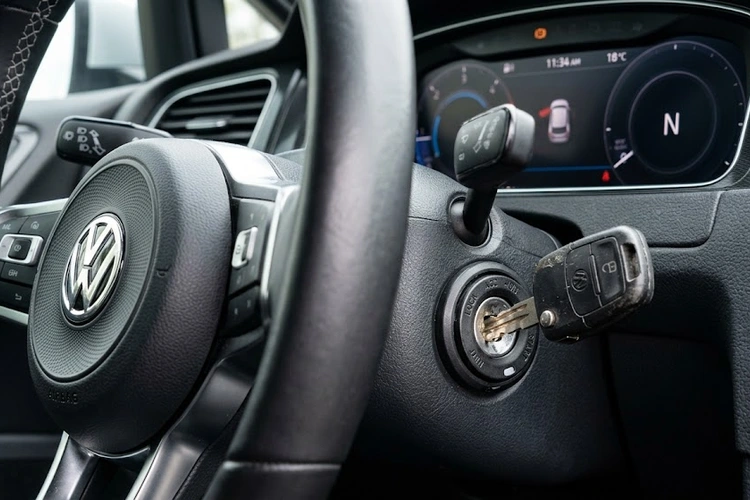
Most people are surprised to learn that the ignition cylinder (the mechanical housing that the key turns inside) connects to several other vehicle systems through a set of interlocking safety mechanisms. These safeties exist to prevent the car from starting while in gear and to keep the steering wheel from spinning freely after the engine shuts off, and they work reliably under normal conditions. When one of those systems falls out of alignment — because of a dead battery, a worn key, or debris lodged inside the cylinder — the ignition mechanism cannot release the key the way it was designed to, and the key becomes trapped until the underlying cause is addressed.
The ignition cylinder operates through a set of spring-loaded pins — small metal rods that align with the cut profile of the correct key when it is inserted — which allow the cylinder to rotate through its positions and the key to be withdrawn. When all the pins line up correctly with the key's cuts, the cylinder turns freely through accessory, on, start, and off, and the key slides out cleanly when returned to the off position. A worn key that no longer matches the pin heights with enough precision, debris blocking a single pin, or a broken internal spring prevents this alignment, and the cylinder holds the key in place as a mechanical fail-safe that cannot be overridden by force alone.
Modern vehicles link the ignition cylinder to the steering column lock, which engages automatically as the key moves toward the off position and prevents the steering wheel from rotating after the engine shuts down. If the wheel is turned even slightly under load — such as when the front tires are pressed against a curb during parking — this lock can engage under lateral tension and create physical resistance that traps the key inside the cylinder. Our team consistently finds this single cause behind more than half of all stuck-key reports we have reviewed, and it is also the easiest of the six causes to resolve without any tools, any cost, or any professional help.
Matching the correct cause to the correct fix is the single most important step in this process, and rushing past the diagnosis almost always leads to wasted time, unnecessary expense, or additional damage to the ignition cylinder.
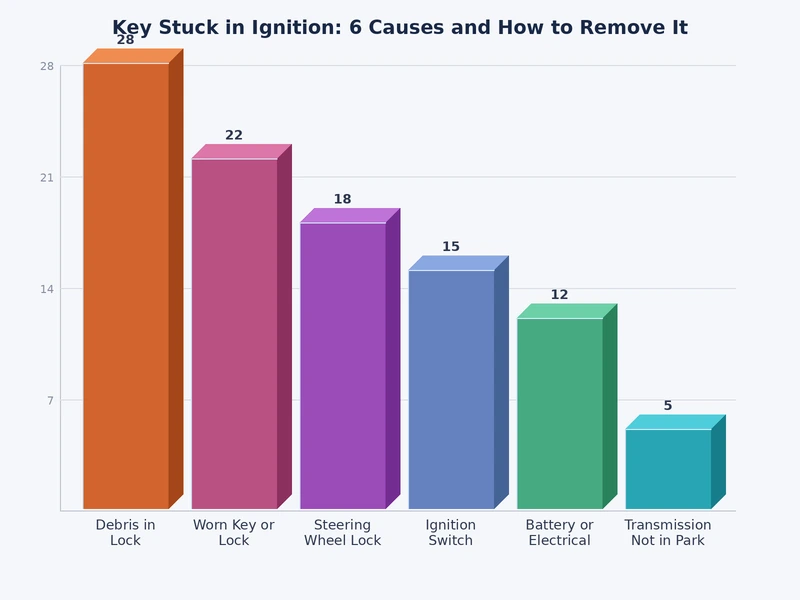
The first and most common cause is a steering wheel locked under tension — the wheel was turned while parking and is now pressing hard against the column lock, physically trapping the key inside the cylinder with no amount of straight pulling able to free it. The second cause is the vehicle not being fully seated in Park — automatic transmissions include a park interlock that prevents key removal unless the gear selector is completely in the Park detent (the notch it clicks into), and a shift that missed the detent by even a fraction of an inch engages the lock fully. The third cause is debris or dirt inside the ignition cylinder, which becomes a problem in higher-mileage vehicles where small particles accumulate in the key slot over years of daily use and interfere with the spring-loaded release pins.
The fourth cause is a worn or damaged key — keys that have been duplicated multiple times from a copy rather than from the original, bent from rough handling, or simply worn through years of use may no longer align the ignition pins with enough precision to allow a clean withdrawal even though the car starts normally. The fifth cause is a faulty ignition cylinder, where the internal spring mechanism has broken, corroded, or seized after extended use, which is most common in vehicles with more than 100,000 miles on the odometer and is often preceded by a period of increasing stiffness when turning the key. The sixth cause is a dead or very weak battery — many modern vehicles with electronic ignition systems require a minimum of approximately 9 to 12 volts to complete the key-release sequence, and a battery below that threshold leaves the electronic release mechanism without the power it needs to function.
Our detailed guide on how to test a car battery at home covers the exact steps for checking voltage with an inexpensive multimeter, which our team considers one of the most practical diagnostic skills any driver can develop for situations exactly like this one.
Never attempt to free a stuck key using pliers, a screwdriver for leverage, or sustained pressure on the key head — a key broken inside the cylinder turns a minor inconvenience into a locksmith visit that can easily exceed $300 in parts and labor.
Four of the six causes described above are fully solvable without tools, professional assistance, or any expense beyond a few minutes of focused effort, and our team recommends working through those solutions in sequence before making any phone calls.
For a steering wheel locked under tension, the correct fix involves gripping the steering wheel firmly and applying gentle rotational pressure in the direction that reduces tension — typically away from the curb — while simultaneously turning the key toward the off position with steady, moderate force. The lateral tension releases almost immediately in most cases, and the key withdraws cleanly without any additional effort. For a vehicle not fully in Park, pressing the brake pedal firmly and pushing the gear selector deliberately into the Park detent before attempting key withdrawal resolves the problem in seconds for the vast majority of automatic transmission vehicles our team has tested this approach on.
For a dead or weak battery, the fix requires either jump-starting the vehicle from a second car or connecting a portable battery charger until the voltage recovers above the minimum threshold needed for the electronic release to operate. Our article on how to extend the life of a car battery covers the maintenance habits that reduce the chance of battery failures happening in the first place, which our team considers far preferable to managing the consequences after the fact.
A worn or damaged key requires either a new key cut by a dealer or locksmith using the vehicle's key code (a unique alphanumeric identifier assigned by the manufacturer that allows a precise new key to be produced without the original) or careful professional extraction if the key has already broken off inside the cylinder. A faulty ignition cylinder is a mechanical repair that involves partial disassembly of the steering column and typically requires one to two hours of shop labor plus the cost of the replacement cylinder. Debris lodged near the surface of the key slot may respond to a short burst of compressed air directed carefully into the opening, but debris packed in deeper requires a locksmith with the correct tools to extract safely without causing additional damage.
Our team always recommends storing a spare key separately from the primary set — switching to a fresh spare instantly resolves a worn-key stuck situation with no cost and no professional help required.
Repair costs vary significantly depending on the cause, and knowing realistic price ranges before calling a shop gives anyone the information needed to make confident decisions and avoid being overcharged for work that may not be necessary.
The steering wheel tension release, the Park interlock check, and the battery jump-start all cost nothing beyond the knowledge of the correct technique. A basic metal duplicate key cut at a hardware store runs between $2 and $10 in most areas of the country. A transponder key — a key with an embedded electronic chip that communicates with the vehicle's immobilizer before allowing the engine to start — requires dealer or locksmith programming in addition to cutting, which brings the total to between $50 and $200 depending on the vehicle make, model, and the specific chip type involved.
The table below reflects the typical price ranges our team has gathered for professional ignition-related repairs across a range of vehicle types and service providers in the United States.
| Repair Type | DIY Cost | Professional Cost | Typical Time |
|---|---|---|---|
| Steering wheel tension release | $0 | $0–$50 (locksmith call-out fee) | Under 1 minute |
| Park interlock check | $0 | $0–$50 | Under 1 minute |
| Battery jump-start or charge | $0 (with cables/charger) | $50–$100 (roadside assistance) | 10–20 minutes |
| New duplicate key (basic metal) | $2–$10 | $50–$200 (transponder) | 15–30 minutes |
| Debris removal | $0–$5 (compressed air) | $75–$150 (locksmith) | 5–20 minutes |
| Broken key extraction | Not recommended | $100–$250 | 30–60 minutes |
| Ignition cylinder replacement | Not recommended | $150–$400 | 1–2 hours |
Several persistent myths lead drivers to spend money unnecessarily or, worse, to cause additional damage while attempting fixes that were never appropriate for the actual problem at hand.
The most widespread myth is that a key stuck in ignition always signals a failing ignition switch that requires full replacement — in reality, the overwhelming majority of cases our team has researched resolve with one of the free or low-cost techniques described above, and full cylinder replacement is needed only in a small fraction of situations. A second costly myth is that spraying WD-40 directly into the key slot frees a stuck ignition key — WD-40 is a water displacer rather than a genuine lubricant, and applying it to an ignition cylinder can wash loose debris deeper into the mechanism while leaving an oily residue that attracts dust and accelerates internal wear over months of continued use. The correct product for ignition cylinder maintenance is a dry graphite lubricant (a fine powder that reduces friction without creating any sticky residue), which professional locksmiths use almost exclusively for this specific application.
A third myth that our team encounters frequently is that an electronic immobilizer (the anti-theft system built into most vehicles produced after 1999, which prevents the engine from starting without recognizing the correct key chip) can physically trap a key inside the ignition cylinder. Immobilizers control the engine's ability to start but have no mechanical connection whatsoever to the key-release mechanism, so a stuck key is always a mechanical or electrical issue regardless of immobilizer status.
Our team consistently recommends a systematic approach that starts with the zero-cost fixes — steering wheel tension release, Park interlock check, dead battery recovery — before moving to low-cost options like switching to a spare key or carefully clearing debris with compressed air, and only escalating to professional repair after ruling out the simpler causes in order. This sequence resolves the overwhelming majority of stuck-key situations without any shop visit, and it also gives anyone a clear and accurate description of the problem to share with a mechanic if professional help does ultimately become necessary.
Yes — leaving the key in the ignition in the accessory or on position without the engine running draws a continuous load from the battery, and a battery that drains fully in this condition may itself become the reason the key cannot be released electronically. Our team recommends checking battery voltage with a multimeter as a first diagnostic step if the key has been left in position for any significant length of time before attempting other fixes.
The most reliable indicators are a key that requires noticeably more force to turn through its positions than it once did, a cylinder that wobbles or feels loose when the key is inserted, or a situation where a brand-new spare key binds in exactly the same way as the original. If switching to a fresh spare key does not resolve the sticking, the cylinder is the most probable culprit and a locksmith inspection is the appropriate next step before authorizing any parts replacement.
A key that sticks on removal but eventually comes free generally indicates early-stage cylinder wear or a key that has become too worn over time, and our team recommends having the issue inspected at the next available opportunity rather than ignoring it while conditions are still manageable. The underlying cause will worsen gradually with continued use, and addressing it early is consistently less expensive than waiting until the key cannot be removed at all.
 |
 |
 |
 |

About Sarah Whitfield
Sarah Whitfield is a diagnostics and troubleshooting specialist who spent ten years as an ASE-certified technician before joining the editorial team. She specializes in OBD-II analysis, electrical gremlins, and the kind of intermittent problems that make most owners give up.
Get some FREE car parts & gear.. Or check out the latest free automotive manuals and build guides here.
Disable your ad blocker to unlock all the hidden deals. Hit the button below 🚗
| | | |
