by Sarah Whitfield
When the low coolant light on your dashboard illuminates, it means your coolant level has dropped below the safe minimum — and you need to check it before driving much further. Ignoring this warning puts your engine at real risk of overheating, warping cylinder heads, and triggering a repair bill that a five-minute stop could have prevented entirely. For a full reference on this topic, bookmark our low coolant light on resource page — and use this guide to work through every cause, every fix, and every scenario you're likely to encounter.
Your car's cooling system is surprisingly simple in concept but completely unforgiving when neglected. Coolant circulates through the engine block, absorbs thermal energy, carries it to the radiator, and releases that heat into the outside air before cycling back again. When the level drops, that cycle loses effectiveness and heat builds faster than the system can manage.

Contents
Your engine produces combustion heat intense enough to destroy unprotected metal within minutes, so the cooling system exists as the buffer between that heat and a catastrophic mechanical failure. Coolant — also called antifreeze — flows through passages in the engine block and cylinder head, absorbs thermal energy continuously, and transfers that heat to the radiator where airflow carries it away from the vehicle and into the atmosphere.
According to Wikipedia's overview of antifreeze, modern coolant formulas also raise the fluid's boiling point, lower its freezing point, and deliver corrosion inhibitors that protect metal surfaces inside the engine — making proper coolant maintenance essential year-round, not just in freezing weather.
Most vehicles use a float sensor mounted inside the coolant reservoir. When the level drops below the safe minimum, the float sinks and closes (or opens) an electrical circuit, sending a signal to the instrument cluster that activates the warning light. Some higher-end vehicles add a second sensor in the radiator itself, giving the system an additional layer of protection before heat damage can begin.
The low coolant light on your dash points to one of three root causes: an external leak somewhere in the system, an internal leak that routes coolant into places it doesn't belong, or gradual evaporation over a long stretch of time. Getting the right diagnosis before you just top off and drive away is critical — refilling a leaking system only delays the same warning by days or weeks.
External leaks are the most common cause and typically the easiest to identify because they leave physical evidence you can see and smell. Look for all of these signs when investigating:
Common external leak points include the radiator core, upper and lower radiator hoses, the water pump gasket, and heater core connections behind the firewall. If your temperature gauge still reads normally despite a visible drip, our guide on car leaking antifreeze but not overheating breaks down that specific scenario in detail, since the causes and urgency level differ from a hot-engine situation.
Internal leaks are more serious and significantly harder to spot because the coolant never reaches the ground — it seeps into the combustion chamber, the oil passages, or the intake manifold instead. Watch for these specific warning signs:
A blown head gasket is the most frequent culprit for internal leaks and one of the more expensive engine repairs you'll face. If your coolant level keeps dropping without any obvious external source, work through the systematic diagnosis steps in our coolant level keeps dropping guide before committing to a costly repair estimate.
A gradual, very slow decline in coolant level over many months is considered normal — cooling systems aren't perfectly hermetic, and a small amount of fluid evaporates over time, particularly in hot operating climates with consistently high under-hood temperatures. What isn't normal is a level that drops noticeably within a week or after a single long drive, which always points to an active leak that deserves immediate investigation.
Checking and refilling your coolant is a five-minute job that any driver can handle safely, provided you follow the steps in the correct order and never skip the first one — because the first one is the only dangerous part of the whole process.
Never open the radiator cap or reservoir cap on a hot engine — the pressurized coolant inside can spray at temperatures above 200°F and cause severe burns even through thick clothing. Always wait at least 30 minutes after the engine was last running before touching either cap.
Not every low coolant situation ends with a simple top-off and clear conscience. Some causes are straightforward enough to handle in your driveway, while others need professional pressure-testing equipment and hands-on expertise to diagnose and fix correctly. Here's an honest breakdown of which situations fall into which category.
| Situation | DIY or Shop? | Typical Cost Range |
|---|---|---|
| Top off low reservoir, no leak identified | DIY | $10–$20 (coolant only) |
| Replace a cracked or leaking radiator hose | DIY (intermediate) | $20–$60 in parts |
| Radiator replacement | Shop recommended | $300–$900 parts + labor |
| Water pump replacement | Shop recommended | $400–$800 parts + labor |
| Heater core replacement | Shop required | $600–$1,200+ (labor intensive) |
| Head gasket repair | Shop required | $1,500–$3,000+ |
| Full coolant flush and refill | DIY (easy) or shop | $20–$30 DIY / $100–$150 shop |
The critical decision point is whether you've identified the source of the coolant loss. Topping off and monitoring is reasonable when the drop was minor and you found no evidence of a leak. But if you can't locate a clear cause, a cooling system pressure test — a quick job at most shops — will pinpoint the leak location before it strands you on the highway or escalates into an engine failure.
Consistent preventive maintenance is the most cost-effective way to make sure you never see that low coolant light on your dashboard again. Cooling systems don't fail all at once — they degrade gradually, giving you plenty of early warning signs if you're making time to look for them on a regular schedule.
Most manufacturers recommend flushing and replacing coolant every 30,000 miles or every 2–3 years for conventional coolant formulas, while extended-life options like Dex-Cool can go up to 5 years or 150,000 miles before a full flush is needed. Your owner's manual is the authoritative source for your specific vehicle — follow it rather than generic internet advice. If you drive in extreme heat conditions regularly, refresh coolant toward the shorter end of the recommended interval, since high operating temperatures accelerate the breakdown of the corrosion inhibitors that protect your engine's internal metal surfaces.
For a broader look at heat-related maintenance habits that protect your entire drivetrain, our guide on how to maintain your car in hot weather covers cooling system care alongside other critical summer checks worth adding to your routine.
Building a monthly fluid check habit — similar to the routine outlined in our guide on how to check your engine oil level — catches most problems weeks before they escalate into costly repairs and takes less time than stopping for a coffee.
The urgency level when the warning appears depends entirely on what else is happening on your dashboard and how the car is actually behaving at that moment. Reading the full picture takes about ten seconds and tells you definitively whether to pull over right now or proceed carefully to the nearest service point.
Multiple warning lights appearing at the same time — especially anything involving engine temperature — require immediate action. An overheating engine can suffer irreversible damage within minutes of reaching the red zone, including a warped cylinder head or a complete seizure.
Even in this lower-urgency scenario, stop as soon as it's practical to do so, check the coolant level in the reservoir, and look under the car for any wet spots or puddles before deciding to continue your drive.
A handful of stubborn myths about engine coolant continue to circulate in parking lots, forums, and YouTube comment sections, and some of them can cause genuine damage to your engine if you act on them without knowing the full picture.
Plain water will temporarily prevent overheating in a roadside emergency, and using it is better than running the engine dry — but it provides zero corrosion protection, it lowers the boiling point of your cooling system compared to a proper 50/50 mix, and it leaves mineral deposits inside passages as it evaporates over time. If you use water in a genuine pinch, flush and refill with the correct coolant formula as soon as you reach safety, before the lack of inhibitors starts attacking metal surfaces.
Different coolant chemistries use incompatible corrosion inhibitor technologies — mixing OAT (organic acid technology) coolant with IAT (inorganic additive technology) coolant creates a gel-like sludge that can physically clog the narrow passages inside your radiator and heater core, turning a minor top-off into an expensive flush job. Always identify the specific type listed in your owner's manual and use only that formula, even when adding a small amount to top off the reservoir between intervals.
Adding coolant addresses the symptom, not the cause. If the level was low, fluid went somewhere — and unless you find and fix the path it took, you'll be staring at the same low coolant light on your dashboard within days or weeks. If the warning appears alongside other symptoms like a reduced engine power warning, don't accept a top-off as a complete repair; schedule a proper cooling system inspection so a manageable leak doesn't quietly grow into a major engine failure over the following weeks.
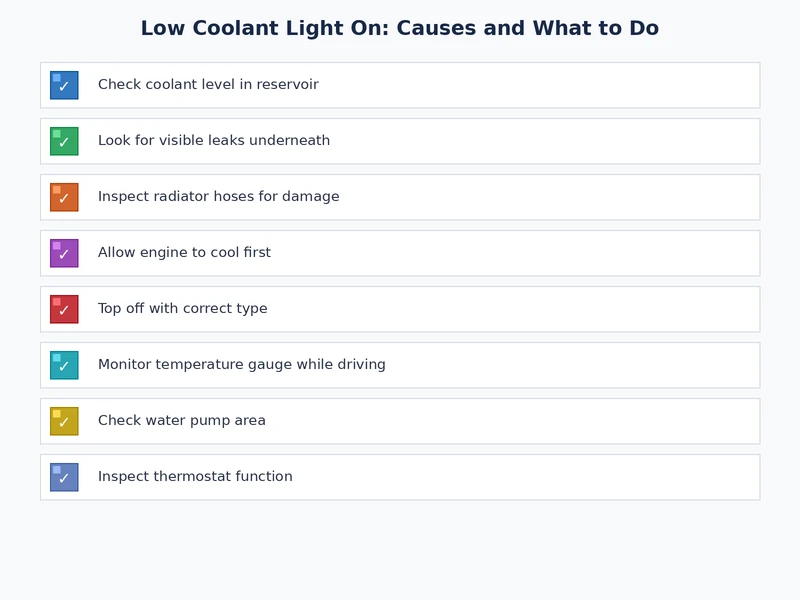
You can drive briefly to reach a safe stopping point if the temperature gauge reads completely normal and no other warning lights are active — but you should not continue a long drive without checking the reservoir level and looking for visible leaks first. If the temperature gauge is rising or you see steam from under the hood, pull over immediately and shut the engine off before any heat damage can occur.
The cost ranges from under $20 to top off the reservoir when no leak is found, up to $3,000 or more for a head gasket repair — the final number depends entirely on what's causing the level to drop. A leaking radiator hose sits at the inexpensive end of the range, while internal leaks involving the head gasket or intake manifold place you firmly at the top of the repair cost spectrum.
Continued driving with insufficient coolant leads directly to engine overheating, which can warp the cylinder head, blow the head gasket, or — in the worst case — seize the engine block entirely. These repairs are among the most expensive in all of automotive work and are almost entirely preventable with a prompt response to the warning light when it first appears on your dashboard.
Every mile you drive with the low coolant light on is a mile you're betting your engine against a repair bill that could have been avoided with a five-minute stop.
 |
 |
 |
 |

About Sarah Whitfield
Sarah Whitfield is a diagnostics and troubleshooting specialist who spent ten years as an ASE-certified technician before joining the editorial team. She specializes in OBD-II analysis, electrical gremlins, and the kind of intermittent problems that make most owners give up.
Get some FREE car parts & gear.. Or check out the latest free automotive manuals and build guides here.
Disable your ad blocker to unlock all the hidden deals. Hit the button below 🚗
| | | |
