by Sarah Whitfield
The P0128 code signals that the engine's coolant is not reaching the minimum temperature the thermostat is designed to maintain, and a failed thermostat is the most frequent culprit. Once the engine control module (ECM) — the vehicle's main computer — logs this fault, the check engine light activates and stays on until the underlying problem is corrected.
Understanding the p0128 code causes matters because repair costs vary widely, ranging from a $15 thermostat to a $200-plus sensor replacement at a shop. A stuck-open thermostat, a defective coolant temperature sensor (CTS), or a slow coolant leak can all produce the same stored fault code. Drivers who notice the temperature gauge sitting unusually low after warm-up, or who observe a drop in fuel economy, should investigate P0128 promptly rather than waiting. A broader overview of similar alerts is available on the check engine light resource page.
Contents
The thermostat is a wax-pellet valve positioned between the engine block and the radiator. During a cold start, the valve remains closed, trapping coolant inside the engine so the temperature climbs quickly to the efficient operating range. Once coolant reaches roughly 195°F (91°C), the thermostat opens and allows hot coolant to circulate through the radiator for cooling.
According to the Wikipedia entry on automotive thermostats, most modern gasoline engines are calibrated to operate between 195°F and 220°F for peak combustion efficiency and lowest emissions output. Any prolonged deviation below that range is what triggers P0128.
The ECM tracks how long the engine takes to reach its coolant temperature threshold after a cold start, comparing elapsed drive time against actual sensor readings. If, after a manufacturer-defined warm-up period, the coolant temperature sensor is still reporting a value below the target, the ECM sets P0128 and stores the fault. The engine is then forced to remain in "open loop" mode — a fuel-delivery state that runs a richer air-fuel mixture, burns more fuel, and increases emissions output.
P0128 sometimes appears alongside other coolant-related faults. Finding multiple codes at once often shifts the diagnosis toward the sensor rather than the thermostat.
A thermostat that has failed in the open position is responsible for the majority of P0128 cases across all vehicle types and ages. When the valve stays open permanently, coolant circulates through the radiator continuously and the engine never accumulates enough heat to reach its target temperature. Key symptoms include:
Thermostats are wear items, and most have a service life of roughly 10 years or 100,000 miles, though repeated cold-weather operation and coolant neglect can shorten that considerably.
The coolant temperature sensor (CTS) is threaded directly into the engine block or cylinder head and feeds live temperature data to the ECM at all times. A CTS that reads artificially low — even when coolant is genuinely hot — causes the ECM to believe the engine is still in warm-up mode, which triggers P0128 even though the thermostat itself is working normally. Testing the sensor with a digital multimeter (a tool that measures electrical resistance) is the fastest way to isolate this possibility.
An inaccurate CTS reading has consequences beyond the stored code. Because the ECM enriches the fuel mixture during perceived cold-start conditions, a faulty sensor can contribute to spark plug fouling over time, as unburned fuel deposits accumulate on the plug electrodes during prolonged rich-running operation.
When the coolant level drops below the tip of the temperature sensor, the sensor reads ambient air temperature instead of liquid temperature, sending a falsely low signal to the ECM. This scenario links P0128 directly to the overall health of the cooling system. Drivers who find the reservoir consistently low or empty should inspect for leaks before replacing any other component. A cracked coolant reservoir is one of the more common sources of slow, difficult-to-spot coolant loss that builds up over weeks rather than days.
A shop-level equipment inventory is not required to diagnose most P0128 faults. The items listed below cover the full range of common diagnostic scenarios at minimal cost.
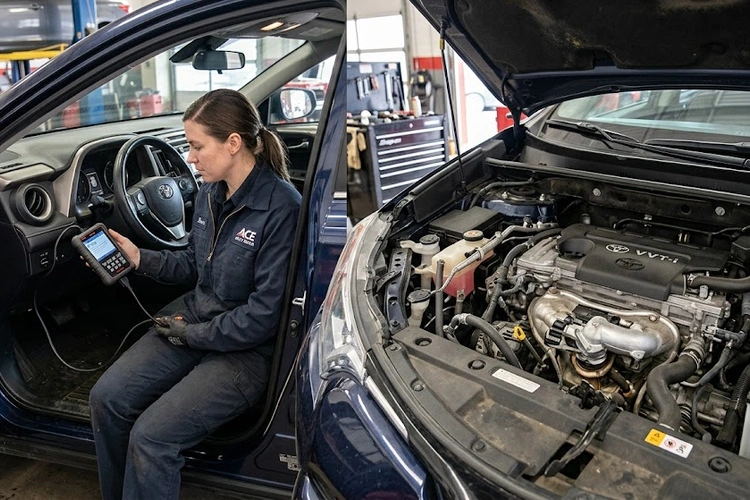
A mid-range scanner with live data streaming capability is far more useful for P0128 than a basic code reader that only retrieves stored fault numbers. By watching the coolant temperature value in real time during a drive cycle, a technician can confirm whether the engine is genuinely failing to heat up or whether the CTS is sending false data to a fully functional system. If live data shows coolant temperature climbing normally to operating range but P0128 still sets, the sensor is the likely culprit rather than the thermostat.
Electrical faults elsewhere in the vehicle can sometimes create confusing diagnostic readings. Drivers who notice other instrument abnormalities alongside P0128 should investigate whether all dashboard gauges are working correctly, since a cluster or wiring fault can occasionally produce false sensor readings across multiple systems simultaneously.
The table below outlines average repair costs for each common P0128 cause, comparing a DIY approach against a professional shop estimate that includes both parts and labor.
| Repair | DIY Parts Cost | Shop Total (Parts + Labor) | Difficulty Level |
|---|---|---|---|
| Thermostat replacement | $10–$30 | $100–$200 | Easy to Moderate |
| Coolant temperature sensor | $15–$50 | $80–$180 | Easy |
| Coolant flush and top-up | $20–$40 | $100–$150 | Easy |
| Coolant reservoir replacement | $20–$60 | $80–$200 | Easy |
| Radiator hose replacement | $20–$50 | $100–$180 | Easy to Moderate |
Labor rates differ significantly by region, dealership versus independent shop, and vehicle design. On certain engines — particularly those where the thermostat housing sits beneath the intake manifold or is buried deep in the engine bay — a shop may bill two or more labor hours for a part that costs under $20 at any auto parts store. Requesting a written estimate before authorizing any diagnostic work is standard practice and helps drivers avoid unexpected charges.
For most drivers, the thermostat is the correct first component to replace, since it is inexpensive, accessible on most engines, and responsible for the overwhelming majority of P0128 cases. The process follows a consistent sequence across most vehicle types.
When a thermostat replacement fails to clear P0128, the coolant temperature sensor becomes the primary suspect. With a digital multimeter set to resistance (ohms), technicians measure the sensor's output at both cold ambient temperature and at full operating temperature, then compare those values against the specifications listed in the vehicle's factory service manual. A sensor that reads outside specification at one or both temperature points should be replaced regardless of its age or appearance. CTS replacement is straightforward on most engines, since the sensor threads directly into the block or head and requires only a sensor socket and a short length of thread sealant tape.
Persistent P0128 after both thermostat and CTS replacement indicates a systemic cooling problem that requires a more thorough evaluation. A complete inspection at this stage covers several areas.
Drivers who discover discolored or milky engine oil during this advanced inspection should read more about the causes and risks documented in the guide to milky oil on the dipstick, since that symptom may point to a head gasket failure that is also compromising coolant system integrity.
Unlike codes that signal overheating or imminent mechanical failure, P0128 generally does not require pulling over immediately and calling for a tow. The engine is running cooler than intended rather than hotter, which reduces the risk of sudden thermal damage in the short term. Drivers can typically continue to their destination or to a repair facility, provided the following conditions are all true.
P0128 becomes an urgent situation when additional symptoms develop alongside the stored code. Drivers should stop the vehicle and investigate before continuing when any of the following are observed.
An engine that begins overheating after a P0128 diagnosis may have developed a secondary leak or a more serious internal failure. Running an engine with insufficient coolant risks warped cylinder heads, a blown head gasket, and repair bills that can reach several thousand dollars. If rough running or noticeable hesitation also develops alongside P0128, the prolonged open-loop enrichment strategy may be degrading driveability, and drivers may find that acceleration from a stop feels sluggish or unresponsive compared to normal behavior.
P0128 is considered a moderate-priority fault. It does not typically cause immediate mechanical damage, but it reduces fuel economy, increases emissions, and can cause the engine to run in a permanently rich fuel mixture state that degrades spark plugs and other components over time if left unaddressed.
Drivers can usually continue driving short distances with P0128 active, provided no overheating symptoms are present. The code should be diagnosed and repaired within a reasonable timeframe — most technicians recommend addressing it within a few weeks to avoid compounding fuel system and emissions issues.
Yes, in most cases. P0128 keeps the engine in open-loop operation, which produces elevated hydrocarbon and carbon monoxide emissions. Most state emissions programs also fail any vehicle with an active check engine light, regardless of which specific code is stored.
Yes, a thermostat stuck in the open position is the single most common cause of P0128 across all vehicle makes and models. Replacing the thermostat resolves the code in the majority of cases without requiring any additional diagnosis or component replacement.
A DIY thermostat replacement typically costs between $10 and $30 in parts. A professional shop repair for the same job ranges from $100 to $200, depending on the vehicle and local labor rates. If the coolant temperature sensor is the cause, costs are similar and often slightly less due to the shorter labor time involved.
P0128 will not clear itself as long as the underlying cause remains. In rare cases, a temporary coolant level fluctuation might cause a one-time occurrence, but a code that returns consistently after being cleared indicates a real hardware fault that requires repair rather than simply erasing the code and waiting.
Yes, noticeably. An engine operating in open-loop mode injects more fuel than necessary because the ECM believes the engine is still warming up. Drivers with a stuck-open thermostat or a faulty CTS often report fuel economy reductions of 10 to 20 percent compared to normal, particularly on short trips in cold weather.
 |
 |
 |
 |

About Sarah Whitfield
Sarah Whitfield is a diagnostics and troubleshooting specialist who spent ten years as an ASE-certified technician before joining the editorial team. She specializes in OBD-II analysis, electrical gremlins, and the kind of intermittent problems that make most owners give up.
Get some FREE car parts & gear.. Or check out the latest free automotive manuals and build guides here.
Disable your ad blocker to unlock all the hidden deals. Hit the button below 🚗
| | | |
