by Sarah Whitfield
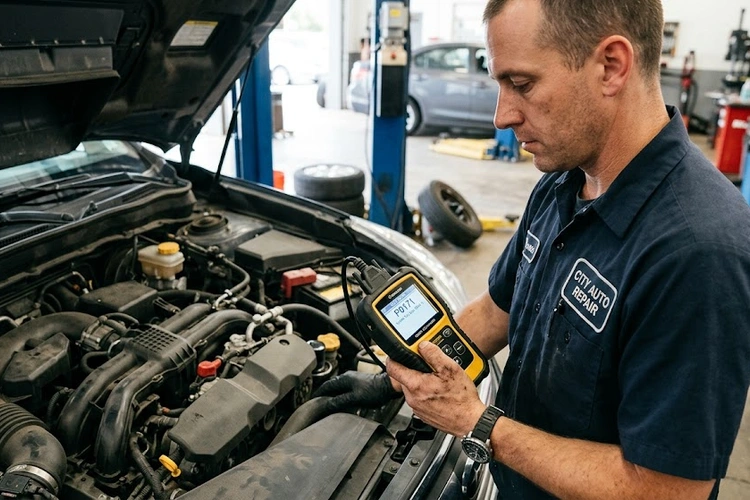
Fuel system fault codes account for nearly 20 percent of all check engine light activations recorded across passenger vehicles in the United States, and the p0171 code consistently ranks among the five most common OBD-II trouble codes logged across virtually every major manufacturer. It signals a lean fuel condition on bank 1 — the engine is receiving too much air relative to fuel, or too little fuel relative to air. Our team has reviewed thousands of diagnostic cases in the troubleshooting category, and we find this code misunderstood more often than almost any other.
Most people see the p0171 code alongside a lit check engine light and assume a catastrophic mechanical failure. The reality is more measured. This code can stem from something as minor as a cracked vacuum hose or as significant as a failing fuel pump. The distinction matters — and so does acting promptly. Sustained lean combustion burns hotter than a normal mixture. Over time, it degrades pistons, exhaust valves, and catalytic converter substrate in ways that cost far more to repair than the original fault.
The p0171 code falls under the OBD-II standard for fuel trim diagnostic trouble codes. It appears when the powertrain control module (PCM) detects that long-term fuel trim (LTFT) on bank 1 has exceeded a positive threshold — typically between +10 and +25 percent — indicating the system is consistently adding extra fuel to compensate for a lean condition. Our team recommends treating this code with urgency rather than deferring diagnosis to a future service interval.
Contents
The p0171 code carries a precise OBD-II definition: "System Too Lean (Bank 1)." Bank 1 is the engine bank containing cylinder number one. On inline four-cylinder engines, only one bank exists — so the code effectively covers the entire engine. On V6 and V8 configurations, bank 1 is typically located on the driver's side, though this varies by manufacturer and engine orientation.
The ideal combustion air-fuel ratio is 14.7:1 — 14.7 parts air to one part fuel by mass. This is the stoichiometric point at which combustion is most complete and efficient. When this ratio climbs higher, the mixture runs lean. The PCM uses feedback from upstream oxygen sensors to make real-time corrections through short-term fuel trim (STFT). When STFT reaches its correction ceiling and long-term fuel trim (LTFT) climbs past approximately +10 percent, the PCM logs P0171 and illuminates the check engine light.
Lean combustion burns at a higher cylinder temperature than stoichiometric combustion. This is the central danger of ignoring the code. Heat damages piston crowns, exhaust valves, and catalytic converter substrate progressively — all replacements that cost orders of magnitude more than resolving the lean condition itself.
P0171 is a bank 1 code. Its counterpart, P0174, indicates a lean condition on bank 2. When both codes appear simultaneously, our team interprets this as strong evidence of a MAF sensor fault or a large vacuum leak upstream of the intake manifold — because a single injector or bank-specific mechanical fault rarely leans out both banks at once. Treating a dual-code presentation as two separate problems wastes diagnostic time.
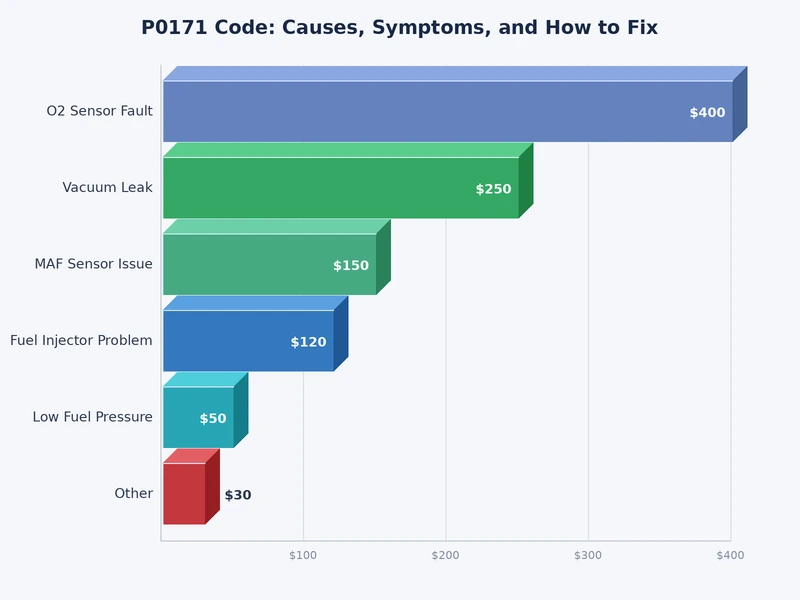
The p0171 code has a well-defined set of causes. Our team ranks them below by typical frequency, DIY feasibility, and expected repair cost to give a clear picture before beginning diagnosis.
| Cause | Frequency | DIY Difficulty | Typical Repair Cost |
|---|---|---|---|
| Vacuum Leak | Very Common | Easy | $0–$150 |
| Dirty MAF Sensor | Common | Easy | $7–$50 |
| Failed MAF Sensor | Moderate | Easy–Medium | $80–$350 |
| Failed PCV Valve | Common | Easy | $15–$60 |
| Clogged Fuel Injectors | Moderate | Medium–Hard | $150–$600 |
| Weak Fuel Pump | Less Common | Hard | $300–$900 |
| Faulty Oxygen Sensor | Less Common | Easy–Medium | $50–$250 |
| Failed Fuel Pressure Regulator | Uncommon | Medium | $100–$300 |
Vacuum leaks are the most frequent P0171 cause in our diagnostic experience. Any unmetered air entering the intake system downstream of the MAF sensor distorts the air-fuel calculation immediately. Cracked intake hoses, deteriorated PCV valves, failed intake manifold gaskets, and loose sensor connections are the standard culprits. Our team recommends smoke machine testing as the primary detection method — it is faster and more conclusive than propane enrichment or aerosol spray approaches, neither of which locates small leaks reliably.
A contaminated or failing MAF sensor transmits inaccurate airflow data to the PCM. The module then calculates less incoming air than is actually present and fuels accordingly — producing a consistent lean condition across all operating ranges. MAF sensors accumulate oil film and fine airborne dust over tens of thousands of miles. Cleaning with dedicated MAF sensor cleaner resolves the code in a meaningful percentage of cases without any parts replacement. Our team always attempts cleaning before condemning the sensor.
A degraded fuel pump, clogged fuel filter, or failing fuel pressure regulator each restrict fuel supply below engine demand. The lean condition that results is most pronounced under acceleration or high load. Our team measures fuel pressure at idle and under load using a gauge teed into the fuel rail. A reading below the manufacturer's minimum specification eliminates guesswork and confirms the fuel delivery system as the root cause without further speculation.
Our team frequently encounters the p0171 code appearing within days of routine maintenance. A loose air intake duct after an air filter swap is a surprisingly common source. So is a vacuum line disturbed during an oil change. Anyone dealing with a check engine light shortly after an oil change should inspect every intake connection touched during that service before pursuing further diagnosis. The relationship between maintenance disturbance and subsequent lean codes is direct and consistently underestimated by both drivers and technicians.
Cold ambient temperatures affect fuel viscosity, sensor response curves, and vacuum hose flexibility simultaneously. Our team observes a seasonal increase in P0171 cases during winter months. Rubber vacuum hoses that hold together through summer often develop hairline cracks when temperatures drop and elasticity decreases. A code that appears exclusively in cold conditions and clears as the vehicle warms — or as ambient temperatures rise seasonally — points to a temperature-sensitive leak rather than a sensor or fuel delivery fault.
Vehicles beyond 100,000 miles develop P0171 through accumulated component wear rather than isolated failure. Injector deposits reduce spray pattern quality incrementally. Fuel pump wear gradually reduces delivery pressure. MAF sensor contamination compounds over time. Our team treats high-mileage P0171 presentations as potentially multi-cause — resolving one component sometimes surfaces a secondary issue that was masked. Vehicles that lose power going uphill at high mileage often share the same fuel delivery weakness responsible for lean codes under load.
The first diagnostic step is always reading live fuel trim data with a quality scan tool. LTFT values above +10 percent at idle confirm an active lean condition. The behavior of LTFT across the RPM range provides the critical next layer of information. If LTFT drops toward zero at higher engine speeds, the cause is almost certainly a vacuum leak — vacuum leaks exert diminishing influence as manifold pressure rises under load. If LTFT remains elevated at all RPM ranges, fuel delivery is the more probable root cause. This single observation narrows the diagnostic field substantially.
Never replace an upstream oxygen sensor as the first response to P0171. The sensor is reporting the lean condition accurately — it is not creating it. Replacing it wastes money and leaves the actual fault unresolved.
Our team follows a fixed diagnostic sequence: vacuum system inspection first, MAF sensor cleaning second, fuel pressure testing third, injector flow testing fourth. Skipping steps or replacing parts on suspicion adds cost without advancing the diagnosis. The OBD-II PID reference on Wikipedia provides a useful breakdown of fuel trim parameter IDs for interpreting live scan data. Understanding what each parameter represents sharpens the diagnostic process and prevents misinterpretation of normal variation as a fault.
Conditions such as engine stalling during acceleration frequently accompany P0171 in cases involving significant vacuum leaks or fuel delivery restrictions. When both symptoms appear together, the diagnostic priority is unambiguous: address the fuel and air delivery system before investigating ignition, sensors, or other secondary systems.
After completing any repair, our team clears the stored code and monitors live fuel trim values across multiple drive cycles before considering the case resolved. LTFT must return to within ±5 percent at both idle and highway cruise to confirm successful correction. Persistent elevated LTFT after a repair indicates a secondary cause remains unaddressed. Declaring victory after a single successful cold start is premature and leads to repeat visits.
Cleaning the MAF sensor, replacing a cracked vacuum hose, and swapping a failed PCV valve are tasks well within the reach of most home mechanics. These jobs require minimal tooling and carry low risk of secondary damage. Our team recommends attempting these interventions before committing to professional service. A MAF cleaning that resolves P0171 costs under $15 in materials versus over $100 in shop labor for an identical 15-minute procedure.
Complications such as oil pan gasket failures or rear main seal leaks that allow oil into the crankcase ventilation path — and from there into the intake — add a layer of complexity that moves the repair outside straightforward DIY territory.
Fuel injector flow testing, fuel pump replacement, and PCM diagnosis fall outside the practical capability of most home mechanics. Injector testing requires specialized bench equipment. Fuel pump replacement on modern vehicles typically involves dropping the fuel tank — a significant undertaking without a lift. Our team recommends professional service when P0171 persists after MAF cleaning and a thorough vacuum system inspection using a smoke machine. Continuing to guess beyond that point produces unnecessary parts expense with no diagnostic progress.
Oil selection intersects with this diagnosis in ways that surprise most people. Understanding whether synthetic blend or full synthetic oil is appropriate for the vehicle affects PCV system health — a direct factor in lean codes that is frequently overlooked. Knowing how long engine oil remains effective is equally relevant, since degraded oil accelerates PCV valve failure and promotes carbon buildup on intake components that compounds lean conditions over time.
The most reliable long-term defense against P0171 is strict adherence to the manufacturer's maintenance schedule. MAF sensor cleaning every 30,000 miles, fuel injector service every 60,000 miles, and consistent air filter replacement each reduce lean code risk substantially. Our team finds that properly maintained vehicles develop fuel trim codes at a fraction of the rate of neglected examples with equivalent mileage — the difference is measurable and consistent across brands.
Top-tier certified fuel with adequate detergent additives keeps injectors cleaner over extended mileage. Our team has observed measurable differences in injector deposit accumulation between vehicles using consistent top-tier fuel versus discount station fuel across 50,000 or more miles. Using the correct oil viscosity for ambient temperature conditions also matters — an oil that is too thick in cold weather slows PCV system operation and indirectly contributes to lean conditions through elevated crankcase pressure and increased blowby contamination of the intake tract.
Addressing vacuum system wear before it becomes a logged fault is the most cost-effective prevention strategy available. Our team recommends inspecting all vacuum hoses at every oil change interval. Hoses showing surface cracking, brittleness, or loss of flexibility should be replaced before they fail — a vacuum hose costs a few dollars, while the diagnostic labor to locate a developed leak often exceeds $100 at a shop rate. Monitoring exhaust pipe condition also provides early warning of combustion and fuel trim irregularities before they progress to stored codes and driveability complaints.
The p0171 code means "System Too Lean (Bank 1)" under the OBD-II standard. It indicates the powertrain control module has detected that long-term fuel trim on bank 1 has exceeded a positive threshold — typically between +10 and +25 percent — as the system compensates for an air-fuel mixture that is leaner than the ideal stoichiometric ratio of 14.7:1.
Short trips are unlikely to cause immediate mechanical failure, but extended driving with an unresolved p0171 code is inadvisable. Sustained lean combustion burns at higher temperatures than normal and progressively degrades pistons, exhaust valves, and catalytic converter substrate. Our team recommends diagnosing and resolving the underlying cause promptly rather than deferring it to a future service visit.
The most frequent causes are vacuum leaks, contaminated or failed mass airflow sensors, and deteriorated PCV valves. Fuel delivery issues — including reduced fuel pump pressure, clogged injectors, and failing fuel pressure regulators — account for a significant portion of persistent cases, particularly on high-mileage vehicles where multiple components have worn simultaneously.
Accurate diagnosis begins with reading live fuel trim data using an OBD-II scan tool. Long-term fuel trim values above +10 percent at idle confirm an active lean condition. Analyzing how LTFT behaves across RPM ranges distinguishes vacuum leaks from fuel delivery faults. Our team recommends a systematic progression through vacuum inspection, MAF cleaning, and fuel pressure testing before replacing any components.
Cost depends entirely on the root cause. Cleaning a dirty MAF sensor costs under $15 in materials. Replacing a cracked vacuum hose runs $5 to $50 depending on location and vehicle. Fuel injector cleaning or replacement ranges from $150 to $600. Fuel pump replacement can reach $300 to $900 depending on the vehicle and tank access. Proper diagnosis before part replacement consistently keeps total repair costs at the lower end of the range.
Yes, in most jurisdictions. An active p0171 code illuminates the check engine light, which constitutes an automatic failure in OBD-II-based emissions testing programs. Even clearing the code immediately before testing is ineffective — readiness monitors require multiple complete drive cycles to set, and most states require all monitors to show ready status before a vehicle can pass inspection.
The effect on fuel economy depends on the root cause. A lean condition caused by a vacuum leak or dirty MAF sensor may produce a marginal improvement in economy since less fuel is delivered per cycle. A lean condition caused by restricted fuel delivery produces misfires and combustion inefficiency that worsen economy and performance. In either case, the underlying fault harms engine health and warrants prompt resolution.
A failing upstream oxygen sensor can misreport exhaust oxygen content, causing the PCM to miscalculate fuel trim and potentially log P0171. However, this is a less common cause than vacuum leaks or MAF sensor contamination. Our team recommends confirming oxygen sensor accuracy with live waveform data before replacement — in the majority of P0171 cases, the sensor is correctly reporting a genuine lean condition rather than generating a false one.
A lean engine is an engine under stress — every mile driven with an unresolved p0171 code shortens the life of components that cost far more to replace than the diagnosis itself.
 |
 |
 |
 |

About Sarah Whitfield
Sarah Whitfield is a diagnostics and troubleshooting specialist who spent ten years as an ASE-certified technician before joining the editorial team. She specializes in OBD-II analysis, electrical gremlins, and the kind of intermittent problems that make most owners give up.
Get some FREE car parts & gear.. Or check out the latest free automotive manuals and build guides here.
Disable your ad blocker to unlock all the hidden deals. Hit the button below 🚗
| | | |
