by Joshua Thomas
The most recognizable signs of a bad water pump are coolant leaks near the front of the engine, a rising temperature gauge, and unusual noises from the pulley area — and spotting any of them early gives you a real opportunity to address the problem before it cascades into a far more expensive engine repair. Your water pump runs continuously whenever the engine is on, circulating coolant between the engine block, the cylinder head passages, and the radiator, and the moment it starts to fail, your engine's entire thermal management system is compromised.
Most cooling system failures don't happen without warning — the pump gives you clues first, and those clues tend to escalate in severity the longer they go unaddressed. If you're also dealing with dropping coolant levels alongside any of these symptoms, it's worth reading through whether it's safe to drive with low engine coolant before deciding whether to keep driving, because the answer depends significantly on how far the level has dropped and what else the car is showing you.
Contents
Understanding what the pump actually does makes these warning signs easier to read. According to the automotive water pump entry on Wikipedia, it is a centrifugal device belt-driven by the engine that keeps coolant moving through the entire cooling circuit at sufficient pressure and volume to prevent hot spots from developing in the block. When the impeller, shaft bearing, gasket, or main seal begins to degrade, the symptoms that follow tend to escalate in a fairly predictable order.
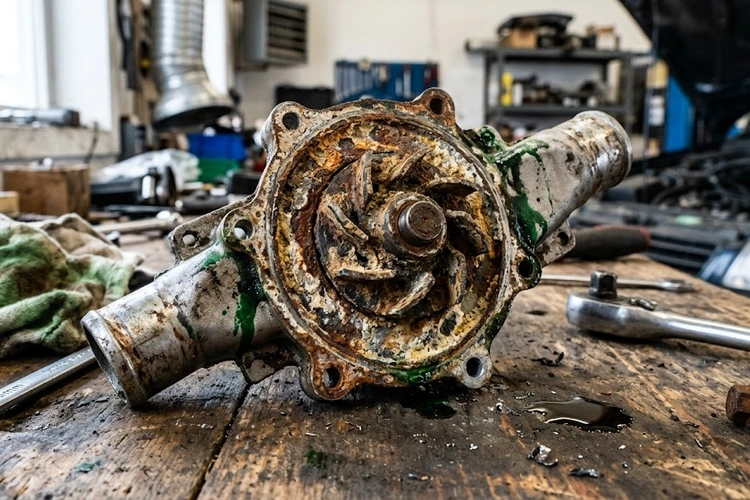
A puddle of coolant — green, orange, pink, or blue depending on your fluid type — appearing beneath the front of your car is often the first visible sign of a pump that's starting to go. The pump uses a shaft seal and a gasket to contain pressurized coolant as it circulates, and both of those components wear down through repeated heat cycling and normal age, eventually allowing fluid to seep through. A small drip at the weep hole or gasket face can become a steady leak within days or weeks, steadily reducing the coolant volume available to the engine and increasing overheating risk with each passing mile.
When the water pump can no longer circulate coolant at the rate the engine demands, heat accumulates faster than the radiator can dissipate it, and your temperature gauge begins climbing toward the red zone. This is among the most serious signs of a bad water pump because sustained overheating warps cylinder heads, destroys head gaskets, and in severe cases seizes pistons inside the bore. If your temperature gauge spikes during normal driving or while idling at a stoplight, that's a reason to investigate the cooling system as soon as possible rather than to wait and monitor.
A worn bearing inside the water pump produces a distinct whining, growling, or grinding sound that originates near the front of the engine where the drive belt connects, and the noise typically increases with engine RPM. It can be easy to confuse with a failing alternator or tensioner, but its location — close to the belt-driven accessories on the engine's nose — helps narrow it down considerably. In some cases the pump shaft develops a wobble as the bearing collapses further, which you might perceive as a faint rhythmic vibration that pulses in time with engine speed rather than road speed.
Visible steam escaping from under the hood or around the radiator cap means your coolant has reached or exceeded its boiling point, and the engine is already in a critically elevated temperature range. A failing water pump is one of the most common reasons this happens because without adequate coolant flow, localized hot spots develop quickly even if the radiator itself is functioning correctly. If you see steam, pull over in a safe location, shut off the engine immediately, and wait a full 30 minutes before approaching the radiator cap — the pressurized system can cause severe burns if opened while the engine is still hot.
If your coolant reservoir keeps dropping to low levels but you never find a puddle under the car, the leak may be internal — meaning coolant is bypassing a failed internal seal and mixing with the engine oil or burning off through the combustion chamber. This makes the problem harder to identify through casual inspection and requires looking at secondary indicators instead. Our guide on engine oil color and what the changes mean walks through exactly what to look for on your dipstick when you suspect coolant is entering places it was never designed to reach.
Coolant that has worked its way into the oil passages creates a milky, frothy texture that appears on the dipstick or underneath the oil filler cap on the valve cover, and it's a symptom that demands immediate attention. This contamination degrades the oil's ability to lubricate and protect metal surfaces, forcing the engine to run on a mixture that accelerates wear on rod and main bearings, cam journals, and cylinder walls with every revolution. If you notice this, the engine should be shut off and not restarted until the source of the contamination — which may be the water pump, a failed head gasket, or a cracked block — is diagnosed and repaired.
Your car's heating system depends on hot coolant passing through the heater core behind the dashboard, and when the water pump is failing to circulate coolant effectively, the heater core receives an inadequate supply of warm fluid, which results in lukewarm or barely warm air from the vents despite the heater being set to full. This symptom tends to surface earlier in a pump's decline than overheating does, which makes it a useful early indicator if you pay attention to it. Combined with a mildly elevated temperature gauge, weak heater output is a reasonable prompt to have your cooling system looked at before the situation becomes more serious.
Adding coolant to the reservoir whenever the level drops is a short-term measure that treats a symptom rather than the underlying problem, and it allows the failing pump to continue degrading with every drive. Each time you top off without investigating the source of the loss, the wear inside the pump advances further, and the eventual repair scope grows accordingly. Treating recurring coolant loss as a routine maintenance task rather than a diagnostic clue is the fastest way to convert an affordable pump replacement into a costly engine repair.
On timing-belt-driven engines, the water pump sits in the same service area as the timing belt, which means replacing one requires accessing the other, and the labor cost is effectively shared between both jobs. Opting out of the water pump replacement during a scheduled timing belt service to save on parts costs is a common and expensive mistake, because when the pump fails shortly after — as it often does on a high-mileage engine — you pay the full labor rate a second time for a job that could have been completed in a single visit. Most manufacturers and experienced mechanics recommend replacing both components simultaneously for exactly this reason.
With the engine completely off and cool, locate the water pump pulley on the front of the engine and try to rock it gently from side to side while wearing gloves. A healthy bearing will feel completely solid with no wobble or lateral movement, while a worn bearing will allow you to feel a small but noticeable amount of play that confirms the bearing is compromised. This check takes about 30 seconds and can give you a concrete indication of whether the bearing is the source of any grinding or howling noises you've been noticing at idle or during acceleration. While you have the hood up, it's also a good time to run a quick battery check if you've noticed any other electrical symptoms — our guide to testing your car battery at home takes about five minutes and helps rule out charging system issues before you close everything back up.
Water pumps include a small weep hole — sometimes called a tell-tale hole — that vents any coolant that has bypassed the main shaft seal, preventing it from pooling behind the bearing and causing additional damage. A small amount of dried residue around this hole can be considered normal on a higher-mileage pump, but active dripping or a crusty mineral buildup is a reliable sign that the internal seal has begun to fail. You can also monitor your oil pressure readings for unexplained fluctuations alongside cooling symptoms, since multiple systems showing stress simultaneously often points to a single root cause — something we cover in more detail in our guide to oil pressure gauge fluctuations and what they mean.
Highway driving puts the cooling system under sustained load, and a partially failed water pump that manages adequately at city speeds may not have enough capacity to keep up when the engine runs continuously at higher RPMs for extended periods without the cooling relief of deceleration. The temperature gauge climbs gradually at first, then rapidly once it crosses a threshold, and by the time steam appears, the engine has already been operating in a damaging temperature range for several minutes. Cold weather provides less protection than many drivers assume, because the pump's reduced output is the core problem regardless of ambient temperature, and a struggling pump can still cause localized overheating that damages head gaskets even when the outside air is frigid — a pattern similar to what we describe in our piece on why cars stall in cold weather and how cold-weather engine stress presents differently from warm-weather failures.
A slow internal coolant leak is particularly deceptive because the outward symptoms are subtle — a gradual drop in the coolant reservoir level, perhaps a faint sweet smell from the vents — and the car may continue to drive and perform normally for weeks or even months before anything dramatic occurs. By the time the damage becomes apparent, the engine has often been running on oil contaminated with coolant for an extended period, causing accelerated wear to bearing surfaces and cylinder walls that doesn't announce itself until the engine begins consuming oil or producing knocking sounds under load. The repair bill in these cases frequently runs into several thousands of dollars, all of which traces back to signs of a bad water pump that were either missed or dismissed at an early stage when intervention would have been straightforward and affordable.
Replacement costs vary considerably depending on whether your pump is belt-driven by the timing belt, driven by the serpentine belt, or electrically driven as on some hybrids and newer vehicles. The pump itself is a relatively modest parts cost in most cases, but labor is where the expense climbs — especially on timing-belt engines where the mechanic must disassemble a significant portion of the engine's front end just to access the pump housing.
| Drive Type / Service Scenario | Parts Cost | Labor Cost | Total Estimate |
|---|---|---|---|
| Serpentine belt-driven (most 4-cylinder engines) | $40–$100 | $100–$200 | $140–$300 |
| Timing belt-driven (Honda, Toyota, Subaru, Mitsubishi) | $40–$120 | $300–$600 | $340–$720 |
| SUV or truck with V6 or V8 serpentine drive | $60–$150 | $200–$450 | $260–$600 |
| Timing belt + water pump bundled service | $100–$250 | $400–$700 | $500–$950 |
| Electric water pump (hybrid or EV application) | $150–$400 | $150–$300 | $300–$700 |
Most mechanics also recommend replacing the thermostat and inspecting the coolant hoses during the same visit, since accessing those components adds minimal time when the cooling system is already partially disassembled. A full coolant flush at the same time is also worth considering if your fluid hasn't been changed in several years, because degraded coolant accelerates corrosion inside the pump housing and shortens the service life of the replacement part you're installing.
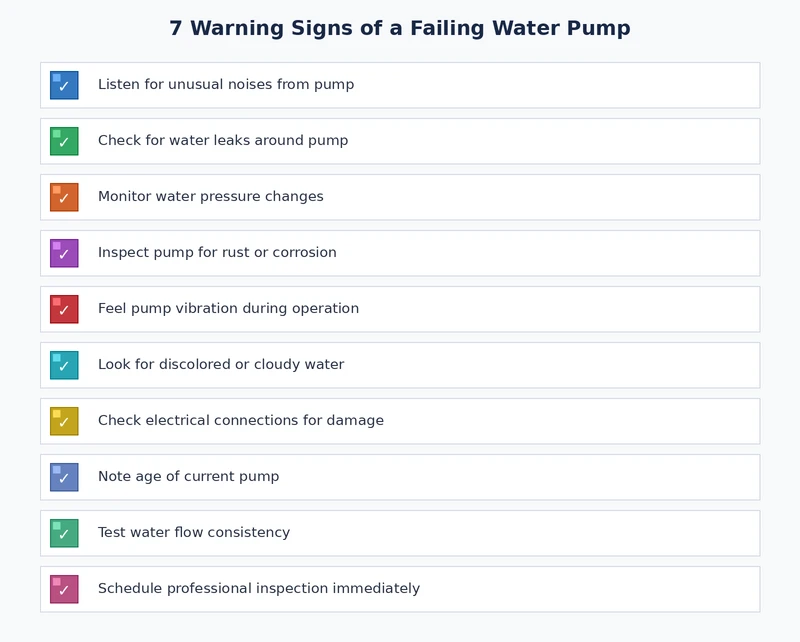
Catching the signs of a bad water pump early is one of the most straightforward ways to protect your engine from a repair that can cost several times what a timely pump replacement would have. If you've noticed any of the symptoms covered here — a coolant leak beneath the front of the car, an elevated temperature gauge, unusual noises near the belt area, weak cabin heat, or milky oil on the dipstick — have your cooling system inspected by a trusted mechanic before those warning signs develop into a breakdown or lasting engine damage. The sooner you act on what the car is telling you, the more options you have and the less the fix is likely to cost.
 |
 |
 |
 |

About Joshua Thomas
Joshua Thomas just simply loves cars and willing to work on them whenever there's chance... sometimes for free.
He started CarCareTotal back in 2017 from the advices of total strangers who witnessed his amazing skills in car repairs here and there.
His goal with this creation is to help car owners better learn how to maintain and repair their cars; as such, the site would cover alot of areas: troubleshooting, product recommendations, tips & tricks.
Joshua received Bachelor of Science in Mechanical Engineering at San Diego State University.
Get some FREE car parts & gear.. Or check out the latest free automotive manuals and build guides here.
Disable your ad blocker to unlock all the hidden deals. Hit the button below 🚗
| | | |
