by Sarah Whitfield
The National Highway Traffic Safety Administration estimates that more than 170,000 vehicle fires occur on American roads every year, and a significant proportion originate in the engine bay. Smoke coming from under the hood is one of the most urgent distress signals a vehicle produces. The cause may range from a harmless condensation burn-off on a cold morning to a catastrophic head gasket failure — but drivers cannot afford to assume the benign explanation. Acting correctly within the first two minutes determines whether the incident costs a hundred dollars or results in total engine loss. For a comprehensive overview of related symptoms and repair cost data, the smoke coming from under hood resource covers the full diagnostic landscape.
The diagnostic framework begins with three observable variables: smoke color, odor, and location of origin. Each combination narrows the list of probable causes considerably. A systematic approach — rather than a panicked one — produces better outcomes and reduces the risk of compounding the damage. This guide identifies the seven primary causes, explains how to read smoke signals accurately, and provides a clear action plan for every scenario. A related warning that frequently accompanies engine bay smoke is a rising temperature gauge, which confirms the severity of the underlying thermal event and narrows the diagnosis to the cooling system.
Contents
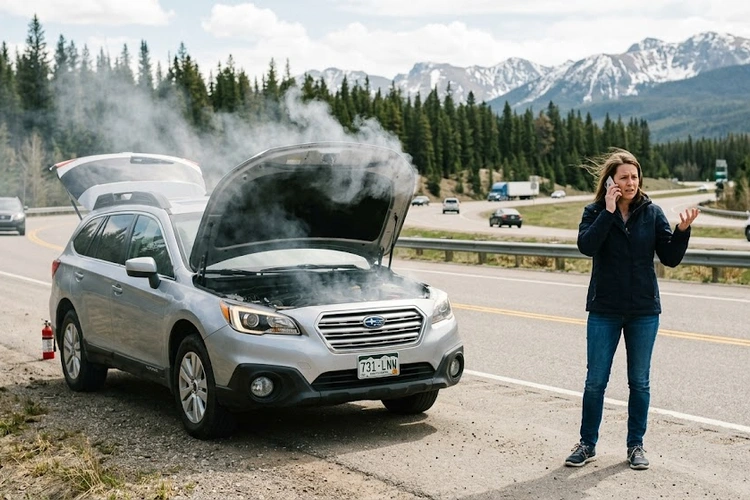
Thick, rapidly accumulating smoke is a vehicle emergency without exception. The correct response is to activate the hazard lights, move to the nearest safe stopping point, shut off the engine, and exit the vehicle. Do not open the hood if flames are visible beneath it. According to the National Highway Traffic Safety Administration, vehicle fires can reach structural temperatures within two to four minutes of ignition. Introducing oxygen by lifting the hood accelerates combustion. The appropriate action is to move at least 100 feet away and contact emergency services.
Instrument panel signals compound the urgency assessment considerably. A temperature gauge spiking into the red zone, an illuminated oil pressure warning, or a battery light appearing simultaneously with visible smoke indicate multiple concurrent system failures. Any two warning lights active alongside under-hood smoke justifies calling for a tow rather than attempting further travel. Driving even a short distance under these conditions risks permanent engine seizure or a full compartment fire.
Safety Warning: Never lift the hood if flames are visible in the engine bay. A sudden influx of fresh air can trigger a flash fire. Exit the vehicle immediately and call emergency services before approaching the hood.
Not every smoke event represents an emergency. On cold mornings, condensation on exhaust manifolds and catalytic converters burns off as thin white vapor within 60 to 90 seconds. This is a normal phenomenon and poses no mechanical risk. Similarly, dry leaves, road debris, or accumulated road film on exhaust heat shields occasionally smolder briefly after parking over combustible material. In these cases, the smoke dissipates within two minutes, the temperature gauge remains stable, and no warning lights activate.
The decisive threshold is persistence. Smoke that continues beyond two minutes, intensifies under load, or changes color requires an immediate stop. Drivers who dismiss persistent smoke as a "cold-start quirk" consistently discover the error at a far greater repair cost than early intervention would have required.
Smoke color is the fastest on-scene diagnostic available before any tools are employed. The table below summarizes the most common combinations encountered in roadside situations and provides an immediate urgency rating for each.
| Smoke Color | Most Likely Source | Characteristic Odor | Urgency Level |
|---|---|---|---|
| White or Light Gray | Coolant on hot surfaces or in combustion chamber | Sweet, syrupy | High |
| Blue or Blue-Gray | Engine oil burning on exhaust components | Acrid, sharp | Medium-High |
| Black | Fuel-rich combustion or fuel-line proximity to heat source | Gasoline or diesel | High |
| Brown or Tan | Burning rubber, plastic, or wiring insulation | Sharp chemical, burnt plastic | Immediate — stop now |
Coolant contacting a hot exhaust surface or entering the combustion chamber produces white to pale gray smoke with a distinctly sweet odor. External coolant leaks — originating from a cracked hose, a deteriorated thermostat housing gasket, or a failed water pump seal — drip onto the exhaust manifold and vaporize on contact. Internal leaks are more severe: a compromised head gasket or cracked cylinder head allows coolant to enter the combustion chamber directly, where it burns alongside the air-fuel mixture. Internal leaks also contaminate engine oil, accelerating bearing wear. For a detailed progression of how coolant infiltration damages the lubrication system, the Water in Engine Oil guide covers every stage of the failure sequence.
Blue smoke confirms oil combustion. When engine oil contacts an exhaust manifold surface — which routinely exceeds 800°F (427°C) — or enters the combustion chamber via worn valve stem seals or damaged piston rings, it burns with a characteristic blue-gray hue. The odor is acrid and unmistakable. A failed positive crankcase ventilation valve can also pressurize the crankcase, forcing oil vapor into the intake tract and resulting in both consumption and blue smoke from the exhaust. Blue smoke originating from under the hood itself, rather than from the tailpipe, indicates an oil drip on a hot engine surface — a distinct and more immediate concern than internal combustion-chamber consumption.
Black smoke emerging from the engine bay — not from the exhaust — suggests a fuel-line proximity hazard. A cracked or chafed fuel line running near a hot surface will produce black smoke in the seconds before a potential fire event. Black smoke from the exhaust, by contrast, indicates a fuel-rich air-fuel mixture caused by a clogged air filter, a failed mass airflow sensor, or a stuck-open fuel injector. Black smoke from under the hood is always an emergency requiring immediate shutdown and professional inspection before the vehicle moves again.
Coolant leaks are the single most common cause of under-hood smoke. A failed radiator hose, a cracked plastic overflow reservoir, a leaking water pump seal, or a deteriorated intake manifold gasket allows coolant to contact the exhaust manifold and vaporize immediately. The resulting white smoke carries a sweet odor that distinguishes it from oil combustion. External coolant leaks are repairable at moderate cost when caught early. Diagnosis begins with a cooling system pressure test — a 30-minute procedure that identifies the leak point precisely. Left unresolved, even a slow coolant leak can empty the system within a single highway drive and trigger engine overheating.
Oil escaping from valve cover gaskets, the oil pan rail, the rear main seal, or a cracked cam cover contacts the exhaust manifold and burns on the surface. The blue-gray smoke produced is typically most visible immediately after startup, when residual oil from the previous drive cycle sits on a hot manifold. Sustained oil leaks also deplete the engine's lubrication reserve at a rate that is not always visible on the dipstick until significant loss has occurred. The Oil Pressure Light On guide explains how progressive oil depletion triggers the pressure warning and what the timeline toward bearing failure looks like under low-lubrication conditions.
An overheating engine generates steam and white smoke as coolant boils within the system. A thermostat stuck in the closed position, a non-functioning electric radiator fan, a clogged radiator core, or a failed water pump impeller are the four most frequent causes. Coolant begins to boil at approximately 250°F (121°C) under standard system pressure. Structural damage to aluminum cylinder heads begins at sustained temperatures above 230°F (110°C). Steam emerging from the overflow reservoir cap or radiator seam confirms this diagnosis. The engine must be shut off immediately to prevent head warp — a repair that costs several times more than replacing the thermostat or fan that failed first.
Automatic transmission fluid operates under high pressure throughout a network of lines, coolers, and solenoid housings. A cracked transmission cooler line, a failed pan gasket, or a leaking solenoid body can deposit ATF on exhaust components routed in close proximity. ATF combustion produces a blue-gray smoke with a slightly sweet burning-oil odor distinct from engine oil. The fire risk is elevated because ATF lines often run near the exhaust crossmember or catalytic converter. Transmission fluid leaks also cause progressive slipping, delayed engagement, and erratic shifting as fluid level drops — symptoms that emerge before the smoke event in most cases.
Wiring harnesses in the engine bay degrade from sustained heat exposure, rodent damage, and chafing against metal brackets. A short circuit or ground fault generates enough current to melt insulation. The resulting smoke is brown to gray with a sharp chemical odor — burning plastic, not burning fluid. Electrical fires in the engine bay escalate faster than fluid-based fires because the arc itself is the continuous heat source, not a secondary contact event. Any persistent acrid chemical smell combined with faint smoke requires immediate vehicle shutdown and professional wiring inspection. Engine electrical faults can also cause cascading secondary failures in the fuel and ignition systems.
Dry leaves, tall grass, accumulated road grease, and plastic debris occasionally contact exhaust heat shields or catalytic converter surfaces and smolder. This is the most benign scenario on this list. The smoke clears within two minutes, the temperature gauge remains in the normal range, and no fluid levels drop afterward. However, a brief visual check before dismissing the event is always warranted. Recurring debris accumulation on exhaust shields may indicate that the heat shielding itself has deteriorated — a condition that increases the risk of grass fire when parking over dry vegetation and warrants replacement of the degraded shield material.
Head gasket failure is the most structurally serious cause on this list. A compromised gasket allows combustion gases, coolant, and oil to cross-contaminate across the cylinder head-to-block interface. The smoke is typically thick and white with a persistent sweet odor, the coolant reservoir empties without any visible external leaks, and the engine oil takes on a milky brown appearance from coolant infiltration. Diagnosis is confirmed by a block combustion gas test — a chemical test that detects combustion byproducts in the coolant. Repair costs range from $1,500 to $3,500 on most vehicles. Intervention before the cylinder head warps keeps the repair at the lower end of that range.
Once the engine is off and the hood is cool enough to open safely — typically 10 to 15 minutes after shutdown — a methodical visual scan identifies most external leaks. Examine hose connection points, the valve cover perimeter, the oil pan rail seam, the transmission pan, and the radiator end tanks. Fresh fluid appears wet and reflective. Older leaks leave baked-on residue in a color-coded pattern: orange-red near the transmission, green or pink near the radiator and hoses, dark brown near the engine block and valve covers. The origin point of discoloration is almost always uphill from where the residue accumulates.
Pro Tip: Placing a clean sheet of white cardboard under the vehicle overnight reveals the color and precise drip location of any active leak — often more diagnostic than a visual scan of the engine compartment alone.
Check four fluid levels after any unexplained smoke event: engine oil, coolant (cold only — never remove a hot radiator cap), transmission fluid, and brake fluid. A single reservoir that has dropped below the minimum mark narrows the diagnosis to one system. Engine oil and coolant are most commonly affected. If the engine oil dipstick shows a milky or frothy consistency, coolant has entered the lubrication system — a condition that requires professional intervention before any additional driving. Operating with emulsified oil destroys bearing surfaces within hours at highway speeds.
Head gasket failure, electrical shorts, and internal coolant leaks require diagnostic equipment beyond what most drivers have accessible. A cooling system pressure test, a combustion block leak test, and oscilloscope-based electrical diagnosis are shop-level procedures. Any smoke event that cannot be traced to an obvious external leak within 15 minutes of visual inspection warrants a professional appointment. Deferring that decision by one week typically doubles the repair cost. Shops can perform a basic pressure test and fluid analysis in under an hour — a worthwhile investment before any long trip following a smoke event.
The cooling system is both the most common source of under-hood smoke and the most preventable. Coolant degrades over time, becoming acidic and corrosive to aluminum components — including water pump housings, thermostat bodies, and heater core tubes. Most manufacturers specify a coolant flush at 30,000 to 50,000 miles or every three to five years, whichever comes first. Silicone radiator hoses typically degrade from the inside out before visible exterior cracking appears; proactive replacement at 80,000 miles eliminates the roadside failure scenario. The thermostat is a $15 to $30 part; replacing it during a scheduled water pump service adds almost nothing to the labor bill.
A monthly under-hood fluid check takes under five minutes and identifies slow leaks before they become smoke events. Engine oil, coolant, transmission fluid, and power steering fluid should all fall within specified ranges on their respective dipsticks or sight glasses. Any unexplained level drop between monthly checks confirms an active leak requiring prompt investigation — the rate of drop indicates urgency. A quart of oil lost per 500 miles constitutes a significant leak; a quart per 3,000 miles is slow but still requires repair. Consistent inspection eliminates the vast majority of smoke-under-hood scenarios before they reach the roadside stage.
White vapor on a cold morning is almost always condensation burning off exhaust components — a normal and harmless event. White smoke appearing after the engine reaches operating temperature is a different matter entirely. Thick white smoke at normal operating temperature, combined with a sweet odor and a coolant reservoir level that drops without visible external leaks, almost always indicates head gasket failure or a cracked cylinder head. Drivers who dismiss warm-engine white smoke as "just steam" routinely return days later requiring a cylinder head replacement rather than a simple gasket repair — a difference of $500 to $2,500 in total repair cost.
Volume and severity are not directly correlated in engine smoke events. A pinhole coolant leak onto the exhaust manifold produces minimal visible smoke but can empty the entire cooling system within 30 minutes of highway driving. An electrical arc generating faint chemical smoke carries almost no visible plume right up until the wiring harness reaches ignition temperature. The correct response to any unexplained under-hood smoke is investigation — not reassurance based on quantity. Small, recurring smoke events that appear without an identified and repaired cause deserve professional evaluation before the vehicle's next extended trip.
Key Insight: Smoke volume does not indicate severity. A faint electrical arc produces almost no visible plume until the wiring harness ignites. Odor — particularly sharp, chemical smells — is often a more reliable early warning than the amount of smoke visible.
Pouring cold water into a hot, overheated engine is a well-documented mistake that causes thermal shock. Cast iron and aluminum engine components expand and contract at different rates. Introducing cold liquid to a system at or near 250°F (121°C) creates rapid differential contraction capable of cracking a cylinder head or engine block — failures that are not covered by a subsequent head gasket repair alone. The correct procedure is to allow the engine to cool completely for a minimum of 45 to 60 minutes before adding coolant or water. When adding fluid, use the overflow reservoir rather than removing the radiator cap directly, which adds a further margin of safety against residual pressure burns.
Intermittent smoke — visible on one drive and absent on the next — is a common early pattern in developing coolant and oil leaks. Drivers frequently interpret the absence of smoke as evidence that the problem resolved itself. In practice, intermittent symptoms indicate that leak conditions vary with engine temperature, system pressure, and driving load. A minor valve cover gasket leak may only deposit oil on the exhaust manifold under hard acceleration at operating temperature. The absence of smoke at idle does not indicate the absence of a leak. Recurring smoke episodes over multiple drive cycles confirm an active leak that will worsen progressively. A professional inspection scheduled within one week is the appropriate response to any smoke event that recurs.
 |
 |
 |
 |

About Sarah Whitfield
Sarah Whitfield is a diagnostics and troubleshooting specialist who spent ten years as an ASE-certified technician before joining the editorial team. She specializes in OBD-II analysis, electrical gremlins, and the kind of intermittent problems that make most owners give up.
Get some FREE car parts & gear.. Or check out the latest free automotive manuals and build guides here.
Disable your ad blocker to unlock all the hidden deals. Hit the button below 🚗
| | | |
