by Sarah Whitfield
Spark plug fouling happens when deposits coat the plug's firing tip, preventing a clean, consistent spark. It's one of the most common — and most misunderstood — causes of rough-running engines.
When a plug fouls, the engine struggles to ignite the air-fuel mixture. That triggers engine misfire symptoms, rough idling, and sometimes a car that won't accelerate from a stop the way it should. Knowing the type of fouling tells you exactly what to fix.
Contents
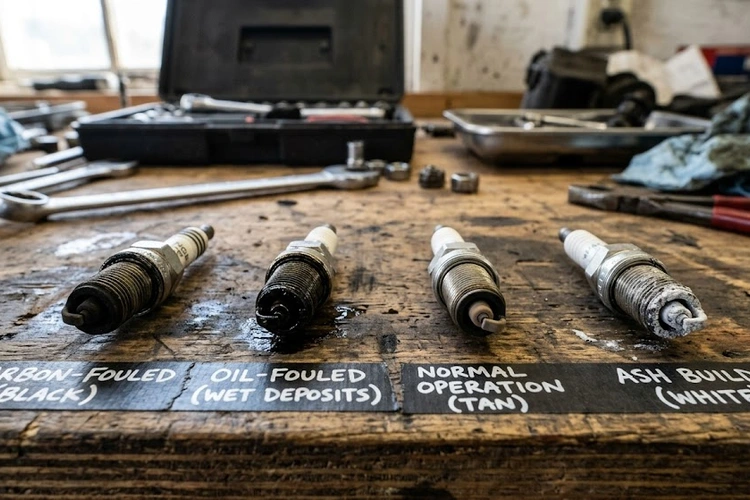
Each type of spark plug fouling leaves a distinct visual clue. A quick look at the plug tip usually narrows down the cause without any special tools.
Carbon fouling is the most common type. The plug tip looks black, dry, and sooty — like it was dipped in charcoal dust.
According to Wikipedia's spark plug overview, carbon deposits form when combustion temperatures stay below the plug's self-cleaning threshold for extended periods.
Oil fouling leaves a wet, dark brown or black oily residue on the electrode. It's a sign that engine oil is sneaking into the combustion chamber.
Fuel fouling means the plug is wet with raw gasoline but no oily residue. It often happens after an engine floods.
Coolant fouling is the most serious type. Deposits look white or light gray, and there's sometimes a sweet smell from the exhaust.
Spark plug fouling is always a symptom of something else. Replacing the plugs without finding the cause just means they'll foul again.
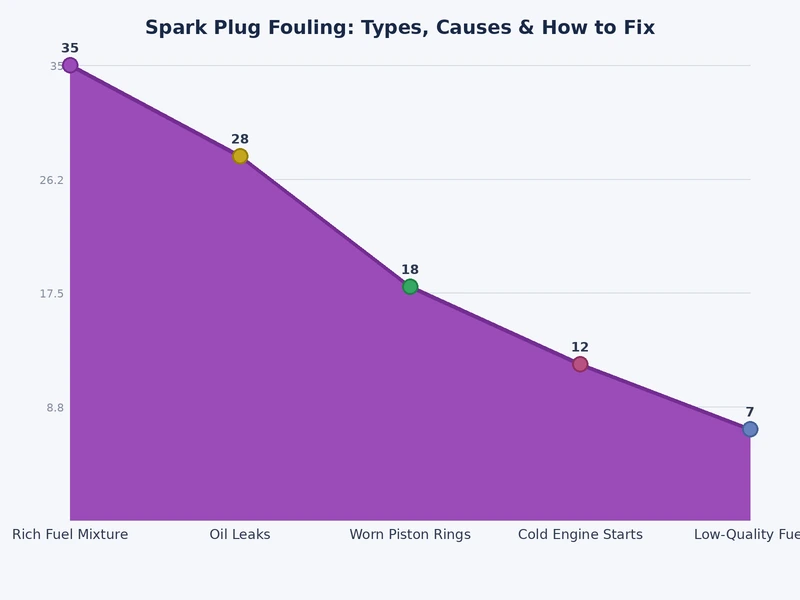
A rich fuel mixture (too much fuel relative to air) is the top cause of carbon spark plug fouling. The excess fuel doesn't burn completely, and the leftover carbon coats the plug.
Note that a P0171 code points to a lean condition — the opposite problem. A rich condition often stores a P0172 code, or sometimes no code at all if the ECU hasn't reached its threshold.
When an engine burns oil, the deposits end up on the spark plugs. Here's what to watch for:
Pro tip: If oil fouling keeps coming back on the same cylinder, that cylinder's piston rings or valve seals may need replacing — new plugs alone won't solve it.
Short trips don't let the engine reach full operating temperature. Carbon deposits accumulate instead of burning off.
Every spark plug has a heat range — a rating for how quickly it transfers heat away from the tip. Installing the wrong plug causes problems in both directions.
Spark plug inspection is a straightforward DIY job on most engines. The right tools make the difference between a clean swap and a broken plug.
| Fouling Type | Visual Appearance | Most Likely Cause | Recommended Action |
|---|---|---|---|
| Carbon | Dry black soot, powdery deposit | Rich mixture, lots of idling | Fix mixture issue, replace plugs |
| Oil | Wet, dark brown/black oily coat | Worn rings or valve seals | Compression test, seal inspection |
| Fuel (Wet) | Wet with raw fuel, no oil | Flooded engine, failed coil | Check ignition system first |
| Coolant | White or light gray, sweet smell | Head gasket failure | Immediate professional inspection |
A car that still shakes at low speed after a plug replacement likely has a secondary issue — a faulty coil-on-plug unit or a clogged fuel injector are the next things to check.
The cost range is wide. It depends on whether the plugs are the whole problem or just a symptom of something larger.
Most DIYers handle a 4-cylinder swap in under an hour for $30–$60 in parts.
If spark plug fouling keeps recurring, the underlying issue needs to be addressed. An engine pinging noise after plug replacement is a strong signal that the cause wasn't the plugs alone.
| Root Cause | Typical Repair Cost | DIY Friendly? |
|---|---|---|
| Faulty oxygen sensor | $150–$300 | Yes, moderate skill |
| Clogged air filter | $20–$50 | Yes, easy |
| Failed ignition coil | $150–$350 per coil | Yes, moderate skill |
| Worn valve stem seals | $500–$1,200 | No, shop job |
| Worn piston rings | $1,500–$4,000 | No, major engine work |
| Blown head gasket | $1,500–$3,000 | No, shop job |
For a standard 4-cylinder or inline-6 engine with easily accessible plugs, DIY is the practical choice. A few situations call for a professional:
A few persistent myths lead people to waste money or miss the real fix. Here's what the evidence actually shows.
Sandblasting or wire-brushing a fouled plug removes loose deposits. But it doesn't restore the original gap geometry, and it can't fix micro-cracks in the ceramic insulator. Most mechanics recommend replacing fouled plugs rather than cleaning them — new iridium plugs are cheap relative to the labor of pulling them again.
Premium fuel has a higher octane rating, not a cleaner-burning additive formula. It doesn't prevent carbon buildup caused by a rich mixture or oil consumption. Fuel grade is determined by engine compression ratio — it's not a maintenance solution for fouling.
New plugs fix the symptom, not the cause. If worn valve seals or a bad injector are feeding oil or excess fuel into the cylinder, replacement plugs will foul at the same rate. A rough idle or misfire that returns within a few thousand miles is a clear sign the root cause wasn't addressed.
Modern direct-injection engines are actually more prone to certain types of carbon buildup. Because fuel is injected directly into the cylinder (bypassing the intake valves), carbon accumulates on valve stems without fuel washing it away. Turbocharged engines also see higher rates of oil fouling due to the demands placed on piston rings and seals.
The most reliable clues are engine behavior: rough idle, misfires, poor fuel economy, or hesitation under acceleration. An OBD2 scanner showing P0300–P0308 misfire codes pinpoints which cylinder is affected. Removing and visually inspecting the plugs is still the definitive check — but symptom patterns point strongly to fouling before any tools come out.
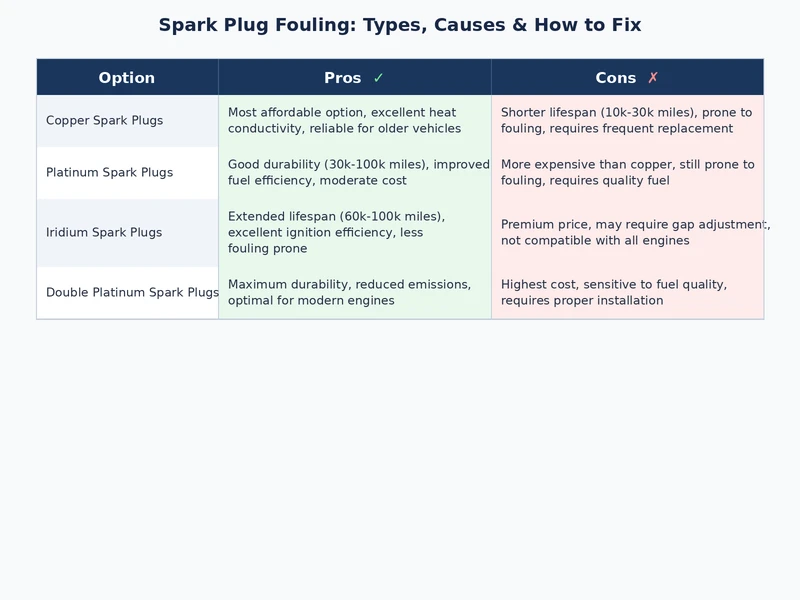
Copper plugs typically last 20,000–30,000 miles. Platinum plugs reach 60,000–100,000 miles. Iridium plugs can last up to 100,000–120,000 miles under normal conditions. Engines with oil consumption issues or lots of short-trip driving should err toward the shorter end of those ranges, regardless of plug type.
Yes. Fouled plugs cause misfires, and the engine control unit detects those misfires via the crankshaft position sensor. Once the misfire rate crosses a threshold, the ECU stores a code and triggers the check engine light. P0300 indicates a random misfire; P0301 through P0308 identify specific cylinders.
Driving style has a significant impact. Frequent short trips, lots of idling, and low-load city driving keep combustion temperatures low, which accelerates carbon buildup. Occasional highway driving at sustained speeds helps burn off deposits and extends plug life. It's one of the few cases where aggressive driving is actually easier on a component.
A worn plug has eroded electrodes and an increased gap from normal use over time — it fires weakly but isn't coated in deposits. A fouled plug has contamination on the tip that prevents a spark from forming at all, regardless of gap size. Both cause misfires, but the fix is different: a worn plug just needs replacement, while a fouled plug signals an underlying engine issue that also needs attention.
Yes, if left uncorrected. Persistent misfires send unburned fuel into the exhaust stream, which damages the catalytic converter over time. Coolant fouling, if ignored, leads to overheating and potential engine seizure. Oil fouling that stems from worn rings or seals will continue to worsen, increasing oil consumption and eventually requiring expensive internal engine repairs.
Spark plug fouling is never just a plug problem — it's the engine's way of telling you something upstream needs attention.
 |
 |
 |
 |

About Sarah Whitfield
Sarah Whitfield is a diagnostics and troubleshooting specialist who spent ten years as an ASE-certified technician before joining the editorial team. She specializes in OBD-II analysis, electrical gremlins, and the kind of intermittent problems that make most owners give up.
Get some FREE car parts & gear.. Or check out the latest free automotive manuals and build guides here.
Disable your ad blocker to unlock all the hidden deals. Hit the button below 🚗
| | | |
