by Sarah Whitfield
Nearly 1 in 5 steering-related complaints filed with the National Highway Traffic Safety Administration (NHTSA) involve power steering stiffness or failure — yet most drivers ignore the early warning signs until the problem becomes a genuine safety hazard. When steering feels heavy, the system is signaling that something has gone wrong, and acting early keeps repair costs manageable.
Heavy steering isn't just an inconvenience. It reduces vehicle control at low speeds, in tight parking situations, and during emergency maneuvers. The causes range from something as simple as underinflated tires to more serious problems like a failing power steering pump or worn-out suspension components.
This guide covers the most common reasons steering feels heavy, how to pinpoint the cause at home, and what each fix actually costs. For a full symptom-based breakdown, browse the steering feels heavy causes category page.

Contents
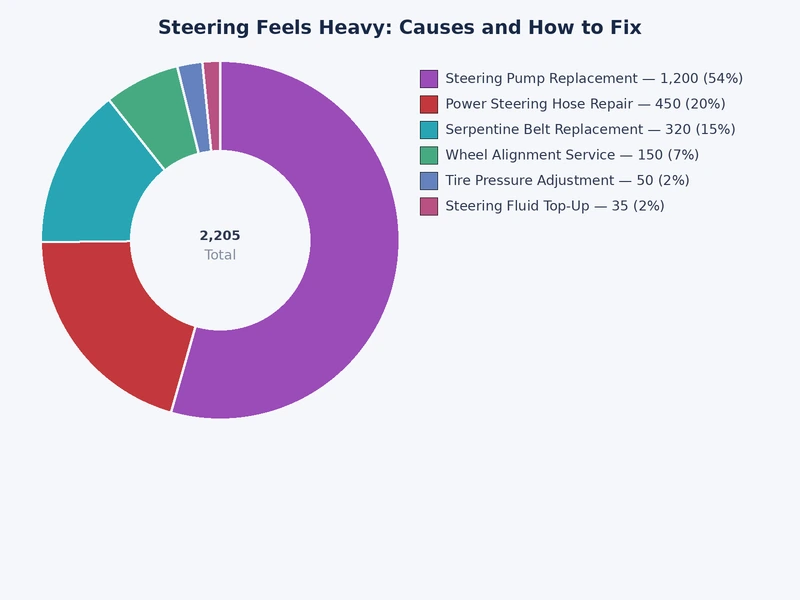
Steering resistance doesn't appear without reason. There's always a mechanical or electronic failure behind it. Understanding which system is involved narrows the fix considerably.
Most older vehicles use a hydraulic power steering (HPS) system — an engine-driven pump that pressurizes fluid to assist steering input. When any part of this circuit fails, steering becomes noticeably heavier.
Newer vehicles use an electric power steering (EPS) motor in place of hydraulic fluid. These systems are more efficient but have distinct failure modes that produce the same heavy-steering symptom.
Pro tip: On EPS-equipped vehicles, an intermittent steering warning light paired with heavy steering almost always points to a torque sensor or module fault — run a diagnostic scan before replacing any parts.
Even a fully functional power steering system can feel stiff if the suspension components are worn or the wheels are misaligned. This connection is easy to overlook during diagnosis.
Before scheduling a shop visit, a few simple checks can identify the most common causes in under 10 minutes. These cost nothing and rule out the obvious before spending on labor.
Underinflated tires are the most overlooked cause of heavy steering — and the easiest fix. When pressure drops significantly, the contact patch widens, rolling resistance increases, and turning becomes noticeably harder, especially in parking lots.
On hydraulic systems, checking the reservoir takes about 30 seconds. It's typically a translucent plastic tank near the engine, marked with MIN and MAX lines.
Warning: Topping off power steering fluid without finding the leak is a temporary fix — the leak will worsen, and running the pump dry causes expensive internal damage fast.
On hydraulic systems, the power steering pump is driven by the serpentine belt. A glazed, cracked, or worn belt can slip under load and reduce pump output enough to cause noticeably heavy steering during sharp turns.
Once the basic checks are done, a structured diagnostic approach confirms the root cause before any money is spent on parts.
| Cause | DIY Cost (parts only) | Shop Cost (parts + labor) | Difficulty |
|---|---|---|---|
| Tire inflation | Free–$5 | Free–$15 | Easy |
| PS fluid top-off | $8–$15 | $20–$40 | Easy |
| PS fluid flush | $15–$30 | $80–$150 | Moderate |
| Serpentine belt replacement | $25–$75 | $100–$200 | Moderate |
| Power steering pump | $80–$200 | $250–$600 | Difficult |
| Steering rack replacement | $200–$500 | $600–$1,200 | Very difficult |
| Tie rod ends | $30–$100 | $150–$350 | Moderate |
| EPS motor or module | $150–$500 | $400–$1,000 | Difficult |
| Wheel alignment | N/A | $80–$150 | Shop only |
Several steering repairs are comfortably within DIY territory. Others require specialized tools, alignment equipment, or module reprogramming that only a shop can provide.
Heavy steering can sometimes point to broader drivetrain strain. Drivers who notice a drop in fuel efficiency alongside stiff steering should consider whether a binding pump or worn suspension is putting extra load on the engine — a scenario covered in the guide to sudden fuel economy drops.
A few common habits accelerate steering system wear or disguise the real problem. Avoiding these keeps repair bills significantly lower over the long run.
Running a hydraulic power steering system with insufficient fluid is one of the fastest ways to destroy an expensive pump. PS fluid doesn't just transmit pressure — it also lubricates moving parts inside the pump itself. Without adequate lubrication, metal-on-metal contact causes rapid internal wear.
Any time a tie rod, ball joint, or strut is replaced, wheel geometry shifts. Driving without realigning puts uneven loads on steering components, accelerates tire wear, and can make steering feel off-center or heavier on one side.
Not all power steering fluids are interchangeable. Using an incompatible type degrades internal seals, causes foaming, and reduces system pressure — all of which progressively worsen steering feel over time.
 |
 |
 |
 |

About Sarah Whitfield
Sarah Whitfield is a diagnostics and troubleshooting specialist who spent ten years as an ASE-certified technician before joining the editorial team. She specializes in OBD-II analysis, electrical gremlins, and the kind of intermittent problems that make most owners give up.
Get some FREE car parts & gear.. Or check out the latest free automotive manuals and build guides here.
Disable your ad blocker to unlock all the hidden deals. Hit the button below 🚗
| | | |
