by Sarah Whitfield
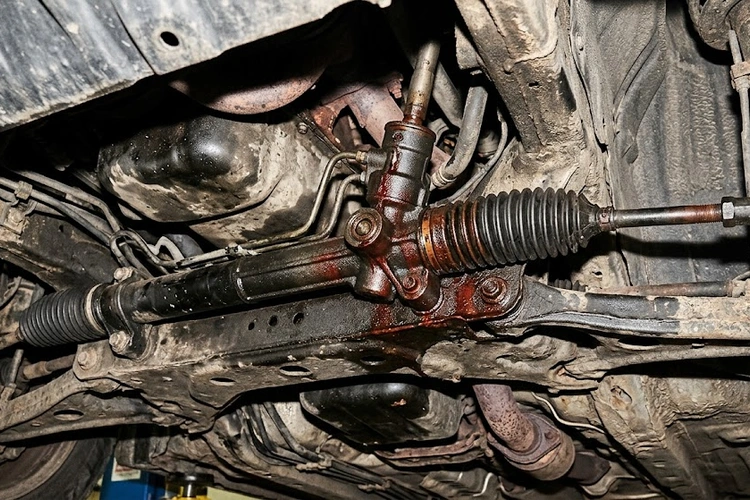
Is your steering wheel suddenly heavy to turn, or have you spotted a reddish-brown puddle forming under the front of your car? Those are textbook steering rack leak symptoms — and catching them early is the difference between a $300 seal repair and a $1,500 full replacement. The rack-and-pinion unit is the core of your steering system, and when its internal seals start failing, both performance and safety degrade quickly.
This guide walks you through every warning sign, shows you how to confirm the leak source, breaks down real replacement costs by vehicle type, and helps you decide whether a repair, reseal, or full replacement is the right call.
Contents
A leaking rack rarely fails without warning. It sends a sequence of signals — from a faint whine on cold starts to a visible puddle in your driveway — that follow a predictable pattern. Knowing what each symptom means lets you act before a manageable leak turns into a major repair.
Power steering fluid is the most direct evidence of a rack leak. Here's how to read it:
If you're unsure whether the leak is coming from the steering rack or another component, the same clean-cardboard-overnight technique used for tracing an oil leak after an oil change works well here — place a clean sheet under the front axle, run the car briefly, then map the drip pattern.
As fluid escapes, hydraulic assist weakens. You'll notice a shift in how the wheel responds:
Low fluid makes the power steering pump work harder, and it tells you about it audibly:
If the noise seems to originate from higher in the column rather than from the rack area itself, see steering column making noise for a breakdown of column-specific failure modes.
Pro tip: With the engine running, slowly turn the wheel from lock to lock and listen for a whine that intensifies as you approach full stop — that sound is a near-certain indicator of low power steering fluid caused by a rack seal leak.
Confirming that the rack — and not the pump, pressure hose, or return line — is the actual source takes a methodical approach. Misdiagnosing this step is expensive.
A UV fluorescent dye added to the power steering reservoir makes locating a seeping leak significantly faster — even a pinhole shows up clearly under a UV light where a visual inspection might miss it entirely.
The same clean-and-observe methodology applies when diagnosing a transfer case fluid leak — systematic elimination of each potential source is more reliable than guessing.
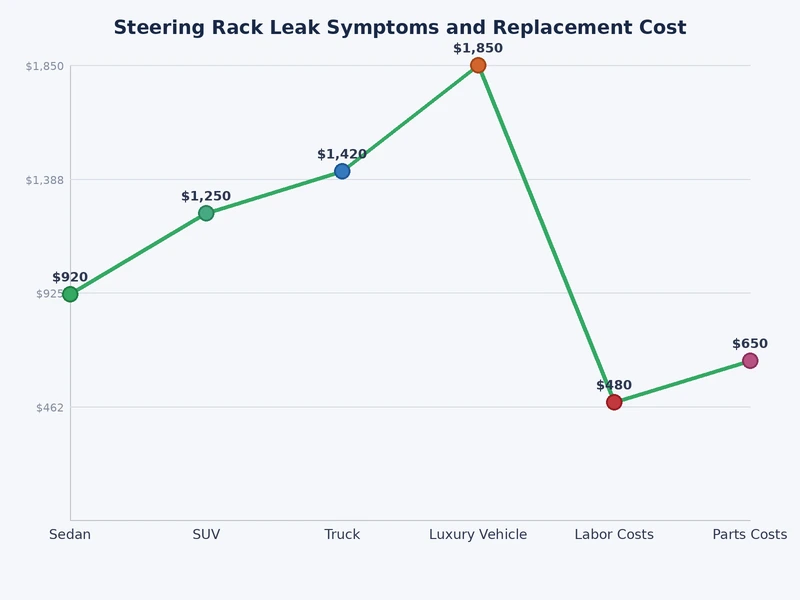
Few front-end repairs generate more sticker shock than a full rack replacement. The range is wide, but understanding what drives the cost helps you evaluate quotes accurately and avoid unnecessary upsells.
| Vehicle Segment | Parts Cost (Rack Only) | Labor Cost | Total Estimate |
|---|---|---|---|
| Economy / Compact (e.g., Honda Civic, Toyota Corolla) | $150–$350 | $200–$350 | $350–$700 |
| Midsize Sedan / SUV (e.g., Honda Accord, Toyota Camry) | $250–$500 | $250–$450 | $500–$950 |
| Truck / Full-Size SUV (e.g., Ford F-150, Chevy Tahoe) | $350–$700 | $300–$500 | $650–$1,200 |
| European / Luxury (e.g., BMW 3 Series, Audi A4) | $600–$1,400 | $400–$700 | $1,000–$2,100 |
| Estimates based on U.S. shop rates. Dealer pricing typically runs 20–30% higher than independent shops for the same parts and labor. | |||
Always collect at least two quotes before authorizing rack replacement. Price variation between a dealership, a chain shop, and a well-reviewed independent mechanic can reach $400 or more for an identical job.
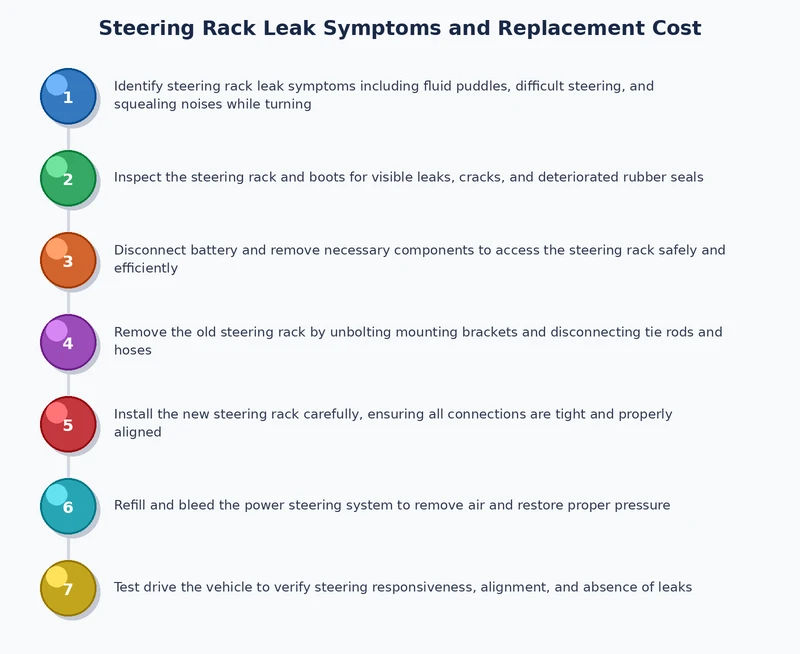
Not every leaking rack needs to come out. The right fix depends on where the leak is, how severe it is, and the overall condition of the surrounding components. Working through these options systematically will save you money without compromising safety.
A seal-only repair is a viable option when:
Some shops offer a rack reseal service: the rack is removed, disassembled, fitted with a new seal kit, and reinstalled. This typically runs $250–$500 all-in — a reasonable middle ground when the rack body is structurally sound.
Power steering stop-leak additives are a short-term measure only. They may slow minor seepage for a few weeks, but they won't restore a failing inner seal or compensate for a cracked housing. Use them strictly to buy time until a proper repair can be scheduled.
Full rack replacement is the better long-term call when:
On the long-term economics: a remanufactured rack with a one-year parts warranty typically costs $250–$600 for most domestic vehicles. Even on a high-mileage car, steering is a safety-critical system where a short-term repair that fails at speed carries real consequences. Factor that risk into the decision.
The most cost-effective approach to steering rack leaks is preventing them from developing in the first place. Power steering systems are low-maintenance by design — but low-maintenance is not the same as no-maintenance.
Several driving and maintenance habits directly affect how long your rack seals hold:
Vehicles equipped with electric power steering (EPS) don't use hydraulic fluid, so this specific failure mode doesn't apply. On EPS-equipped cars, you're more likely to encounter motor, sensor, or control module issues than fluid-related symptoms.
Short distances are possible if the fluid level is still adequate and the steering feels normal, but it's not a safe long-term situation. As fluid continues to escape, power assist weakens and the pump risks running dry — which causes its own damage. If steering feels heavy or the reservoir is visibly low, stop driving and have the vehicle inspected promptly.
Most units last between 100,000 and 150,000 miles under normal conditions. Road salt exposure, infrequent fluid maintenance, and repeated full-lock steering maneuvers can shorten that range considerably. Vehicles in northern climates with heavy winter road treatment tend to see earlier seal failures.
Power steering fluid is typically clear to light red or amber — similar in appearance to automatic transmission fluid, which some vehicles actually use in their power steering systems. It's thin, slick, and oily. You'll generally find it pooling beneath the front axle area, toward the center of the vehicle where the rack is mounted.
Factory bumper-to-bumper warranties cover the rack during the initial coverage period, typically 3 years or 36,000 miles on most domestic vehicles. Powertrain-only warranties may not include it. Extended service contracts vary significantly — check your specific contract for steering component coverage language before authorizing out-of-pocket repairs.
 |
 |
 |
 |

About Sarah Whitfield
Sarah Whitfield is a diagnostics and troubleshooting specialist who spent ten years as an ASE-certified technician before joining the editorial team. She specializes in OBD-II analysis, electrical gremlins, and the kind of intermittent problems that make most owners give up.
Get some FREE car parts & gear.. Or check out the latest free automotive manuals and build guides here.
Disable your ad blocker to unlock all the hidden deals. Hit the button below 🚗
| | | |
