by Sarah Whitfield
When the steering wheel pulls to one side when braking, it almost always means one side of the brake system is generating more stopping force than the other. That imbalance is what tugs the wheel. The fix depends on which part is causing the unequal friction — but most cases are diagnosable at home with basic tools.
This kind of pull isn't a minor annoyance. It reduces stopping control and increases the risk of losing directional stability in an emergency stop. Drivers dealing with related brake issues should also check the guide on brake pedal goes to floor, which covers what happens when brake pressure disappears entirely during a stop.
Contents
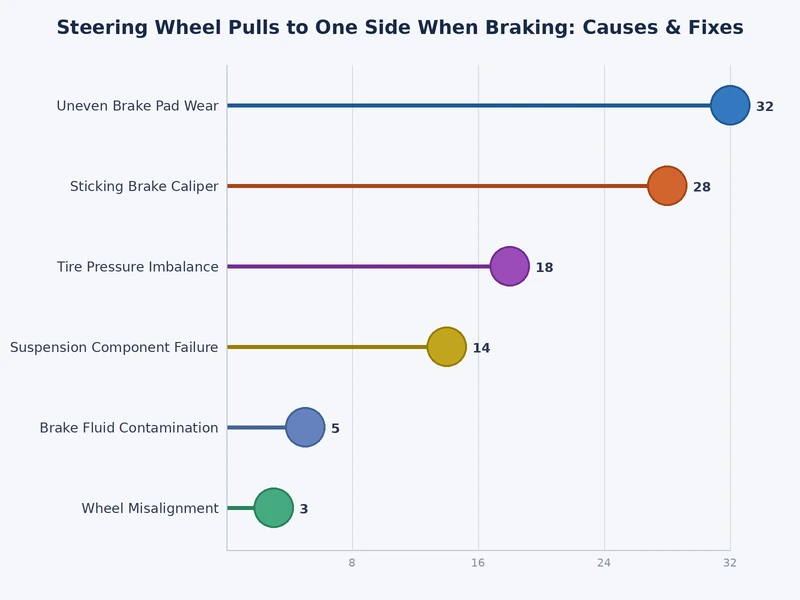
The brake system relies on equal clamping force on both sides of the axle. The moment one side grips harder — or barely grips at all — the car steers toward the stronger side. Understanding what disrupts that balance is the first step.
The brake caliper (the hydraulic clamp that squeezes the pads against the spinning rotor) is the most common source of brake pull. It can fail in two directions:
Telltale signs of a stuck caliper include a burning smell after driving, a wheel that's noticeably hotter than the others, and uneven pad wear when the old pads are removed. The caliper piston or its guide pins (called slide pins) are usually to blame.
Brake pads on one side of an axle can wear down faster than the other. Thinner pads generate less friction, creating an imbalance. Common reasons for uneven wear include:
This issue tends to develop slowly. The pull might be barely noticeable at first, then gradually get worse as the difference in pad thickness grows.
The brake rotor (the large metal disc the pads clamp onto) can warp from excessive heat or develop uneven corrosion from sitting in moisture. Either condition creates inconsistent friction across the disc's surface. For a detailed look at how rotor rust develops and when it becomes a real concern, the guide on brake rotor surface rust covers it thoroughly.
A few other issues can cause or mimic brake pull:
Quick tip: Check tire pressure on all four tires before diagnosing the brakes. A difference of more than 5 PSI across the front axle can cause noticeable drift during braking and is easily mistaken for a brake problem.
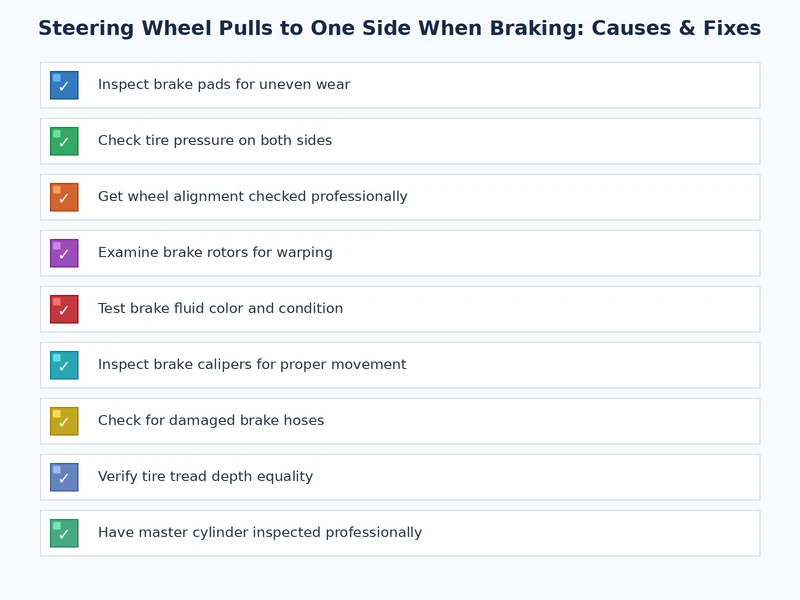
Systematic diagnosis prevents wasted money on parts that aren't the problem. Start with the cheapest and easiest checks, then move deeper.
Before any driving test, do a quick walkaround:
A structured road test narrows the diagnosis considerably:
The brake master cylinder is worth inspecting during this process. A failing master cylinder can deliver unequal hydraulic pressure to each side of the system, causing pull that gets worse as the pedal is held down.
The right fix depends entirely on the diagnosis. Applying the wrong solution wastes money and time.
If the rear parking brake cable is corroded or won't fully release, it can cause rear-wheel drag that mimics front brake pull. The guide on parking brake cable seized covers how to diagnose and free a stuck cable.
| Cause | Key Symptom | Typical Fix | DIY Parts Cost |
|---|---|---|---|
| Seized brake caliper | Strong pull, burning smell, hot wheel hub | Replace caliper (axle pair) | $80–$200 |
| Stuck caliper slide pin | Gradual pull, uneven pad wear | Clean and lubricate pins | $10–$25 |
| Uneven brake pads | Mild pull, squealing noise | Replace pads (axle pair) | $30–$80 |
| Warped or corroded rotor | Pull with steering wheel pulsation | Machine or replace rotors | $20–$120 |
| Collapsed brake hose | Pull that shifts with pedal pressure | Replace brake hose | $15–$45 |
| Seized parking brake cable | Rear drag, pull when releasing brake | Free or replace cable | $15–$50 |
| Tire pressure mismatch | Mild drift during braking only | Inflate to door-jamb spec | $0 |
The character of the pull — how strong it is, when it happens, and whether it's consistent — tells a lot about the underlying cause. Paying attention to these details before the repair saves time.
Pro insight: A pull that changes direction or intensity depending on how hard the brake pedal is pressed often points to a collapsed rubber brake hose rather than a stuck caliper — the hose acts as a pressure valve that behaves differently under varying load.
Brake pull is largely preventable. Consistent maintenance keeps both sides of the system working equally, which extends the life of the pads, rotors, and calipers.
One often-overlooked rule: always use the same pad and rotor brand on both sides of an axle. Even minor differences in friction material between manufacturers can introduce subtle imbalances that cause pull over time.
Sometimes the steering wheel still pulls to one side when braking even after a brake service. That's a signal something was overlooked during the repair.
It depends on severity. A mild, gradual pull may be manageable for short local trips, but a hard yank that requires corrective steering is a safety hazard. Any brake pull reduces directional control during emergency stops. Drivers dealing with strong pull should avoid highway speeds and schedule a brake inspection as soon as possible.
A pull to the left during braking usually means the right side is generating less braking force (weak caliper, thin pads) or the left side has excess drag (seized caliper, dragging pad). The car moves toward the side with more braking force. A road test followed by a visual inspection of both front calipers and pads should narrow it down quickly.
Alignment causes pulling while driving straight or cruising — not specifically during braking. If the pull only appears when the brakes are applied and disappears the moment the pedal is released, alignment is not the cause. Brake-only pull points to the brake system or to suspension components that flex under braking load.
Cost ranges widely depending on the cause. Cleaning and lubricating stuck slide pins costs under $25 in parts. Replacing a brake caliper pair runs $150–$400 in parts. A full front brake job (pads, rotors, calipers) can reach $600–$900 at a shop. Starting with the simplest and cheapest diagnosis steps avoids unnecessary parts replacement.
Hard braking amplifies any imbalance in the system. A slightly warped rotor or marginally uneven pads may not create enough pull at low deceleration rates to be noticeable. Under hard braking, the same small difference in friction generates a much larger directional force, making the pull obvious. Worn suspension bushings can also flex under maximum braking load and cause speed-sensitive pull.
Calipers commonly last between 75,000 and 100,000 miles under normal conditions. Corrosion from road salt, infrequent braking, and lack of maintenance (dirty slide pins, degraded dust boots) shorten that lifespan significantly. Vehicles in cold-weather regions with heavy road salt use tend to see caliper issues earlier. Regular slide pin cleaning extends caliper life considerably.
Yes — a collapsed brake hose is one of the most commonly missed causes of brake pull. The deteriorated inner lining of the hose can flap like a one-way valve, allowing pressure in but not back out. The caliper stays partially engaged even after the pedal is released. The symptoms match a stuck caliper almost exactly, which is why the hose should always be inspected when a new caliper doesn't resolve the pull.
A steering wheel that pulls to one side when braking is the car's way of flagging a brake imbalance that only gets worse if ignored. Start with tire pressure, move to a visual caliper and pad inspection, and use the pull pattern itself as a diagnostic clue. Most causes — sticky slide pins, worn pads, a failing caliper — are within reach of a home mechanic with basic tools, and the fixes are far cheaper when caught early rather than after the problem causes rotor or suspension damage.
 |
 |
 |
 |

About Sarah Whitfield
Sarah Whitfield is a diagnostics and troubleshooting specialist who spent ten years as an ASE-certified technician before joining the editorial team. She specializes in OBD-II analysis, electrical gremlins, and the kind of intermittent problems that make most owners give up.
Get some FREE car parts & gear.. Or check out the latest free automotive manuals and build guides here.
Disable your ad blocker to unlock all the hidden deals. Hit the button below 🚗
| | | |
