by Sarah Whitfield
Have you ever heard a clunking or rattling sound from beneath your vehicle as you drive over a pothole or navigate a sharp curve, and wondered what that noise could mean? That sound is often one of the earliest sway bar link symptoms, and the encouraging news is that this is a diagnosable, manageable problem when you catch it early. Sway bar links — also called stabilizer bar links — are the short connecting rods that join the sway bar (the metal anti-roll rod that spans the full width of your vehicle) to the suspension assembly on each wheel. When these links wear out, they produce recognizable warning signs that affect your vehicle's handling, stability, and overall safety. This guide walks you through every aspect of the problem, from identification and diagnosis to repair costs and prevention, so you can make a fully informed decision. If your vehicle also shows broader signs of suspension trouble, our article on bad strut symptoms explains how multiple components interact within the same system.
Contents
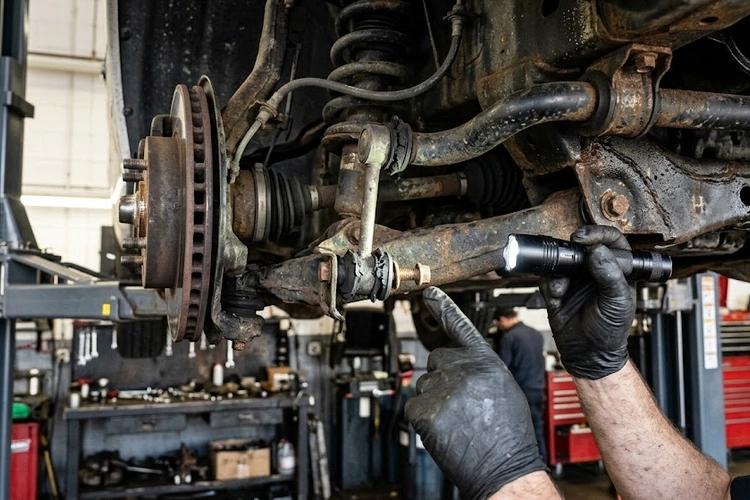
The anti-roll bar — commonly called a sway bar or stabilizer bar — is a metal rod that connects the left and right sides of your vehicle's suspension along a single axle. Its primary purpose is to resist body roll, which is the leaning sensation you feel when you take a sharp turn at speed. When one wheel rises over a bump, the sway bar transfers a portion of that upward force to the opposite wheel, keeping the vehicle level and the tires planted on the road surface.
Sway bar links are the short connecting rods that attach each end of the sway bar to the suspension's control arms or strut assemblies. Each link typically consists of:
Without functioning links, the sway bar cannot transmit force effectively across the axle, and your vehicle's cornering behavior becomes unreliable and potentially hazardous.
Sway bar links fail for several well-documented reasons, most of which relate to accumulated exposure and mileage rather than any single dramatic event:
Unusual sounds are almost always the first sway bar link symptoms that vehicle owners notice, and they are worth treating as a meaningful signal rather than background noise. You may hear one or more of the following depending on how far the wear has progressed:
If you experience shaking or vibration in addition to these sounds, our article on car shakes when turning can help you determine whether multiple suspension components are contributing to the problem at the same time.
Beyond noise, worn sway bar links directly affect your vehicle's behavior on the road, and these handling changes represent the more serious dimension of the problem:
| Symptom | Most Likely Cause | Urgency Level |
|---|---|---|
| Clunking or knocking over bumps | Worn or loose ball joint on the link | Moderate — inspect within two weeks |
| Rattling during sharp turns | Bushing degradation or excessive link play | Moderate — schedule inspection soon |
| Squeaking at low speeds | Dried or cracked rubber bushing | Low-to-moderate — monitor closely and inspect |
| Excessive body roll in corners | Severely worn or disconnected link | High — repair promptly to restore stability |
| Vehicle pulling to one side | Single failed link causing suspension imbalance | High — safety concern, repair soon |
| Metal-on-metal grinding sound | Fully separated link with bare metal contact | Critical — do not continue driving |
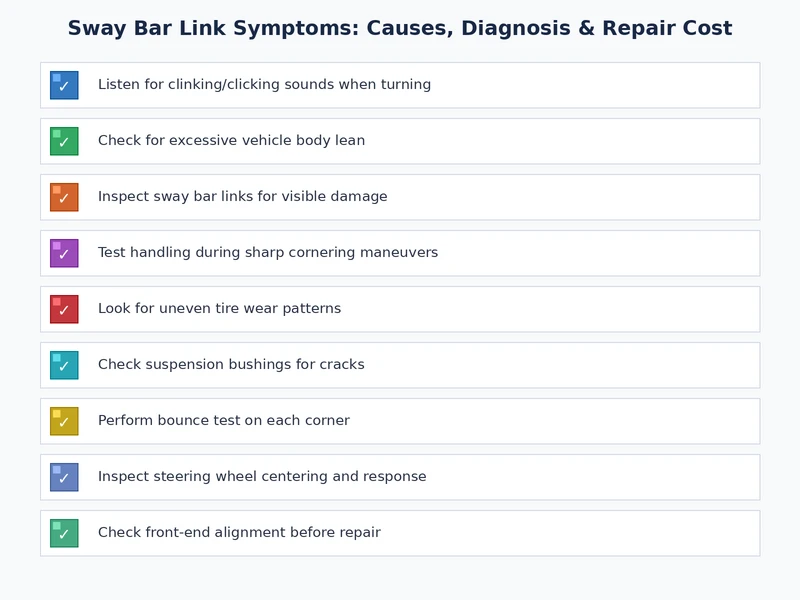
Regular inspection is the most cost-effective strategy for catching sway bar link wear before it progresses to a full failure that affects your safety. Follow this inspection procedure on a consistent schedule:
Pro tip: The ideal time to inspect your sway bar links is when your tires are already removed for rotation — you gain unobstructed access to the links and can identify wear that would otherwise remain hidden behind the wheel assembly.
The conditions in which you drive play a significant role in determining how quickly sway bar links degrade, and understanding these factors allows you to adjust your inspection frequency accordingly:
Replacing sway bar links is among the more accessible suspension repairs for a capable home mechanic, but there are meaningful trade-offs to evaluate honestly before deciding to proceed without professional assistance.
Potential advantages of a DIY approach:
Potential disadvantages of a DIY approach:
The skill level required for sway bar link replacement is comparable to other suspension service tasks; if you have already reviewed our guide on bad ball joint symptoms and the associated repair procedures, you will find that the approach follows a similar progression of steps.
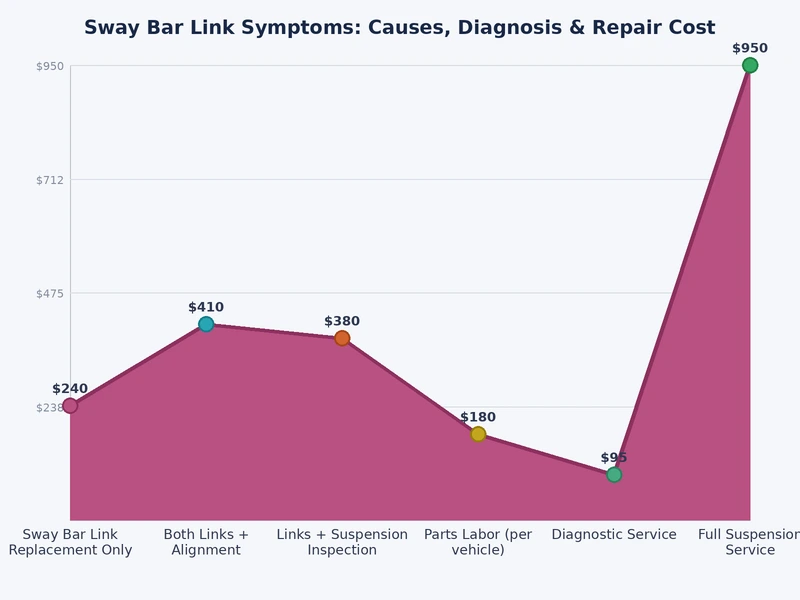
When you choose to have a professional technician perform the repair, you can expect the following cost structure at most independent repair shops and dealerships:
Addressing sway bar link symptoms promptly also prevents secondary damage to adjacent components such as control arm bushings and tie rod ends, which are considerably more expensive to repair when stress is transferred to them from a failed link over an extended period.
Several persistent myths surround sway bar links, and accepting them as fact can lead to delayed repairs and avoidable risk. Here are the most common misconceptions alongside the evidence that counters them:
The consequences of delaying a sway bar link repair extend well beyond increased noise or a minor deterioration in ride quality. As the worn link continues to move excessively, it transfers stress to adjacent suspension and steering components that were not engineered to absorb that additional load over time. What begins as a straightforward link replacement can evolve into a more costly repair involving control arms or inner tie rod ends if the problem is left unaddressed across many thousands of miles. For a broader overview of how interconnected suspension failures develop and compound, the CarCareTotal maintenance library provides an organized reference that covers multiple symptoms and their underlying causes in one place.
You can continue driving with a worn sway bar link for a limited period — typically days to a few weeks — if the link is loose but not fully separated and your vehicle's handling remains reasonably stable. However, driving with a completely separated link is not considered safe, because the sway bar is free to shift and body roll during cornering increases significantly. You should schedule a repair as soon as you identify the problem and avoid high-speed driving or sharp turns in the meantime.
A bad sway bar link most commonly produces a clunking or knocking sound when you drive over bumps, speed bumps, or uneven pavement, and a rattling noise during sharp turns. When the rubber bushings are the primary component that has failed rather than the ball joints, you may hear squeaking at low speeds instead of clunking. In the most advanced stage of wear, where the link has fully separated, a louder banging or grinding sound from the undercarriage becomes audible even on smooth road surfaces.
Yes, a failed sway bar link on one side of an axle can create a suspension imbalance that causes your vehicle to drift or pull toward the side where the link has failed. This occurs because the sway bar can no longer distribute body roll forces evenly across both sides of the axle. If your vehicle pulls to one side and you also notice clunking or rattling noises, inspecting the sway bar links during the same service visit is a practical way to investigate both symptoms at once.
The total cost to replace sway bar links at an independent repair shop typically falls between $80 and $300 per axle, including both parts and labor. Aftermarket parts generally cost $20 to $80 per link, while OEM links may cost $60 to $150 per link depending on the vehicle. Dealerships tend to charge a premium, with total costs ranging from $250 to $450 per axle. Replacing both links on the same axle in a single appointment is almost always more economical than scheduling two separate visits.
A small clunking link ignored today is a large repair bill and a compromised suspension tomorrow — the moment you recognize the symptom is the moment to act.
 |
 |
 |
 |

About Sarah Whitfield
Sarah Whitfield is a diagnostics and troubleshooting specialist who spent ten years as an ASE-certified technician before joining the editorial team. She specializes in OBD-II analysis, electrical gremlins, and the kind of intermittent problems that make most owners give up.
Get some FREE car parts & gear.. Or check out the latest free automotive manuals and build guides here.
Disable your ad blocker to unlock all the hidden deals. Hit the button below 🚗
| | | |
