by Joshua Thomas
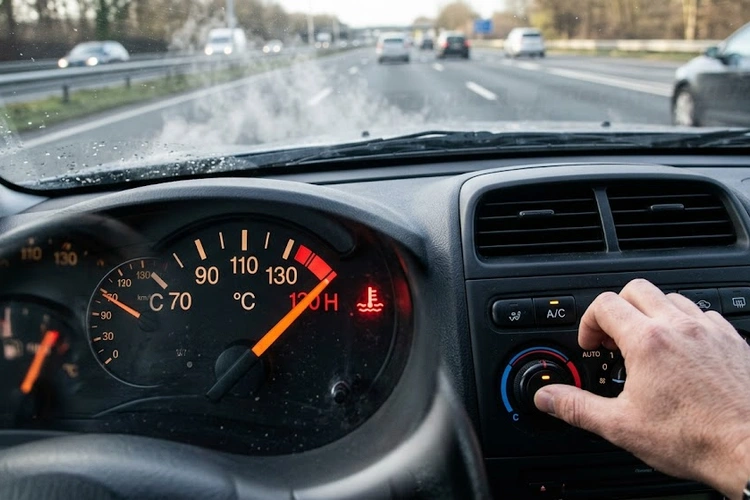
A temperature gauge rising toward the red zone signals engine overheating, and every additional mile driven in that condition accelerates irreversible damage to cylinder heads, gaskets, and pistons. Seven causes account for nearly all overheating events, and each produces distinct warning signs that make accurate diagnosis achievable without specialized tools.
Understanding the full range of temperature gauge rising causes allows drivers to respond decisively rather than attempting roadside remedies that worsen damage instead of preventing it. The sections below cover every major cause, a step-by-step diagnostic process, maintenance that prevents the problem entirely, and the critical mistakes that convert minor cooling system faults into complete engine replacements.
Contents
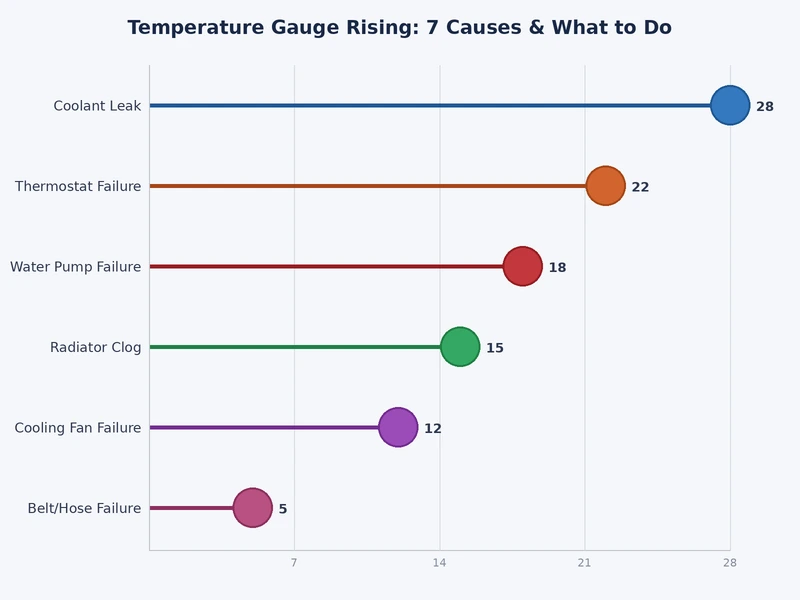
The engine cooling system operates as a closed loop where every component depends on the others, and a failure anywhere in that chain causes coolant temperature to climb rapidly. Each cause below carries specific warning signs that distinguish it from the others before any disassembly is required.
Coolant lost to leaks or gradual evaporation creates air pockets inside the system, and those pockets cause localized hot spots that the temperature gauge registers almost immediately. Drivers typically notice the gauge climbing alongside a faint sweet smell from under the hood or through the cabin vents.
The thermostat controls coolant flow between the engine block and the radiator, and when it sticks in the closed position it traps hot coolant inside the engine with nowhere to dissipate the heat. This is one of the most frequent triggers of a temperature gauge rising rapidly after the engine reaches operating temperature.
Sediment, mineral deposits, and corrosion accumulate inside the radiator core over time, restricting coolant flow and reducing heat dissipation capacity considerably. External leaks from cracked tanks or corroded fins bleed the system dry and cause the temperature gauge to rise under sustained load.
The water pump circulates coolant through the entire system, and a worn impeller or failed bearing causes circulation to drop sharply while engine temperature climbs. A whining or grinding noise near the front of the engine often accompanies pump deterioration, and drivers who also notice serpentine belt symptoms should inspect both components together since the belt drives the pump on many vehicles.
A blown head gasket allows combustion gases into the cooling circuit or permits coolant into the combustion chamber, and either condition destroys the system's ability to regulate temperature. This is the most expensive cause of a temperature gauge rising and demands immediate engine shutdown to prevent total destruction.
Electric cooling fans pull air through the radiator when the vehicle sits at idle or moves slowly in traffic, and a failed fan motor, blown fuse, or defective temperature sensor causes heat to accumulate without adequate airflow. Drivers frequently observe the temperature gauge rising specifically in stop-and-go conditions, while highway speeds temporarily cool the engine through ram airflow alone.
On many vehicles the serpentine belt drives the water pump directly, meaning a snapped or severely worn belt halts coolant circulation and sends temperatures soaring within a matter of minutes. The oil pressure warning light may also activate simultaneously if the belt drives accessories critical to engine lubrication alongside the water pump.
Pro tip: When the temperature gauge and the oil pressure light both activate at the same time, pull over immediately. The engine is facing multiple simultaneous failures that cause irreversible damage within minutes of continued operation.
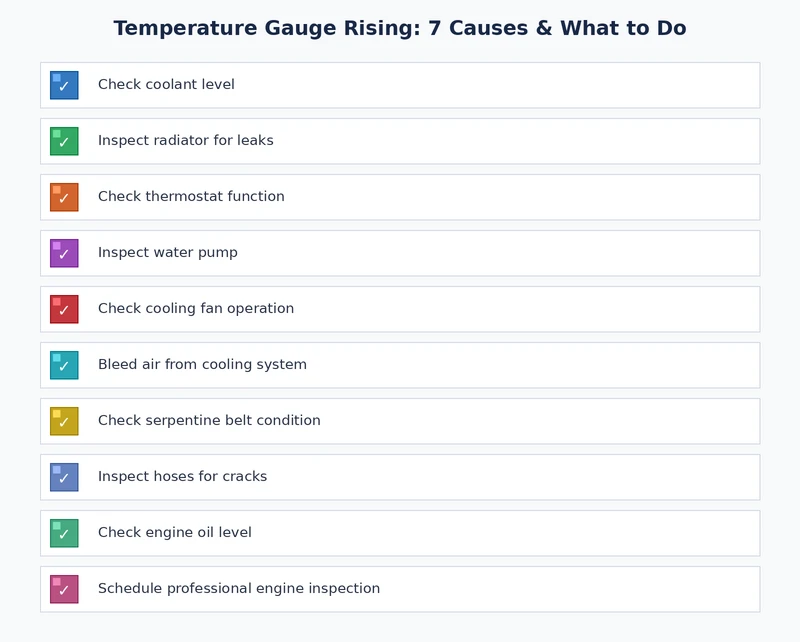
A systematic approach eliminates the most obvious causes before component-level testing begins, and it prevents misdiagnosis that leads to unnecessary parts replacement. All inspection must take place after the engine has cooled completely — at least 30 minutes after shutdown.
Fresh coolant maintains the correct pH balance that protects metal components from corrosion, and degraded coolant turns acidic and attacks the water pump housing, thermostat seat, and radiator passages from within. Flush intervals depend on the coolant type installed in the vehicle.
Catching cooling system wear before it triggers a temperature gauge rising event costs far less than towing fees and the secondary engine damage that overheating inevitably causes. These checks take under fifteen minutes and protect against thousands of dollars in preventable repairs.
The moments immediately after a temperature gauge rising event are critical, and several well-intentioned responses cause damage that dwarfs the original repair cost by a wide margin.
Warning: Pulling over immediately when the temperature gauge reaches the red zone is the single most effective action any driver can take. The difference between a $200 repair and a $4,000 engine rebuild often comes down to those first two minutes of continued driving.
A clear protocol followed calmly at the moment of overheating limits damage to the minimum achievable level and preserves the engine for a straightforward, affordable repair rather than a catastrophic rebuild.
Each cooling system component carries a different repair cost and complexity level, and understanding those trade-offs helps drivers make informed decisions about DIY repair versus professional service. The table below summarizes the essential data for all seven overheating causes at a glance.
| Cause | DIY Difficulty | Average Repair Cost | Risk of Ignoring |
|---|---|---|---|
| Low coolant level | Easy | $15–$40 | High — sustained overheating |
| Thermostat failure | Moderate | $150–$300 | High — rapid overheating at temp |
| Radiator leak or blockage | Moderate | $300–$900 | High — coolant loss under load |
| Water pump failure | Advanced | $400–$800 | Very high — full circulation loss |
| Blown head gasket | Expert only | $1,500–$3,500 | Catastrophic — engine destruction |
| Cooling fan malfunction | Moderate | $200–$600 | High — idle and traffic overheating |
| Serpentine belt failure | Moderate | $100–$250 | Very high — immediate circulation loss |
The data above illustrates that the least expensive repairs carry nearly the same urgency as the most expensive ones — a $15 coolant top-off ignored long enough produces identical catastrophic engine damage to a $3,500 head gasket failure left unaddressed for the same duration.
The first step is switching off the air conditioning and turning the cabin heater to maximum heat, which draws excess heat from the coolant circuit and provides a brief window to reach a safe pullout. Once stopped, the engine should be shut off immediately and left to cool for a minimum of 30 minutes before any part of the cooling system is inspected or touched.
A normal-looking coolant reservoir does not rule out a cooling system failure, because a stuck thermostat, failed water pump, or non-functioning cooling fan can each cause the temperature gauge to rise even when fluid volume is at the correct level. Component function matters just as much as fluid quantity in determining whether the system operates correctly under load.
Aluminum cylinder heads can begin warping within two to five minutes of sustained red-zone operation, while cast iron components tolerate elevated temperatures slightly longer before cracking or seizing internally. The safest protocol treats any red-zone temperature reading as an immediate stop situation without exception or negotiation.
Cooling system component failures cause overheating year-round because the failures stem from mechanical wear rather than ambient temperature, though hot weather reduces the system's margin for error and converts borderline failures into acute crises much faster than cooler conditions. A thermostat stuck closed or a failing water pump causes overheating in winter just as reliably as it does in peak summer heat.
A gauge reading elevated but not yet critical can deteriorate rapidly under stop-and-go traffic, uphill grades, or additional AC load. Driving to a shop under those conditions risks converting a manageable repair into total engine failure, making a tow the far safer and ultimately less expensive choice.
A failed or stuck thermostat is the single most common cause in higher-mileage vehicles, followed closely by a water pump whose impeller loses pumping efficiency gradually as the metal erodes or the shaft bearing wears through normal use. Both are relatively affordable repairs when caught before sustained overheating causes secondary damage to gaskets, heads, or rod bearings.
 |
 |
 |
 |

About Joshua Thomas
Joshua Thomas just simply loves cars and willing to work on them whenever there's chance... sometimes for free.
He started CarCareTotal back in 2017 from the advices of total strangers who witnessed his amazing skills in car repairs here and there.
His goal with this creation is to help car owners better learn how to maintain and repair their cars; as such, the site would cover alot of areas: troubleshooting, product recommendations, tips & tricks.
Joshua received Bachelor of Science in Mechanical Engineering at San Diego State University.
Get some FREE car parts & gear.. Or check out the latest free automotive manuals and build guides here.
Disable your ad blocker to unlock all the hidden deals. Hit the button below 🚗
| | | |
