by Sarah Whitfield
Water in engine oil is a serious problem — and it demands immediate attention. The milky, frothy residue on a dipstick or oil cap means contamination has already begun, and continued operation accelerates engine damage fast.
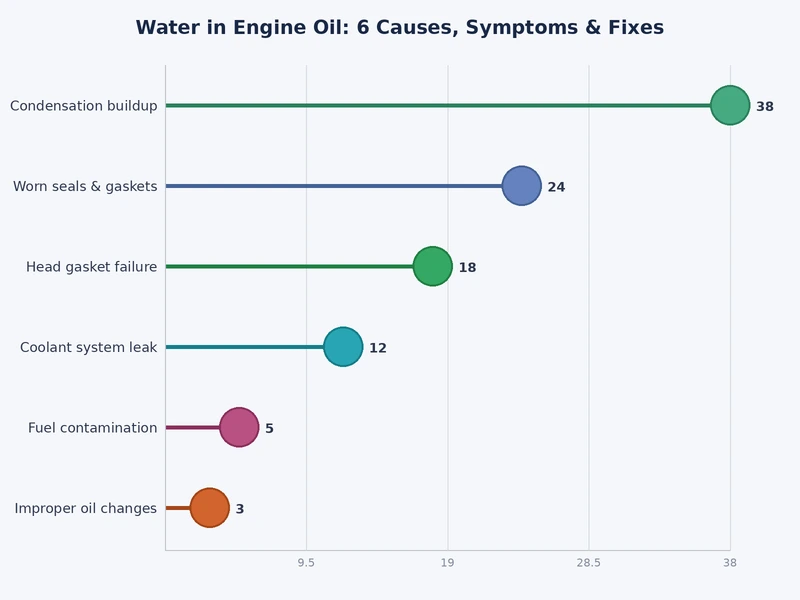
The fix depends entirely on the cause. A blown head gasket calls for a completely different approach than simple condensation buildup — and confusing the two costs time and money. This guide covers the six most common causes of water in engine oil, the symptoms that confirm it, and the correct repair path for each scenario. For a broader look at related issues, see the water in engine oil causes category page.
Contents
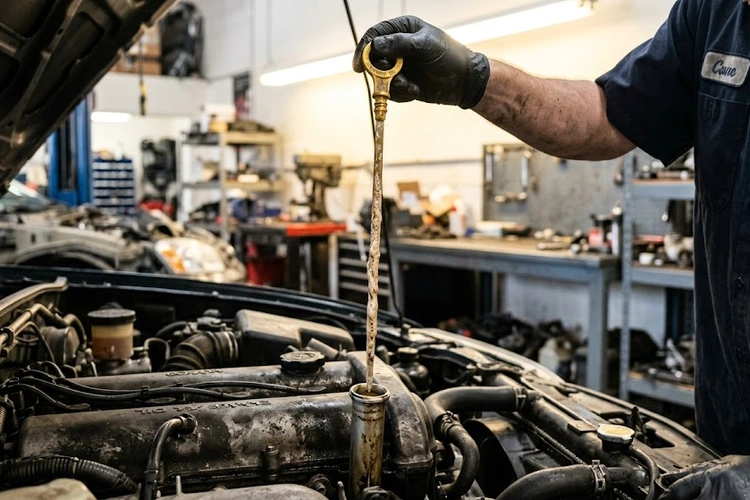
The fastest confirmation costs nothing. Pull the dipstick and inspect the oil. Healthy oil runs amber to dark brown. Contaminated oil turns milky, creamy, or gray — often described as a chocolate milkshake consistency. The same milky film typically coats the underside of the oil filler cap. Both together are near-certain confirmation of water contamination in the oil.
Beyond the dipstick, white or gray exhaust smoke is a strong indicator — especially when it persists after the engine reaches operating temperature. A sweet smell from the exhaust means coolant is burning alongside oil. A temperature gauge rising above normal often accompanies a head gasket breach, since the compromised seal disrupts coolant circulation. The oil pressure light may also trigger erratically — water thins oil viscosity and destroys its load-bearing film strength, dropping pressure at the sensor. An engine knocking noise appearing alongside milky oil means bearings are already starving for lubrication.
If the engine is knocking and the oil looks milky, stop driving immediately. Every additional mile risks catastrophic bearing failure — turning a gasket repair into a full engine replacement.
The head gasket seals combustion chambers from the coolant passages running through the engine block. When it fails — from overheating, detonation, or age — coolant flows directly into oil galleries. This is the most common cause of water contamination in passenger vehicles. A car that cranks but won't start combined with milky oil is a textbook blown head gasket presentation.
Severe overheating, thermal shock from adding cold water to a hot engine, or physical impact can crack the cylinder head or block. Cracks allow coolant to seep directly into oil passages and combustion chambers. This repair typically exceeds a head gasket job in cost — it often demands machine shop work or full component replacement rather than a simple gasket swap.
Short trips in cold weather prevent the engine from reaching full operating temperature. Moisture from combustion blow-by and ambient humidity condenses inside the crankcase and mixes with oil. This is the least dangerous cause — it often resolves with longer drives — and it's frequently misdiagnosed as a serious mechanical failure. Stable coolant level and no white exhaust smoke are the tells that distinguish it from a real leak.
Turbocharged and diesel engines often use an oil-to-water heat exchanger — a thin-walled component separating pressurized oil and coolant. When the cooler cracks or its gasket fails, both fluids mix under pressure. Contamination from a failed oil cooler is typically rapid and severe, with the oil turning milky within hours of the failure.
Driving through deep standing water can force water into the intake, through the crankcase breather, or via the exhaust on cool-down. Hydrolocking — water entering the combustion chamber — can bend connecting rods instantly. Even without hydrolocking, any flood exposure warrants an immediate oil inspection before the engine is started again.
On engines with coolant passages routed through the intake manifold — common on older GM V6 and V8 platforms — a failed intake gasket allows coolant to leak internally into the oil. Symptoms are subtler than a head gasket breach. Contamination builds slowly over weeks, making it easy to miss until milky oil is already visible.
| Cause | Severity | Coolant Level Drop? | Typical Repair Cost |
|---|---|---|---|
| Blown Head Gasket | High | Yes | $1,000–$2,500 |
| Cracked Head or Block | Critical | Yes | $2,000–$5,000+ |
| Internal Condensation | Low | No | $0–$100 (oil change) |
| Faulty Oil Cooler | High | Yes | $500–$1,500 |
| Flooding / Water Ingestion | Variable | No | $100–$5,000+ |
| Failed Intake Manifold Gasket | Medium | Slow drop | $400–$900 |
On diesel engines, a failing EGR cooler can introduce condensate into the coolant loop, which eventually migrates into the oil. Always inspect EGR integrity on diesels before assuming head gasket failure — it's a far cheaper fix if caught early.
Condensation-related contamination — where the oil looks slightly gray but retains normal consistency — may allow careful short-term operation while scheduling an oil change. The key diagnostic: verify the coolant reservoir level is stable. If coolant isn't dropping, there's no white exhaust smoke, and the engine temperature stays normal, condensation is the likely cause. Switching to longer drive cycles typically clears it within a few days.
Visibly milky or frothy oil demands an immediate stop. Same goes for a dropping coolant level with no external leak, white exhaust smoke persisting after warm-up, or any sign of overheating. According to the head gasket entry on Wikipedia, continued operation with a breached gasket accelerates cylinder head warpage exponentially, often converting a straightforward gasket replacement into a full head resurface. Cross-referencing with exhaust leak symptoms helps differentiate combustion gas leaks from manifold issues — both can produce white smoke, but the repairs are very different.
Water is incompressible and provides zero lubrication. It strips the hydrodynamic oil film from bearing surfaces within minutes of sustained operation. Crankshaft main bearings and connecting rod bearings fail first — they rely entirely on that film to survive the loads placed on them. Once water concentration reaches even 1–2% of total oil volume, bearing wear accelerates dramatically and the damage becomes audible as a knock.
Beyond bearings, water promotes oxidation rust inside the crankcase. Cam lobes, lifters, and cylinder walls can develop surface corrosion within 48 hours of heavy contamination. Oil that has been in contact with water also breaks down thermally at a lower threshold, losing viscosity stability before normal operating temperatures are even reached. The longer water-contaminated oil stays in the engine, the more aggressive and widespread the damage becomes.
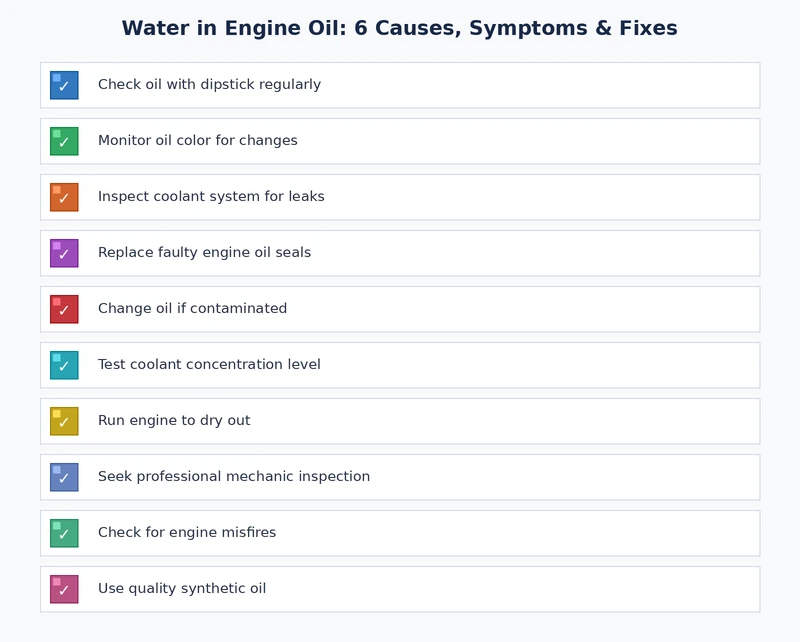
Draining and refilling the oil without identifying the source guarantees the contamination returns. Start with a cooling system pressure test to check for internal leaks. A block test — using a chemical combustion leak tester over the coolant reservoir — confirms whether exhaust gases are entering the coolant, which is the clearest indicator of a head gasket breach. These two tests together cover the most common causes with minimal cost and time.
Once the source is repaired, flush the engine with a dedicated flushing oil or engine flush product. Run it at idle for 5–10 minutes, drain completely, then refill with fresh oil and a new filter. In severe contamination cases — visible water pooling in the drain pan — a second flush cycle before the final fill is the right call. Skipping the flush leaves emulsified residue that continues degrading fresh oil from day one.
The repair path depends entirely on the diagnosis. Head gasket failure requires full replacement with the head inspected and resurfaced at a machine shop. Cracks in the head or block typically require component replacement. A failed oil cooler means replacing the cooler and associated gaskets. Condensation resolves by adjusting drive habits or adding a catch can to the crankcase breather. Using a liquid head gasket sealer as a permanent fix is not a real repair — it always fails within months.
After any head gasket repair, insist on a cylinder head flatness check at a machine shop. A warped head will blow another gasket within months, regardless of the brand installed.
Regular oil changes at manufacturer-recommended intervals remove moisture and combustion byproducts before they concentrate. Using the correct 50/50 ethylene glycol and distilled water coolant mix maintains the freeze and boil protection that keeps gasket materials healthy. Checking coolant condition annually — and replacing it on schedule — prevents the acidic degradation that attacks gaskets from the inside out. Drivers who catch a rising temperature gauge early and pull over before overheating occurs have dramatically fewer head gasket failures over the life of their vehicle.
Vehicles are not built for water crossings. Even modern engines can suffer intake ingestion or crankcase breather contamination from sustained water exposure. The repair bill from a flood event — potentially a hydrolocked engine with bent connecting rods — almost always far exceeds the inconvenience of finding an alternate route. If a vehicle has been driven through deep water, inspect the oil immediately before the next cold start.
Contaminated oil turns milky, creamy, or grayish — often described as a chocolate milkshake texture. The same residue appears on the underside of the oil filler cap. Healthy oil is amber to dark brown with no cloudiness or froth.
Condensation-related contamination can clear up on its own with longer drive cycles that fully heat the oil. Any other cause — blown head gasket, cracked block, oil cooler failure — will not self-resolve and requires a mechanical repair before the damage worsens.
In most cases, driving should stop immediately. The exception is minor condensation with stable coolant level and no white exhaust smoke, which may allow brief operation. Any sign of a mechanical leak means the vehicle should not be driven until the source is identified and repaired.
Costs range from near-zero for a condensation oil change to $1,000–$2,500 for a head gasket replacement, $500–$1,500 for an oil cooler, and potentially $5,000 or more for a cracked block. Diagnosing the cause accurately before authorizing repairs is critical to avoiding wasted money.
No. A blown head gasket is the most common cause, but condensation, a failed oil cooler, a cracked engine block, intake manifold gasket failure, and flood water ingestion can all produce milky oil. Proper diagnosis — not assumptions — determines the correct repair path.
A faulty thermostat can cause overheating, and severe overheating is a leading cause of head gasket failure. The thermostat doesn't introduce water directly, but a stuck-closed thermostat that triggers an overheat event sets the stage for the gasket breach that does.
It depends on how long the contaminated oil remained in service. Short-term condensation rarely causes lasting harm. A head gasket leak left unaddressed for weeks can produce bearing damage, cylinder wall corrosion, and cam wear that demands significant reconditioning or full engine replacement.
Water in engine oil is never a minor inconvenience — it's the engine asking for help before the damage becomes irreversible.
 |
 |
 |
 |

About Sarah Whitfield
Sarah Whitfield is a diagnostics and troubleshooting specialist who spent ten years as an ASE-certified technician before joining the editorial team. She specializes in OBD-II analysis, electrical gremlins, and the kind of intermittent problems that make most owners give up.
Get some FREE car parts & gear.. Or check out the latest free automotive manuals and build guides here.
Disable your ad blocker to unlock all the hidden deals. Hit the button below 🚗
| | | |
