by Sarah Whitfield
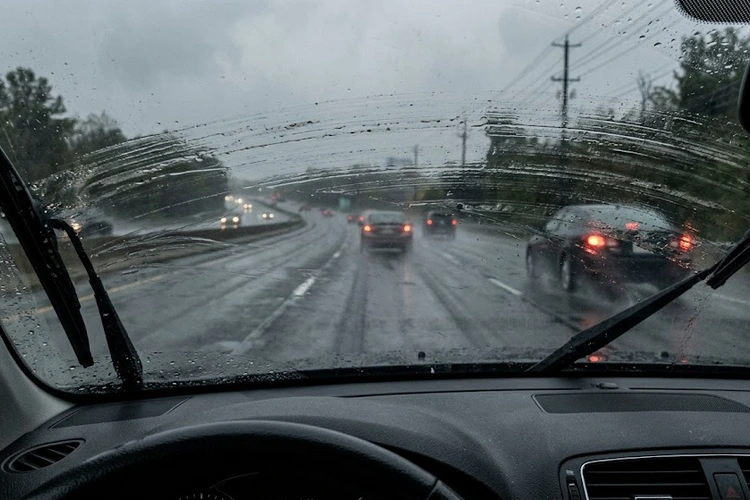
Last summer, our team was field-testing a set of premium beam blades on a freshly detailed vehicle. Rain hit the windshield within minutes. Streaks appeared immediately across the driver's sightline. The glass had received a hydrophobic coating the day before — and that single chemical interaction taught us more about wiper system behavior than any product spec sheet had.
Windshield wipers leaving streaks is one of the most consistent complaints we encounter in automotive maintenance. Most people ignore the problem until visibility drops to a genuinely dangerous level. Our team at CarCareTotal has diagnosed this issue across dozens of vehicles, and the root causes fall into a short, repeatable list every single time. This guide covers everything from a fast blade cleaning to full arm replacement, with cost breakdowns and real-world field observations included throughout. For a broader look at the problem category, our dedicated page on windshield wiper streaking covers the full scope of related visibility issues.
Contents
Streaking is never random. It always has a mechanical or chemical cause. Understanding the physics behind each failure mode makes the correct fix obvious and prevents wasted spending on unnecessary parts.
Wiper rubber is engineered to a precise cross-sectional geometry. That geometry creates a water-tight edge contact across curved glass. UV radiation, ozone exposure, and sustained heat degrade that rubber continuously. After prolonged environmental exposure — particularly in high-UV or high-heat climates — the rubber stiffens, develops micro-cracks along the squeegee edge, or takes on a curved thermal memory that lifts the wiping lip away from the glass surface during operation.
A blade that appears intact from five feet away can carry micro-tears along the squeegee lip that are invisible without close inspection. Those tears leave thin, irregular water films on the glass — the defining visual signature of a streaking wiper. Our team encounters this most frequently on vehicles parked in open lots without shade coverage. Heat degradation is a broader issue worth understanding in full; our guide on how to maintain a car in hot weather covers the complete scope of UV and thermal effects on exterior components, including rubber seals and trim.
Wiper arm spring tension is a contributing factor that most people overlook entirely. A spring-loaded arm that has lost tension over time doesn't press the blade firmly enough against the glass. The blade skips across the surface instead of maintaining the continuous squeegee contact it was designed for. The result is intermittent streaking that mimics blade edge damage but is actually a pure pressure deficit. Replacing the blade without addressing the arm tension simply repeats the problem with new parts.
A perfectly intact rubber edge on a contaminated windshield still streaks. Road film, silicone-based hydrophobic treatments, tree sap residue, and automotive wax all create surface conditions that resist consistent wiper contact. The blade either skips over high-surface-tension zones, drags through tacky patches, or deposits a thin smeared film that optically distorts the driver's forward sightline.
Wax migration is one of the most underappreciated causes in this category. When most people detail their car's exterior, wax overspray inevitably migrates to the glass surface during application and buffing. Even a micron-thin wax layer creates inconsistent surface tension across the windshield. The wiper blade skips over the waxed zones and smears through uncoated patches — producing the classic irregular streak pattern that doesn't respond to blade cleaning alone.
According to the National Highway Traffic Safety Administration, impaired windshield visibility is a documented contributing factor in thousands of traffic incidents annually. Treating streaking wipers as a cosmetic inconvenience rather than a safety issue is the wrong call entirely.
The fastest resolution for windshield wipers leaving streaks is a thorough cleaning — of the blade, the glass, or both. Most people skip this step entirely and jump straight to purchasing replacement blades. That's an expensive reflex, and it's often unnecessary. Our team's field estimate is that proper cleaning resolves the streaking problem in roughly 60% of cases without a single part purchased or a shop visit required.
Lift the blade away from the glass. Run a clean microfiber cloth soaked in isopropyl alcohol along the full length of the rubber squeegee edge — both the front and rear faces of the wiper lip. Repeat the pass multiple times until the cloth comes away without black residue. That residue is oxidized rubber compounds combined with accumulated road grime. It is the direct, proximate cause of the streak, and removing it often restores full wiping performance immediately.
Our team specifies 70% isopropyl alcohol as the standard for routine cleaning. Anything below that concentration leaves behind excess water content that slows drying and can leave its own residue film. A single cleaning pass with 90% or 91% IPA is acceptable for severe buildup cases. Repeated high-concentration IPA applications accelerate rubber degradation over a maintenance cycle, so 70% is the correct ongoing standard — reserve the stronger concentration for exceptional cases only.
Never use petroleum-based solvents or silicone sprays on wiper rubber — they swell the squeegee geometry and create a new, worse streaking problem within days of application.
Glass cleaner alone doesn't remove road film or wax contamination. Our standard decontamination protocol runs two steps. First, a clay bar treatment or a dedicated glass decontamination towel across the entire windshield surface — this removes bonded contamination that no spray cleaner can touch regardless of dwell time or agitation. Second, a high-quality automotive glass cleaner applied with a clean, glass-dedicated microfiber and buffed to a haze-free finish.
Household ammonia-based window cleaners are the wrong choice for this application. They attack rubber seals and wiper blade rubber on contact, degrade interior tinting films, and leave a residue that refracts light under certain angles — amplifying the visual appearance of streaking rather than eliminating it. Automotive-specific, ammonia-free glass cleaners are the non-negotiable standard here, and the cost difference over household products is negligible.
Most streaking problems resolve with inexpensive materials and basic tools. Having the correct kit on hand prevents improvised solutions that introduce secondary problems — cross-contaminated cloths, wrong-chemistry solvents, and mismatched blade connectors being the most common improvisation failures our team encounters.
Three blade architectures dominate the market. Each has a distinct behavior profile on the glass, and each has a well-defined application where it performs best. Selecting the wrong architecture for the vehicle or climate is a leading cause of premature streaking onset.
| Blade Type | Construction | Best Application | Primary Failure Mode | Typical Lifespan |
|---|---|---|---|---|
| Conventional (framed) | Steel pressure frame with rubber insert | Budget replacement, older vehicles with flat glass | Frame corrosion; uneven pressure distribution in cold weather | 6–12 months |
| Beam (bracketless) | Single curved rubber or silicone body, no frame | Modern curved glass, premium fitment, all-season use | Thermal set on sun-exposed glass; costly per blade | 12–24 months |
| Hybrid | Beam blade core inside aerodynamic plastic shell | All-season use, high-speed highway driving | Shell traps ice in severe winter; heavier than bare beam | 12–18 months |
Our team defaults to silicone beam blades for most modern passenger vehicles. The absence of a metal pressure frame eliminates corrosion-related pressure inconsistencies entirely — the single biggest advantage over conventional blades. Silicone beam blades cost more upfront but maintain consistent edge geometry significantly longer than rubber alternatives, and they deposit a thin hydrophobic film on the glass over time that actually improves wipe quality with use rather than degrading it.
A complete kit for handling any streaking scenario doesn't require a large investment. The essentials cover both the blade cleaning and glass decontamination steps:
The microfiber separation rule is non-negotiable. Cloths used on painted surfaces, wheel wells, or engine compartments carry embedded abrasive grit and chemical residue. Wiping a windshield with a cross-contaminated cloth introduces new micro-scratching and streak-causing deposits. Our team color-codes its cloth inventory by application category and replaces the glass-dedicated set on a more aggressive schedule than any other cloth category in the kit.
A consistent maintenance schedule eliminates most wiper problems before they affect visibility. Most people react to streaking after it appears rather than preventing it through routine attention. That reactive approach costs more over time and creates avoidable safety exposure.
Summer degrades wiper rubber faster than any other season. High ambient temperatures accelerate plasticizer migration within the rubber compound — making the squeegee edge initially tacky and eventually brittle and cracked. Vehicles parked without shade coverage, or driven extensively in high-UV conditions, need blade inspection at a minimum of once per season. Hydrophobic glass treatments are a useful summer complement — they reduce the mechanical load the blade carries by sheeting water before the wiper needs to fully engage, extending effective blade life by reducing friction cycles.
Winter creates an entirely different failure mode. Ice accumulation beneath the blade arm lifts the wiping edge off the glass at the pivot point, producing a characteristic bow-tie streak pattern where the center of the blade wipes cleanly but both ends smear. Dedicated winter blades with a full rubber shroud enclosing the entire arm and frame assembly eliminate this problem at its source. Running a standard beam or conventional blade through repeated freeze-thaw cycles accelerates edge micro-cracking and guarantees early streaking onset. This connects to broader winter exterior care considerations — our analysis of carnauba vs. synthetic wax is relevant here, as certain wax chemistries create glass contamination that becomes significantly harder to remove in cold temperatures.
Manufacturer guidance typically lands at 6–12 months. Our field experience is more nuanced than that single-range recommendation. Blades in dry, low-UV climates with consistent cleaning maintenance can comfortably reach 18 months without meaningful performance degradation. In coastal environments with salt air exposure, or in high-UV sunbelt markets where vehicles sit on hot glass daily, 8 months is a realistic upper limit before streaking onset becomes routine.
The decisive test is straightforward and takes under ten minutes. Clean the blade thoroughly with IPA and decontaminate the glass with a clay bar. Then run the wipers in rain or under a garden hose spray. If streaking persists after that full protocol, replacement is the correct call. Extending blade life beyond that threshold risks compromised visibility in emergency conditions — a trade-off our team considers unacceptable regardless of the blade's remaining visual appearance.
Wiper maintenance and replacement sit at the low end of automotive service costs. The range is wide enough that understanding where each dollar goes helps calibrate the right approach for any situation.
A complete DIY cleaning kit — IPA, automotive glass cleaner, clay bar, and a set of glass-dedicated microfibers — runs between $25 and $45 as a one-time investment. That kit handles multiple cleaning cycles across multiple vehicles and seasons. Per-incident cost after the initial purchase is effectively labor-only.
Blade replacement at the DIY level is the lowest-cost professional-grade repair in automotive maintenance. Conventional blades for common vehicles start at $8 to $15 per blade. Beam blades run $20 to $45 each depending on length and brand. Premium silicone beam blades reach $50 to $60 for larger fitments. A full front axle replacement with beam blades — the configuration our team recommends — lands at $40 to $90 depending on vehicle and brand selection.
Dealership wiper service — cleaning, inspection, and blade replacement — typically runs $60 to $150 per service including parts and labor. Independent shops come in lower, often $40 to $90 for the same scope of work. Quick-lube chains frequently run blade replacement promotions at or near cost as a loss leader to drive higher-margin oil change upsells.
Wiper arm replacement, when the spring tension or geometry is the root cause, adds $30 to $80 in parts plus applicable labor. At a shop rate, a full arm-plus-blade service can reach $150 to $200 depending on vehicle complexity and access difficulty. For most front-engine passenger vehicles with accessible arm hardware, arm replacement is a 15 to 20 minute job with basic hand tools and the correct tension specification in hand.
The threshold between home repair and professional intervention is clearly defined for wiper systems. Most scenarios fall unambiguously on one side of that line, and the decision tree is short.
Blade cleaning, blade replacement, and full glass decontamination are within reach for anyone with basic mechanical confidence and the right materials. The most important technique in the entire process: always place a folded shop towel on the windshield glass before lifting either wiper arm away from the glass. A spring-loaded arm that snaps back unloaded against bare glass will crack a windshield instantly. Our team treats this as an absolute rule — no exceptions, no shortcuts, regardless of how quickly the job needs to be done.
Blade connector type is the next practical hurdle. Modern vehicles use hook, pinch-tab, side-pin, and top-lock connector architectures in various combinations. Most replacement blade packaging includes an adapter kit covering common connector types, but matching the correct adapter before installation saves significant frustration. Taking a clear photo of the existing blade connector before removal is faster and more reliable than referencing the vehicle owner's manual.
Persistent streaking after new blades are installed on a freshly decontaminated windshield points to a structural issue with the arm. A bent or fatigued wiper arm applies non-uniform pressure across the blade arc. No blade architecture compensates for that — the contact physics don't allow it. Diagnosis requires pressing the blade flat against the glass and scanning the contact line with a light source aimed at a low angle. Any visible air gap along the arc length confirms arm deformation as the root cause.
Arm spring tension measurement with a wiper pressure gauge provides a definitive diagnosis. A healthy arm applies approximately 0.7 to 1.2 Newtons per centimeter of blade length uniformly across the full arc. Below that range, the blade lifts and streaks. Above it, the blade judders across the glass and wears unevenly on the squeegee edge. Arm adjustment or replacement is achievable at the home level, but only with the correct pressure specification for the vehicle in hand. Guessing the correct tension and installing the arm without verification produces an outcome worse than the original problem.
Pattern recognition from direct field work is more instructive than theoretical cause lists. These are the most common failure presentations our team has worked through, and what actually resolved each one — not what the spec sheet suggested.
A recurring presentation in our experience: a vehicle running premium silicone beam blades showing severe streaking after a single hot-weather season, despite low annual mileage and infrequent wiper use. On close inspection, the blade rubber shows no visible cracking or surface degradation. The actual failure is thermal set — the rubber has taken on a permanent curved memory from repeated contact with sun-heated glass, permanently altering the engineered squeegee geometry. The blade no longer conforms correctly to the windshield curvature during operation.
In these cases, cleaning produces no improvement. Replacement is the immediate call. The preventive recommendation our team now gives: park with the blades lifted away from the glass during extreme heat events, or use a windshield sun shade specifically designed to hold the blade arms elevated off the glass surface. Most people don't consider wiper position as a heat management variable until after their first thermal-set failure and the subsequent blade replacement cost.
Our team regularly encounters streaking that develops mid-winter on vehicles running conventional framed blades. The failure mechanism is ice bridging inside the blade's steel pressure frame. As ice accumulates between the frame arms and the glass surface, it creates a rigid arch beneath the frame that prevents the rubber squeegee edge from conforming to the windshield curvature. The result is a streak that runs the full blade length and doesn't respond to cleaning, IPA treatment, or blade adjustment — because the rubber geometry is being physically forced out of spec by the ice structure.
The immediate fix requires physically clearing ice from inside the frame — running warm water over the blade arm assembly before each cold-weather use, or using a proper ice scraper to clear frame channels before engaging the wipers. The permanent fix is switching to a winter blade with a full rubber shroud that excludes ice from the frame entirely. This is a solved problem with a known-cost solution. Our team sees no justification for running standard blades through severe winter conditions when purpose-built winter alternatives exist at comparable price points.
Windshield wipers leaving streaks is a solved problem — the causes are well-documented, the fixes are low-cost, and the diagnostic process is short. Our team's standing recommendation is to start with a full IPA blade clean and glass decontamination before purchasing any parts, switch to silicone beam blades on the next replacement cycle, and build wiper inspection into a seasonal maintenance routine rather than waiting for visibility to degrade. Anyone ready to address this properly can pick up a complete cleaning kit, spend fifteen minutes on the car, and eliminate the problem the same afternoon — the right place to start is our full guide on windshield wiper streaking for a complete diagnosis checklist.
 |
 |
 |
 |

About Sarah Whitfield
Sarah Whitfield is a diagnostics and troubleshooting specialist who spent ten years as an ASE-certified technician before joining the editorial team. She specializes in OBD-II analysis, electrical gremlins, and the kind of intermittent problems that make most owners give up.
Get some FREE car parts & gear.. Or check out the latest free automotive manuals and build guides here.
Disable your ad blocker to unlock all the hidden deals. Hit the button below 🚗
| | | |
