by Joshua Thomas
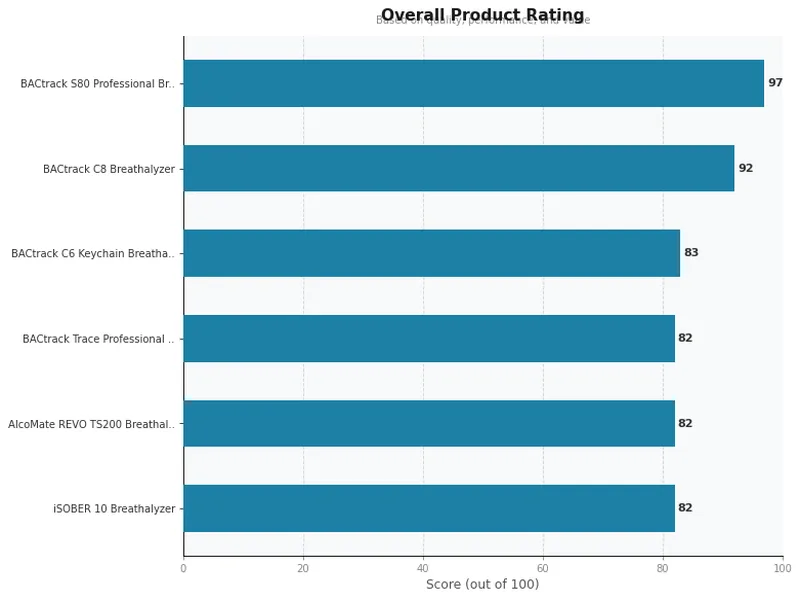
The BACtrack S80 earns the top spot on our list because it uses the same platinum fuel cell sensor technology that hospitals and law enforcement rely on, and it delivers that professional-grade accuracy in a pocket-sized device you can actually afford. If you drive, host parties, or simply want a reliable way to make responsible decisions after a few drinks, owning a quality breathalyzer in 2026 is one of the smartest investments you can make for your personal safety and the safety of everyone else on the road.
According to NHTSA, drunk driving claims more than 10,000 lives every year in the United States, and the vast majority of those fatalities involve drivers who believed they were fine to get behind the wheel. A personal breathalyzer removes that dangerous guesswork from the equation and gives you an objective, science-backed reading in seconds. Paired with other car safety tools and smart driving habits, a breathalyzer becomes a cornerstone of responsible ownership.
Not all breathalyzers are created equal, and the technology gap between a gas station novelty unit and a fuel cell device is enormous. Semiconductor sensors, which power most budget models, degrade quickly and return wildly inaccurate readings after just a few months of use. Fuel cell sensors — the same type used in professional law enforcement equipment — oxidize alcohol electrochemically, which means the accuracy holds over years of use without constant recalibration. This guide breaks down six of the best breathalyzers available in 2026, explains exactly what separates a trustworthy device from a useless one, and gives you everything you need to make a confident purchase.
Contents










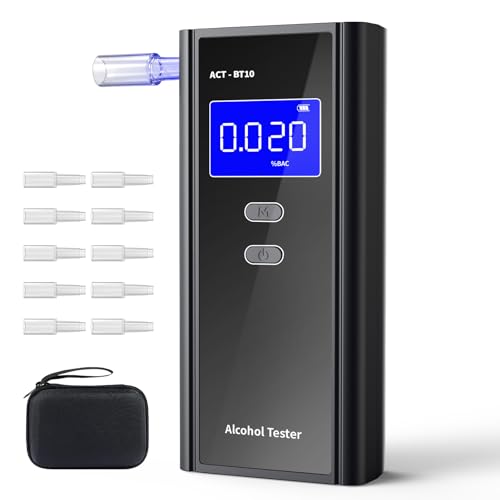
The BACtrack S80 has been the gold standard in personal breathalyzers for years, and its 2026 reputation is built on a foundation of verified, real-world accuracy that simply no competing device at this price point can match. Wirecutter spent 65 hours of research — including getting intoxicated at a police station to test personal breathalyzers alongside law enforcement equipment — and concluded the S80 is the most accurate, reliable, and easiest-to-use personal breathalyzer you can buy. That endorsement is not hyperbole, and when you hold the device and read your first result, you understand why professionals trust it.
At the heart of the S80 is BACtrack's largest platinum-based Xtend Fuel Cell Sensor, which is the same electrochemical technology used in hospital-grade and law enforcement equipment. A fuel cell works by oxidizing the alcohol in your breath and generating a proportional electrical current, which the device converts into a precise BAC reading — it does not guess, it measures. The S80 is FDA 510(k) cleared, DOT and NHTSA approved, and FSA/HSA eligible, which means your health spending account dollars can legitimately fund this purchase, making it even more accessible than the list price suggests.
Operation is genuinely one-button simple: you insert two AA batteries, power the device on, wait for the warm-up cycle, blow steadily into the mouthpiece, and read your BAC on the bright digital display within seconds. You can change the unit of measurement between %BAC and g/L, and you can set user-defined BAC thresholds that trigger an alert when you exceed your personal limit. The build quality feels solid and purposeful, and the included mouthpieces are hygienic and easy to replace. If you want one breathalyzer that performs like professional equipment, costs less than a tank of gas, and lasts for years, the S80 is it — no caveats, no hedging.
Pros:
Cons:
The BACtrack Trace sits just below the S80 in the BACtrack lineup, and while it shares the same platinum-based Xtend Fuel Cell Sensor technology, it offers a slightly more compact form factor and runs on AAA batteries rather than AAs, which makes it a natural fit if you prioritize portability without sacrificing the accuracy credentials that define BACtrack's professional tier. The Trace carries full DOT and NHTSA compliance, which means it meets the same rigorous standards used by roadside law enforcement and hospital treatment professionals — not a marketing claim, but a certification earned by performance testing against regulated benchmarks.
If you already own or are researching a car emergency kit, the Trace is a natural companion item — small enough to slip into a glove box, durable enough to survive the temperature swings of a parked vehicle, and accurate enough to trust when the stakes are real. The one-button operation follows the same intuitive pattern as the S80: power on, wait for the warm-up indicator, blow, and read. There are no complicated menus to navigate and no app required, which appeals to users who want a straightforward, distraction-free reading process every time they reach for the device.
The Trace is particularly well-suited to designated driver scenarios, corporate fleet safety programs, and anyone who wants a backup device to the S80 without dropping down to semiconductor-sensor territory. Battery life is excellent, and the included mouthpieces are individually wrapped for hygiene. The only real trade-off between the Trace and the S80 is that the S80's sensor is physically larger, which BACtrack claims contributes to marginally higher accuracy at very low BAC levels — a distinction that matters in professional settings but is virtually imperceptible in everyday personal use.
Pros:
Cons:
When The New York Times compared smartphone breathalyzers against the $890 unit used by the California Highway Patrol, only one device matched the police-grade model's accuracy — and that device was the BACtrack Mobile. That independent verification is exactly the kind of real-world proof that separates a legitimately useful product from a novelty gadget, and in 2026 the BACtrack Mobile remains the definitive answer if you want fuel cell accuracy combined with the data logging and connectivity capabilities that a modern smartphone unlocks.
The Mobile pairs wirelessly with both Apple iPhone and Android devices via the free BACtrack app, and the integration is seamless across iOS and Android ecosystems, including Apple HealthKit support for users who track their health data in one centralized location. The app's standout feature is ZeroLine technology, which uses your BAC reading and proprietary algorithms to estimate the specific time at which your blood alcohol content will return to 0.00%, giving you a concrete, actionable window rather than a vague guess. This is genuinely useful for planning — it removes the "I think I'm fine" calculation and replaces it with a data-driven estimate that you can actually trust.
The device itself is compact and connects via the headphone jack or Bluetooth depending on your model, and the app stores your testing history so you can review trends over time and identify patterns in how your body processes alcohol. If you are someone who values data, loves connected devices, and wants the same accuracy that law enforcement trusts delivered through an interface that fits naturally into your digital life, the BACtrack Mobile is the only device on this list that delivers all three simultaneously. Just remember that the app requires a compatible smartphone, so if you want a standalone device without phone dependency, the S80 or Trace serve you better.
Pros:
Cons:
The AlcoMate Prestige AL6000 solves one of the most persistent frustrations in personal breathalyzer ownership: the need for regular factory recalibration, which costs money, time, and leaves you without your device while it sits in a mail-in service queue. AlcoMate's patented PRISM system — Pre-calibrated Replaceable Intelligent Sensor Modules, protected under US Patent Nos. 7,841,224 B2 and 8,250,900 B2 — eliminates that headache entirely by housing the calibration inside a swappable sensor cartridge that you simply replace when it reaches the end of its service life. No shipping, no waiting, no recalibration fees, just a fresh sensor module and you are immediately back to certified accuracy.
The AL6000 uses a precision oxide semiconductor sensor that delivers ±0.01 accuracy at 0.100% BAC, which is the industry-standard benchmark for measuring breathalyzer precision, and the DOT and NHTSA approval for law enforcement use confirms that this accuracy holds up under professional scrutiny. Readings come back in seconds, the interface is clean and intuitive, and the device handles high-volume testing environments — workplaces, events, professional settings — without the performance degradation that cheaper sensors exhibit under repeated use. If you run a small business with safety compliance requirements and need a device you can depend on without building a calibration maintenance schedule into your workflow, the AL6000 deserves serious consideration.
The trade-off with the PRISM system is that replacement sensor modules represent a recurring cost, and those modules are only available through AlcoMate's specific supply chain rather than a generic consumable you can grab from any retailer. That said, the cost per module is reasonable relative to professional calibration service fees, and the convenience of an immediate in-field sensor swap outweighs the supply chain limitation for most users. The build quality is solid, the form factor is professional, and the one-way flow mouthpieces maintain hygiene standards across multiple users in a shared setting.
Pros:
Cons:
The AlcoMate Premium AL7000 builds directly on the AL6000's PRISM platform and adds a second-generation precision oxide semiconductor sensor that AlcoMate claims delivers measurably enhanced accuracy and consistency under repeated, rapid-cycle testing conditions — exactly the environment that industrial and commercial operators encounter when screening employees at shift start or processing a line of event attendees. Like its sibling, the AL7000 carries DOT and NHTSA approval for law enforcement use and requires zero factory recalibration thanks to the swappable PRISM sensor module system that AlcoMate has patented and refined over multiple product generations.
Where the AL7000 distinguishes itself from the AL6000 is in its explicit design brief for commercial and industrial environments, where the device needs to handle not just one or two tests per session but a continuous stream of readings without the performance drift that affects lesser sensors under thermal load. The second-generation sensor addresses this through improved thermal stability and faster recovery times between tests, so the 50th reading of a shift is as accurate as the first. If you manage a fleet, run a warehouse, or operate any facility where alcohol testing is part of your safety compliance protocol, the AL7000 gives you the throughput and reliability you need without building a calibration maintenance schedule into your operations.
For personal users, the AL7000 is frankly more device than most situations require, and the AL6000 or a BACtrack model serves personal needs more efficiently and economically. But if your use case genuinely involves frequent, volume testing — hosting regular events, managing driver compliance programs, or operating in a regulated industry — the AL7000's second-generation sensor and commercial-grade durability justify the step up in investment. The PRISM module replacement model means your total cost of ownership is predictable and manageable over the device's lifespan, which is a meaningful advantage in budget-conscious commercial operations.
Pros:
Cons:
The AlcoMate Core is AlcoMate's entry into the budget-accessible professional segment, and it brings the brand's commitment to DOT approval for law enforcement into a price range that makes it competitive with far less capable consumer devices. The Core features active pressure sensor technology rather than passive airflow detection, which means the device actually monitors the pressure and flow of your breath during a test to ensure you are delivering a valid, complete sample rather than a partial blow that would skew the reading lower than your actual BAC. This is a genuinely professional feature that many devices at this price point skip entirely.
One-way flow mouthpieces come included and are designed to prevent contaminated breath samples from being drawn back into the sensor housing, which extends sensor life and maintains hygiene across multiple users. The one-button operation keeps the user experience simple, and the active pressure sensor ensures that simple operation does not come at the cost of reading validity. If you are equipping a household, a rental property, or a small business with a reliable screening tool that carries real regulatory credentials without the premium price of the S80 or the commercial scale of the AL7000, the Core fills that gap effectively and with AlcoMate's professional pedigree behind it.
The Core does not offer smartphone connectivity, data logging, or any of the advanced features that define the upper tier of this list — but that is precisely the point. It does exactly what a reliable breathalyzer needs to do: deliver an accurate reading, confirm sample validity through the active pressure sensor, and protect the sensor through hygienic one-way flow mouthpieces. Just as you might pair a GPS tracker with your vehicle as a simple safety layer rather than a full fleet management system, the Core represents the straightforward, professional-grade safety tool without the feature overhead you may not need.
Pros:
Cons:
The Homealexa Breathalyzer enters this list as the most accessible option for casual home and party use, and it earns its place by delivering a genuinely fast, readable digital BAC display in a compact, shareable form factor that comes bundled with 10 mouthpieces — enough to cover a full social gathering without anyone reusing a tip. The high-sensitivity alcohol sensor returns results in three to five seconds after a short warm-up, which means you are not waiting on the device while a line of guests accumulates behind you at the end of a party. Fast results, a clean digital display, and an affordable price make this an accessible gateway into responsible BAC awareness for households that have never owned a breathalyzer before.
The built-in memory function lets the device store recent test results, so you can review how your BAC has changed over the course of an evening rather than relying on a single snapshot reading taken at a single point in time. This is a thoughtful feature for social settings where the trajectory of your BAC — whether it is climbing or declining — matters as much as the current reading. The device does not claim fuel cell accuracy or law enforcement certification, and you should understand that its semiconductor sensor will not match the long-term consistency of the BACtrack fuel cell units on this list, but for the specific use case of home awareness and party hosting in 2026, it performs reliably and affordably within its design parameters.
Just as a quality OBD2 scanner gives you useful diagnostic data without replacing a certified mechanic's assessment, the Homealexa gives you useful awareness data without replacing a professional-grade fuel cell device's certified accuracy. Use it as a directional guide and a social responsibility tool, understand its limitations, and consider upgrading to a fuel cell device if your use case requires certified precision. For the price, the 10-mouthpiece bundle, the memory function, and the fast five-second readings make the Homealexa an excellent entry point for households just beginning to build a culture of data-driven safety decisions.
Pros:
Cons:
This is the single most important buying decision you will make, and the distinction between these two sensor technologies explains most of the price variation you see across the breathalyzer market in 2026. Fuel cell sensors — used in BACtrack's Xtend platform and professional law enforcement equipment — work by electrochemically oxidizing alcohol molecules, which generates a precise electrical current proportional to your BAC. The chemistry is specific to ethanol, which means your morning coffee, your mouthwash, or your ketogenic diet breath compounds do not trigger a false positive. Semiconductor sensors, by contrast, detect a broader range of volatile organic compounds and degrade in accuracy over time as the semiconductor material ages, particularly under frequent use or temperature extremes. If accuracy over the long term is your priority — and for any safety-critical application, it absolutely should be — a fuel cell sensor is the only defensible choice.
Every breathalyzer sensor drifts over time, and managing that drift is a real cost of ownership that many first-time buyers underestimate. BACtrack fuel cell devices require periodic factory recalibration — typically once a year under regular personal use — which involves mailing your device to a service center and paying a calibration fee. AlcoMate's PRISM system sidesteps that process entirely by housing the calibration inside a replaceable sensor module that you swap at home, eliminating downtime and shipping costs but introducing the ongoing cost of replacement modules. Neither model is inherently superior across the board — the right choice depends on whether you value the convenience of an in-field sensor swap or the established service infrastructure of a professional recalibration provider. Either way, budget for ongoing maintenance when you compare purchase prices.
DOT and NHTSA approval means a device has been tested and confirmed to meet the standards set by the US Department of Transportation and National Highway Traffic Safety Administration for use as a breath alcohol screening device, which includes roadside law enforcement, workplace compliance programs, and professional safety applications. FDA 510(k) clearance is a separate designation that applies specifically to medical devices and indicates that the breathalyzer has been evaluated and cleared for clinical and medical use. If you are selecting a device for personal use in driving-safety decisions, DOT/NHTSA approval is the relevant benchmark. If you are selecting a device for a healthcare or treatment setting, FDA clearance matters additionally. The BACtrack S80 is the only personal device on this list that holds both certifications simultaneously, which is part of why it stands above the field as the overall recommendation for 2026.
Not every breathalyzer buyer needs smartphone integration, historical data logging, or ZeroLine BAC return estimates — but if those features align with how you actually intend to use the device, they add genuine value rather than marketing fluff. The BACtrack Mobile's app integration is meaningfully useful for users who want trend data and time-to-sober estimates, while the standalone devices on this list serve users who want a fast, direct reading without phone dependency. Think honestly about your specific use scenario before deciding: if you are hosting large gatherings frequently and need to screen multiple people quickly, the Homealexa's 10-mouthpiece bundle and fast cycle time fit your workflow; if you are a daily driver who wants certification-grade accuracy in your glove box, the S80 or Trace is a clear fit; if compliance testing is part of your work, the AlcoMate AL6000 or AL7000's no-recalibration PRISM system makes operational sense. Match the feature set to your reality, and you will get measurably better value from your investment.
Fuel cell breathalyzers like the BACtrack S80 use the same electrochemical sensor technology as law enforcement equipment, and independent testing — including New York Times comparisons against the $890 California Highway Patrol device — has confirmed that the best personal units match professional equipment accuracy. Semiconductor sensor devices, however, are significantly less accurate and degrade over time, so the answer depends entirely on which sensor type your device uses. For any safety-critical decision in 2026, you want a certified fuel cell device, not a semiconductor unit.
Most fuel cell breathalyzers need recalibration roughly once per year under normal personal use, though the exact interval depends on usage volume and the manufacturer's specifications. BACtrack recommends annual calibration for their fuel cell units, which involves a mail-in service. AlcoMate's PRISM sensor module system replaces this process entirely — when the sensor module reaches the end of its service life, you swap the module rather than sending the device for calibration. Either approach maintains accuracy over time, but you need to account for one or the other in your ongoing cost and maintenance planning.
Semiconductor sensor breathalyzers are prone to false positives from mouth alcohol, mouthwash, breath fresheners, certain medications, and even high-ketone breath in people following low-carbohydrate diets, because the semiconductor detects a broad range of volatile organic compounds rather than being specific to ethanol. Fuel cell sensors are electrochemically specific to ethanol oxidation, which makes them far more resistant to false positives from non-alcohol sources. To minimize the risk of any false reading, you should wait at least 15 minutes after eating, drinking, or using any oral product before testing, regardless of sensor type.
The legal limit for operating a motor vehicle in the United States is 0.08% BAC for drivers aged 21 and over in all 50 states, with a lower limit of 0.04% applying to commercial vehicle operators and a zero-tolerance standard of 0.02% or below applying to drivers under the legal drinking age. Several states have also enacted enhanced penalty laws for drivers testing at 0.15% or above. A personal breathalyzer gives you an objective reading relative to these thresholds, but remember that individual impairment begins well below 0.08% and that legal limit does not mean safe to drive.
The BACtrack S80 is specifically marked as FSA/HSA eligible, which means the IRS has recognized it as a qualifying medical device purchase under health spending account rules. This effectively reduces the out-of-pocket cost by whatever marginal tax rate applies to your FSA or HSA contributions — typically 20 to 35 percent, depending on your tax bracket. Not all breathalyzers on this list carry the same FSA/HSA eligibility designation, so if this matters to your purchasing decision, confirm eligibility directly with your spending account administrator before purchasing a model other than the S80.
Yes, but you need a device that carries DOT and NHTSA approval if your workplace testing program needs to meet federal or state compliance standards, because those certifications confirm the device meets the accuracy and reliability benchmarks that regulatory frameworks require. Both BACtrack fuel cell units and the AlcoMate PRISM-equipped devices on this list hold appropriate approval for professional use. For high-volume workplace environments where multiple tests per session are routine, the AlcoMate AL6000 or AL7000's no-recalibration sensor module design offers a meaningful operational advantage over devices that require periodic factory service.
 |
 |
 |
 |

About Joshua Thomas
Joshua Thomas holds a Bachelor of Science in Mechanical Engineering from San Diego State University and has spent years applying that technical foundation to hands-on automotive work — from routine maintenance to full mechanical repairs. He founded CarCareTotal in 2017 to give car owners the kind of clear, practical guidance that helps them understand what is happening under the hood and make smarter decisions about upkeep and repairs. At CarCareTotal, he oversees editorial direction and covers automotive fundamentals, maintenance guides, and troubleshooting resources for everyday drivers.
Get some FREE car parts & gear.. Or check out the latest free automotive manuals and build guides here.
Disable your ad blocker to unlock all the hidden deals. Hit the button below 🚗
| | | |
