by Marcus Chen
If you need one tire that holds up to Florida's brutal summer downpours without turning into a liability on dry pavement, the MICHELIN Defender2 is the one most Florida drivers keep coming back to — its combination of wet-stopping power and exceptional tread life is hard to beat in this climate. But Florida roads ask a lot of your tires year-round: scorching asphalt temps that accelerate wear, sudden afternoon thunderstorms that flood intersections in minutes, and the occasional highway stretch where handling at speed really matters. Choosing the wrong set can cost you control when it counts most.
Florida's weather profile is genuinely unique. The average summer high in Miami sits above 90°F, and the state averages over 50 inches of rainfall per year — much of it concentrated in intense, short-duration storms. According to the National Weather Service, south Florida is among the wettest regions in the continental US. That combination of heat and standing water is tough on rubber compounds not specifically engineered for those conditions. Tires that excel in cold and snow — the focus of many national tire reviews — may not prioritize the hydroplaning resistance and heat tolerance that matter most here. You need to shop with Florida in mind.
This guide covers seven all-season tires that perform well in hot, wet Florida conditions in 2026, drawn from brands with proven track records. Whether you drive a compact sedan, a family SUV, or a CUV, you'll find a solid match below. We've also put together a buying guide and FAQ to help you make a confident decision. For more options organized by vehicle type, check out our roundup of the best tires for Toyota Camry — one of the most popular vehicles on Florida roads. And if you're browsing the broader tire and wheel category, head to our wheels and tires section for more in-depth coverage.

Contents








The Defender2 is Michelin's flagship touring all-season, and it earns that title. Michelin completely redesigned this tire from its predecessor, focusing on two things Florida drivers care about most: tread life and wet-weather stopping performance. The tread compound uses what Michelin calls an "EverTread" formulation — a rubber mix that resists the kind of gradual heat-degradation that shortens tire life on hot Florida pavement. In independent treadwear testing, the Defender2 outlasted three major competing tires by up to 25,000 miles, which translates to real-world savings over the ownership period of your vehicle.
On wet roads — the bigger concern for most Florida drivers — the Defender2 performs confidently. The Locking 3-D Sipes are the key technology here: they interlock under load so the tire stays rigid when you need braking force, then open up to create biting edges on slick surfaces. In wet braking tests, it outperforms several well-known rivals. You'll feel the difference when you're doing 65 mph on I-95 and a wall of rain appears in front of you. The tire also handles dry heat well; the rubber stays pliable without getting greasy, which is a real issue for some budget compounds on Florida summers.
The ride quality is solid for a touring tire — not sports-car sharp, but composed and predictable. It's a sensible choice for sedans, SUVs, CUVs, and minivans. If your priority is a tire you can put on and mostly forget about for several years of Florida driving, the Defender2 is a strong starting point.
Pros:
Cons:
If wet-weather grip is your single biggest priority — and in Florida, it often should be — the Goodyear Assurance WeatherReady 2 deserves serious attention. Goodyear built this tire around what they call AquaTred Technology, which means the tread pattern is specifically engineered to channel water out from under the contact patch efficiently. The sweeping grooves move water and slush away quickly, reducing the risk of hydroplaning even when you're rolling through the standing water that builds up on Florida roads after a downpour. The WeatherReady 2 earned a severe snow designation, which is more relevant as a signal of overall wet-grip capability than it is for Florida winters.
What sets the WeatherReady 2 apart from its predecessor is the Evolving Traction Grooves feature. Most tires lose a measurable amount of wet traction as they wear down, because the grooves that evacuate water get shallower. Goodyear's solution is to design grooves that remain effective throughout the tire's life — newer grooves emerge as the tread wears, so the tire maintains water-evacuation performance longer. That's a practical benefit in Florida, where wet roads are a constant reality and you can't count on your tires only needing to perform when they're brand new.
The ride is quiet and composed for an all-season in this class. It's a good fit for mid-size and full-size SUVs, where the combination of vehicle weight and Florida rain can make hydroplaning a more serious risk. The specialized tread compound is formulated to stay adaptable across temperature ranges — which also means it doesn't go hard and slick in the heat the way some budget tires do.
Pros:
Cons:
The CrossClimate2 occupies an interesting space in Michelin's lineup. It's technically an all-season touring tire, but it's engineered with the handling characteristics of a performance tire and the wet grip of a dedicated rain tire. For Florida drivers who occasionally travel north for vacations, or who simply want maximum confidence in every weather condition they might encounter, the CrossClimate2 delivers a noticeable step up in capability. It carries an M+S rating and is designed for "every climate condition," which is a bold claim that independent testing largely backs up.
Where the CrossClimate2 stands out in a Florida context is its braking performance on both wet and dry surfaces. Michelin engineered it with a tread compound that stays grippy across a wide temperature range — it doesn't soften too much in heat or stiffen in the rare Florida cold snap. The tread design features a V-shaped groove pattern that efficiently channels water outward, and the sipe density gives you confident wet-road bite. On dry pavement, the tire feels more connected and responsive than most touring all-seasons, which makes it a pleasure to drive on Florida highways and city streets alike.
Michelin also promises up to one extra year of tread life compared to competitors, which is a significant claim when you factor in Florida's high mileage potential — many Florida drivers put on more miles per year than the national average. If you're comparing this to the Defender2, think of the CrossClimate2 as the option that prioritizes all-weather driving feel, while the Defender2 leans more toward pure longevity and everyday comfort.
Pros:
Cons:
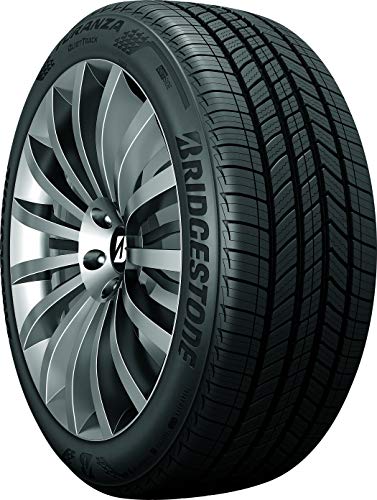
The Bridgestone Turanza QuietTrack is built around one premise: make highway driving as quiet and smooth as possible without sacrificing all-weather safety. Bridgestone achieves this through a combination of a noise-dampening tread pattern and an internal construction tuned to absorb road vibration. The result is a tire that makes a noticeable difference on Florida's long highway stretches — if you drive I-75 or the Turnpike regularly, you'll appreciate how much the QuietTrack reduces cabin noise compared to typical all-seasons.
Beyond the quiet ride, the QuietTrack still delivers meaningful wet and snowy-condition traction. The circumferential grooves evacuate water effectively, and the biting edges in the tread provide control in wet conditions — which, again, is exactly what you need when an afternoon storm turns the highway into a river. Bridgestone backs this tire with an 80,000-mile treadwear warranty, which is among the stronger warranties in this segment. That warranty signals confidence in the compound's longevity, and for Florida drivers who want a set-and-forget experience, that assurance matters.
The QuietTrack is particularly well-suited to larger sedans, luxury vehicles, and any driver who spends significant time on the highway and prioritizes NVH (noise, vibration, and harshness) reduction. If you're the type who puts on 20,000+ miles per year on Florida's interstates, this tire's combination of quiet ride and long warranty makes it a compelling choice.
Pros:
Cons:
Continental's TrueContact Tour 54 punches above its price bracket in almost every performance category that matters in Florida. The headline feature is Continental's EcoPlus Technology, which is a compound formulation designed to reduce rolling resistance, improve fuel economy, and extend tread life — all at the same time. That last benefit is what Florida buyers should focus on: the TrueContact Tour 54 carries an 80,000-mile limited treadwear warranty, making it one of the longest-lasting options in this roundup relative to its price. If you're buying tires for a vehicle you plan to keep for a long time, that math works out well.
On wet roads, the Continental shows its engineering. The tread pattern is designed specifically for confident wet braking and handling — Continental's own testing shows shorter wet stopping distances compared to competitors in its class. For Florida drivers dealing with flash floods and sudden heavy rain, that kind of stopping performance matters every single day. The tire manages water evacuation efficiently, and the compound doesn't harden under the kind of sustained heat exposure Florida summers deliver regularly.
Fuel savings are a real benefit too. The lower rolling resistance from EcoPlus Technology won't transform your MPG, but over 80,000 miles on a Florida commute, the cumulative savings in fuel costs add up to a meaningful number. Continental positions this tire as a value play for drivers who want performance without paying Michelin-level prices. For the price-conscious buyer who still wants a legitimate all-season performer, the TrueContact Tour 54 is one of the best options available in 2026.
Pros:
Cons:
The Kumho Solus TA51a makes a legitimate case for itself as the best tire in this roundup for buyers on a tighter budget. Kumho backs it with a 65,000-mile treadwear warranty (H-speed rating and above) or 75,000 miles for T-speed rated sizes — numbers that compare favorably even against tires from brands with bigger marketing budgets. The tread compound uses multi-functionalized polymers and high-dispersion silica, which is the same kind of formulation you see in more expensive tires: the silica helps the rubber stay flexible in heat while extending wear life. That's not marketing language — silica compounding genuinely makes a difference in both wet grip and durability.
The interlocking sipe design provides biting edges across the full tread width, which helps in the wet conditions Florida roads frequently serve up. It won't match the Michelin Defender2 or Goodyear WeatherReady 2 in pure wet-stopping tests, but for everyday driving in moderate rain — not extreme flash flooding — it handles the task competently. The tire is quiet enough for comfortable daily use, and the ride quality is smooth without being spongy.
Where the Kumho makes the most sense is as an entry point for a reliable all-season in a size that the premium brands price significantly higher. If you're driving a vehicle that doesn't need the most advanced tire technology but you want something more dependable than the cheapest option available, the Solus TA51a hits a practical sweet spot. It's also a reasonable choice for a second or third vehicle that doesn't see as many miles but still needs to handle Florida's rainy season without drama.
Pros:
Cons:
The Hankook Kinergy PT H737 is a dedicated touring all-season built for smaller passenger vehicles — compacts, economy sedans, and commuter cars that don't need the muscle of a full SUV tire. In Florida's context, this tire earns its spot by offering solid wet-road performance in a size range that many larger-brand tires either skip or price premium. The 195/65R15 fitment in this listing covers a huge range of popular Florida commuter cars, from Honda Civics to Toyota Corollas, which is one of the reasons the Kinergy PT remains a relevant choice year after year.
Hankook designed the Kinergy PT with a tread pattern that balances wet-road water evacuation with low rolling resistance, keeping fuel costs down for drivers who depend on their car for high daily mileage. The circumferential grooves channel water away effectively, and the shoulder blocks provide stability when you're cornering through a wet intersection. It's not a tire that's going to push the boundaries of wet braking performance, but it handles Florida's typical rainfall — including afternoon thunderstorm conditions — with reliability you can depend on.
For budget-minded Florida drivers who want a recognizable name brand without premium pricing, the Kinergy PT H737 is a thoughtful choice. It also makes sense if you're running a fleet vehicle or a work car where consistency and cost control matter more than outright performance. The ride is smooth, the noise level is acceptable, and in the compact car segment, it does everything you reasonably need from an all-season tire in this climate. If you're also outfitting another vehicle type for similar long-haul use, our guide on the best tire chains of 2026 covers additional traction accessories worth considering for road trips outside the state.
Pros:
Cons:
In Florida, wet traction is the single most important performance category. The state's afternoon thunderstorms can drop half an inch of rain in twenty minutes, creating standing water on roads with poor drainage. When your tires can't evacuate water fast enough from the contact patch, you lose traction abruptly — that's hydroplaning. Look for tires with wide circumferential grooves that run the full length of the tread. These grooves act as channels that direct water away from the center of the tire where grip happens. Features like AquaTred Technology (Goodyear) and Locking 3-D Sipes (Michelin) are specifically engineered to address this. Also pay attention to tread depth: a new tire resists hydroplaning far better than one at 4/32" of remaining tread. Florida's rainfall intensity means you should consider replacing tires earlier than drivers in drier climates would.
Florida's summer pavement temperatures regularly exceed 140°F — well above what most tire compounds are calibrated for in colder regions. Cheaper tires with lower-grade rubber compounds can soften excessively in sustained heat, which accelerates tread wear and can cause handling to feel vague or floaty. Tires that use silica in their compound — like the Kumho Solus TA51a and the Continental TrueContact Tour 54 — tend to perform better in heat because silica keeps the rubber more thermally stable. When you're evaluating tires, check the treadwear warranty: a higher mileage warranty (70,000+ miles) generally indicates a compound that's been engineered for durability under stress, including heat stress.
You'll see letters like H, V, and T on tire specs — these are speed ratings that also correlate loosely with performance characteristics. H-rated tires (up to 130 mph) are the sweet spot for most Florida highway driving and tend to balance performance with longevity well. V-rated tires (up to 149 mph) offer crisper handling response and are appropriate for sports sedans or performance-oriented vehicles. Don't go below the speed rating your vehicle manufacturer specifies — it's a safety floor, not just a marketing number. The load index tells you how much weight each tire can support. If you regularly carry passengers or cargo in a SUV or CUV, matching or exceeding your vehicle's recommended load rating is non-negotiable. Check the sticker inside your driver's door jamb for the factory-recommended specs.
The sticker price of a tire is just one part of the cost equation. A tire with a 40,000-mile warranty that costs $100 may actually be more expensive per mile than a tire with an 80,000-mile warranty that costs $160. Do the math on cost-per-mile before you buy. Florida's year-round driving season means most drivers accumulate mileage faster than in northern states — that makes treadwear efficiency even more relevant here. Also factor in fuel savings: tires with lower rolling resistance (look for EcoPlus or similar technology labels) save a real amount of fuel over 50,000+ miles, which partially offsets a higher purchase price.
All-season tires with strong wet traction features — specifically wide circumferential grooves, 3-D sipes, and silica-based compounds — perform best in Florida's rainy season. Look for tires with dedicated wet-braking ratings and, ideally, a severe snow designation (three-peak mountain snowflake symbol), which indicates the tread compound has been certified for extreme wet performance. The Goodyear WeatherReady 2 and MICHELIN Defender2 are standout performers in this category for 2026.
Florida's heat accelerates tire aging, especially UV exposure and ozone degradation. Even tires with 60,000–80,000-mile tread warranties may need replacement for age-related cracking before they actually wear out in tread depth. Most tire manufacturers and safety organizations recommend replacing tires after 6–10 years regardless of remaining tread, and in Florida's climate, erring on the side of 6 years is prudent. Inspect your sidewalls regularly for cracking, which is an early sign of heat and UV degradation.
For the vast majority of Florida drivers, a quality all-season tire is sufficient. True rain tires (also called summer tires optimized for wet performance) offer a performance edge in extreme wet conditions but wear faster and aren't practical for year-round use. A well-engineered all-season like the MICHELIN CrossClimate2 or Goodyear WeatherReady 2 handles Florida's rain conditions confidently while still performing on dry roads and the occasional cold morning. Unless you're driving a performance vehicle in extreme conditions, quality all-seasons are the practical choice.
Yes, in a useful way. Florida's lack of steep grades and mountain roads means you don't need tires optimized for cornering at steep angles or heavy towing on inclines. What Florida roads do demand is consistent performance on long flat highway stretches and in heavy rain. That tilts the calculus toward tires that prioritize hydroplaning resistance, highway noise reduction, and long tread life — rather than ultimate cornering grip or off-road capability. Touring all-season tires, rather than performance or all-terrain tires, are the right category for most Florida drivers.
Use the penny test: insert a penny into your tread grooves with Lincoln's head facing down. If you can see the top of Lincoln's head, your tread is at 2/32" or less — that's the legal minimum in Florida and a signal to replace immediately. For Florida's wet roads, many tire experts recommend replacing at 4/32" because wet braking performance degrades meaningfully below that depth. Also check your sidewalls for cracking or bulging, which can indicate age-related degradation independent of tread depth. An annual tire inspection from a trusted shop is a worthwhile habit in this climate.
Generally, yes — especially if wet traction is a priority. The measurable difference in wet braking distances between premium and budget tires can be 10–15 feet at highway speeds, which is the difference between stopping safely and a collision. That said, options like the Kumho Solus TA51a and Hankook Kinergy PT prove that "budget" doesn't have to mean unsafe. The gap between a solid mid-tier tire and a premium brand is smaller than the gap between premium and the cheapest tires on the market. If your budget is constrained, aim for a mid-tier option with a 60,000+ mile warranty rather than the absolute lowest price.
 |
 |
 |
 |

About Marcus Chen
Marcus Chen has over twelve years of hands-on experience modifying cars across a range of platforms — from commuter builds to track-focused setups — with deep expertise in suspension tuning, wheel and tire fitment, and performance upgrades that improve driving dynamics without sacrificing day-to-day reliability. He has worked with both bolt-on and engineered modifications and brings a methodical, results-focused approach to evaluating performance parts. At CarCareTotal, he covers performance upgrades, suspension and handling, and wheel, tire, and drivetrain modifications.
Get some FREE car parts & gear.. Or check out the latest free automotive manuals and build guides here.
Disable your ad blocker to unlock all the hidden deals. Hit the button below 🚗
| | | |
