Car Heater Not Working: 7 Causes & How to Fix

by Sarah Whitfield

You climb into your car on a bitter cold morning, crank the heat to full blast, and wait — only to feel a stream of cold air pouring from the vents. A car heater not working starts as a minor annoyance and quickly becomes a safety issue when you cannot defrost your windshield. The good news is that most heater failures trace back to one of seven fixable causes, and many of them you can diagnose yourself with no special tools.

Understanding how your heater fails also helps you catch related problems before they get expensive. If your vehicle also develops cooling issues in warm weather, the guide on car AC not blowing cold air covers the shared components — the two systems fail together more often than most drivers realize.
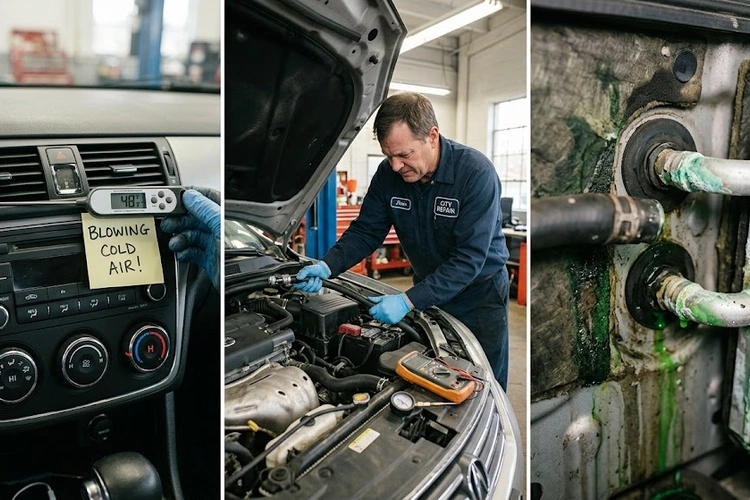
car heater not working — close-up of dashboard climate control vents
Figure 1 — A car heater not working often signals a deeper coolant or thermostat problem rather than a failed vent.
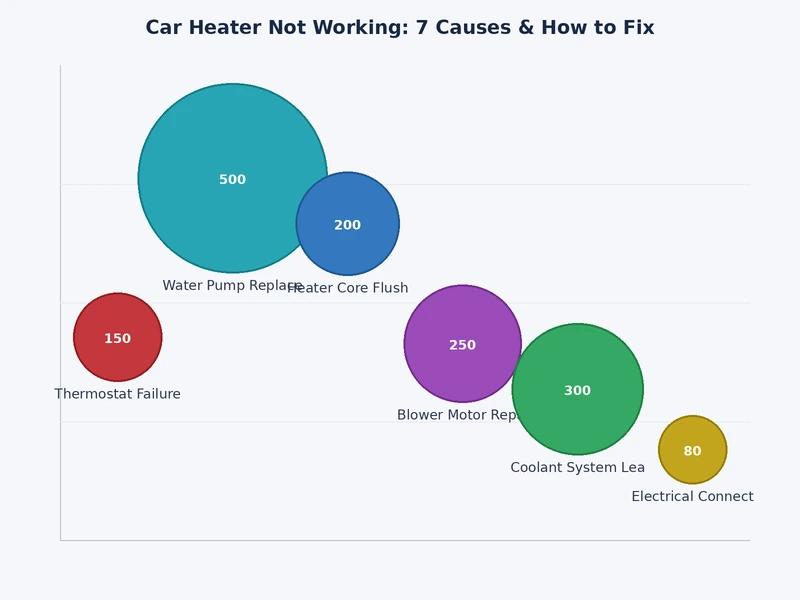
bar chart showing the 7 most common causes of a car heater not working ranked by frequency
Figure 2 — The 7 most common causes of a car heater not working, ranked by diagnostic frequency.

How Your Car's Heating System Actually Works

Your car's heater is not a standalone system — it is a branch of the engine cooling system, and it depends entirely on that system being healthy. Here is the basic chain of events that produces warm air in your cabin:

  • The engine generates heat as it runs, which coolant (a mix of antifreeze and water) absorbs as it circulates through the engine block.
  • A thermostat — a small valve — stays closed while the engine warms up, then opens to route hot coolant toward the radiator.
  • A portion of that hot coolant is diverted through the heater core, which is essentially a small radiator mounted behind your dashboard.
  • The blower motor (the cabin fan) pushes air over the heater core and out through your vents as warm air.
  • A blend door actuator — a small electric motor — controls a flap that mixes hot and cold air to match your temperature dial setting.

According to NHTSA's vehicle safety resources, heating and defrost systems are classified as safety-critical components because a failed defroster directly impairs driver visibility. When any single link in this chain breaks, the result is a car heater not working — and the fix depends entirely on which link failed.

The 7 Causes of a Car Heater Not Working

1. Low Coolant Level

This is the most common cause and the first thing to check. Your heater core needs a continuous supply of hot coolant to heat the cabin air, and when coolant is low, the core runs dry or partially starved.

  • Check the coolant reservoir (a translucent plastic tank under the hood) when the engine is completely cold.
  • The level must sit between the MIN and MAX marks — below MIN means the system is short on fluid.
  • A level that drops repeatedly over days or weeks points to a coolant leak that needs to be diagnosed and fixed, not just topped off.

Pro tip: Never open the radiator cap on a hot engine — the pressurized coolant can spray out and cause severe burns to your hands and face.

2. Faulty Thermostat

The thermostat regulates engine temperature by staying closed until the engine reaches operating temperature, then opening to allow coolant flow. When it sticks open, coolant circulates constantly and never builds up enough heat to warm the cabin effectively.

  • Watch your temperature gauge — a stuck-open thermostat keeps the needle near the cold end even after 10 or more minutes of driving.
  • The symptom is heat that feels lukewarm rather than completely absent, since the coolant is warm but never reaches its full temperature.
  • See the full breakdown in the guide on bad thermostat symptoms — it covers the diagnostic steps and typical replacement costs in detail.

3. Clogged or Failing Heater Core

The heater core can clog over time with rust, mineral deposits, or degraded coolant that forms a thick sludge inside its small tubes. A partially blocked core gives you weak heat; a fully blocked one gives you none.

  • A sweet, slightly syrupy smell inside the cabin is the most reliable indicator that coolant is leaking through a failing heater core.
  • Foggy windows that appear from inside the car — not condensation from outside — are another strong signal.
  • Wet or damp carpet on the passenger side floor is almost always a heater core leak and warrants immediate attention.
  • A shop can sometimes flush the core to clear soft deposits, which costs $100–$200; a full replacement requires removing the dashboard and runs $500–$1,000.

4. Failing Water Pump

The water pump drives coolant circulation through the entire cooling system, including through the heater core. A failing pump moves coolant too slowly or not at all, which starves the heater core of the hot fluid it needs.

  • Engine overheating alongside no cabin heat is the clearest combination that points to a failing water pump rather than an isolated heater problem.
  • Listen for a grinding or whining noise from the front of the engine — a worn pump bearing produces this sound, especially at idle.
  • Water pump replacement typically runs $300–$750 at a shop, depending on how accessible the pump is on your particular engine.

5. Broken Blend Door Actuator

Modern climate control systems use a small electric motor called a blend door actuator to move a flap that mixes hot and cold air to your selected temperature. When this actuator fails mechanically or electrically, the door can become stuck in the all-cold position.

  • A clicking or tapping noise from behind the dashboard when you adjust the temperature dial is the definitive symptom of a failed blend door actuator.
  • The part itself costs $20–$50, but labor varies widely depending on how deeply buried the actuator is in your dashboard assembly.
  • This cause is unique because it makes the car heater not working even when your coolant level, thermostat, and water pump are all perfectly healthy.

6. Coolant Leak

A coolant leak slowly drains the system until there is not enough fluid to supply the heater core — and it can originate from multiple points, ranging from minor hose cracks to catastrophic gasket failures.

  • Check the ground beneath the car after it sits overnight — green, orange, or pink puddles indicate active coolant loss from hoses, the radiator, or the water pump seal.
  • A blown head gasket is the most serious source, allowing coolant to mix with engine oil and escape internally rather than dripping externally.
  • White exhaust smoke with a sweet smell is the most visible sign of internal coolant combustion and signals you should stop driving immediately.

Warning: If your coolant reservoir empties within days of being refilled, stop driving and have the car towed — continued operation risks destroying the engine through overheating or oil contamination.

7. Blower Motor or Electrical Failure

Even when your entire cooling system is working perfectly, no warm air reaches you if the blower motor or its electrical circuit has failed. The blower motor is the fan that pushes air over the heater core and through the vents.

  • If you hear zero fan noise at any speed setting, start with the blower motor fuse — it is the fastest and cheapest fix to attempt before anything else.
  • If the fan works on some speed settings but not others, the blower resistor has likely failed — a $20–$40 part that most DIYers can replace in under an hour.
  • A completely dead blower motor with a good fuse points to the motor itself, which costs $200–$500 at most shops for parts and labor.

Quick Diagnostic Checks You Can Do at Home

Run through these steps in order before booking a shop appointment. Each check takes under five minutes and eliminates the simpler causes first.

  1. Check coolant level — engine cold, reservoir between MIN and MAX marks. If low, top off with the correct coolant type specified in your owner's manual.
  2. Monitor the temperature gauge — drive for 10 minutes; the needle should reach the midpoint. Staying near cold confirms a stuck-open thermostat.
  3. Cycle the fan through all speeds — if it works on some settings but not others, the blower resistor is the likely cause.
  4. Move the temperature dial slowly from cold to hot while listening — clicking from behind the dash points directly to a broken blend door actuator.
  5. Smell the cabin air — a sweet or syrupy smell with the heat on indicates coolant vapor entering through a leaking heater core.
  6. Check the passenger side floor mat — lift it and feel for moisture; wet insulation below the mat confirms heater core leakage.

If your vehicle also struggles to start in cold weather, a stuck-closed thermostat or weak coolant mix may be contributing to both problems at the same time — fixing one often resolves the other.

DIY vs. Professional Repair: Cost and Complexity Compared

The savings on certain repairs are significant enough to make DIY worth the effort, while others — particularly heater core replacements — are best left to professionals unless you have several hours and real mechanical experience.

Cause DIY Difficulty DIY Parts Cost Shop Cost (Parts + Labor)
Low coolant Very Easy $10–$20 $15–$30
Faulty thermostat Easy–Moderate $10–$30 $150–$300
Heater core flush Moderate $20–$40 $100–$200
Heater core replacement Very Hard $50–$200 $500–$1,000
Water pump Moderate–Hard $50–$150 $300–$750
Blend door actuator Easy–Moderate $20–$50 $150–$400
Blower motor or resistor Moderate $20–$80 $200–$500

The thermostat and blend door actuator deliver the highest DIY savings relative to difficulty and are the two repairs worth attempting yourself first. Heater core replacement is the exception — the dashboard disassembly required on most modern vehicles makes it a job where shop labor is money well spent.

Warning Signs of a More Serious Problem

Most heater failures are contained, fixable problems — but certain combinations of symptoms point to engine damage that goes well beyond the heating system itself.

  • Coolant disappears within days of refilling — the system has an internal leak, most likely a blown head gasket, and continued driving risks severe engine damage.
  • White smoke from the exhaust with a sweet smell — the engine is burning coolant internally; stop driving and have the car towed, not driven, to a shop.
  • Engine overheating at the same time as no cabin heat — the two symptoms together almost always indicate water pump failure or total coolant loss rather than an isolated heater component.
  • Oil that looks milky, foamy, or light brown on the dipstick — coolant is mixing with engine oil, which destroys lubrication and causes rapid engine wear.
  • Persistent rough idle alongside no heat — multiple systems are being affected simultaneously; the guide on rough idle causes covers the overlapping diagnostic path in detail.

Any one of the above means you should park the car and have it towed rather than driven to the shop — the potential repair bill from continued driving far exceeds a tow fee.

Preventing Heater Failures Before Cold Weather Hits

Consistent maintenance eliminates most car heater problems before they develop. Follow this schedule to keep the system reliable year-round.

  • Flush and replace coolant on schedule — most manufacturers recommend every 30,000–50,000 miles or every two to three years. Old coolant turns acidic and corrodes the heater core, the water pump, and the thermostat housing from the inside out.
  • Inspect coolant hoses annually — squeeze each hose by hand; replace any that feel stiff, brittle, spongy, or show surface cracking, since a burst hose can drain the entire system in minutes.
  • Replace the thermostat proactively during a coolant flush — the part costs $10–$30, and swapping it out while the system is already open costs almost nothing in labor.
  • Test the heater fully in late summer — run it at maximum heat for 10 minutes on a warm day so you discover any blend door or blower problems while there is still time to fix them before temperatures drop.
  • Use only the coolant type specified in your owner's manual — mixing incompatible formulas creates gel deposits that clog the heater core and are difficult to remove without a full system flush.

Heater Myths That Waste Your Money

Myth 1: Idling longer warms the cabin faster

Idling does warm the engine, but it does so slowly and wastes fuel in the process. Driving at moderate speed circulates coolant faster and brings the heater core to full temperature more quickly than sitting in your driveway does.

Myth 2: Adding water to the coolant reservoir is harmless in a pinch

Plain water is acceptable as a temporary emergency top-off, but it raises the freezing point of your coolant mixture and promotes internal rust and corrosion in the heater core and water pump over time. Flush and refill with the proper mix as soon as possible afterward.

Myth 3: Intermittent heat is a minor quirk, not a real problem

Intermittent heat is a warning, not a personality trait. It usually means an air pocket has entered the coolant system and is intermittently blocking the heater core, or that the thermostat is beginning to fail unpredictably. Fix it early rather than waiting for a complete failure.

Myth 4: You can just keep topping off coolant and ignore the leak source

Repeatedly refilling without finding the source is a slow path to engine damage and a large repair bill. Every coolant system that loses fluid has a leak — find it and fix it. The guide on coolant leak symptoms covers the step-by-step process for locating the source yourself.

Frequently Asked Questions

Why is my car heater blowing cold air?

The most common reasons are low coolant level, a stuck-open thermostat, or a clogged heater core. Start by checking the coolant reservoir when the engine is cold, then watch your temperature gauge during a 10-minute drive to confirm whether the engine reaches normal operating temperature.

How much does it cost to fix a car heater not working?

Costs range from $15 for a simple coolant top-off to over $1,000 for a heater core replacement that requires removing the dashboard. A faulty thermostat — one of the most common causes — runs $150–$300 at most shops including parts and labor.

Can I drive with a broken car heater?

You can drive if the engine reaches normal operating temperature and the only symptom is no cabin heat. However, if the heater failure is caused by low coolant or an active leak, driving risks severe engine overheating and internal damage — tow the car instead.

What does a bad heater core smell like?

A failing heater core produces a sweet, slightly syrupy smell inside the cabin — similar to maple syrup or candy — which is the scent of heated antifreeze vapor entering the passenger compartment through the damaged core. If you smell this, stop using the heat and have the core inspected promptly.

How long does heater core replacement take?

Most heater core replacements take a professional mechanic 4–8 hours because the entire dashboard assembly must come out to access the core on most modern vehicles. Labor is the dominant cost, not the part itself, which is why shop estimates commonly reach $500–$1,000 total.

Why does my car heater only work while driving, not at idle?

When heat is present at speed but absent at idle, the water pump is most likely not circulating coolant fast enough at low RPM to keep the heater core adequately supplied with hot fluid. Have the water pump inspected — a worn impeller (the internal fan inside the pump) is a common cause of this specific symptom pattern.

Is a car heater not working related to AC problems?

The two systems share the blower motor, blend door actuator, and cabin ductwork, but they do not share refrigerant components. If both heating and cooling are weak simultaneously, a failed blower motor or stuck blend door is likely the shared root cause. For cooling-specific diagnosis, the guide on car AC not blowing cold air covers the refrigerant side of the system in full detail.

Next Steps

  1. Check your coolant reservoir right now with the engine cold — if the level is below the MIN mark, top it off with the correct coolant type and monitor the level daily for the next week to determine whether an active leak is draining it.
  2. Take a 10-minute test drive and watch the temperature gauge the entire time — if the needle stays near the cold end after 8–10 miles of driving, schedule a thermostat replacement before you drive in cold weather again.
  3. Sit in the car with the engine warm and cycle the climate control through all fan speeds and from full cold to full hot while listening for clicking noises from the dashboard — this single test identifies two of the seven causes in under two minutes.
  4. If you detect a sweet smell inside the cabin or find damp carpet on the passenger side floor, book a heater core inspection at a shop before the next use — a leaking heater core can fill your footwell with coolant and impair your ability to brake safely.
  5. Schedule a full coolant flush if you cannot confirm one was done within the past 30,000 miles — fresh coolant prevents internal heater core corrosion, and the service typically costs $80–$150 at an independent shop.

About Sarah Whitfield

Sarah Whitfield is a diagnostics and troubleshooting specialist who spent ten years as an ASE-certified technician before joining the editorial team. She specializes in OBD-II analysis, electrical gremlins, and the kind of intermittent problems that make most owners give up.

Get some FREE car parts & gear.. Or check out the latest free automotive manuals and build guides here.

Disable your ad blocker to unlock all the hidden deals. Hit the button below 🚗