by Joshua Thomas
If your car smells like antifreeze, take it seriously. That sweet, syrupy odor — often compared to maple syrup or candy — signals that coolant is escaping your vehicle's cooling system. Left unchecked, even a small leak can lead to engine overheating, head gasket failure, and repair bills in the thousands. Understanding the cause is the first step toward a fix.
Antifreeze (coolant) circulates through your engine to regulate temperature. When it leaks — whether outside the vehicle or inside the cabin — that distinctive smell is usually the first warning. This guide walks you through every common cause and what to do about each one. For a full breakdown of related warning signs, visit our coolant leak symptoms service page.
Contents
Antifreeze typically contains ethylene glycol, which has a distinctively sweet, slightly chemical odor. Most people describe it as smelling like syrup, candy, or even bubble gum. Unlike oil or fuel smells, the antifreeze odor is soft and sweet — which is exactly why it can catch you off guard.
You might notice the smell strongest right after turning off a hot engine, when residual heat causes any leaked coolant to evaporate. You may also detect it inside the cabin — especially through the vents — or as a lingering scent underneath the vehicle after parking.
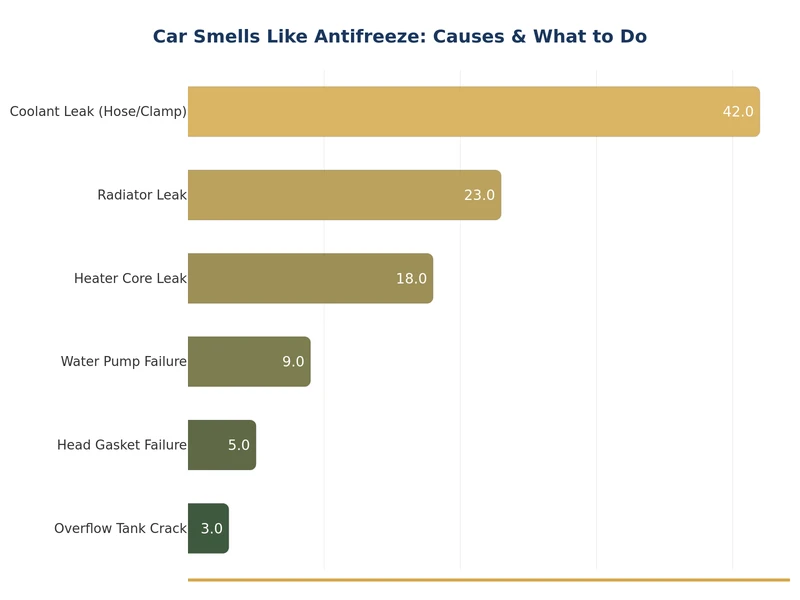
Several components in your cooling system can fail and allow coolant to escape. Some leaks are external and visible; others are internal and harder to detect. The table below summarizes the most common causes and how serious each one is.
| Cause | Location | Severity | Average Repair Cost |
|---|---|---|---|
| Radiator leak | Front of engine bay | Moderate | $150–$500 |
| Coolant hose leak | Engine bay (various) | Low–Moderate | $50–$200 |
| Water pump failure | Engine block (front) | Moderate–High | $200–$600 |
| Heater core leak | Inside dashboard | High | $500–$1,200 |
| Head gasket failure | Between block and head | Very High | $1,000–$3,000 |
| Coolant reservoir crack | Engine bay (side) | Low | $30–$100 |
| Radiator cap failure | Top of radiator | Low | $10–$30 |
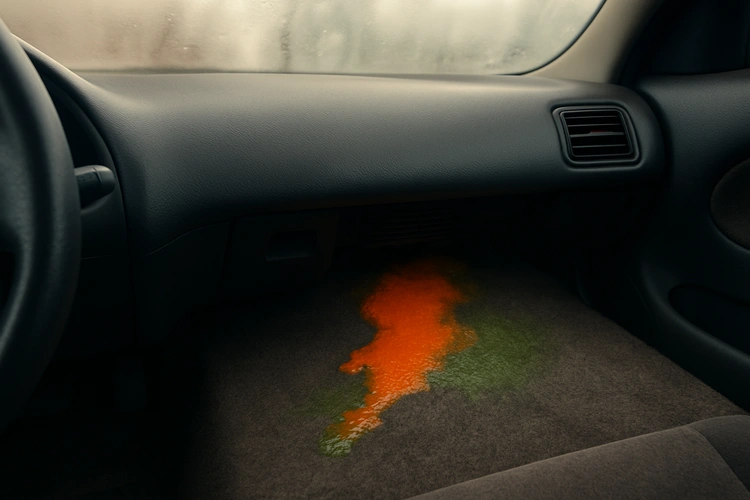
The most common reason a car smells like antifreeze is a straightforward external leak — coolant dripping or seeping from a hose, the radiator, water pump, or reservoir. You may spot a puddle of brightly colored liquid (green, orange, pink, or blue depending on the coolant type) beneath the vehicle after it has been parked.
Hoses degrade over time from heat cycling. Squeeze them when cold — a hose that feels hard, brittle, or spongy should be replaced. Inspect the radiator for small cracks or corrosion along the tanks and fins. Before inspecting, it helps to have a clean engine bay; our guide on how to clean an engine bay safely walks you through the process without risking electrical damage.
If the cooling system appears intact but the smell persists, coolant may be leaking internally — meaning it enters the combustion chamber or oil passages. This typically points to a blown head gasket, a cracked engine block, or a warped cylinder head.
Warning signs of an internal leak include white, sweet-smelling exhaust smoke, a milky or foamy appearance on the oil dipstick or under the oil cap, and a constantly dropping coolant level with no visible puddle. These symptoms require immediate professional attention.
The heater core is a small radiator-like unit inside the dashboard that warms cabin air. When it develops a leak, coolant vapors flow directly through the ventilation system into the passenger compartment. You'll notice the sweet antifreeze smell strongest when the heater or defroster is running, and the windshield may fog up on the inside even on dry days. In severe cases, you'll see a film of oily residue on the inside of the windshield or damp carpet on the passenger side floor.
In most cases, you should not continue driving when your car smells like antifreeze. The cooling system exists to prevent your engine from overheating — if coolant is leaking, that protection is compromised. Even a slow leak can cause the coolant level to drop low enough within a short drive to trigger overheating, which can warp the cylinder head or destroy the engine entirely.
If the smell is faint and the temperature gauge reads normal, you may be able to drive a short distance to a shop — but check the coolant level first (only when the engine is cold) and keep a close eye on the temperature gauge. If it climbs above normal, pull over immediately and let the engine cool before doing anything else. Do not open the radiator cap on a hot engine.
Start with a cold engine. Open the hood and look for visible signs of coolant — staining, crusty white or rust-colored deposits around hose connections, the radiator, water pump, and thermostat housing. Check the coolant reservoir for cracks and confirm the level is between the MIN and MAX marks. Trace all hoses from the radiator to the engine and back, checking clamps and connection points.
Check under the car for puddles. Coolant tends to be brightly colored and slightly oily to the touch. If you find residue but can't trace the leak, a piece of cardboard placed under the car overnight can help pinpoint the drip location.
A cooling system pressure test is the most reliable way to find small leaks that aren't visible. A mechanic attaches a hand pump to the coolant reservoir or radiator filler neck and pressurizes the system to the cap's rated pressure (usually 13–16 PSI). The pressure is held for 10–15 minutes; any drop indicates a leak. This test can also reveal internal leaks that wouldn't show up in a visual inspection.
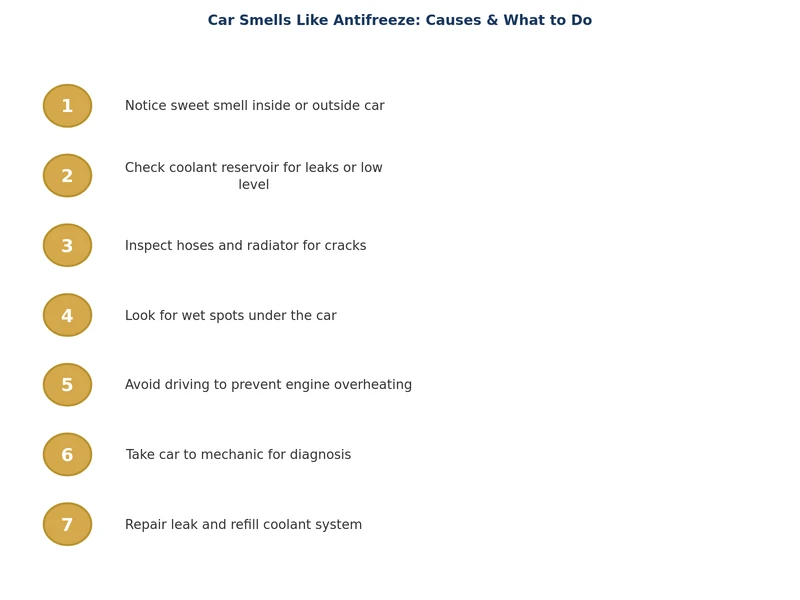
The fix depends entirely on the source. Here is a quick breakdown by cause:
After any repair, flush and refill the cooling system with fresh coolant mixed to the manufacturer's recommended concentration. While you're maintaining your vehicle, it's also a good time to check your brake fluid level and top it up if needed — neglecting fluids across the board is a common cause of avoidable breakdowns.
Routine maintenance goes a long way in preventing cooling system failures. Follow these practices to reduce the risk of ever dealing with an antifreeze smell:
If you're storing a vehicle for an extended period, make sure the cooling system is in good condition beforehand. Our guide on how to store a car for winter includes a full checklist of fluid checks and system inspections to complete before putting a vehicle away.
If there's no puddle under the car, the leak is likely internal. A blown head gasket or cracked cylinder head can allow coolant to burn in the combustion chamber or mix with engine oil without leaving visible traces outside. A pressure test and combustion leak test can confirm this.
Yes. Ethylene glycol vapors from a leaking heater core can enter the passenger compartment through the vents. Prolonged exposure causes headaches, nausea, and dizziness. If you smell antifreeze strongly inside the car, switch off the heater, ventilate the cabin, and get the heater core inspected promptly.
Costs vary widely by cause. A radiator cap replacement runs $10–$30; a hose replacement $50–$200; a water pump $200–$600; a heater core $500–$1,200; and a head gasket repair $1,000–$3,000 or more. Getting a diagnosis early keeps costs lower.
Antifreeze comes in green, orange, pink, blue, and yellow depending on the formulation. The color is dye added for identification. Do not mix different coolant types — they use different corrosion inhibitor chemistries that can react and form damaging sludge. Always use the type specified in your owner's manual.
Check it monthly and before any long trip. Always inspect it when the engine is cold — opening the radiator cap on a hot engine releases pressurized steam and can cause serious burns. The level should sit between the MIN and MAX markings on the translucent reservoir.
Only for a very short distance with extreme caution. Monitor the temperature gauge constantly and turn the heater on full blast — it acts as a secondary radiator and can help prevent overheating. Top up the coolant before driving if the level is low. Get the leak repaired as soon as possible; even small leaks worsen over time.
 |
 |
 |
 |

About Joshua Thomas
Joshua Thomas just simply loves cars and willing to work on them whenever there's chance... sometimes for free.
He started CarCareTotal back in 2017 from the advices of total strangers who witnessed his amazing skills in car repairs here and there.
His goal with this creation is to help car owners better learn how to maintain and repair their cars; as such, the site would cover alot of areas: troubleshooting, product recommendations, tips & tricks.
Joshua received Bachelor of Science in Mechanical Engineering at San Diego State University.


Get some FREE car parts & gear.. Or check out the latest free automotive manuals and build guides here.
Disable your ad blocker to unlock all the hidden deals. Hit the button below 🚗
| | | |
