by Joshua Thomas
When it comes to protecting your car's paint, two options dominate the conversation: ceramic coating vs paint protection film. Both shield your vehicle from the elements, but they work differently, cost differently, and suit different needs. Understanding which is right for you depends on your budget, how you use your car, and the level of protection you expect. If you want long-term gloss and chemical resistance, ceramic coating is compelling. If you need physical armor against rock chips and road debris, paint protection film (PPF) may be the smarter investment. This guide breaks down both options head-to-head so you can make an informed decision.
Before diving in, it's worth knowing that both products sit at the premium end of paint care. For those on a tighter budget, quality paint sealants offer a solid middle ground worth exploring.
Contents
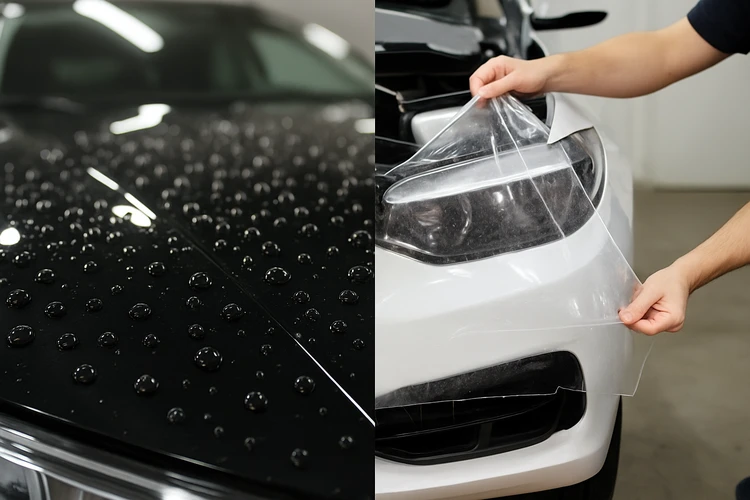
Ceramic coating is a liquid polymer applied by hand to your car's exterior. It chemically bonds with the factory paint, creating a semi-permanent hydrophobic layer. The active ingredient is typically silicon dioxide (SiO2), sometimes combined with titanium dioxide for added hardness. Once cured, the coating forms a rigid, glass-like shell that repels water, dirt, and contaminants.
Unlike wax, which sits on top of the paint and wears off in months, ceramic coating bonds at a molecular level. According to Wikipedia's overview of ceramic coatings, the cured layer measures only a few microns thick yet delivers measurable improvements in surface hardness and chemical resistance.
Pros: Exceptional gloss and hydrophobic effect. Easier maintenance — water beads and sheets off, taking dirt with it. Resistance to UV oxidation, bird droppings, tree sap, and industrial fallout. Lasts two to five years with proper care. Significantly cheaper than full PPF coverage.
Cons: Does not prevent rock chips or physical scratches. Application requires a perfectly decontaminated surface, often including paint correction. Professional installation adds to cost. Improper DIY application can cause streaking or high spots.
Paint protection film — also called clear bra — is a thick thermoplastic urethane film applied over the paint. It acts as a physical sacrificial layer, absorbing impacts from gravel, road debris, and minor abrasions before they reach the paint. Modern PPF films are optically clear and feature a self-healing top coat: minor swirl marks and scratches disappear with heat from the sun or a warm water rinse.
PPF is typically 6 to 8 mils thick, making it many times thicker than a ceramic coating. It can be cut precisely to cover vulnerable areas like the front bumper, hood leading edge, mirrors, and rocker panels — or it can wrap the entire vehicle.
Pros: Best-in-class physical protection against chips, scratches, and abrasions. Self-healing top coat repairs light surface marks. Protects against UV yellowing on modern films. Invisible on most colors. Can be removed without damaging paint.
Cons: Expensive, especially for full-vehicle coverage. Edges can lift over time if not installed correctly. Requires professional installation for clean results. Does not deliver the same depth of gloss as a standalone ceramic coating unless topped with one.
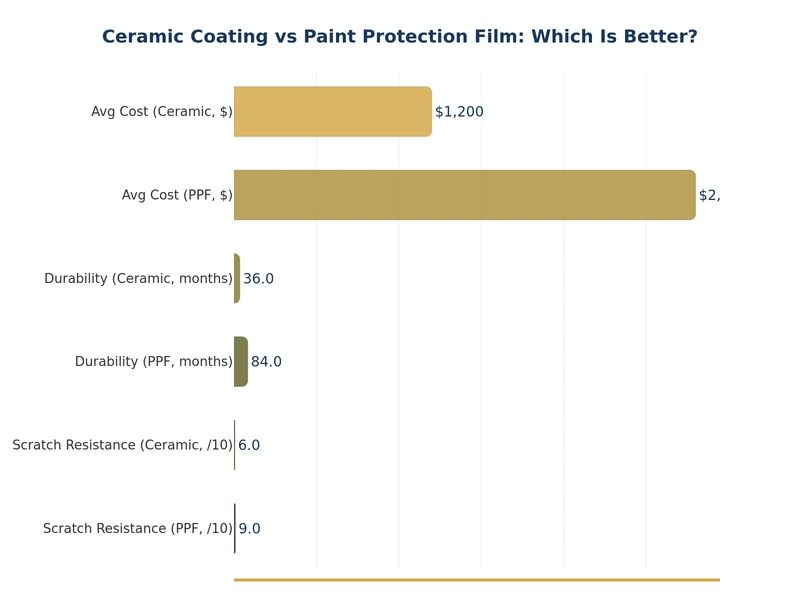
The table below summarizes the key differences between ceramic coating and paint protection film across the factors that matter most to car owners.
| Factor | Ceramic Coating | Paint Protection Film |
|---|---|---|
| Protection type | Chemical & UV | Physical & UV |
| Rock chip resistance | None | Excellent |
| Scratch resistance | Light swirls only | Self-healing |
| Hydrophobic effect | Excellent | Good (better with ceramic top coat) |
| Gloss enhancement | Excellent | Moderate |
| Typical lifespan | 2–5 years | 5–10 years |
| Average cost (full car) | $500–$2,000 | $2,000–$7,000+ |
| DIY friendly | Possible with prep | Not recommended |
| Removable | No (bonds to paint) | Yes |
Professional ceramic coating installation typically ranges from $500 to $2,000 depending on vehicle size, paint condition, and the number of coating layers. Prices rise when paint correction is needed beforehand — removing swirl marks and oxidation before coating can add $200 to $800 to the bill. Entry-level DIY kits start around $50 to $150, but results vary widely based on application skill.
Partial PPF coverage — front bumper, hood, and mirrors — typically costs $800 to $1,500. Full-vehicle wraps range from $2,500 to $7,000 or more for larger SUVs and exotic cars. Premium self-healing films from brands like XPEL or SunTek command higher prices. Because installation involves computer-cut patterns and precise edge work, professional application is strongly recommended.
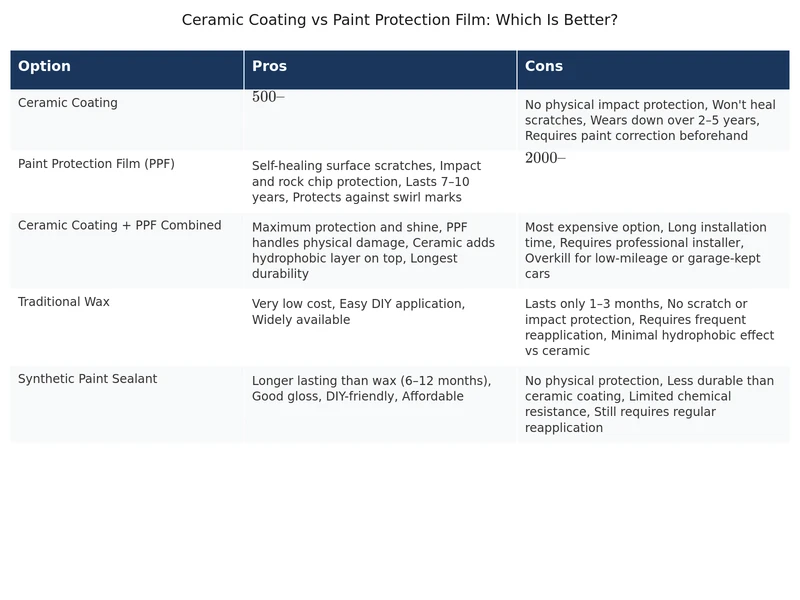
For everyday vehicles that encounter highway driving, gravel, and road salt, the ceramic coating vs paint protection film decision often favors a partial PPF install on high-impact areas combined with ceramic coating over the rest of the car. This hybrid approach protects the front clip from chips while keeping maintenance easy across the entire surface. If budget is a constraint, starting with a top-rated paint sealant and upgrading later is a practical path.
For high-value vehicles, full PPF coverage followed by a ceramic top coat is the gold standard. The investment represents a small fraction of the car's value while dramatically preserving resale price and paint condition. Exotic car owners who track their vehicles should prioritize PPF for its physical impact resistance — ceramic coating alone won't save a fender from a stone strike at highway speed.
Yes — and combining them is increasingly popular. Applying a ceramic coating on top of PPF delivers the best of both worlds: the physical protection of the film with the hydrophobic gloss and chemical resistance of the coating. The ceramic layer also makes the PPF surface easier to clean and more resistant to water spots. Many premium detailing shops offer this combination as a single package. Just ensure the PPF has fully cured before applying the ceramic coat — typically 48 to 72 hours.
In the end, the ceramic coating vs paint protection film debate doesn't have to be either/or. Assess where your car takes the most abuse, set a realistic budget, and choose accordingly. Both products, properly applied and maintained, will keep your paint looking its best for years.
Paint protection film is far superior for rock chip protection. Ceramic coating adds hardness and chemical resistance but has no meaningful thickness to absorb physical impacts. If rock chips are your primary concern, PPF on vulnerable front panels is the right choice.
A professionally applied ceramic coating typically lasts two to five years. High-quality paint protection film lasts five to ten years. Both lifespans depend on maintenance, climate, and exposure to harsh conditions.
Yes, DIY ceramic coating kits are widely available. However, proper application requires thorough paint decontamination, often paint correction, and precise application technique. Mistakes can cause streaking or uneven bonding that is difficult to correct without polishing the surface.
Older PPF films were prone to yellowing and hazing, especially under prolonged UV exposure. Modern premium films include UV inhibitors and optical-clarity top coats that resist yellowing significantly. High-quality films from reputable brands should remain clear for the life of the product when properly maintained.
Yes, and it is a popular combination. Applying ceramic coating over fully cured PPF enhances hydrophobic performance, makes the surface easier to clean, and adds gloss depth. Allow the PPF to cure fully — at least 48 to 72 hours — before applying the ceramic layer.
Both protect resale value by preserving paint condition. Full PPF coverage provides the strongest protection and is often highlighted as a premium feature in listings for luxury and exotic cars. Ceramic coating adds gloss and cleanliness that makes a vehicle more attractive to buyers. For maximum resale benefit, combining both on a high-value vehicle is ideal.
 |
 |
 |
 |

About Joshua Thomas
Joshua Thomas just simply loves cars and willing to work on them whenever there's chance... sometimes for free.
He started CarCareTotal back in 2017 from the advices of total strangers who witnessed his amazing skills in car repairs here and there.
His goal with this creation is to help car owners better learn how to maintain and repair their cars; as such, the site would cover alot of areas: troubleshooting, product recommendations, tips & tricks.
Joshua received Bachelor of Science in Mechanical Engineering at San Diego State University.


Get some FREE car parts & gear.. Or check out the latest free automotive manuals and build guides here.
Disable your ad blocker to unlock all the hidden deals. Hit the button below 🚗
| | | |
