by Sarah Whitfield
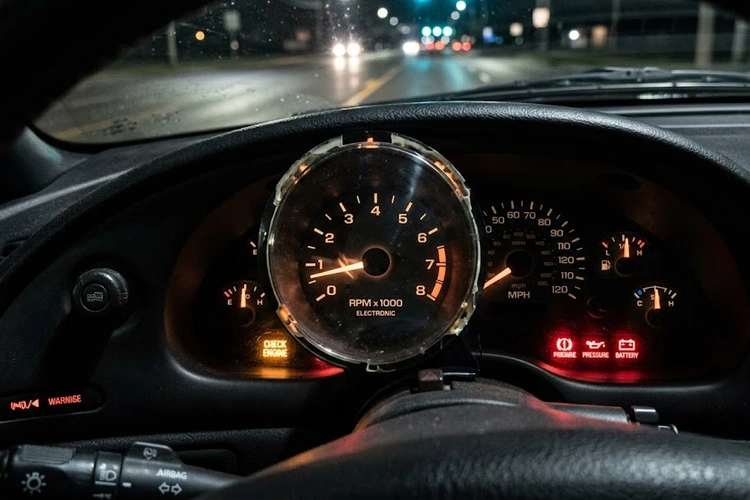
You're pulling into a gas station and tap the brakes. A deep, metallic grind cuts through the cabin. Not a squeak — a grind. Your stomach drops a little. That moment is familiar to a lot of drivers, and it's almost always a signal worth taking seriously. A grinding noise when braking means something inside your brake system is making contact that it shouldn't. Ignore it and a $150 pad swap becomes a $500 rotor job. If you've ever felt your brake pedal go to the floor, you already know how fast brake issues can compound. This guide covers 7 causes, how to identify each one, and what to do about it.
Contents
Not every grind has the same cause. Some are urgent — stop driving immediately. Others can wait a day. Knowing the difference protects both your safety and your wallet. Here are the 7 most common culprits.
This is the most common cause by a wide margin. Brake pads have a layer of friction material bonded to a metal backing plate. When the friction material wears away completely, that metal plate presses directly against the iron rotor. Every stop after that scores the rotor surface deeper. You'll feel a vibration through the pedal. The grinding gets louder over time. At this stage, you're damaging expensive parts fast.
According to the National Highway Traffic Safety Administration (NHTSA), brake system failures are a significant contributor to vehicle crashes. Worn pads that go unchecked are a preventable part of that statistic.
If your car sat overnight in the rain or dew, you might hear grinding during your first few stops the next morning. That's surface rust. Bare iron rotors oxidize quickly in moisture. When the brake pads wipe the rotor surface, they scrape that thin rust layer off. It usually clears up within a quarter mile of normal driving. If the grinding continues past that, look elsewhere.
A small pebble, a shard of road grit, or even a piece of hardened mud can lodge between your brake pad and rotor. The noise is usually sudden and loud. Sometimes the debris gets ground down and the noise disappears on its own within a mile or two. If it doesn't clear, the debris is scoring the rotor. Pull over and check the wheel assembly when it's safe to do so.
Pro tip: If grinding starts immediately after driving on a gravel road or unpaved surface, suspect debris before assuming worn pads — especially if the sound is inconsistent rather than constant with each stop.
Cheap brake pads — or pads that have been overheated — can develop a glaze on their surface. This is a hard, shiny layer that reduces friction and grip. Glazed pads scrape rather than bite the rotor, producing a grinding or rasping sound. If your brakes also squeal before they grind, glazing is worth investigating. The fix usually means new pads and a check of the rotor surface for damage.
The brake caliper is the hydraulic clamp that squeezes the pads against the rotor when you press the pedal. It's held by mounting bolts and slides on lubricated guide pins. If a bolt backs out or a guide pin seizes, the caliper can shift out of alignment. It may drag against the rotor even when your foot is off the pedal entirely. You'll hear grinding while rolling, not just while stopping. The car may also pull to one side as the dragging caliper creates an uneven braking force.
A wheel bearing is a set of steel balls inside a sealed hub that allows your wheel to spin smoothly. When a bearing wears out, it produces a grinding or growling sound that closely mimics brake noise. The key difference: bearing noise often changes pitch when you gently sway the car left and right at highway speeds. It also tends to be constant — not just when braking. A failing bearing is a safety issue. The wheel can seize or, in severe cases, separate from the hub.
Most modern brake pads include a small metal tab called a wear indicator. As the pad friction material wears down, this tab gets closer to the rotor. When it makes contact, it produces a high-pitched squeal — that's the warning. If you keep driving past the squeal without replacing the pads, the tab eventually grinds rather than squeals. Consider the squeal stage a countdown. The grind stage means the clock ran out.
You don't need a full workshop to figure out what's going on. A basic visual inspection requires tools most home mechanics already have.
A floor jack and a set of jack stands let you safely lift the car and remove a wheel. If you do brake work more than once a year, a portable lift like the QuickJack BL-5000SLX makes the job considerably faster and safer in a home driveway setup. A breaker bar and lug wrench handle the wheels. A flashlight or phone light helps you see the pad surface and rotor through the wheel opening before you pull anything apart. A brake pad thickness gauge gives you a precise measurement — most pads need replacement at or below 2–3mm of friction material remaining.
For more detailed diagnosis — checking rotor runout (wobble) or caliper slide pin condition — you'll want a dial indicator and a torque wrench. But for a quick triage to narrow down the cause, the basic tools are enough to get you 80% of the way there.
Warning: Never assess pad thickness by peeking through the wheel spokes. The wheel must come off for a reliable look at the full pad surface — the inner pad wears faster and is invisible from the outside.
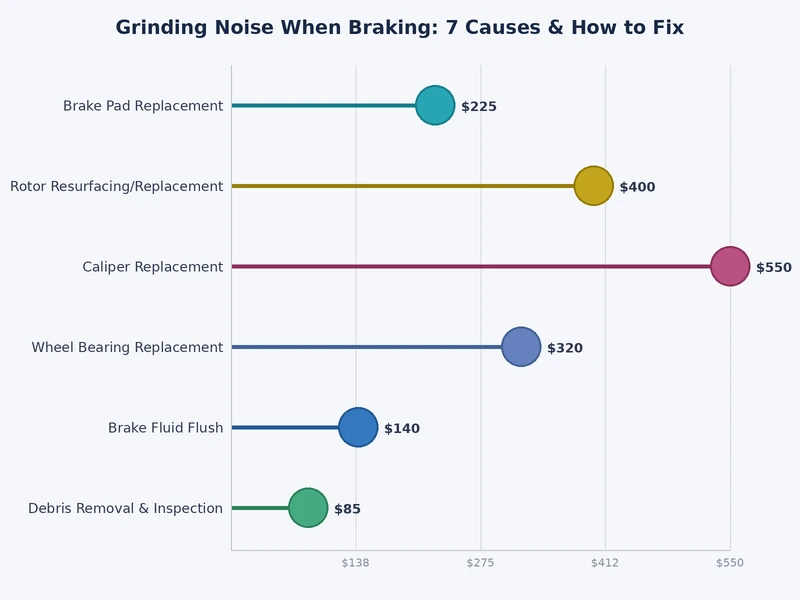
Once you've identified the source, the repair path becomes much clearer. The table below summarizes each cause, its urgency level, and what a typical fix involves.
| Cause | Urgency | Fix | Avg. Cost (Parts + Labor) |
|---|---|---|---|
| Worn brake pads | High — stop driving | Replace pads; resurface or replace rotors | $150–$400 per axle |
| Rusted rotors | Low — usually self-resolving | Normal braking clears surface rust | $0 (monitor closely) |
| Debris in brakes | Medium | Drive cautiously; inspect if noise persists | $0–$50 (inspection) |
| Glazed brake pads | Medium | Replace pads; inspect rotors for damage | $80–$250 per axle |
| Loose caliper | High — stop driving | Tighten or replace caliper hardware and pins | $100–$350 |
| Worn wheel bearing | High | Replace wheel bearing or hub assembly | $150–$400 per wheel |
| Wear indicator tab | High | Replace pads immediately; inspect rotors | $80–$200 per axle |
When replacing brake pads, always swap them in axle pairs — both front or both rear at the same time. Replacing just one side creates uneven braking force and can cause the car to pull under hard stops. If the rotors show visible grooves or scoring deeper than about 1mm, replacement usually makes more sense than resurfacing, especially on high-mileage cars. Resurfacing shaves material off the rotor, and thin rotors overheat faster and warp more easily.
For a loose caliper, start by inspecting the slide pins. These pins allow the caliper to float slightly as the pads wear. They need periodic lubrication with high-temperature brake grease. A seized slide pin is one of the most overlooked causes of dragging brakes and premature pad wear. If the pins are corroded solid, replace them rather than forcing them free — stripped threads in the caliper bracket are expensive to fix.
Brake pad replacement sits comfortably in the DIY zone for most people. You need basic hand tools, a C-clamp to compress the caliper piston, and a few hours. The process is well-documented, and the savings over shop labor are real — typically $80 to $150 per axle. Pads themselves range from $25 to $80 per axle depending on quality.
But some repairs cross a line. Calipers on vehicles with electronic parking brakes (EPB) require a scan tool or a specialized caliper wind-back tool to retract the piston — the piston threads in rather than compressing straight back. Doing it wrong damages the caliper. Wheel bearing replacement on many front-wheel-drive cars requires a hydraulic press to separate and seat the bearing properly. Attempting it with improvised tools usually damages the new bearing immediately.
If you notice other symptoms alongside the grinding — like a fluid leak near a wheel, an unusually soft brake pedal, or a burning smell after driving — have a professional look at the whole system. Brake fluid contaminated with oil or other fluid dramatically reduces braking performance in ways that aren't always visible during a casual inspection.
Consider a driver who hears grinding only during the final few feet of a slow stop — the last moment before the car comes to a complete halt. That pattern typically points to severely worn pads where the metal backing barely contacts the rotor at very light pedal pressure. At speed, pad pressure and heat create a thin buffer that masks the contact. When the car slows to a crawl and pedal pressure drops off, the buffer disappears and the metal touches.
Another pattern: grinding that shows up only on the first stop of the day, then vanishes completely. That's almost always surface rust on the rotors. Overnight condensation or morning dew oxidizes the bare iron surface quickly. One or two firm brake applications scrub it clean. If it consistently clears up within a block, you probably don't have a pad problem — yet. Still worth noting the trend.
A third scenario is grinding that happens while rolling at highway speed with no foot on the brake pedal at all. The sound shifts slightly when you change lanes or take a wide sweeping turn. That's a wheel bearing, not a brake issue. The diagnostic test is straightforward: at a safe highway speed, slowly sway the car left and right by a few feet. If the growl shifts from louder to quieter as you change direction, you've located the bad bearing side. This is a time-sensitive fix — a bearing that fails completely can lock a wheel.
Don't assume one noise means one problem. A car that grinds when braking sometimes has secondary issues developing in parallel. If you also notice hesitation when the transmission shifts, it's worth checking for low transmission fluid symptoms at the same time — some brake jobs require dropping the car and give you access to inspect other components easily.
If you heard the grind for the first time today, here's how to think through your next steps before committing to a repair or a shop visit.
Start by characterizing the sound. Is it grinding only when you apply the brakes, or is it constant while the car is in motion? Constant grinding while rolling — with no pedal input — points to a seized caliper or a failing wheel bearing. Both are high-urgency situations. Drive only as far as necessary to get the car to a safe location or a shop.
Next, check the pedal feel. A firm pedal that grinds is a different situation than a soft or spongy pedal that grinds. Soft pedal plus grinding suggests a brake fluid or master cylinder issue. That combination should be treated as an emergency. Our guide on brake squealing causes also covers how pedal behavior helps you sort different types of brake noise.
Finally, do a quick visual check through the wheel spokes. Look at the rotor surface. Visible grooves or a lip on the outer edge of the rotor confirms the pads have been grinding long enough to cause real damage. Similar diagnostic thinking — listening carefully, checking fluid levels, assessing related symptoms — applies to other car issues too. Catching a rough idle early uses the same methodical approach: don't wait for a small warning sign to become an expensive failure.
It depends on the cause, but the short answer is: not long. Worn pads grinding metal-on-metal cause rotor damage with every stop. A day or two of careful driving to reach a shop is reasonable. A loose caliper or failing wheel bearing is more urgent — those can cause sudden brake failure or a wheel lockup. If the grinding is constant while rolling, stop driving immediately.
Sometimes, yes — but only in specific cases. Surface rust on the rotors after a car sits in wet weather will typically clear up after a few stops. Debris caught between the pad and rotor may get ground down and disappear within a mile or two. Any other cause — worn pads, loose caliper, bad bearing — will not fix itself and will continue to worsen.
Generally, no. The braking system is your primary safety mechanism. Metal-on-metal contact from worn pads progressively damages the rotors and reduces stopping power. A dragging caliper can overheat and cause brake fade. A failing wheel bearing can seize. Each of these scenarios creates serious safety risk. Have the issue diagnosed and repaired as soon as possible rather than continuing to drive on a compromised brake system.
 |
 |
 |
 |

About Sarah Whitfield
Sarah Whitfield is a diagnostics and troubleshooting specialist who spent ten years as an ASE-certified technician before joining the editorial team. She specializes in OBD-II analysis, electrical gremlins, and the kind of intermittent problems that make most owners give up.
Get some FREE car parts & gear.. Or check out the latest free automotive manuals and build guides here.
Disable your ad blocker to unlock all the hidden deals. Hit the button below 🚗
| | | |
