by Joshua Thomas
Dirty floor mats are one of the most overlooked parts of car maintenance. Knowing how to clean carpet car floor mats properly keeps your interior looking sharp, prevents odors, and extends the life of your mats. Whether you're dealing with caked-on mud, food spills, or ground-in grime, the process is straightforward and requires only basic supplies you likely already own.
If your car has developed a stale smell alongside dirty mats, pairing this routine with our guide on how to remove mildew smell from car will give you a truly fresh interior.
Contents
Gather everything before you start. Having the right tools on hand makes the job faster and more thorough.
For stubborn stains, use a dedicated car carpet stain remover formulated for automotive interiors. These products break down grease, mud, and food residue more effectively than general household cleaners and are safe for mat fibers.
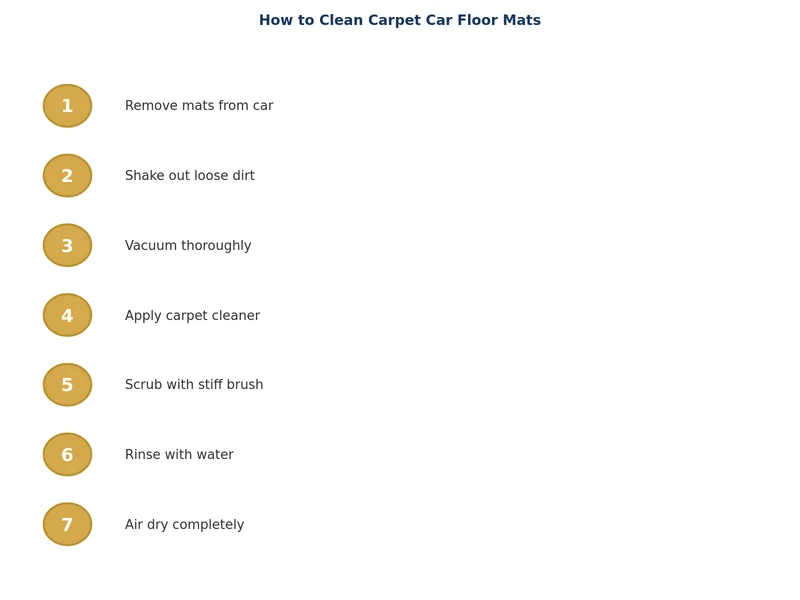
Pull all mats out of the vehicle. Most carpet mats clip into floor anchors — unhook them carefully. Take the mats outside and shake each one vigorously to dislodge loose dirt, gravel, and debris. This single step removes a surprising amount of dry material and makes every step that follows easier.
Lay the mats flat on a clean, dry surface. Vacuum both the top surface and the rubber backing, paying close attention to edges and textured grooves where fine particles settle. Use a crevice tool for tight areas. Vacuuming before applying any liquid prevents dry dirt from turning into muddy paste that drives deeper into the fibers.
Spray carpet cleaner directly onto stained or heavily soiled areas and let it dwell for 3–5 minutes. This soak time is important — it allows the cleaning agents to break apart the bond between the stain and the carpet fibers. For oily spots, blot with a dry towel first to absorb excess before applying the product.
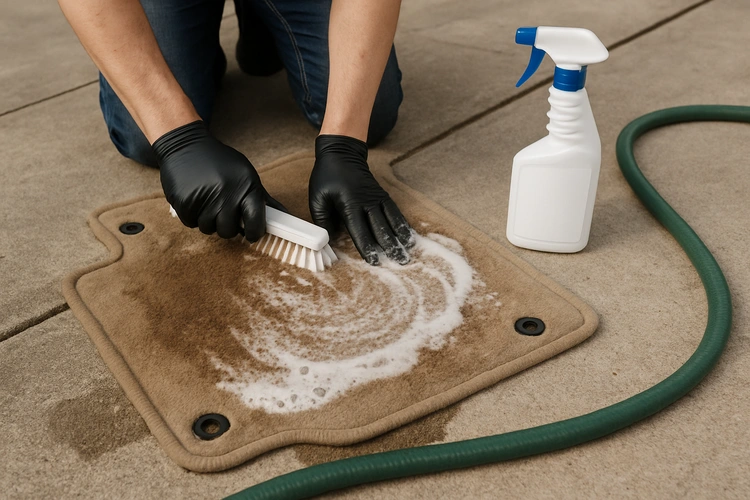
Work the cleaner into the carpet using a stiff-bristle brush with firm circular motions. Apply enough pressure to agitate the fibers without fraying them. Always work from the outside edge of a stain inward to prevent it from spreading. Rinse the brush in clean water periodically so you aren't redistributing dirt as you work.
Rinse the mat with clean water. Outdoors, a garden hose on a gentle setting works well. Indoors, use a damp microfiber towel to wipe away cleaner residue, refreshing the towel frequently. If you have a wet/dry vacuum, use it to extract as much moisture as possible — this dramatically shortens drying time and reduces the risk of mildew.
Hang mats vertically or prop them against a wall in a well-ventilated area. Never reinstall damp mats — trapped moisture underneath leads to mold growth and persistent odors. On a warm, sunny day, mats dry in 1–2 hours. In humid or cool conditions, allow 4–6 hours or position a fan to accelerate airflow.
Standard carpet cleaner handles most everyday dirt, but some stains require a targeted approach.
Let mud dry completely before treating it. Wet mud spreads and embeds deeper when scrubbed. Once dry, break up the crust with a stiff brush, vacuum up the loosened material, then apply cleaner and scrub normally. Attempting to clean wet mud typically makes the stain worse.
Blot liquid spills immediately with a clean cloth — pressing straight down, not rubbing. For dried food, dampen the area with a warm, wet towel to soften the residue before scrubbing. Coffee and cola respond well to a solution of one part white vinegar to two parts warm water with a small amount of dish soap mixed in.
Apply a small amount of dish soap or automotive degreaser directly to the stain. Let it sit for five minutes, then scrub with a brush and rinse thoroughly. Repeat if needed. Avoid saturating the mat with excessive water, as prolonged moisture promotes mildew growth underneath.
Rubber gloves or a dedicated pet hair tool drag embedded hair to the surface before vacuuming removes it. For odors, sprinkle a generous layer of baking soda over the dry mat, let it sit for 30 minutes, then vacuum completely. For severe odor problems combined with visible discoloration, our guide on how to remove mold from car interior walks through the deeper treatment required.
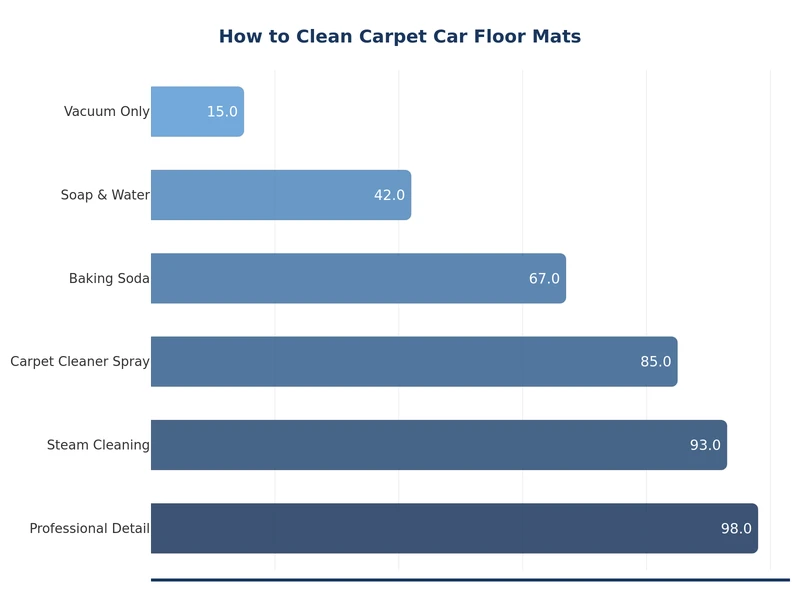
Different situations call for different approaches. Use this table to choose the right method for your mats.
| Method | Best For | Equipment Needed | Drying Time | Effectiveness |
|---|---|---|---|---|
| Dry vacuum only | Light dust and debris | Vacuum | None | Basic |
| Spray cleaner + brush | General dirt and stains | Cleaner, brush, towels | 1–3 hours | Good |
| Hose rinse + cleaner | Heavy mud and grime | Hose, brush, cleaner | 2–4 hours | Very good |
| Wet/dry vacuum extraction | Deep cleaning, fast drying | Wet/dry vac, cleaner | 30–60 min | Excellent |
| Steam cleaning | Sanitizing, odor removal | Steam cleaner | 1–2 hours | Excellent |
Cleaning frequency depends on your driving habits and conditions.
Between deep cleans, a quick vacuum each week keeps buildup manageable and prevents soil from embedding into the fibers. If you're doing a full interior detail, our guide on how to clean car door panels covers every interior surface material you'll encounter alongside your mats.
According to Wikipedia's overview of carpet cleaning, regular vacuuming and periodic deep cleaning are the two most effective practices for maintaining carpet fibers and preventing permanent staining — principles that apply equally to automotive carpet mats.
During wet or muddy seasons, place rubber all-weather mats on top of your carpet mats. They catch the worst of the mud and water and take only seconds to hose clean, protecting the carpet layer underneath from heavy soiling.
A 30-second shake outdoors each week removes loose particles before they work their way into the carpet fibers. This simple habit significantly extends the interval between full deep cleans.
The faster you treat a spill, the easier it is to remove. Keep a pack of automotive carpet cleaning wipes in your glove box for quick action on fresh spills before they set.
Always ensure mats are completely dry before putting them back in the car. Even slightly damp mats trap moisture against the vehicle carpet underneath, creating ideal conditions for mold and odor.
For regular daily drivers, a deep clean once a month is ideal. If you drive in muddy or wet conditions frequently, clean every two weeks. Light-use vehicles can go 2–3 months between deep cleans, but vacuuming weekly helps in all cases.
It depends on the mat. Lightweight carpet mats without rubber backings can often be machine washed on a gentle, cold cycle. Heavy mats with thick rubber bases should not go in the machine — the rubber can crack and damage the machine's drum. Hand cleaning with a brush is safer and just as effective.
A dedicated automotive carpet or upholstery cleaner is the best choice because it is formulated to lift vehicle-specific soils like road grime and grease without damaging mat fibers. Enzyme-based cleaners work especially well on organic stains like food and pet accidents.
After cleaning, use a wet/dry vacuum to extract as much water as possible, then hang the mats vertically in a well-ventilated area. A box fan directed at the mats cuts drying time in half. Avoid laying them flat on a non-breathable surface, which traps moisture underneath.
Yes, with caution. Most household carpet cleaners are safe for automotive carpet mats, but avoid formulas with bleach or optical brighteners, which can fade colored mats. Test a small hidden area first. Automotive-specific products are formulated for the fiber types and soil profiles found in vehicles and are generally the better option.
The most common cause of mat odors is moisture — either from wet shoes, spills, or mats being reinstalled before they fully dry. Always dry mats completely before use. Sprinkle baking soda on dry mats and let it sit for 30 minutes before vacuuming to neutralize existing odors. Using rubber overlay mats in wet weather also helps by keeping the carpet layer dry.
 |
 |
 |
 |

About Joshua Thomas
Joshua Thomas just simply loves cars and willing to work on them whenever there's chance... sometimes for free.
He started CarCareTotal back in 2017 from the advices of total strangers who witnessed his amazing skills in car repairs here and there.
His goal with this creation is to help car owners better learn how to maintain and repair their cars; as such, the site would cover alot of areas: troubleshooting, product recommendations, tips & tricks.
Joshua received Bachelor of Science in Mechanical Engineering at San Diego State University.


Get some FREE car parts & gear.. Or check out the latest free automotive manuals and build guides here.
Disable your ad blocker to unlock all the hidden deals. Hit the button below 🚗
| | | |
