Car Care ›
by Diego Ramirez
If you want your car to look truly finished, you need to know how to clean exhaust tips properly. Those chrome or stainless steel pipes take a beating from heat, carbon buildup, and road grime. A few minutes with the right products can restore them to a mirror shine that rivals a showroom finish. Whether you drive a daily commuter or a weekend cruiser, clean exhaust tips make a real difference in the overall look of your vehicle.
This guide walks you through every step — from stripping away carbon deposits to polishing for that deep reflective gleam. You don't need professional tools, just the right technique and a little patience.
Contents
Exhaust tips are exposed to extreme heat cycles, unburned fuel residue, oil vapors, and road debris. Carbon soot bonds to the metal surface over time, and if left untreated it bakes on and becomes increasingly difficult to remove. Stainless steel is corrosion-resistant, but it still discolors from heat and collects carbon. Chrome-plated tips are even more vulnerable because the plating can pit if harsh deposits are left too long.
The good news is that even heavily sooted tips respond well to cleaning once you know the right approach. Regular maintenance — ideally every time you detail your car's interior — prevents buildup from becoming a major project.
You don't need a full detailing kit to get great results. Here's what to gather before you start:
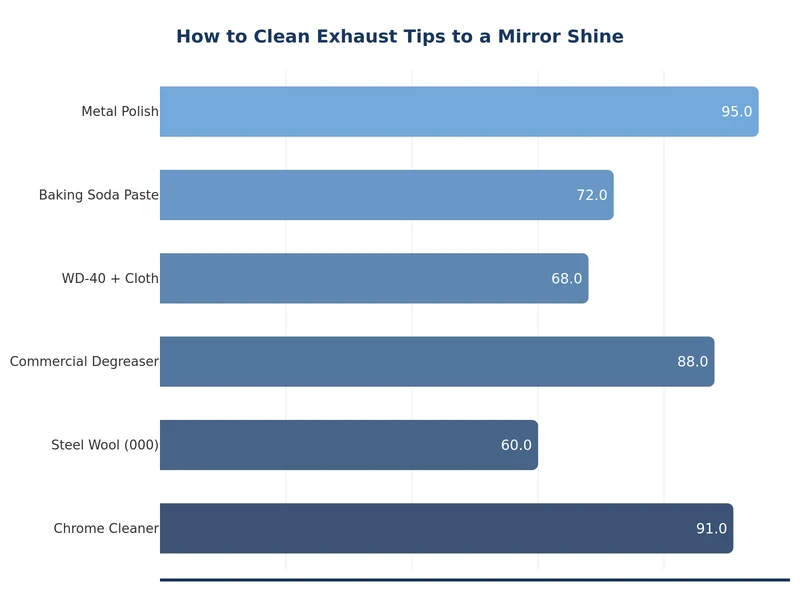
The polish you choose matters. Using the wrong product on chrome can scratch the plating. The table below compares the most common options:
| Product Type | Best For | Abrasiveness | Finish Level |
|---|---|---|---|
| Chrome polish (e.g., Mothers Mag) | Chrome-plated tips | Low | Mirror |
| Metal polish (e.g., Flitz, Wenol) | Stainless steel tips | Low–Medium | Mirror |
| Autosol Metal Polish | Both chrome and stainless | Medium | High gloss |
| 0000 Steel wool + polish combo | Heavy carbon deposits | Medium | Satin–Mirror |
| Bar Keepers Friend (powder) | Light oxidation on stainless | Low | Bright satin |
For chrome tips, check out our guide to the best chrome polishes to find a product that won't damage the plating.
Always work on a cool exhaust. Cleaning hot metal can cause burns, and some chemicals react badly to heat. Let the car sit for at least 30 minutes after driving before you begin.
Spray a generous amount of automotive degreaser inside and outside the tip. Let it sit for 2–3 minutes to break down the oily carbon layer. If the buildup is severe, stuff a rag soaked in degreaser inside the tip and leave it for 5 minutes. This soak stage is the most important — it's what separates a 10-minute job from a 45-minute scrubfest.
Using your exhaust brush or 0000 steel wool, scrub in circular motions both inside the barrel and on the outer face. Apply moderate pressure — you want to lift the carbon, not gouge the metal. For stubborn baked-on soot, apply a small amount of metal polish directly to the steel wool and work it in. The mild abrasive cuts through carbon without scratching when used correctly. Rinse your brush frequently to avoid dragging grit across the surface.
Rinse thoroughly with clean water, making sure to flush the inside of the barrel. Any degreaser or polish residue left to dry will leave a haze. Dry immediately with a clean microfiber cloth — air drying leaves water spots on polished metal. At this stage your tips should look clean but dull. The shine comes next.
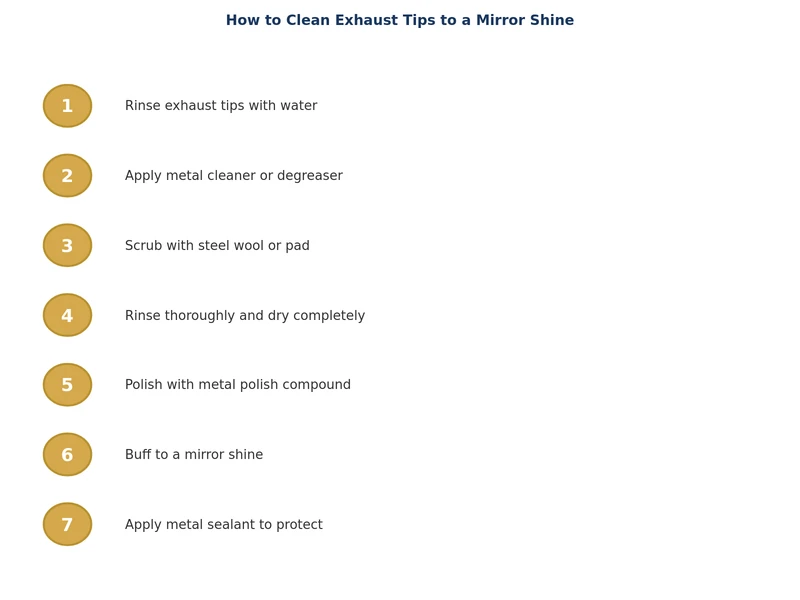
Polishing is what separates a clean exhaust tip from a mirror-shine exhaust tip. This step takes 5–10 minutes per tip and makes a dramatic visual difference.
Apply a pea-sized amount of chrome polish to a foam applicator pad. Work it into the surface using small overlapping circles. You'll see a dark residue build up — that's the polish doing its job, lifting microscopic oxidation and leveling the surface. Buff off with a clean microfiber cloth using light pressure. Repeat once more for a deeper shine. Avoid getting chrome polish on rubber gaskets or painted surfaces — it can stain.
Stainless responds well to metal polish like Flitz or Mothers Mag. Apply to a microfiber cloth rather than a foam pad — the tighter weave helps cut through heat discoloration (the blue-yellow tint that develops from exhaust heat). Work in the direction of the metal's grain when possible to avoid cross-grain scratches. Buff immediately before the polish dries. For heavily discolored stainless, two to three passes may be needed. The result should be a near-mirror finish even on tips with significant heat staining.
Just as polishing your car's paint by hand requires consistent technique and quality products, exhaust tip polishing rewards patience and the right compound.
The easiest way to maintain mirror-shine exhaust tips is to prevent heavy buildup from forming in the first place. After polishing, apply a thin layer of carnauba wax or a dedicated metal sealant to the outer face of the tip. This creates a barrier that makes future carbon deposits easier to wipe off.
Include the exhaust tips in your regular wash routine. A quick scrub with a soft brush during each wash removes surface soot before it bakes on. For drivers who want their entire car to look its best without spending hours on it, professional detailing services can handle this — though understanding what car detailing costs helps you decide when it's worth outsourcing versus doing it yourself.
Avoid applying wax or sealant inside the tip barrel — heat will burn it off immediately and can create unpleasant fumes.
For most drivers, cleaning exhaust tips once a month keeps buildup manageable. If you notice visible soot or discoloration after a week, bump it to every two weeks. The more frequently you clean, the easier each session will be.
WD-40 can help loosen light carbon deposits and is safe for metal surfaces, but it's not a polish. It leaves an oily residue that attracts new dirt quickly. Use it as a first-pass cleaner, then follow up with a proper metal polish for lasting results.
Standard steel wool will scratch chrome or polished stainless steel. Always use 0000 (ultra-fine) grade steel wool, which is fine enough to scrub without leaving visible scratches. Never use coarse grades on any polished metal surface.
Blue and yellow heat tinting on stainless steel responds to metal polishes with mild abrasives, like Flitz or Mothers Mag & Aluminum Polish. Work the polish in the direction of the metal grain using moderate pressure. Multiple passes are usually needed for severe discoloration.
Yes, most chrome polishes are safe on stainless steel and will produce a good shine. However, dedicated metal polishes are often more effective at removing heat staining from stainless. Check the product label to confirm compatibility before use.
After polishing, apply a thin coat of carnauba wax or a metal sealant to the outer face of the tip. This protective barrier makes carbon soot much easier to wipe away during regular washes and significantly slows the buildup process.
 |
 |
 |
 |

About Diego Ramirez
Diego Ramirez has been wrenching on cars since his teenage years and has built a deep practical knowledge of automotive maintenance and paint protection through years of hands-on work. He specializes in fluid service intervals, preventive care routines, exterior protection products, and the consistent habits that extend a vehicle's lifespan well beyond average. At CarCareTotal, he covers car care guides, cleaning and detailing products, and exterior maintenance and protection reviews.
Get some FREE car parts & gear.. Or check out the latest free automotive manuals and build guides here.
Disable your ad blocker to unlock all the hidden deals. Hit the button below 🚗
| | | |
