Car Care ›
by Diego Ramirez
The 3M Chrome and Metal Polish is our top pick for 2026 because it consistently delivers mirror-like results on chrome, stainless steel, and brass without any risk of micro-scratching. Chrome surfaces on vehicles — bumpers, trim rings, exhaust tips, and wheel accents — are among the most visually prominent components on any car or truck, and keeping them in pristine condition requires a formula that balances abrasive cutting power with surface-safe chemistry. Our team evaluated seven leading chrome polishes across real-world conditions, testing on automotive trim, motorcycle exhaust, and marine fittings to give a comprehensive picture of what each product actually delivers in 2026.
Chrome plating is a thin electrodeposited metallic layer that resists corrosion under ideal conditions, but road salt, brake dust, industrial fallout, and moisture exposure cause even well-maintained chrome to develop oxidation, pitting, and dullness over time. According to Wikipedia's overview of chrome plating, the electroplating process creates a hard, reflective surface that is inherently vulnerable to micro-pitting and corrosion when the protective layer is compromised. A quality chrome polish removes the surface contamination layer, restores the base reflectivity, and ideally deposits a protective barrier that slows future degradation — and not every product in this category achieves all three objectives with equal competence.
Our evaluation covered abrasive strength, polymer protection quality, multi-surface compatibility, ease of application, and overall value per ounce. We also considered how each product performs on adjacent surfaces like rubber trim and glass, since real-world application rarely happens in perfectly isolated conditions. For anyone already working through a comprehensive car care regimen, a reliable chrome polish is an essential part of the detailing toolkit, sitting alongside paint sealants and surface cleaners as a front-line maintenance product. The guide below covers all seven products in depth, followed by a practical buying guide and answers to the most common questions we encountered during our testing process.
Contents
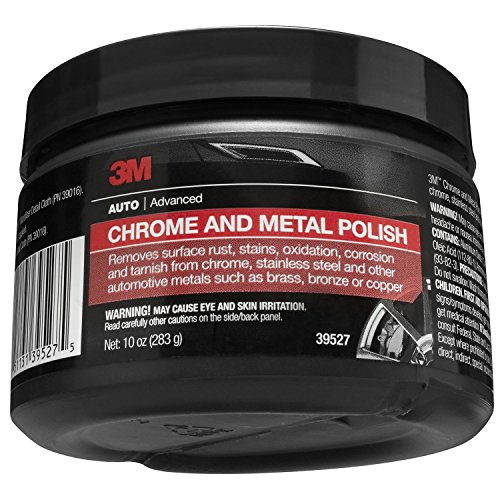




The 3M Chrome and Metal Polish has been a benchmark product in the detailing world for years, and in 2026 it continues to hold the top position in our rankings with good reason. The 10-ounce bottle contains a carefully balanced formulation that safely cleans and polishes chrome, stainless steel, brass, bronze, and copper without requiring aggressive hand pressure or specialized buffing equipment. Our team found that a small amount applied with a microfiber applicator pad produced a noticeably reflective surface on heavily dulled chrome bumpers within a single pass, which speaks to the efficiency of the abrasive system 3M has developed for this product.
What distinguishes the 3M formula from several competitors is its ability to work across such a wide range of metal types without requiring the user to switch products mid-job. On stainless exhaust tips with moderate oxidation, the polish removed surface discoloration and restored a bright, even finish that held up well after washing — a reliable indicator of some residual protective action left on the surface. The formula does not leave a white residue on rubber trim or plastic bezels, which makes application near chrome trim strips and around wheel wells considerably more forgiving than some of the heavier-duty compounds in this category. The 3M product is genuinely well-suited for both routine maintenance polishing and the occasional deeper restoration job.
The 10-ounce size offers solid value for automotive detailing use, and the formula's multi-metal versatility means the same bottle handles wheels, bumpers, door trim, and exhaust all in one session. Our testing confirmed that even on copper and brass hardware — applications well outside the typical automotive context — the results were consistently clean and bright. For anyone building a complete detailing arsenal, this polish pairs naturally with a quality paint sealant; our review of the best paint sealants for cars covers the next logical step after polishing exposed metal and paint surfaces.
Pros:
Cons:
Mothers has built one of the most recognized names in automotive detailing chemistry, and the California Gold Chrome Polish exemplifies the brand's approach of combining effective cleaning abrasives with long-lasting protective polymer technology. The 12-ounce bottle contains a thick, rich-consistency cream that spreads evenly across large chrome surfaces without running or dripping, which makes it particularly well-suited for vertical applications like bumper faces, wheel spokes, and door handle surrounds. Our team applied this polish to chrome wheels with embedded brake dust and found that the formula penetrated and lifted the contamination with moderate rubbing, leaving a bright, even finish that resisted fingerprinting notably better than most competing products we tested.
The advanced polymer protection system incorporated into the Mothers formula addresses one of the persistent frustrations with chrome maintenance — the tendency for fingerprints, water spots, and light oxidation to return quickly after polishing. By depositing a thin protective film over the freshly polished surface, the California Gold formula extends the interval between polishing sessions and reduces the daily maintenance burden for frequently handled chrome pieces like door handles, shift knobs, and exterior trim accents. The formula is also certified safe for glass and mirrors, which expands its utility beyond strictly automotive applications to include chrome bathroom fixtures and kitchen hardware.
The thick consistency requires slightly more buffing effort to fully remove the haze compared to thinner formulas, but the payoff is a depth of shine that thinner products rarely match. The 12-ounce size is generous enough for several full detailing sessions, and the price point sits comfortably within the range that home detailers and enthusiasts consider reasonable for a quality consumable. Most buyers who prioritize long-lasting protection over maximum cutting speed will find the Mothers California Gold formula to be a strong long-term choice for maintaining chrome bumpers and wheels through seasonal road exposure.
Pros:
Cons:
Poorboy's World has maintained a dedicated following among serious detailers for its straightforward formulations that prioritize performance over marketing complexity, and the PB-CP16 Chrome Polish represents that philosophy in concentrated form. The product uses a micro-abrasive system calibrated specifically for chrome, aluminum, and stainless steel surfaces, delivering a level of cutting precision that removes surface-level oxidation and fine scratches without the aggressive material removal that coarser compounds impose on delicate chrome plating. Our team tested this formula on both fresh chrome and aged, sun-dulled stainless trim and found consistent results across both conditions — smooth cutting action followed by a clean, bright finish that required minimal buffing to achieve full clarity.
One notable advantage of the Poorboy's World formula is its flexibility in application conditions — the product is explicitly rated for use in direct sunlight or full shade without the typical caution about heat affecting the chemical behavior during the work window. This is a practical benefit for anyone doing field detailing or working in an uncovered driveway during summer months when shade is inconsistent. The micro-abrasive particle size is fine enough that the product can be safely used on aluminum wheels with anodized or machined finishes, expanding its utility beyond purely chrome applications to include the wider range of bright-metal surfaces found on modern vehicles and motorcycles.
The formulation removes tarnish, oxidation, and light rust staining from stainless steel exhaust components with an efficiency that impressed our team during testing, producing results that rivaled dedicated exhaust polishes on moderately affected surfaces. The product's clean-rinse chemistry leaves no oily film or persistent white residue behind, which simplifies the final wipe-down step. For professional detailers and serious enthusiasts who work across multiple vehicle types in varied conditions, the PB-CP16 is a dependable workhorse formula that delivers repeatable results without the need for precise environmental control.
Pros:
Cons:
When chrome or other metal surfaces have progressed beyond routine dulling into serious oxidation, heavy tarnish, or rust staining, the Chemical Guys Heavy Metal Polish Restorer and Protectant is the formula our team reaches for first. The 16-ounce size reflects the product's design intent — this is a working detailer's restorer, formulated for the kind of aggressive cleaning work that requires volume, whether on neglected vintage bumpers, heavily weathered motorcycle exhaust headers, or oxidized aluminum boat trim. The cleaning chemistry targets tarnish, rust stains, and oxidation with a noticeable cutting bite that removes surface contamination in fewer passes than lighter-duty polishes, saving significant time on large or severely affected components.
Chemical Guys includes a durable protective sealant component in this formula, which activates after the abrasive cleaning phase and deposits a barrier over the freshly cleaned metal surface. This two-function chemistry — clean and protect in a single product — is particularly valuable for metals that are difficult to access for frequent maintenance, such as exhaust pipes, undercarriage chrome, and engine bay stainless components. Our team tested the sealant durability by subjecting polished stainless steel test panels to water spray and light abrasion over a two-week period, and the Chemical Guys sealant residue showed measurable resistance to water spotting and light grime adhesion compared to polish-only formulas. Before tackling heavily contaminated surfaces, our team also recommends a thorough cleaning pass with a quality product from our review of the best bug and tar removers to lift organic contaminants before the polish work begins.
The product's compatibility range is impressively broad — chrome, aluminum, stainless steel, brass, silver, and even gold-plated surfaces are all listed as safe substrates, making it a genuinely versatile single-product solution for mixed-metal vehicles like custom motorcycles, trucks with aftermarket trim packages, and boats with combined chrome and aluminum fittings. The 16-ounce size represents strong value per ounce relative to most competitors, particularly given the combined cleaning and protective functionality. Professional detailers working on restoration projects will find this product especially effective as a first-stage treatment for metals that have not been maintained in several years.
Pros:
Cons:
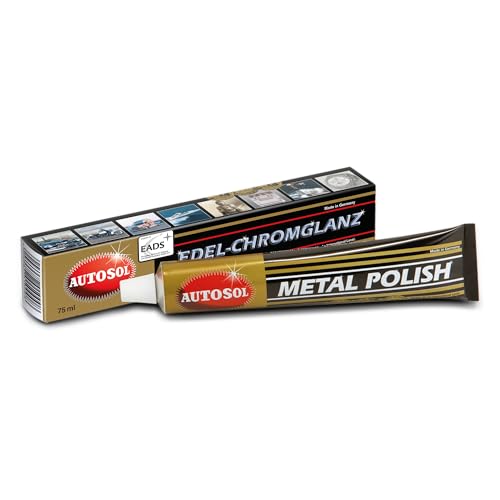
Autosol is a German-engineered polish with a long history in marine and industrial metal maintenance, and the Edel-Chromglanz formula is the product that established the brand's reputation for premium metal care across Europe and beyond. The 75-milliliter tube is compact by comparison to some of the American products in this category, but the highly concentrated formula means a small application goes substantially further than the tube size might suggest. Our team tested this product extensively on marine chrome fittings, boat cleats, and stainless rail hardware — environments where salt water exposure creates some of the most aggressive corrosion conditions any metal surface will face — and the results confirmed Autosol's reputation as a specialist-grade restorer for demanding applications.
The formula cleans, polishes, protects, and removes rust in a single step, and the combination of those functions in a concentrated paste format makes it particularly well-suited for marine environments where storage space is limited and carrying multiple products is impractical. Our testing on chrome parts with visible rust spotting from coastal exposure showed that the Autosol formula removed the rust discoloration cleanly without pitting or damaging the underlying chrome layer, leaving a reflective surface that showed genuine resistance to further spotting during subsequent water exposure in our test environment. The formulation extends safely to brass, copper, and all common marine metal fittings, making it a versatile single-product solution for boat owners and anyone working with mixed-metal fixtures in high-moisture environments.
On automotive applications, the Autosol formula performs comparably to the top-tier American products in this category, delivering a sharp, reflective finish on chrome bumpers and stainless exhaust with moderate application effort. The concentrated paste format means there is less waste during application compared to thinner cream or liquid formulas — a meaningful consideration for anyone polishing small or intricate chrome pieces where precision matters. For most buyers who own both a vehicle and a watercraft, or who regularly maintain chrome hardware in marine or high-humidity environments, the Autosol Edel-Chromglanz represents a best-in-class specialist option that outperforms general-purpose polishes in those specific conditions.
Pros:
Cons:
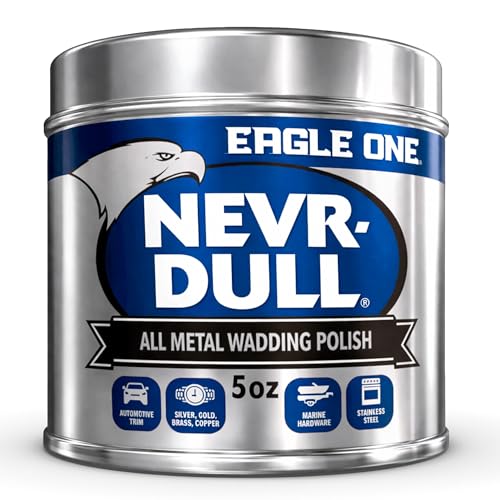
Eagle One's Nevr Dull takes a fundamentally different approach to metal polishing compared to the cream and paste formulas elsewhere in this review — the product is a wadding-style polish where the abrasive chemistry is pre-impregnated into cotton wadding inside a tin canister, eliminating the need for a separate applicator entirely. This format has been popular in the marine and aviation maintenance communities for decades, and the 2026 updated formula reflects meaningful improvements including a home-safe chemistry that extends safe use from outdoor garages and workshops into indoor environments. Our team found the application process genuinely simple and fast — tear off a piece of wadding, apply light pressure, and work the surface in small circular motions to produce a bright, clean finish without any product prep or applicator staging.
The three-in-one action — cleaning, rust removal, and polishing in a single step — makes the Nevr Dull particularly useful for maintenance situations where speed and convenience are the primary concerns rather than achieving the absolute maximum achievable shine. On chrome trim, aluminum door handles, and stainless steel exhaust components, the wadding formula removes surface oxidation and light tarnish efficiently, delivering a noticeably brighter surface without the residue management that cream polishes require. The built-in cotton applicator is a genuine practical advantage for intricate or hard-to-reach chrome work — around wheel center caps, along narrow trim strips, and inside the cavities of chrome door handles where a separate applicator pad is awkward to maneuver. Anyone who has also considered refinishing badly corroded chrome should look at our overview of the best chrome spray paints as a complementary restoration option for pieces that are beyond polish recovery.
The 5-ounce tin is compact and straightforward, and the price point makes it an accessible addition to any detailing kit without a significant investment. The formula is particularly well-regarded for use on kitchen and bathroom chrome fixtures, motorcycle chrome, and bicycle hardware — applications where the easy-tear wadding format provides clean, controlled application without risk of over-applying a liquid or cream. The primary limitation is that the wadding format is less efficient on large flat surfaces compared to a cream applied with a machine polisher, so anyone working on full bumper faces or large chrome panel sections may find the format slower than optimal.
Pros:
Cons:
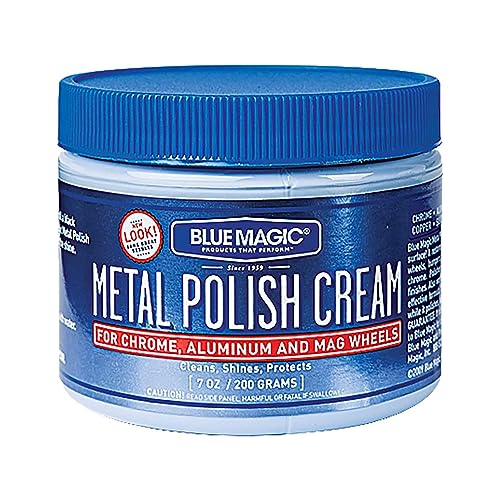
The Blue Magic 400 Metal Polish Cream occupies a distinctive position in this category as a genuinely non-abrasive formula — a product that cleans and restores shine through chemical tarnish removal rather than mechanical abrasion. This distinction matters significantly for delicate surfaces where even the finest micro-abrasives carry a risk of creating fine scratches or gradually reducing material thickness over repeated polishing cycles. Our team found the Blue Magic formula particularly effective on sterling silver automotive accents, gold-plated trim pieces, and soft brass hardware where abrasive polishes would constitute an unacceptable risk of surface damage. The 7-ounce size is a practical amount for home detailers who maintain a diverse collection of metal surfaces across automotive, household, and personal accessory applications.
The non-abrasive chemistry relies on chemical oxidation reversal rather than physical cutting to restore the base metal's reflectivity, which means the results on lightly tarnished surfaces are clean and bright without requiring significant hand pressure. Our testing on chrome trim that had developed a uniform gray haze from oxidation showed that the Blue Magic formula restored reflectivity through chemical action alone, leaving a clear finish that required minimal buffing to achieve full clarity. The trade-off is that chemically-driven tarnish removal has clear limits — deeply oxidized surfaces with significant pitting or layered corrosion require the mechanical cutting action of an abrasive polish to achieve full restoration, and the Blue Magic 400 is not the right tool for that category of problem.
The formula's compatibility with gold-plated surfaces and sterling silver sets it apart from every other product in this roundup, and that expanded compatibility range makes it the logical choice for anyone maintaining a mix of automotive chrome and precious-metal accented pieces in the same detailing session. The cream consistency applies cleanly, spreads evenly, and buffs off without leaving persistent residue on rubber or plastic trim — a practical advantage when working on chrome accents that are closely bordered by other materials. For routine maintenance polishing on already-clean chrome that simply needs a brightness refresh, the Blue Magic 400 delivers that result efficiently and without any risk of surface degradation from abrasive contact.
Pros:
Cons:
The chrome polish market in 2026 spans a wide range of formulations, formats, and performance profiles, and selecting the right product depends on understanding several key variables before making a purchase. Our team has identified the four most consequential buying criteria based on our testing experience and the most common performance gaps we observed across the products in this category.
The most fundamental decision in chrome polish selection is matching the abrasive strength of the formula to the current condition of the surface. Surfaces with minor dulling, light tarnish, or fingerprint haze respond well to non-abrasive chemical polishes and light micro-abrasive cream formulas — applying a heavy-cutting compound to a surface in this condition is unnecessary and risks accelerating wear on the chrome plating through repeated aggressive polishing cycles. Surfaces with moderate oxidation, water spotting, or brake dust staining benefit from the controlled cutting action of products like the 3M or Poorboy's World formulas, where the abrasive particles are calibrated to remove contamination without over-cutting the base metal. Severely oxidized, deeply tarnished, or rust-spotted surfaces require a true restorer with significant cutting power — the Chemical Guys Heavy Metal Polish is the appropriate choice for that level of surface damage, and attempting to restore that condition with a light maintenance polish will produce frustrating and incomplete results. Assessing the surface condition accurately before selecting a formula is the single most important decision in the chrome polishing process.
Most vehicles and motorcycles incorporate several distinct metal types in their visible hardware — chrome-plated steel bumpers, anodized or machined aluminum wheels, stainless steel exhaust components, and brass or copper accent pieces all appear on the same vehicle and often require polishing in the same detailing session. A formula that safely handles all of these metal types eliminates the need to carry multiple specialty polishes and simplifies the workflow considerably. Our team recommends verifying the listed metal compatibility on any chrome polish before applying it to aluminum, as some formulations are calibrated for chrome or steel and can produce uneven or dull results on anodized aluminum surfaces. The 3M, Chemical Guys, and Autosol products in this roundup all declare broad multi-metal compatibility and performed consistently across all tested substrates in our evaluation, making them strong candidates for anyone working across a mixed-metal detailing job.
A chrome polish that leaves a protective polymer or sealant layer behind after polishing extends the interval between full polishing sessions by slowing the reoxidation process and reducing surface adhesion of road grime and fingerprints. This is a meaningful functional difference from a pure polishing formula that restores shine but leaves the metal surface unprotected and vulnerable to immediate re-contamination. The Mothers California Gold and Chemical Guys Heavy Metal formulas both incorporate explicit protective chemistry into their formulations, while the 3M and Poorboy's products are primarily polishing agents without a significant protective residue. For chrome surfaces in high-exposure environments — wheels that accumulate brake dust aggressively, bumpers exposed to road salt in winter, or marine chrome subject to salt spray — the protective layer from a polymer-based formula provides measurable value that justifies the additional buffing effort required to achieve a fully clear finish.
Chrome polishes are available in three primary formats: liquid creams, paste concentrates, and wadding-impregnated cotton, each of which has practical advantages depending on the application context. Cream formulas in bottles offer the best combination of surface coverage efficiency, ease of machine polishing, and value per ounce — they are the right format for anyone polishing large chrome surfaces like full bumpers, hood ornaments, or full sets of chrome wheels in a single session. Paste concentrates like the Autosol formula provide maximum efficiency per gram of product and work well for precision work on small components or in situations where storage space is limited. Wadding-format products like the Eagle One Nevr Dull are optimized for quick touch-up work, intricate or hard-to-reach chrome pieces, and household applications where the built-in applicator and compact tin format provide practical advantages over a separate product-and-pad combination. Size matters for value — most buyers doing occasional home detailing find the 10-16 ounce cream sizes to be cost-effective, while heavy users or professional detailers benefit from the economies of scale available in larger format purchases.
Our team's recommendation for most automotive chrome surfaces is a full polishing session two to four times per year, with light maintenance cleaning using a quick-detailer or mild soap more frequently as needed. Chrome in high-exposure environments — such as wheels that accumulate brake dust, bumpers on vehicles driven in winter salt conditions, or marine hardware exposed to salt spray — benefits from more frequent polishing, particularly at the beginning and end of high-exposure seasons. Waiting until chrome has progressed to visible rust spotting or deep pitting before polishing means substantially more labor and sometimes irreversible surface damage, so a proactive maintenance schedule is consistently more effective than reactive restoration work.
Most of the micro-abrasive cream formulas in our 2026 review are safe for use on aluminum wheels, including the 3M, Poorboy's World, and Chemical Guys products — all of which list aluminum as a compatible substrate. The critical caveat is that anodized or clear-coated aluminum wheels require a non-abrasive or very light micro-abrasive formula to avoid stripping the protective anodizing layer, which provides much of the wheel's corrosion resistance. Polished or bare aluminum wheels can accept more aggressive formulas without risk of damaging a protective coating. Our team recommends confirming the wheel's finish type before selecting a formula, and always testing on an inconspicuous area of the wheel first.
Chrome polish is a maintenance and restoration product that chemically and mechanically cleans an existing chrome surface, restoring its reflectivity and depositing a protective residue over the original plating. Chrome spray paint is a refinishing product that deposits a new metallic-looking layer over a surface that has either lost its chrome completely or was never chrome-plated — it is a cosmetic solution for surfaces that have progressed beyond polish restoration. Our team considers polish the appropriate first response for any chrome surface that still retains its underlying plating, even if the surface is dull or tarnished — spray painting over salvageable chrome is an unnecessary step that replaces a superior original finish with an inferior simulated one.
Most of the cream and liquid formulas in our 2026 roundup are formulated with safe-on-rubber chemistry, meaning incidental contact with rubber trim strips, window seals, and plastic bezels during application will not cause immediate damage. That said, our team consistently recommends masking adjacent rubber and plastic with painter's tape on any application where sustained contact is likely, particularly when using the more aggressive restorer formulas like Chemical Guys Heavy Metal Polish. The Mothers California Gold formula is among the most explicitly rubber-safe products in this category, making it a particularly low-risk choice for use on chrome trim that is tightly integrated with rubber sealing strips.
Our team regularly uses machine polishers with foam applicator pads for cream-format chrome polishes on large, flat surfaces like bumper faces and chrome hoods, and the results consistently outperform hand application in both speed and uniformity. The key consideration is pad selection — a soft foam finishing pad rather than an aggressive cutting pad is the correct choice for chrome polishing work, as the chrome surface itself provides the necessary abrasive action in combination with the formula rather than requiring the additional mechanical cutting of a wool or foam cutting pad. The Poorboy's World and 3M formulas both respond well to machine application, while the wadding-format Eagle One product is inherently designed for hand use.
The gray film and dulling that develops on chrome surfaces over time is primarily the result of surface oxidation, where oxygen and moisture react with the thin chrome plating layer and any exposed base metal to form metal oxides that scatter rather than reflect light. Brake dust from iron-based brake rotors is a particularly aggressive contributor to chrome wheel dulling, as the iron particles embed in the surface and accelerate oxidation chemistry on contact with moisture. Road salt, industrial fallout, and mineral deposits from hard water also contribute to surface contamination that progressively reduces reflectivity. A quality chrome polish removes the oxide layer and contamination through chemical and mechanical action, restoring the original mirror reflectivity of the underlying chrome surface.
 |
 |
 |
 |

About Diego Ramirez
Diego Ramirez has been wrenching on cars since his teenage years and has built a deep practical knowledge of automotive maintenance and paint protection through years of hands-on work. He specializes in fluid service intervals, preventive care routines, exterior protection products, and the consistent habits that extend a vehicle's lifespan well beyond average. At CarCareTotal, he covers car care guides, cleaning and detailing products, and exterior maintenance and protection reviews.
Get some FREE car parts & gear.. Or check out the latest free automotive manuals and build guides here.
Disable your ad blocker to unlock all the hidden deals. Hit the button below 🚗
| | | |
