by Joshua Thomas
Knowing how to get ink out of car upholstery can save your interior from a permanent stain. Whether a pen burst in your pocket, a marker rolled under the seat, or a child got creative on the back cushions, ink is one of the more stubborn stains you'll face inside a vehicle. The good news: with the right products and technique, most ink stains can be lifted completely — even from fabric, leather, and vinyl seats.
The key is speed. The longer ink sits, the deeper it bonds with fibers or pores. This guide walks you through every upholstery type with proven removal methods, a quick-reference comparison table, and tips to stop it happening again. For a broader look at stain removal beyond ink, see our guide on how to get grease out of car upholstery — the blotting technique is similar.
Contents
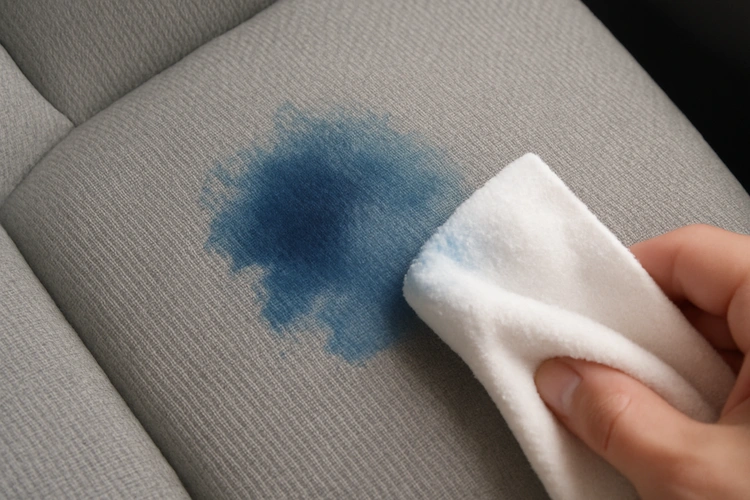
Ink stains fall into two categories: fresh (wet, not yet set) and dried (fully cured, bonded to fibers). Fresh ink is far easier to remove. Once the solvent carrier in the ink evaporates, the pigment or dye locks into the upholstery material.
Different pen types also behave differently. Ballpoint ink is oil-based and responds well to isopropyl alcohol. Gel ink is water-based but thick, and may smear if you rub rather than blot. Permanent marker (like Sharpie) is the hardest to remove because it is designed to resist both water and most solvents.
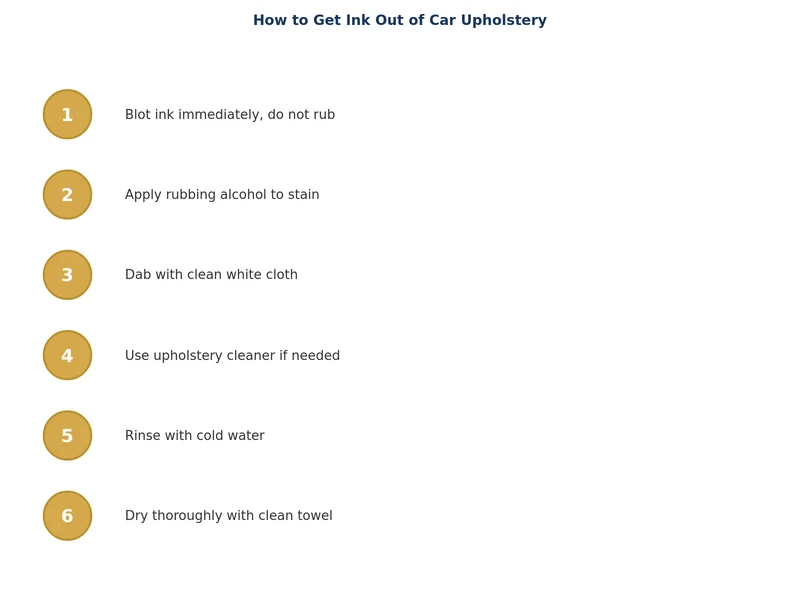
For fresh ink: blot immediately with a dry white cloth to absorb as much liquid as possible. Do not rub — rubbing spreads the stain and pushes it deeper. For dried ink: you'll need a solvent to re-dissolve the binder before lifting the pigment.
Most of these items are already in your home or garage:
For tougher stains, a dedicated product from our list of best upholstery cleaners will outperform DIY solutions. Look for enzyme-based formulas for fabric and pH-balanced cleaners for leather.
The method varies by upholstery type. Identify your material before starting — using the wrong approach can spread the stain or damage a finish.
Leather is porous but has a protective coating on most factory seats. Move carefully here — alcohol can dry out leather if used excessively.
If you maintain your leather seats regularly, the protective coating makes stains easier to remove. See our guide on how to clean a leather steering wheel for the same conditioning routine applied to another leather surface in your cabin.
Vinyl is non-porous, making it the easiest surface to clean. Isopropyl alcohol on a cloth will usually lift fresh or dried ballpoint ink in a few blots. For stubborn spots, a magic eraser (melamine foam) works well on vinyl but should never be used on leather or fabric. Finish with a vinyl protectant spray. For a full routine on this material, read our guide on how to clean vinyl car seats.
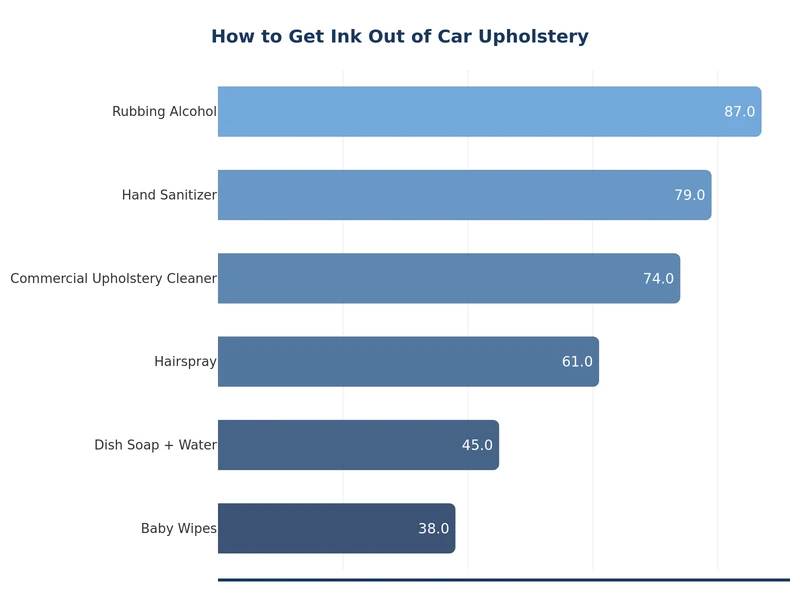
Not every method works equally well across pen types and materials. This table gives you a quick reference before you start:
| Method | Best For | Fabric | Leather | Vinyl | Notes |
|---|---|---|---|---|---|
| Isopropyl Alcohol (70–90%) | Ballpoint, gel ink | Excellent | Good | Excellent | Follow with conditioner on leather |
| Hairspray (alcohol-based) | Ballpoint ink | Good | Fair | Good | Rinse well; sticky residue if left |
| Commercial Upholstery Cleaner | All ink types | Excellent | Good | Good | Best all-round for fabric |
| Dish Soap + Cold Water | Fresh, light stains | Fair | Fair | Good | Mild; won't remove set ink |
| Magic Eraser | Dried ballpoint/permanent marker | Poor | Avoid | Excellent | Abrasive — damages leather/fabric |
| Acetone (nail polish remover) | Permanent marker on vinyl | Avoid | Avoid | Use carefully | Can dissolve vinyl coating; test first |
The easiest ink stain to deal with is one that never happens. A few simple habits keep your upholstery cleaner for longer:
Most ink stains respond to the methods above, but some situations call for professional detailing:
A professional detailer has access to steam extractors and industrial solvents that can reach deeper into the material without damaging the surface. Before booking, photograph the stain and tell them the ink type — ballpoint, gel, or permanent — so they can bring the right product.
On fabric and vinyl, isopropyl alcohol is safe when used in small amounts and blotted rather than soaked in. On leather, it can strip natural oils, so always follow with a leather conditioner after use. Avoid using it on suede or Alcantara, where it may cause discoloration.
Yes. Alcohol-based hand sanitizer contains isopropyl or ethyl alcohol and works similarly to rubbing alcohol on fresh ballpoint ink stains. Apply a small amount to a cloth and blot the stain. Rinse the area with a damp cloth afterward to remove any gel residue.
WD-40 can loosen oil-based ballpoint ink on some surfaces, but it leaves behind an oily residue that can be difficult to fully remove from fabric — and may create a secondary stain. It's better to use isopropyl alcohol, which evaporates cleanly.
Dried ink requires re-dissolving with a solvent. Apply 90% isopropyl alcohol to a microfiber cloth and blot the stain repeatedly, using a clean section of cloth each time. For heavily set stains, a commercial upholstery stain remover designed for ink works better than alcohol alone.
Older aerosol hairsprays were high in alcohol content and worked well on ink. Most modern formulas contain less alcohol and more conditioning agents, making them less effective. Dedicated isopropyl alcohol is more reliable and predictable for ink removal today.
Permanent marker is the hardest ink type to remove because it resists water and most solvents. On vinyl, 90% isopropyl alcohol or a magic eraser can reduce or eliminate it. On fabric, multiple treatments with alcohol plus a commercial enzyme cleaner may fade the stain significantly, but complete removal is not always guaranteed without professional help.
 |
 |
 |
 |

About Joshua Thomas
Joshua Thomas just simply loves cars and willing to work on them whenever there's chance... sometimes for free.
He started CarCareTotal back in 2017 from the advices of total strangers who witnessed his amazing skills in car repairs here and there.
His goal with this creation is to help car owners better learn how to maintain and repair their cars; as such, the site would cover alot of areas: troubleshooting, product recommendations, tips & tricks.
Joshua received Bachelor of Science in Mechanical Engineering at San Diego State University.


Get some FREE car parts & gear.. Or check out the latest free automotive manuals and build guides here.
Disable your ad blocker to unlock all the hidden deals. Hit the button below 🚗
| | | |
