by Marcus Chen
Our team lined up two identical V6 pickups at a test track last year — one bone stock, one running a full bolt-on package. The modified truck pulled away cleanly and held the gap straight through the quarter mile. That difference came down to roughly 65 extra horsepower. Knowing how to increase horsepower changes what a vehicle is actually capable of, and the upgrades don't require an engine rebuild to make a real impact. Our team has tested these modifications across dozens of builds — from economy cars to performance trucks. The results are consistent: the right combination of parts delivers measurable, real-world gains. Here are the 10 that consistently deliver.
Contents
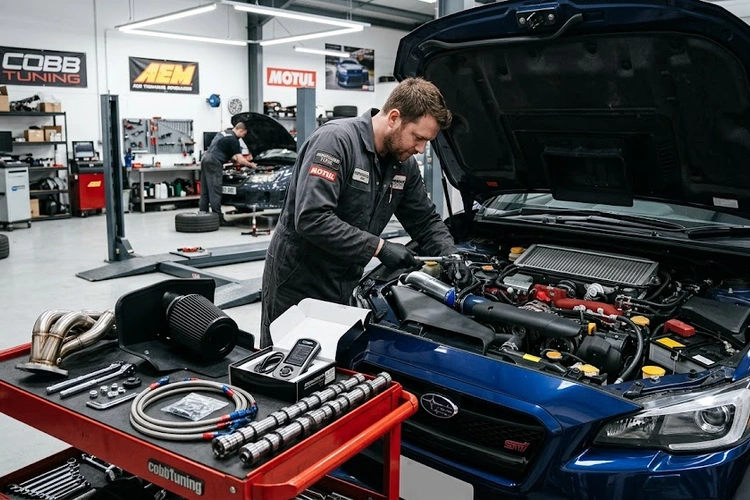
Before touching anything under the hood, having the right equipment matters. Our team has watched too many upgrades go sideways because someone skipped this step. The good news is that most bolt-on horsepower upgrades don't require specialized shop equipment — just quality tools and a methodical approach.
A solid tool set covers the basics for every build our team runs. These items belong in every performance garage:
For any ECU work — tuning, reflashing, or piggyback controllers — a laptop with the appropriate software is non-negotiable. Running a forced induction setup without proper monitoring is how expensive engines get damaged. Our team treats data logging as part of the build, not an afterthought.
A dyno session before and after modifications gives accurate baseline and post-upgrade numbers. Most shops charge $75–$150 per pull. Our team considers it mandatory for any build over $500 in parts. Guessing at gains is how money gets wasted. Verified numbers on a dyno sheet reveal what actually happened — and flag any issues with the tune before they cause engine damage.
Not every horsepower upgrade demands the same level of commitment. Our team breaks them into two clear categories: bolt-ons that experienced DIYers can handle in a weekend, and deep modifications that require machine shop work or professional installation.
The easiest wins come from improving airflow in and out of the engine. A cold air intake is always our first recommendation. It relocates the filter away from engine heat, pulling in cooler, denser air. Combined with a performance cat-back exhaust, most naturally aspirated engines gain 10–25 hp without touching anything internal. Performance headers reduce exhaust backpressure significantly and pair well with that exhaust upgrade. Our in-depth look at short ram intake vs. cold air intake covers the airflow trade-offs between the two most common intake styles.
Camshaft upgrades, ported cylinder heads, and forced induction belong in a different category entirely. These require precise installation, tight machining tolerances, and — in almost every case — a supporting ECU tune to extract the gains safely. The payoff is significant. A properly installed turbo kit on a 4-cylinder can double the stock output. Our team covers the forced induction decision in detail in our comparison of turbocharger vs. supercharger setups.
| Upgrade | Est. HP Gain | Difficulty | Avg. Cost |
|---|---|---|---|
| Cold Air Intake | 5–15 hp | Easy | $150–$400 |
| Performance Exhaust | 10–20 hp | Medium | $500–$1,500 |
| ECU Tune | 15–50 hp | Easy (pro) | $300–$800 |
| Performance Headers | 10–30 hp | Medium | $400–$1,200 |
| Throttle Body Upgrade | 5–20 hp | Easy | $200–$600 |
| High-Flow Fuel Injectors | 10–30 hp | Medium | $300–$900 |
| Camshaft Upgrade | 20–60 hp | Hard | $800–$2,500 |
| Turbocharger | 50–150+ hp | Hard | $2,000–$6,000 |
| Supercharger | 50–100+ hp | Hard | $3,000–$8,000 |
| Intercooler Upgrade | 10–30 hp | Medium | $400–$1,200 |
Hardware alone doesn't unlock all available power. How upgrades are installed and calibrated matters as much as the parts themselves. Our team has picked up a few hard lessons on this over the years.
Our team is direct about this: every significant hardware upgrade needs a supporting ECU tune. The factory ECU is calibrated for stock components. Add a cold air intake, headers, and a free-flowing exhaust, and the fuel map is already working against the build. An aftermarket tune recalibrates ignition timing, fuel delivery, and air-fuel ratio to match the new hardware. Skipping the tune leaves 20–40% of the potential gains sitting unused — and risks detonation on any forced induction setup. It's the single most overlooked step in performance builds.
Our recommended sequence for a complete naturally aspirated build:
Installing a tune before hardware is finalized means tuning twice. Our team always locks in all hardware first, then tunes once. It saves shop time and money without sacrificing any power.
More power is genuinely useful — but every upgrade involves trade-offs. Our team gives an honest picture of both sides rather than selling the upgrade without the full context.
A full bolt-on package — intake, exhaust, headers, and tune — on a typical V6 or turbocharged 4-cylinder nets 40–70 hp in our testing. That's a real difference felt in everyday driving, not just on a dyno sheet. According to Wikipedia's overview of horsepower measurement, factory ratings already factor in efficiency constraints — meaning there's legitimate headroom in most stock tune files.
Our team thinks the trade-offs are acceptable on the right build — but never acceptable on a vehicle that hasn't been properly inspected first. The foundation has to be solid before adding load.
Not every vehicle or use case benefits from a power upgrade. Our team has learned to ask the right questions before recommending any modifications, and the answers sometimes point toward holding off.
Engine health is the non-negotiable prerequisite. Problems like low engine compression or deteriorating seals get worse under increased load — not better. Our team always runs a full mechanical inspection before approving any performance parts for a build.
Throwing horsepower upgrades at a vehicle with underlying problems accelerates failure. Our team has seen expensive turbos and superchargers destroy engines that weren't ready for them. Fix the foundation first — every time.
The practical impact of horsepower upgrades varies significantly by use case. Our team has tested these modifications across multiple platforms and driving scenarios to understand where the gains actually matter.
For street builds, the bolt-on package delivers the best return on investment. The biggest real-world improvement comes from the intake, exhaust, and tune combination. The car feels more responsive in everyday conditions — sharper throttle response, stronger mid-range pull during lane changes and highway on-ramps. Full forced induction setups are harder to justify for pure street use given the cost, added maintenance, and heat management demands. Most street drivers get 80% of the satisfaction from 30% of the cost by staying in the bolt-on range.
Track-focused builds benefit most from camshaft upgrades, ported heads, and forced induction. These setups extract maximum output at sustained RPM — exactly what circuit driving demands. For towing applications, torque delivery matters more than peak horsepower figures. A supercharger typically delivers broader low-end torque compared to a turbocharger, making it the preferred platform for trucks that work for a living. The full engineering breakdown lives in our turbocharger vs. supercharger comparison for anyone deciding between the two routes.
A cold air intake combined with an ECU tune is consistently the most cost-effective starting point. Our team has seen 20–40 hp gains on factory turbocharged engines from a tune alone, with total costs under $500. That's the best horsepower-per-dollar ratio available without touching engine internals.
Yes — on most engines, a quality cold air intake adds 5–15 hp by delivering cooler, denser air to the combustion chamber. The gains are more pronounced on turbocharged engines because the turbo compresses that denser air before it enters the cylinders. Our team always recommends pairing it with a tune to fully capture the benefit.
On a stock naturally aspirated engine, an ECU tune typically adds 10–20 hp by optimizing ignition timing and fuel delivery. On a turbocharged engine with supporting bolt-ons already installed, gains of 30–60 hp are realistic. The tune is most powerful when hardware upgrades are in place first.
Mild bolt-on upgrades have minimal impact on fuel economy — sometimes improving it slightly at cruise speeds due to better airflow efficiency. Aggressive builds with forced induction and high-boost tunes typically reduce fuel economy by 10–20% under spirited driving. Conservative daily driving habits reduce that gap considerably.
On most modern vehicles with mass airflow sensors, a tune isn't strictly required after intake installation alone. However, our team strongly recommends one to maximize gains and ensure the air-fuel ratio remains in a safe range. Without a tune, the ECU's adaptive learning helps compensate, but full potential stays locked.
An ECU tune targeting the boost table, ignition timing, and fuel map is the single most impactful upgrade for any factory turbocharged engine. Many modern turbo cars run conservative factory tunes with significant headroom left in the hardware. A professional tune on an otherwise stock vehicle unlocks that margin immediately.
In the United States, the Magnuson-Moss Warranty Act prevents dealers from voiding an entire warranty solely because aftermarket parts are installed. However, a dealer can deny specific warranty claims if an aftermarket part is shown to have caused the failure. Our team always recommends understanding the distinction before modifying a vehicle still under manufacturer coverage.
Only if the engine has been mechanically inspected and confirmed healthy. High-mileage engines with worn rings, weakened seals, or marginal compression will fail faster under increased stress. Our team's rule is straightforward: if the engine wouldn't comfortably pass a compression test and leak-down test, skip the power upgrades until it's rebuilt.
 |
 |
 |
 |

About Marcus Chen
Marcus Chen is a performance and tuning specialist with 12+ years of hands-on experience modifying everything from daily drivers to track cars. He specializes in suspension setup, wheel-and-tire fitment, and squeezing every drop of performance from stock platforms without sacrificing reliability.
Get some FREE car parts & gear.. Or check out the latest free automotive manuals and build guides here.
Disable your ad blocker to unlock all the hidden deals. Hit the button below 🚗
| | | |
