by Joshua Thomas
Rust is one of the most destructive forces a car owner can face. Once it takes hold, it spreads fast — weakening metal, destroying resale value, and costing hundreds in repairs. The good news is that learning how to prevent rust on your car is straightforward, and most of the work can be done at home with basic products and a little time. Whether you drive in a coastal climate, a snowy region, or a dry desert, rust prevention should be a regular part of your car care routine.
Paint chips, road salt, moisture, and even small door dings create entry points for oxidation. A proactive approach — washing regularly, sealing surfaces, and treating vulnerable spots — keeps corrosion from ever getting a foothold. This guide covers everything from daily habits to long-term protective treatments, so your car stays solid and rust-free for years.
Contents
Rust — technically iron oxide — forms when bare metal is exposed to oxygen and moisture simultaneously. Modern cars use high-strength steel throughout the body, frame, and undercarriage. When the protective layers of primer, paint, and clear coat are compromised, that steel is vulnerable. The NHTSA has noted that corrosion-related structural failure is a long-term safety concern, not just a cosmetic one.
Rust rarely starts in the middle of a panel. It starts at weak points — places where moisture collects or the protective coating is broken. Common entry points include:
Even small door dings can crack the clear coat and prime a spot for rust. Fixing these early is far cheaper than dealing with body rot later.
Not all climates are equal when it comes to rust risk. Cars driven in snowy regions are exposed to road salt, which accelerates electrochemical corrosion dramatically. Coastal areas bring salt air that attacks paint and bare metal constantly. Humid subtropical climates combine heat and moisture — a perfect environment for oxidation. Even arid climates aren't immune: dry air cracks rubber seals and lets water penetrate during rare rains.
The simplest and most effective thing you can do to prevent rust is keep your car clean. Dirt, grime, and especially road salt are hygroscopic — they attract and hold moisture against your paint and metal. Regular washing removes these contaminants before they can do damage.
For most drivers, washing every two weeks is sufficient. In winter or coastal areas, weekly washing is better — especially the undercarriage. Many automatic car washes offer undercarriage rinse cycles. If you wash at home, use a pressure washer or hose to blast the wheel wells, rocker panels, and underbody.
Wax creates a sacrificial barrier between your paint and the environment. Carnauba wax lasts 6–8 weeks; synthetic paint sealants last 3–6 months. For guidance on timing, see our article on how often you should wax your car — the frequency depends on your climate and how the car is stored. At minimum, wax twice a year — once before summer and once before winter.
Your car's paint system is its primary rust shield. Keeping that system intact is central to any rust prevention strategy. When the clear coat and paint layers are damaged, oxidation can begin within weeks — especially in humid conditions.
Paint chips happen. Gravel, road debris, and even insects can break the surface. The key is to act fast. Touch-up paint pens are inexpensive and available for every OEM color code. Clean the area, apply primer if the chip is deep, then apply color and clear coat in thin layers. It won't be perfect, but it seals the metal and stops rust from starting.
Similarly, light scratches that haven't reached bare metal can be addressed with polish or a dual action polisher. Our guide on how to remove scratches from car paint at home walks through the process from light swirls to deeper cuts.
Ceramic coatings bond to the clear coat at a molecular level and create a semi-permanent hydrophobic layer. Water beads off, contaminants don't bond as easily, and UV protection is significantly improved. A properly applied ceramic coating can last 2–5 years. Our DIY ceramic coating guide covers surface prep, application technique, and curing — it's a weekend project that pays off for years.
Paint protection film (PPF) is another option for high-impact areas like the front bumper, hood leading edge, and mirror caps. PPF is thicker and self-healing, making it ideal for areas that take the most stone chip abuse.
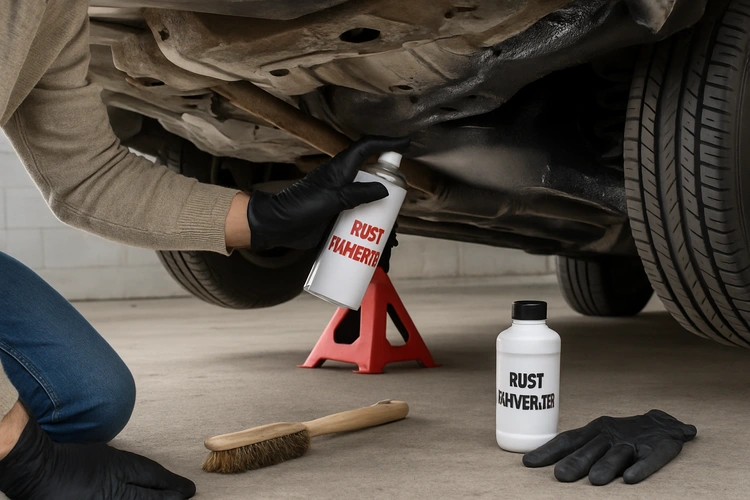
The undercarriage is the most rust-prone area on any car. It's constantly exposed to water, gravel, salt, and road chemicals — and it's the area least likely to be noticed until rust is advanced. Proactive undercarriage protection is one of the highest-value rust prevention steps you can take.
Undercoating is a rubberized or oil-based coating sprayed onto the undercarriage to seal out moisture and dampen road noise. It's best applied to new or recently cleaned vehicles. Professional application costs $100–$300 depending on vehicle size. DIY spray cans are available for touchup or partial application.
For cavity protection — inside door skins, rocker panels, and frame rails — drip oil rustproofing (such as Krown or similar products) is applied annually through drain holes and body plugs. The oil creeps into seams and welds, displacing moisture and coating bare metal. This is especially valuable in salt-belt states. Our service page on the best rust prevention spray for cars compares the top options across different use cases.
Factory drain holes in door bottoms, rocker panels, and the trunk allow water to escape. When these clog with dirt and debris, water pools — and pooled water means rust. Inspect and clear drain holes every year. A pick tool or compressed air works well. While you're at it, check rubber grommets and body plugs for cracks or missing pieces.
Choosing the right product depends on what you're protecting and how long you want it to last. Here's a comparison of the most common rust prevention approaches:
| Product Type | Best For | Durability | DIY Friendly | Avg. Cost |
|---|---|---|---|---|
| Carnauba Wax | Paint surface | 6–8 weeks | Yes | $15–$40 |
| Paint Sealant | Paint surface | 3–6 months | Yes | $20–$60 |
| Ceramic Coating | Paint + clear coat | 2–5 years | Moderate | $50–$150 (DIY) |
| Paint Protection Film | High-impact panels | 5–10 years | Difficult | $500–$2,000+ |
| Rubberized Undercoating | Undercarriage | 3–5 years | Yes | $80–$300 |
| Oil-Based Cavity Spray | Cavities, seams, rails | Annual reapply | Yes | $30–$100 |
| Touch-Up Paint | Chips and scratches | Until reapply | Yes | $10–$25 |
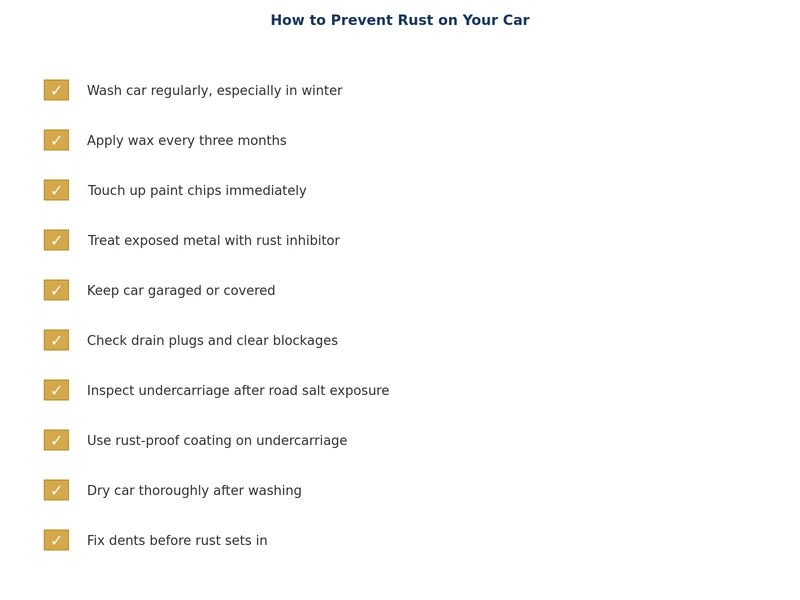
Rust prevention isn't a once-a-year task — it requires adjusting your routine to match the season. Different times of year bring different threats, and your strategy should reflect that.
Road salt is the single biggest rust accelerant for most drivers. Salt lowers the freezing point of water while also acting as an electrolyte that dramatically speeds up the oxidation process. Every time you drive on salted roads, your undercarriage gets coated. Wash your car — especially underneath — after every significant snow or sleet event. Apply a fresh coat of wax before winter begins to protect your paint. If you can garage the car overnight rather than letting salt-laden slush sit on it, do so.
In fall, inspect all rubber seals around doors, windows, and the trunk. Cracked or hardened seals let water into cavities. Replace them before cold weather arrives. This is also the time to schedule a cavity oil treatment if you're in a salt-belt region.
UV radiation degrades clear coat, making paint brittle and more vulnerable to chipping. Humidity, especially in coastal or subtropical regions, accelerates surface oxidation on any bare or poorly sealed metal. Parking in the shade or a garage when possible reduces UV exposure dramatically. Keeping your paint protected with wax or a sealant all summer is just as important as winter protection.
Summer is also the right time to inspect the car top-to-bottom for any new chips, bubbling paint (a sign of rust forming underneath), or rust staining at seams. Catching these early — when they're the size of a pinhead rather than a palm — keeps repair costs manageable. Addressing a chip with touch-up paint costs $15. Replacing a rusted rocker panel costs $500 or more.
Salt air accelerates corrosion even without road salt. Wash your car weekly, apply a high-quality wax or paint sealant every 6–8 weeks, and keep drain holes clear so moisture doesn't pool in body cavities. Ceramic coating is a strong investment in coastal environments due to its durability and hydrophobic properties.
Yes — wax creates a protective barrier between your paint and environmental moisture, salt, and contaminants. It won't stop rust that's already started, but it's one of the most effective preventive measures for the paint surface. Wax regularly and address any chips or scratches before rust can form underneath.
Rubberized undercoating is the most durable option for full undercarriage coverage. For cavity protection inside door skins and frame rails, annual oil-based cavity spray (drip or injection method) is the most effective approach, especially in regions with heavy road salt use. See our guide to the best rust prevention spray for cars for specific product recommendations.
Look for bubbling or blistering paint — this indicates rust forming beneath the surface before it breaks through. Rust staining at seams, drain holes, or the edges of panels is another early sign. Check wheel arches, the underside of doors, rocker panels, and trunk edges regularly. Early-stage rust is much cheaper to address than advanced corrosion.
Yes, and it's worth doing even if some surface rust is already present. Treat any existing rust spots with a rust converter product before applying protective coatings. Then apply undercoating, wax the paint, and schedule a cavity oil treatment. Rust prevention is always better late than never, though it works best on clean, unaffected surfaces.
Paint sealants and waxes should be refreshed every 1–6 months depending on the product. Cavity oil spray treatments are typically done annually. Rubberized undercoating lasts 3–5 years before needing touchup. Ceramic coating lasts 2–5 years. Create a seasonal checklist and inspect the car each fall and spring to stay ahead of corrosion.
 |
 |
 |
 |

About Joshua Thomas
Joshua Thomas just simply loves cars and willing to work on them whenever there's chance... sometimes for free.
He started CarCareTotal back in 2017 from the advices of total strangers who witnessed his amazing skills in car repairs here and there.
His goal with this creation is to help car owners better learn how to maintain and repair their cars; as such, the site would cover alot of areas: troubleshooting, product recommendations, tips & tricks.
Joshua received Bachelor of Science in Mechanical Engineering at San Diego State University.


Get some FREE car parts & gear.. Or check out the latest free automotive manuals and build guides here.
Disable your ad blocker to unlock all the hidden deals. Hit the button below 🚗
| | | |
