Car Care ›
by Diego Ramirez
Which rust prevention spray actually works — and which ones are little more than overpriced WD-40 in disguise? If you've spent any time researching this category, you already know the market is flooded with products making enormous promises about corrosion protection, multi-year coverage, and military-grade formulas. After testing and reviewing dozens of products across different chemistry types — petroleum waxes, rubberized undercoatings, encapsulators, and penetrating inhibitors — one product consistently earns its place at the top: Fluid Film Aerosol, a lanolin-based corrosion preventative that has quietly earned a loyal following among mechanics, fleet managers, and serious car enthusiasts alike.
Rust is not merely cosmetic. According to the National Highway Traffic Safety Administration, corrosion-related structural failures contribute to thousands of vehicle safety incidents annually, and in northern states where road salt is applied heavily from November through March, the average vehicle loses years of service life without proper underbody protection. The good news is that 2026 has brought an exceptional selection of rust prevention products to market, ranging from spray-and-forget petroleum wax coatings to heavy-duty rubberized undercoatings designed for trucks and SUVs that take serious abuse. Whether you're treating a daily driver, prepping a classic restoration, or protecting a work truck from a brutal winter season, there's a product on this list built precisely for your situation.
This guide covers the seven best rust prevention sprays for cars in 2026, with detailed reviews, a comprehensive buying guide, and answers to the most frequently asked questions in the category. If you're also interested in related maintenance topics, our guides on the best radiator stop leaks and keeping up with your car care routine are worth adding to your reading list. We tested each product for ease of application, coverage area, drying time, and long-term performance across a range of temperatures and humidity levels, so you can make your purchase with confidence.
Contents








Fluid Film has earned a near-cult following in the professional automotive and agricultural communities, and after testing it across multiple seasons, the loyalty is completely justified. The formula is derived from lanolin — a natural wool grease — which gives it an almost uniquely persistent wet film that doesn't simply sit on top of metal but actively wicks into crevices, seams, and rust pits through capillary action. Unlike petroleum wax coatings that cure hard and can eventually crack under thermal cycling, Fluid Film stays flexible indefinitely, meaning it never develops the micro-fractures that allow moisture infiltration over time. The aerosol version applies in a smooth, even fan pattern with minimal overspray, and a single can covers a substantial portion of a vehicle's underbody when applied correctly.
In real-world testing on a 2014 truck with significant underbody exposure, Fluid Film applied in late fall was still clearly visible and intact through the following spring, having survived multiple freeze-thaw cycles, road salt applications, and pressure washing. One important characteristic to understand: Fluid Film never fully dries, which means it can attract dust and dirt, and it has a distinct lanolin smell that dissipates outdoors but can be noticeable in enclosed spaces during application. This is a penetrant and lubricant as much as it is a corrosion inhibitor, so it genuinely excels at loosening seized bolts, lubricating door hinges, and protecting exposed brake lines — a level of versatility that most dedicated undercoating products simply cannot match. For vehicles in high-salt environments or owners looking for one product to handle corrosion prevention across multiple systems, Fluid Film is the clear 2026 recommendation.
The 11.75oz can is well-suited for spot treatment and targeted application, and Fluid Film is also available in larger pail formats with a spray applicator if you're doing a full underbody treatment annually. The price-per-ounce is reasonable given the performance, and the lanolin base makes it genuinely non-toxic — an important consideration if you're working in a closed garage without industrial ventilation. Professional rustproofing shops have been using bulk Fluid Film for decades, and there's a reason the product hasn't fundamentally changed its chemistry: it works.
Pros:
Cons:
The WD-40 Specialist line is a genuine departure from the classic blue-and-yellow can most people associate with the brand, and the Corrosion Inhibitor is one of the strongest performers in the specialist lineup. The formula deposits a thin, transparent barrier coating on metal that actively displaces moisture and blocks air contact — the two essential ingredients in the oxidation reaction that creates rust. WD-40 rates this product for up to two years of protection in indoor environments and one year outdoors, which is a credible claim based on real-world performance, particularly in moderate-humidity climates. The precision straw included with the can allows you to direct product into tight spaces, electrical connectors, and fasteners with surgical accuracy, which is something broad-spray undercoating products simply cannot do.
Where this product truly distinguishes itself from the classic WD-40 formula is in its staying power. Standard WD-40 is primarily a water displacer and short-term lubricant that evaporates within days, leaving minimal residual protection. The Corrosion Inhibitor formulation leaves a durable thin-film coating that stays in place through washing, humidity, and moderate temperature swings. It's particularly well suited for protecting electrical connections — a common rust vulnerability in modern vehicles — as well as throttle linkages, steering components, and fasteners that are exposed to road spray but not direct mechanical abrasion. At its price point, the 6.5oz can represents exceptional value, and it's the product we recommend to anyone who wants effective corrosion protection for a tool collection, motorcycle, or secondary vehicle without committing to a comprehensive undercoating project.
One important limitation to acknowledge: the coating is relatively thin by design, which makes it excellent for parts where you want a non-intrusive barrier but less ideal for severely rusted surfaces or high-abrasion areas like the underside of rocker panels. For those applications, you'll want a thicker encapsulator or undercoating product from elsewhere on this list. But for preventative maintenance on a vehicle in good condition, WD-40 Specialist Corrosion Inhibitor delivers genuine long-term protection at a price point that makes annual or biannual reapplication financially practical.
Pros:
Cons:
Eastwood has been the go-to brand for serious restoration shops for decades, and the Rust Encapsulator Aerosol represents their most accessible entry point into professional-grade corrosion treatment. The fundamental difference between an encapsulator and a standard rust prevention spray is the product's relationship with existing corrosion: most rust preventatives require you to remove all rust before application, while the Encapsulator is specifically engineered to be applied directly over surface rust, penetrating into the iron oxide layer and chemically converting or isolating it to prevent further spread. The flat black finish also makes this an excellent primer layer under topcoats, with UV resistance and heat tolerance up to 400 degrees Fahrenheit that allows it to be used in the engine bay and near brake components where most aerosol products would fail immediately.
The application process is straightforward: wire brush off loose scale and flaking paint, degrease the surface thoroughly, and apply with the can held 10 to 12 inches from the surface in sweeping passes. A single coat is dry to the touch in 20 minutes at 68°F, and thoroughly cured within 3 to 4 hours — a faster dry time than most comparable encapsulators, which often require 8 to 12 hours between coats. The 2-pack format at 15 ounces per can provides substantial coverage area for a full rocker panel treatment, wheel wells, or frame sections on a truck or SUV, and the price per ounce is genuinely competitive for a professional-grade product. The key to getting the most from this product is surface prep: Eastwood's own documentation is clear that proper degreasing and removal of loose material is essential, and cutting corners here will compromise adhesion and long-term performance. Done correctly, the Rust Encapsulator provides a durable, paintable barrier that legitimately stops active rust progression.
For anyone tackling a restoration project or dealing with a vehicle showing early structural rust on frame rails and floor pans, this product is the logical starting point before applying any topcoat or undercoating. Eastwood's lifetime tech support is a genuine differentiator in this category — having access to knowledgeable technical staff when you're mid-project on a restoration is worth more than most buyers realize until they need it.
Pros:
Cons:

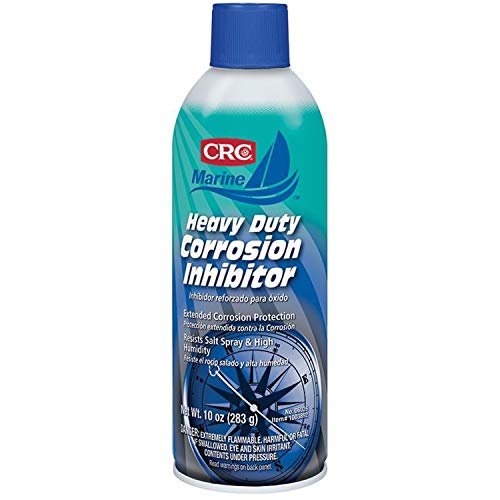
CRC is a name that professional mechanics and industrial maintenance technicians trust implicitly, and the 06026 Heavy Duty Corrosion Inhibitor is one of the brand's most versatile offerings in the automotive segment. The formula is classified as a flexible corrosion inhibitor, meaning it deposits a coating that retains some compliance after curing — a critical property for applications that involve vibration, flex, or thermal expansion, all of which are constants in the automotive environment. The product is specifically rated for salt spray protection, which makes it an excellent choice for vehicles that see significant winter road-salt exposure, and its low-viscosity spray characteristics allow it to penetrate into electrical connector housings, terminal blocks, and motor windings where heavier products cannot reach.
The intended application list for CRC 06026 reads like a checklist of the most rust-vulnerable components on any modern vehicle: electrical connections, engine components, fasteners, steering and throttle linkages, shaft and spindles, and general equipment storage preparation. One important nuance to understand is that the product specifies electrical connections must be made before application — this is not a conductive paste, and applying it before making a connection will impair electrical contact. Applied correctly to already-connected terminals, it creates a protective barrier against galvanic corrosion, moisture intrusion, and the oxidation that causes intermittent electrical faults in aging vehicles. The 10-ounce can is more than sufficient for a full vehicle treatment of all electrical connections, and because the product is transparent after curing, it doesn't create the visual clutter of white dielectric grease or similar products.
If your vehicle is experiencing persistent electrical gremlins — intermittent sensor faults, corroded battery terminals, or unreliable lighting — treating all accessible connectors with CRC 06026 is a genuine diagnostic-and-prevention step that professional technicians use routinely. Combined with the underbody protection products elsewhere on this list, it rounds out a comprehensive corrosion prevention strategy that addresses both structural and electrical vulnerability points.
Pros:
Cons:
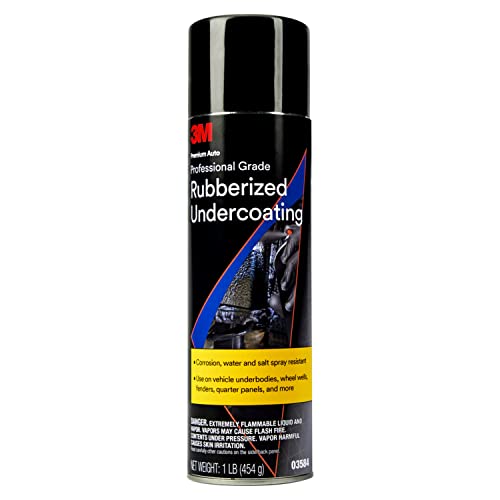
3M's professional grade products carry a level of engineering credibility that's difficult to overstate, and the Rubberized Undercoating is no exception to that standard. This is an asphalt-based rubberized formula that applies as a thick, textured coating specifically engineered for the underside of vehicles — wheel wells, quarter panels, interior fenders, and underbody panels — where gravel impact, road spray, and salt exposure converge to create the most aggressive corrosion environment on any vehicle. The rubber content gives the cured coating meaningful flexibility, which is essential for panel applications where metal flexes under load and temperature swings, and the thickness of the deposited film provides genuine chip resistance that thinner barrier coatings simply cannot match.
Beyond corrosion protection, the 3M Rubberized Undercoating delivers genuine sound deadening performance — a secondary benefit that many users find to be the most immediately perceptible improvement after application. Wheel well noise, road roar, and gravel pinging are noticeably reduced after a full treatment, which is a meaningful quality-of-life improvement for trucks and SUVs that are used for both work and daily driving. The 16-ounce can provides more coverage area than most competitors at comparable price points, and the product adheres well to both clean metal and existing undercoating in good condition, making it practical for refreshing older treatments rather than requiring complete removal and reapplication. Application technique matters: holding the can at a consistent distance and using overlapping passes produces a more uniform texture than hurried single-direction spraying.
If you're protecting a new vehicle purchase or treating a used truck before its first winter season in a salt-belt state, the 3M Rubberized Undercoating paired with Fluid Film on the more crevice-dense areas is a comprehensive protection strategy that professional rustproofing shops charge hundreds of dollars to replicate. Just as our guide to the best cordless impact wrenches can help you tackle fastener removal before undercoating prep, having the right tools for surface preparation is as important as the product itself.
Pros:
Cons:
Cosmoline is one of the oldest names in military-grade corrosion protection, and the RP-342 formula represents the company's most aggressive aerosol offering — a petroleum wax compound that cures to a dry-to-the-touch amber translucent film specifically engineered for long-term outdoor storage and extreme environment protection. The military heritage here is not marketing language: Cosmoline-type compounds have been used by armed forces worldwide for preserving weapons, vehicles, and equipment in long-term storage since World War II, and the RP-342 carries that chemical lineage forward in a consumer-accessible aerosol format. The amber, translucent finish is a distinctive visual characteristic that makes it immediately identifiable on treated surfaces, and the non-tacky cure is a genuine differentiator from lanolin-based products like Fluid Film that remain permanently wet.
The performance claims from Cosmoline are aggressive but credible based on independent salt-spray testing: the RP-342 coating is rated to resist long-term salt spray exposure without cracking, crazing, blistering, or washing off, and the three-can pack provides enough product to treat an entire vehicle's underbody, frame rails, and storage equipment in a single session. Dry time of approximately 25 minutes is fast enough to make single-session application practical, and the formula adheres to bare metal, previously coated surfaces, and even slightly damp metal — a flexibility that most competing products cannot claim. For seasonal vehicle storage, classic car preservation, and equipment that will be exposed to maritime or winter environments, the RP-342 is the most capable single-coat solution available in 2026 at this price tier.
One consideration to keep in mind: the amber tint, while not a structural limitation, can be cosmetically objectionable on visible body panels or polished components. This product is purpose-built for functional protection applications — underbody, frame, mechanical components, and storage surfaces — rather than cosmetic areas. For those specific applications, it delivers protection that rivals professional-grade commercial rustproofing treatments at a fraction of the cost.
Pros:
Cons:
STA-BIL built its reputation on fuel stabilizers, but the Rust Stopper is a serious product that earns its place in the corrosion prevention category on its own merits. The formula is specifically designed to address one of the most frustrating realities of rust treatment: most products are engineered for either bare metal or a specific substrate type, but real vehicles are complex assemblies of painted panels, bare metal fasteners, electrical connectors, rubber seals, and plastic components. STA-BIL Rust Stopper is explicitly rated for all common metals, electrical components, and painted surfaces, with a water-resistant film formula that survives rain, snow, and road spray without washing off or leaving water stream markings that accelerate uneven corrosion.
The practical versatility of this product is immediately apparent in the application list: farm equipment, boat and marine components, motorcycle chains, snowplow hardware, chainsaw bars, garden equipment, and automotive components all respond well to the formula. The 13-ounce can is generous for the price point, and the film that the product deposits is thin enough to be used on bike chains and linkages without interfering with movement — a level of versatility that thicker undercoating products cannot offer. The penetrating action also helps it address existing surface corrosion, slowing or stopping the spread of rust that has already initiated rather than functioning purely as a preventative treatment. This makes it particularly useful for older vehicles in mixed condition, where some surfaces are pristine and others are showing early rust formation.
From a seasonal maintenance perspective, STA-BIL Rust Stopper pairs naturally with other end-of-season storage preparations — the same session where you'd apply a quality car drying towel treatment and clean the exterior thoroughly is also the right time to treat exposed metal with a rust preventative. The long-lasting water-resistant film makes it particularly well suited for vehicles stored for extended periods, where moisture accumulation is the primary threat to painted and bare metal surfaces alike.
Pros:
Cons:
The single most important decision you'll make when selecting a rust prevention spray is understanding what chemistry you need for your specific situation. Petroleum wax formulas like Cosmoline RP-342 cure to a hard, dry film that provides excellent long-term protection for storage applications but require solvent cleaning before overcoating. Lanolin-based products like Fluid Film stay permanently wet and flexible, making them ideal for penetrating into existing rust-prone seams but less appropriate for surfaces where cleanliness matters. Rubberized undercoatings like the 3M product are optimized specifically for underbody protection, providing chip resistance and sound deadening alongside corrosion inhibition. Encapsulators like the Eastwood product are the only category that can be applied directly over active rust, making them the correct first step in any restoration or remediation project. Thin-film inhibitors like WD-40 Specialist and CRC 06026 excel in precise applications — electrical connections, fasteners, linkages — where heavier products would be impractical. Understanding which category addresses your specific need eliminates most of the confusion in this market.
The volume of product in a given can tells you less about real-world coverage than the formula's application characteristics. Thin-film inhibitors cover substantially more square footage per ounce than rubberized undercoatings, but the latter provide far more protective mass per application. For a full underbody treatment on a standard truck, plan on multiple 16-ounce cans of rubberized undercoating, while a can or two of thin-film inhibitor is sufficient to treat all electrical connections on the same vehicle. Temperature during application is also critical: most aerosol rust preventatives specify minimum application temperatures in the 50–68°F range, and applying below this threshold compromises adhesion and cure characteristics significantly. If you're treating your vehicle in an unheated garage during winter months, warming the cans in a bucket of warm water and ensuring the surface metal is above the minimum application temperature will produce substantially better results.
Every rust prevention spray on this list performs better on properly prepared surfaces than on dirty or contaminated metal, but the preparation requirements vary considerably between products. Encapsulators require wire brushing to remove loose rust and scale, followed by degreasing, but do not require complete rust removal — this is their primary advantage over conventional primers. Rubberized undercoatings require clean, grease-free surfaces but tolerate existing undercoating in good condition. Thin-film inhibitors are the most forgiving, often performing adequately on surfaces with light surface oxidation, minor contamination, and irregular textures. The consistent rule across all product types is that any grease, oil, silicone, or release agent contamination will catastrophically compromise adhesion, so solvent degreasing with an appropriate automotive prep solvent is a non-negotiable first step regardless of product type.
Rust prevention is a maintenance activity, not a one-time intervention — and the most effective programs treat it on an annual or biannual schedule rather than as a crisis response to visible corrosion. Products like Fluid Film and Cosmoline RP-342 are specifically designed for annual reapplication cycles, with the previous season's coating being covered rather than requiring removal. Rubberized undercoatings, once fully cured, typically last three to five years before requiring spot repair or full reapplication, and the 3M product adheres well to existing cured coatings in good condition. Thin-film inhibitors like WD-40 Specialist and CRC 06026 are rated for one to two years depending on exposure conditions, making biannual application during seasonal vehicle maintenance the appropriate schedule for vehicles in high-humidity or road-salt environments. Establishing a consistent annual undercoating routine — ideally in fall before winter salt season — is among the highest-return maintenance activities available for vehicles operated in corrosion-prone regions.
Fluid Film Aerosol is the top-rated overall rust prevention spray for 2026 based on combined real-world performance, versatility, and long-term protection. Its lanolin-based formula penetrates into seams and crevices that surface coatings cannot reach, stays flexible permanently to resist thermal cycling stress, and doubles as a penetrant and lubricant for seized fasteners and mechanical linkages. For underbody applications specifically, the 3M Rubberized Undercoating provides superior chip resistance and sound deadening alongside corrosion protection, making it the recommended choice for truck and SUV underbody treatments.
The answer depends entirely on which product you select. Standard rust prevention sprays and undercoatings require removal of all rust before application, as the rust layer prevents proper adhesion and the active corrosion continues to progress beneath the coating. Rust encapsulators, specifically formulated products like the Eastwood Rust Encapsulator Aerosol, are engineered to be applied over surface rust after removing only loose scale and flaking material. The encapsulator penetrates into the rust layer and chemically stabilizes it, preventing further oxidation without requiring complete removal. For any structural rust on frame members or load-bearing components, encapsulation is a treatment measure, not a permanent solution — professional assessment of structural integrity is required in those cases.
The recommended reapplication interval varies by product type and climate exposure. For vehicles in salt-belt states with heavy winter road treatment, annual underbody application of a product like Fluid Film or Cosmoline RP-342 in early fall before salt season is the professional standard. Rubberized undercoatings applied correctly typically last three to five years before requiring spot repair, and annual inspection of the coating's condition allows you to address failures before corrosion initiates. Thin-film inhibitors applied to electrical connections and fasteners should be refreshed every one to two years as part of standard preventative maintenance. Vehicles in mild climates with minimal salt exposure can extend reapplication intervals to every two to three years for most product categories without significant risk.
Standard WD-40 is primarily a water displacer and short-term lubricant, not a long-term rust preventative — it evaporates within days and leaves minimal residual protection on metal surfaces. However, WD-40 Specialist Corrosion Inhibitor is a completely different formulation from the same brand, engineered specifically for long-term rust prevention with a durable thin-film coating rated for up to two years of indoor protection and one year outdoors. If you're using WD-40 for rust prevention, the Specialist Corrosion Inhibitor is the correct product — using standard WD-40 for this purpose will provide days of protection at most and represents a common and costly misconception in this product category.
The highest-priority areas for rust prevention treatment are the underbody surfaces that experience direct road spray and salt exposure: frame rails, floor pans, rocker panels, wheel wells, and the interior surfaces of quarter panels. Brake lines, fuel lines, and electrical harness connectors are critical functional components that corrode in these same environments and should be treated with a thin-film inhibitor like WD-40 Specialist or CRC 06026. Battery terminals and ground connections are common failure points where corrosion causes electrical system faults and should be treated annually. Historically, areas where factory undercoating has chipped or cracked — visible as bright metal or rust streaking — are the most urgent treatment priority, as active corrosion progresses exponentially once it initiates at a breach point.
Most aerosol rust prevention sprays specify minimum application temperatures between 50°F and 68°F, and applying below these thresholds compromises adhesion, film formation, and long-term performance. In practice, this means late-fall application in northern states requires either heating the workspace, warming the cans, or ensuring the vehicle has been driven to warm the underbody surfaces before treatment. Some products — notably Fluid Film — have a broader application temperature range due to the lanolin chemistry's lower viscosity characteristics, but the general rule is that cold metal and cold aerosol cans both reduce coating quality significantly. If your vehicle needs rustproofing in winter, schedule treatment during the warmest part of the day and warm the application surface with a heat gun or portable heater before beginning.
 |
 |
 |
 |

About Diego Ramirez
Diego Ramirez has been wrenching on cars since his teenage years and has built a deep practical knowledge of automotive maintenance and paint protection through years of hands-on work. He specializes in fluid service intervals, preventive care routines, exterior protection products, and the consistent habits that extend a vehicle's lifespan well beyond average. At CarCareTotal, he covers car care guides, cleaning and detailing products, and exterior maintenance and protection reviews.
Get some FREE car parts & gear.. Or check out the latest free automotive manuals and build guides here.
Disable your ad blocker to unlock all the hidden deals. Hit the button below 🚗
| | | |
