by Joshua Thomas
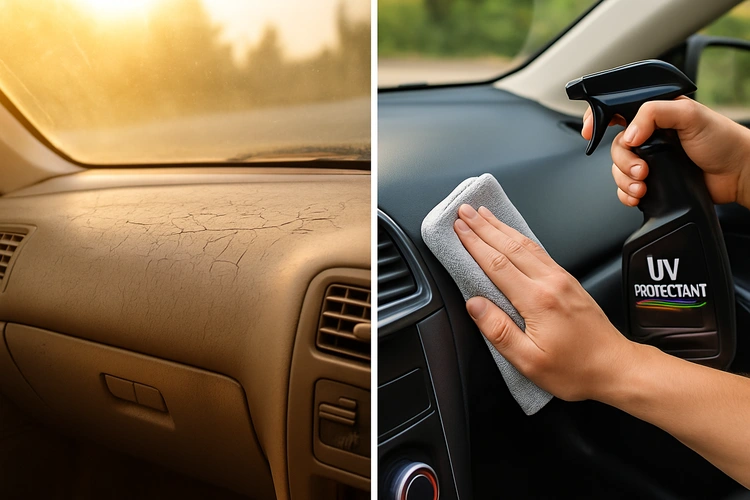
The sun is relentless. Every hour your car sits in direct sunlight, ultraviolet radiation silently fades your dashboard, cracks leather seats, and warps plastic trim. Knowing how to protect car interior from UV damage is one of the smartest investments you can make in your vehicle's long-term condition and resale value. UV rays penetrate automotive glass far more effectively than most drivers realize, and the degradation starts well before you can see it.
This guide covers every layer of UV defense — from window films and physical sunshades to surface conditioners and smarter parking habits. If you're concerned about the outside of your car as well, our guide on how to protect your car paint from sun damage covers the exterior side of the same problem. For now, let's focus on what's happening inside.
Contents
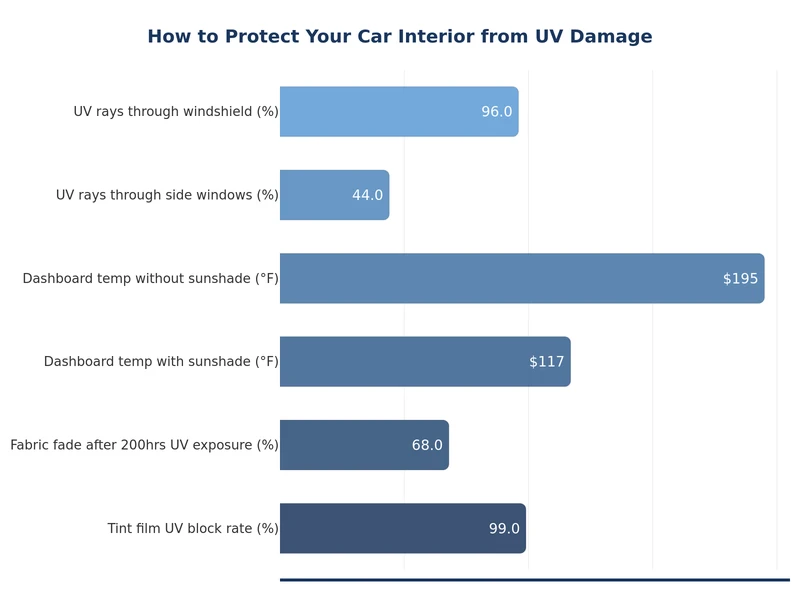
UV radiation exists in two forms that matter for your car: UVA and UVB. UVA rays, which account for roughly 95% of the UV reaching Earth's surface, are the primary culprit for interior damage. Standard automotive glass blocks most UVB but allows UVA to pass through almost unimpeded. Once inside, UVA triggers a chemical process called photodegradation — it breaks the molecular bonds in polymers, dyes, and organic materials. The EPA's UV Index resources explain how UV intensity varies by location, season, and time of day, all of which affect how fast interior damage accumulates.
Not all interior materials degrade at the same rate, but none are immune. The dashboard absorbs both heat and UV simultaneously, which accelerates breakdown faster than UV alone. Leather loses its natural oils and begins to crack or peel. Vinyl trim and door panels fade unevenly. Fabric seats and carpet lose vibrancy and weaken at the fibers. Even the steering wheel — one of the most-touched surfaces in your car — suffers significant UV-related wear over time.
Window films are the single most effective structural barrier between UV radiation and your interior. Quality matters enormously here. Basic dyed films block some visible light but offer limited UV rejection. Carbon films perform better on heat but still let through significant UVA. Ceramic films are the gold standard — they reject 99% or more of UV radiation while remaining optically clear and not interfering with electronics. Look for films that advertise a UV rejection rating, not just a visible light transmission (VLT) percentage.
Professional installation is worth the cost for front windows and the windshield. Bubbles, lifting edges, and improper cuts on curved glass are common issues with DIY kits. For rear side windows on simpler vehicles, pre-cut kits can work well. Always verify local tint laws before installation — front window regulations vary significantly by state.
A UV-blocking protectant applied to your dashboard creates a sacrificial layer that absorbs UV before it can reach the plastic beneath. Choose a matte-finish protectant — glossy products can create glare on your windshield and attract more heat. Apply every four to six weeks for consistent coverage. For a curated list of top-rated options, see our best dashboard cleaners guide, which includes products with UV inhibitors built in. Avoid silicone-heavy sprays, which may feel protective but often degrade plastics over time.
Leather needs regular conditioning to retain the oils that UV exposure depletes. A conditioner with UV inhibitors — applied every one to two months — prevents the surface from drying out and cracking. For detailed cleaning steps before conditioning, our guide on how to clean a leather steering wheel applies to seats as well. Vinyl seats require a different approach: use a vinyl protectant rather than a leather conditioner. See our step-by-step walkthrough on how to clean vinyl car seats for the full process before applying any UV protectant.
A reflective windshield sunshade is one of the cheapest and most effective tools available. A quality accordion-style or roll-up shade can reduce cabin temperature by 30°F or more and cut UV exposure to your dashboard dramatically. Deploy it every time you park in direct sunlight — the habit pays off quickly. Rear window shades are worth adding if you regularly park with the rear facing the sun or if children ride in the back seat.
If covered parking isn't available, an outdoor car cover rated for UV protection blocks all direct sunlight. Breathable fabric covers prevent moisture buildup while still stopping UV penetration. Garage parking remains the best option — it eliminates UV, heat accumulation, and environmental contaminants simultaneously. Even a carport provides meaningful protection compared to open-lot parking.
Different methods offer different levels of protection, cost, and convenience. Use this comparison to decide which combination makes sense for your situation:
| Protection Method | UV Block Rating | Estimated Cost | Frequency | Best For |
|---|---|---|---|---|
| Ceramic window tint | Up to 99% | $300–$800 (pro) | Permanent | Maximum long-term protection |
| Carbon window tint | ~70–90% | $150–$400 (pro) | Permanent | Budget-conscious all-round protection |
| Windshield sunshade | High (direct block) | $15–$50 | Every park | Dashboard and front seat protection |
| UV dashboard protectant | Moderate | $10–$25/bottle | Every 4–6 weeks | Trim, dashboard, plastic surfaces |
| Leather/vinyl conditioner with UV | Moderate | $15–$40/bottle | Every 1–2 months | Seats, steering wheel, door panels |
| Outdoor UV car cover | Very high (full block) | $50–$200 | When parked outside | No garage access situations |
| Garage or covered parking | Complete | Varies | Always | Best overall prevention |
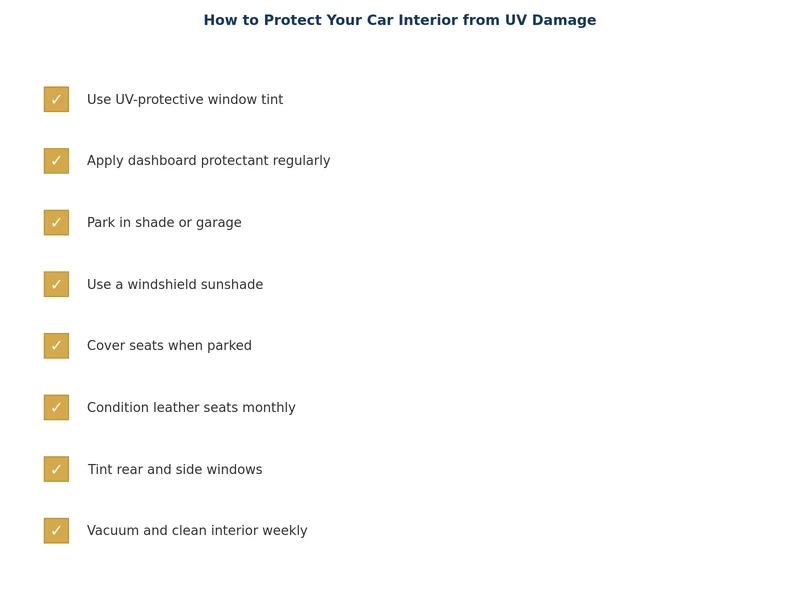
UV protection isn't a one-time task — it degrades along with the materials it's meant to shield. Conditioners wear off, sunshades get left at home, and tint films eventually age. The best approach is to fold UV protection tasks into your regular maintenance calendar. If you follow a structured car maintenance schedule, add dashboard protectant and leather conditioning to your monthly checklist alongside fluid checks and filter inspections.
UV intensity peaks in summer, but UVA radiation is present year-round — even on overcast days. Winter driving at high altitudes can expose your interior to higher UV doses than a summer day at sea level. Apply UV protectants consistently in every season, not just when the sun feels strong. If you notice any surface beginning to crack, fade, or feel dry, treat it immediately rather than waiting for scheduled maintenance. Early intervention prevents cosmetic damage from becoming structural deterioration.
Standard automotive glass blocks most UVB radiation but allows UVA rays to pass through with minimal reduction. UVA is the primary cause of interior fading and material degradation. To block UVA effectively, you need ceramic or carbon window tint, or UV-blocking film applied to the glass.
Every four to six weeks is the recommended interval for most dashboard protectants. If you park outdoors daily in a sunny climate, apply it closer to every four weeks. In winter or shaded conditions, every six to eight weeks is typically sufficient.
Yes. A combination of a reflective windshield sunshade, regular UV-blocking surface conditioners, and covered or garage parking can provide strong protection without tint. However, window film is the most effective single barrier and is worth considering for vehicles parked in the sun regularly.
Use a leather conditioner that specifically lists UV inhibitors in its ingredients. Apply it every one to two months. Clean the leather thoroughly before conditioning so the product can penetrate rather than sit on top of dirt. Avoid products with high alcohol content, which can accelerate drying.
Yes, significantly. Faded dashboards, cracked leather seats, and discolored trim are among the first things buyers and inspectors notice. UV-damaged interiors can reduce a vehicle's resale value by hundreds to several thousand dollars depending on severity. Consistent UV protection is one of the highest-return maintenance habits for preserving resale value.
A sunshade provides excellent protection for the dashboard and front seats when deployed correctly, but it doesn't protect rear seats, door panels, or surfaces exposed to light from side and rear windows. For comprehensive protection, combine a sunshade with window tinting and UV-protective surface treatments on all interior materials.
 |
 |
 |
 |

About Joshua Thomas
Joshua Thomas just simply loves cars and willing to work on them whenever there's chance... sometimes for free.
He started CarCareTotal back in 2017 from the advices of total strangers who witnessed his amazing skills in car repairs here and there.
His goal with this creation is to help car owners better learn how to maintain and repair their cars; as such, the site would cover alot of areas: troubleshooting, product recommendations, tips & tricks.
Joshua received Bachelor of Science in Mechanical Engineering at San Diego State University.


Get some FREE car parts & gear.. Or check out the latest free automotive manuals and build guides here.
Disable your ad blocker to unlock all the hidden deals. Hit the button below 🚗
| | | |
