by Joshua Thomas
Knowing how to remove adhesive from car paint safely is a skill every car owner eventually needs. Whether you're peeling off an old bumper sticker, removing a parking permit, or dealing with leftover tape residue after a road trip, the sticky gunk left behind can look terrible — and cause real paint damage if you attack it the wrong way. Scratching, using harsh solvents, or dry-peeling can strip clear coat and leave marks that cost hundreds to fix. This guide walks you through proven, paint-safe techniques for removing adhesive and sticker residue without causing damage.
If you also need to tackle residue on glass, see our guide on how to get a sticker off a car window for surface-specific tips. For paint chips that may already be present before you start, check how to fix paint chips on your car first.
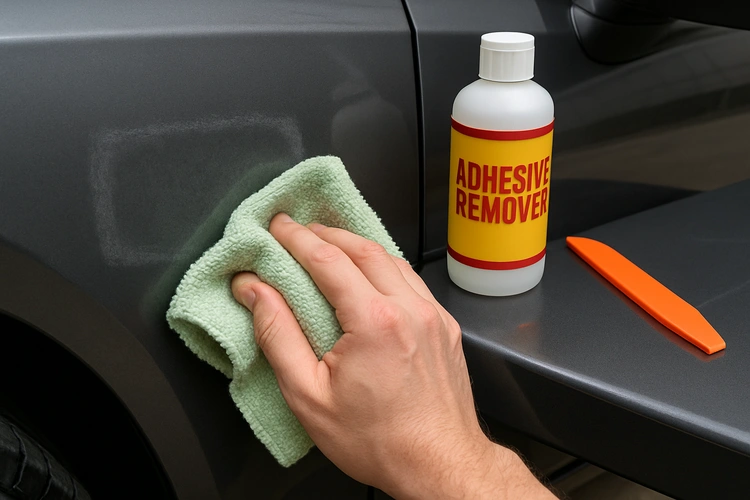
Contents
Car paint has multiple layers: primer, base coat, and clear coat. Adhesive residue bonds to the clear coat surface. Left in the sun, heat bakes the adhesive deeper into micro-pores in the clear coat, making it harder to remove over time. Aggressive scraping or abrasive tools cut through the clear coat, exposing the base coat to UV damage and oxidation.
According to Wikipedia's overview of automotive paint, clear coat systems are designed to be chemically resistant — but they are still vulnerable to petroleum-based solvents at high concentrations and prolonged contact. The goal is to dissolve the adhesive, not the paint beneath it.
Common sources of adhesive residue on car paint include:
Gather everything before you begin. Working dry or stopping mid-process leaves adhesive exposed longer and increases the risk of streaking.
Always start with a clean surface. A quick wash removes surface dirt that could cause scratches when you wipe. Follow our guide to washing a car properly if you want a thorough prep before tackling residue.
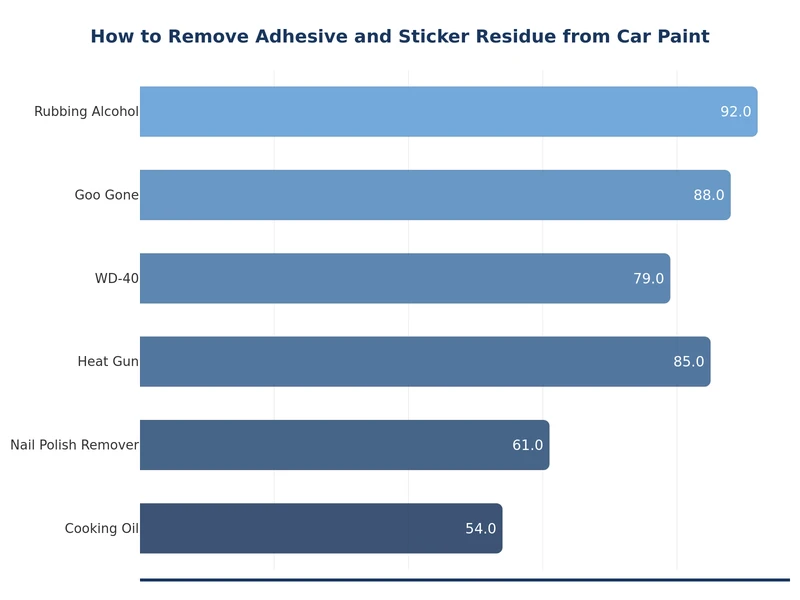
Heat softens adhesive and makes it peel cleanly. This is always the right first move, especially for thick stickers and decals.
Products like 3M Adhesive Remover or Goo Gone Automotive are formulated to dissolve adhesive without harming clear coat when used correctly.
Several household products work well in a pinch:
After solvent treatment, a clay bar removes any remaining micro-deposits that wiping misses. Lubricate the surface with clay bar lubricant or a quick detailer spray, then glide the clay bar gently over the area using straight-line strokes. The clay picks up embedded contamination without scratching. See our full guide to clay barring your car for technique details.
| Method | Effectiveness | Paint Safety | Cost | Best For |
|---|---|---|---|---|
| Heat gun + peel | High | Very Safe | Low | Whole stickers, decals |
| Dedicated adhesive remover | Very High | Safe (as directed) | Low–Medium | All residue types |
| Isopropyl alcohol (70–90%) | Medium | Very Safe | Very Low | Light residue, tape marks |
| WD-40 | Medium | Safe | Very Low | Light to medium residue |
| Clay bar | Medium (finish step) | Very Safe | Medium | Micro-deposits after solvent |
| Acetone | Very High | Risky | Very Low | Last resort only |
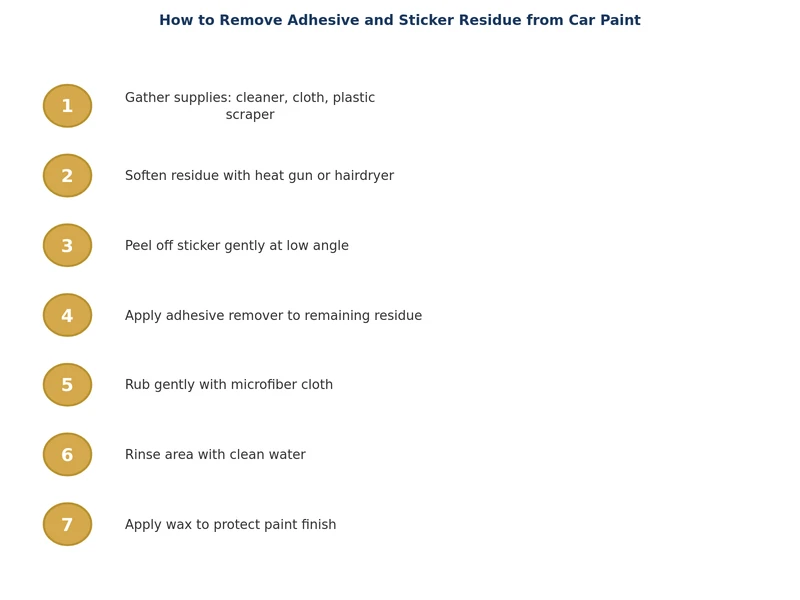
Once the adhesive is gone and the area is clean, the paint in that spot may be slightly more vulnerable than the surrounding area. The solvent process can strip existing wax or sealant.
Wash the entire panel — not just the spot — with car wash soap. Inspect in good lighting for any remaining haze, micro-scratches, or residue. If you see swirl marks from wiping, a light polish will restore the surface.
Rewax the area to restore protection. Even a thin coat of paste wax seals the clear coat and brings back the shine. For longer-lasting protection, a paint sealant or ceramic coating spray applied after removal keeps the area guarded against future contamination.
Not if you use the right method. Heat softening followed by a purpose-made adhesive remover applied to a cloth — not directly to the surface — is safe for clear coat. Avoid acetone and metal scrapers, and always wash the area after treatment.
Dedicated automotive adhesive removers like 3M Adhesive Remover or Goo Gone Automotive are the most effective and paint-safe options. For light residue, 90% isopropyl alcohol on a microfiber cloth works well and is very affordable.
Yes. Isopropyl alcohol at 70–90% concentration is safe on automotive clear coat and effective on light to medium adhesive residue. Apply it to a clean microfiber cloth and wipe in straight lines. Avoid leaving it pooled on the surface for extended periods.
Start with a heat gun or hair dryer to re-soften the adhesive — even old residue responds to heat. Follow immediately with a dedicated adhesive remover, letting it soak on a cloth placed against the residue for 60 seconds before wiping. Repeat as needed. Finish with a clay bar to clear any remaining traces.
WD-40 is generally safe on automotive clear coat in small amounts and for short contact time. It can loosen light to medium adhesive residue. The key is to wash the treated area thoroughly with car wash soap afterward, as oil residue will prevent wax and sealant from bonding properly.
Yes, it's strongly recommended. Solvent-based removers strip the wax layer in the treated area. Rewaxing seals the clear coat, restores shine, and protects the paint from UV exposure and future contamination. Apply wax to the whole panel for an even appearance.
 |
 |
 |
 |

About Joshua Thomas
Joshua Thomas just simply loves cars and willing to work on them whenever there's chance... sometimes for free.
He started CarCareTotal back in 2017 from the advices of total strangers who witnessed his amazing skills in car repairs here and there.
His goal with this creation is to help car owners better learn how to maintain and repair their cars; as such, the site would cover alot of areas: troubleshooting, product recommendations, tips & tricks.
Joshua received Bachelor of Science in Mechanical Engineering at San Diego State University.


Get some FREE car parts & gear.. Or check out the latest free automotive manuals and build guides here.
Disable your ad blocker to unlock all the hidden deals. Hit the button below 🚗
| | | |
