by Joshua Thomas
Bird droppings are more than an eyesore — they are one of the fastest ways to permanently damage your car's finish. Learning how to remove bird droppings from car paint quickly and correctly can mean the difference between a two-minute wipe-down and a costly respray. Bird waste is highly acidic, with a pH between 3.5 and 4.5, and it begins etching clear coat within minutes in direct sunlight. The longer it sits, the deeper the damage goes. This guide covers every removal method, the best products, and how to protect your paint afterward so you never have to deal with this problem twice.
If you park outdoors, under trees, or near power lines, bird droppings are a regular threat. Acting fast — ideally within the same day — is the single most important thing you can do. Understanding why droppings are so damaging helps explain why the right removal technique matters just as much as speed.
Contents
Unlike rain or dust, bird droppings are chemically reactive. They contain uric acid, which attacks your car's clear coat on contact. As the dropping dries, it shrinks and contracts, pulling the softened paint surface into micro-cracks or raised imprints. The result is dulling, discoloration, or a textured etch mark that no amount of washing will fix.
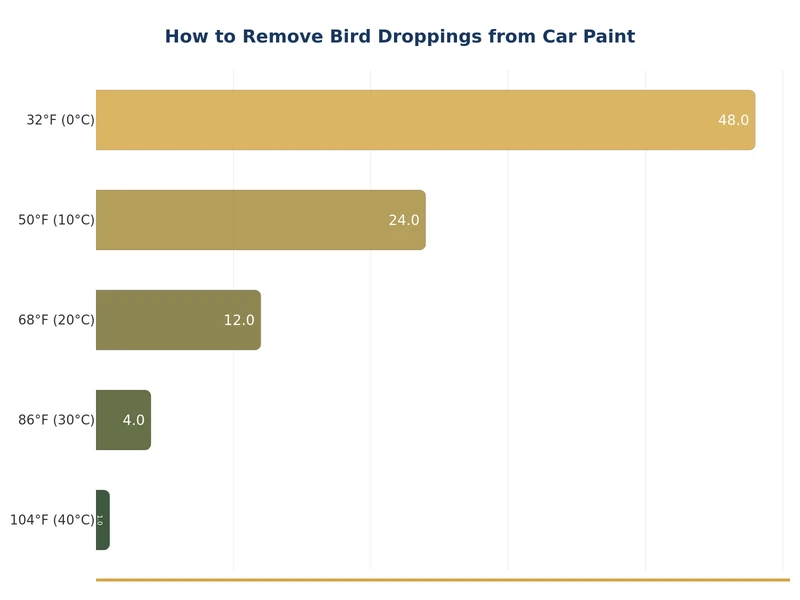
Speed of damage depends heavily on temperature and sun exposure. On a hot, sunny day, irreversible etching can begin in under an hour. On a cool, overcast day, you may have most of the day before serious harm sets in.
| Condition | Estimated Time Before Paint Damage | Risk Level |
|---|---|---|
| Hot sun (above 85°F / 30°C) | Under 1 hour | Critical |
| Warm, partly cloudy | 2–6 hours | High |
| Mild, overcast | 6–24 hours | Moderate |
| Cool (below 60°F / 15°C) | 24–48+ hours | Low |
The clear coat is the first line of defense. If etching reaches the base coat (the colored layer), the damage becomes visible as a dull or discolored patch. In severe cases — particularly on older vehicles with thin paint — the damage can reach the primer, requiring professional bodywork.
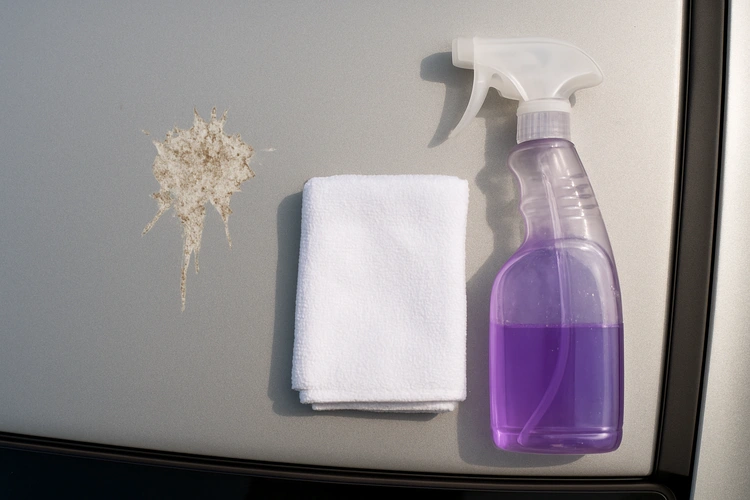
You don't need expensive equipment, but using the wrong materials can scratch the paint while removing the dropping. Avoid paper towels, rough cloths, or dry wiping of any kind.
A quality car wash soap or shampoo is worth keeping in your kit specifically for post-dropping washes, as pH-neutral formulas are gentle on both paint and any existing wax or sealant layer.
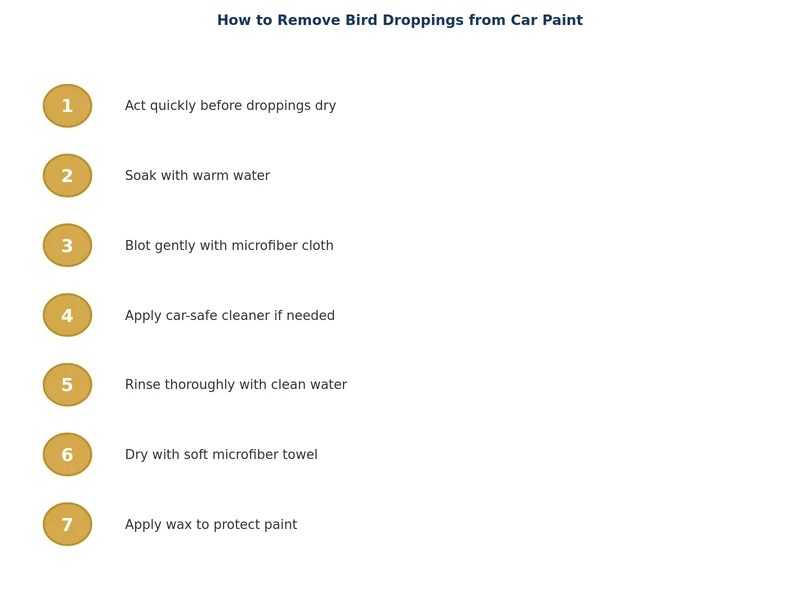
The method you use depends on whether the dropping is fresh or has dried and hardened. Never scrape or wipe a dry dropping without softening it first — doing so will grind grit particles across your paint and cause fine scratches.
Droppings that have been sitting in the sun for hours — or have been repeatedly wetted and dried — can bond strongly to the clear coat. Standard soaking may not be enough.
Products specifically formulated for bird dropping removal contain enzymes or pH-adjusted surfactants that break down uric acid without attacking paint. Spray directly onto the affected area, wait the recommended dwell time (usually 1–3 minutes), then wipe clean with a microfiber cloth. These products are more effective than water alone on baked-on deposits and safe for clear coat, wax, and sealant.
Club soda or sparkling water is a useful home remedy. The carbonation helps lift dried material from the surface. Apply liberally and allow it to fizz for a minute before wiping.
If you notice water spots appearing around the cleaned area after drying, the process outlined in how to remove water spots from car paint will help you address those without causing further damage.
If you notice a dull, textured, or discolored patch after removing a dropping, the clear coat has already been etched. The repair approach depends on severity.
Light etching — affecting only the surface of the clear coat — can often be corrected with a machine or hand polish. Use a cutting compound followed by a finishing polish, then protect the area with wax or sealant.
Deep etching — where the discoloration or texture remains after polishing — means the base coat has been reached. In this case, applying touch-up paint may be necessary for cosmetic correction, or you may need to consult a body shop for a professional blend or respray.
The sooner you act after a dropping lands, the less likely you are to need any paint correction at all. Buffing and polishing remove a thin layer of clear coat each time, so repeated correction shortens the life of your paint.
Prevention reduces both cleaning effort and the risk of etching. Several protective strategies work well depending on your situation.
A fresh coat of wax or synthetic sealant provides a sacrificial barrier over your clear coat. Bird droppings still need to be removed promptly, but wax slows the acid from reaching the paint and makes cleaning easier. Applying wax every few months is one of the simplest and most cost-effective ways to protect your finish. Our guide on how to wax a car by hand walks through the full process.
For longer-lasting protection, a ceramic coating creates a hard, hydrophobic layer that is significantly more resistant to bird dropping acid than wax. Coatings last years rather than months. If you're weighing your protection options, the detailed comparison of ceramic coating vs paint protection film covers what each offers and which is better suited for different needs.
No protection is a substitute for prompt removal — but a well-maintained paint surface gives you more time and a better outcome when droppings do land.
In hot, sunny conditions, damage can begin in under an hour. On cool or overcast days, you may have up to 24 hours before etching occurs. The safest rule is to remove bird droppings as soon as you notice them, regardless of conditions.
Not always, but it always poses a risk. Fresh droppings removed quickly — especially on a cool day or if the car is waxed — often leave no lasting damage. However, leaving any bird dropping on paint for an extended period, particularly in heat or direct sunlight, is very likely to cause at least minor etching.
It is best to avoid household cleaners. Products containing ammonia, bleach, or strong alkaline ingredients can strip wax, dull clear coat, or cause their own chemical damage. Stick to pH-neutral car shampoo, a dedicated bird dropping remover, or plain water with a microfiber cloth.
A purpose-made bird dropping remover is the most effective option, particularly for dried or baked-on deposits. These products use enzymes or targeted surfactants to break down uric acid. For fresh droppings, a quality pH-neutral car shampoo diluted in a spray bottle works very well.
A ceramic coating significantly slows down the damage process due to its chemical resistance and hardness. However, it does not make the paint immune — leaving bird droppings on a ceramic coated car for an extended period can still cause etching. Prompt removal is still recommended even with a coating.
Light etching that affects only the surface of the clear coat can often be corrected with a polishing compound followed by a finishing polish. Deeper etching that reaches the base coat may require touch-up paint or professional bodywork. In either case, protect the repaired area with wax or a sealant afterward to prevent future damage.
 |
 |
 |
 |

About Joshua Thomas
Joshua Thomas just simply loves cars and willing to work on them whenever there's chance... sometimes for free.
He started CarCareTotal back in 2017 from the advices of total strangers who witnessed his amazing skills in car repairs here and there.
His goal with this creation is to help car owners better learn how to maintain and repair their cars; as such, the site would cover alot of areas: troubleshooting, product recommendations, tips & tricks.
Joshua received Bachelor of Science in Mechanical Engineering at San Diego State University.


Get some FREE car parts & gear.. Or check out the latest free automotive manuals and build guides here.
Disable your ad blocker to unlock all the hidden deals. Hit the button below 🚗
| | | |
