by Joshua Thomas
Discovering a fine, gritty film on your car's finish after nearby construction or a neighbor's spray paint project is frustrating — but learning how to remove paint overspray from a car is easier than most people think. With the right tools and a methodical approach, you can restore your paint to a smooth, factory-like finish without visiting a body shop. This guide walks you through every method, from a simple clay bar treatment to more aggressive compound correction, so you can choose the right option for your situation.
Before you grab a rag and start scrubbing, it's worth understanding what you're dealing with. Overspray is airborne paint, lacquer, or industrial fallout that settles onto your car's clear coat and hardens. Treating it incorrectly — or ignoring it — can lead to deeper paint damage over time. If your car already has swirl marks or surface scratches, read our guide on how to remove scratches from car paint at home to address those issues alongside overspray removal.
Contents
Paint overspray refers to airborne paint particles or industrial fallout that land and bond to surfaces they were never intended for. On a car, this typically appears as a rough, sandpaper-like texture on the clear coat. According to Wikipedia's article on overspray, the term covers any paint that misses the intended target during spray application — and vehicles parked outdoors are frequent victims.
Run a clean fingertip lightly across your car's hood or roof. If the surface feels like fine sandpaper or has tiny bumps despite being visually clean, you likely have overspray or bonded contamination. Wrapping your hand in a thin plastic bag while running it across the paint amplifies the texture, making faint overspray easier to detect.
Having the right supplies before you start saves time and avoids the risk of making things worse. The good news is that most overspray situations can be resolved with an affordable clay bar kit and basic detailing supplies.
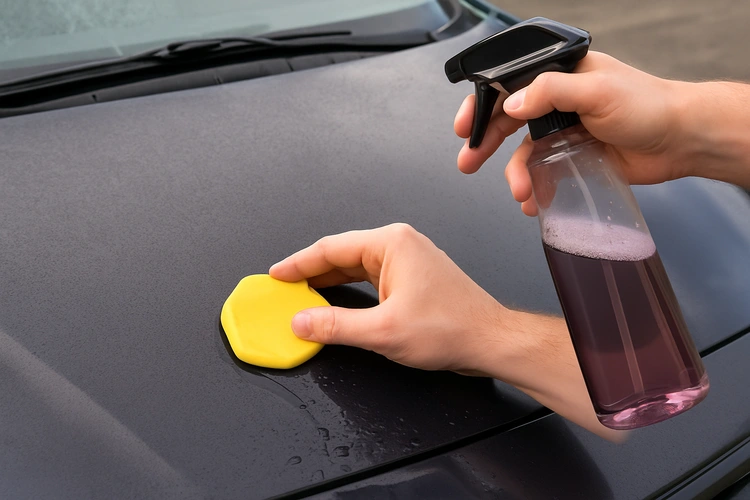
A detailing clay bar is the go-to solution for bonded surface contamination. It works by mechanically shearing contaminants off the clear coat without scratching the paint when used with proper lubrication. Our guide to the best clay bars covers top-rated options across different budgets and contamination levels. For overspray, a medium-grade clay bar is typically the right starting point.
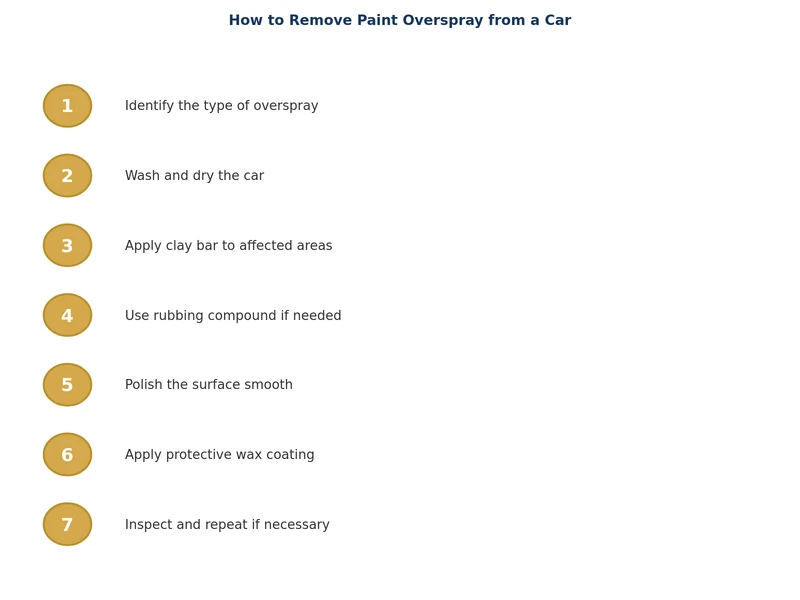
The clay bar method is the safest and most effective first approach for how to remove paint overspray from a car. It works on water-based and most solvent-based overspray, provided the contamination hasn't deeply etched the clear coat.
In some cases — especially when overspray has been baked in by sun heat or when it contains industrial lacquer — a clay bar alone won't be sufficient. These escalation methods can help.
A light polishing compound applied with a dual-action polisher or microfiber applicator pad abrades the very top layer of clear coat, removing contamination that clay couldn't lift. Work one panel at a time, use moderate pressure, and follow up with a finishing polish to restore gloss. This method is more aggressive, so reserve it for persistent overspray after claying has failed. Be particularly careful on older vehicles where the clear coat may already be thin.
Dedicated overspray removal products contain mild solvents formulated to dissolve paint particles without harming automotive clear coat. They are especially useful for fresh overspray (within a few days of exposure). Apply the product with a microfiber applicator using light pressure, let it dwell for 30–60 seconds, then wipe off. Never use acetone, lacquer thinner, or other harsh solvents — these will strip your clear coat. Always test any chemical remover on an inconspicuous spot first.
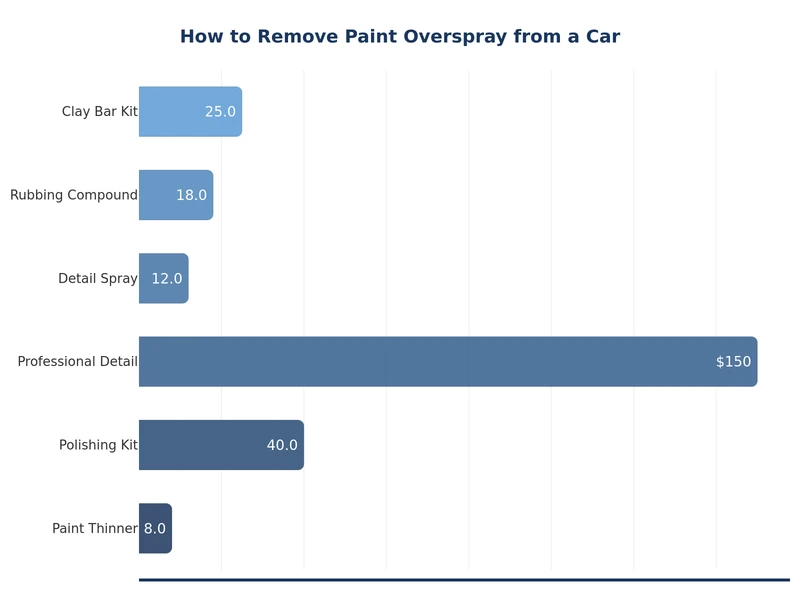
| Method | Best For | Risk Level | Cost | Skill Level |
|---|---|---|---|---|
| Clay Bar | Light to moderate overspray, fresh contamination | Low | $10–$30 | Beginner |
| Chemical Remover | Fresh overspray, water-based paint | Low–Medium | $15–$40 | Beginner |
| Polishing Compound | Stubborn, baked-in overspray | Medium | $20–$60 | Intermediate |
| Professional Detailer | Severe, multi-layer overspray | Low (outsourced) | $100–$400+ | N/A |
Once the overspray is gone, your clear coat is slightly more vulnerable because the clay or compound process has removed the wax layer that was on the surface. Apply a quality carnauba wax or synthetic paint sealant within 24 hours of completing the overspray removal. Regular waxing creates a sacrificial layer so that future overspray binds to the wax rather than directly to your clear coat — making future removal far easier.
For long-term protection, especially if you park near construction zones or industrial areas, consider paint protection film on the hood and roof. Also review how to protect your car paint from sun damage, since UV exposure weakens clear coat and makes it more susceptible to bonded contamination over time.
If you discover overspray has gotten into recessed areas like door jambs or trim edges, a detailing brush loaded with clay lubricant and a small clay piece can reach these tight spots. For thorough cleaning of those hidden edges, our guide on how to clean car door jambs properly covers the full process.
Run your fingertip across a clean panel — if the surface feels rough or gritty like fine sandpaper despite being washed, you likely have bonded overspray or industrial fallout. Using a thin plastic bag over your hand amplifies the texture and makes faint contamination easier to detect.
A clay bar handles most light to moderate overspray effectively, including water-based and many solvent-based paints. Very old, heavily baked-in, or multi-layer overspray may require a polishing compound or professional treatment after claying.
WD-40 can loosen fresh, light overspray on some surfaces, but it is not recommended as a primary method. It leaves an oily residue that must be fully removed before waxing, and it may not be strong enough for anything beyond very fresh, thin contamination.
When done correctly with proper lubrication, clay barring causes minimal to no damage. Using a compound carries slightly more risk since it removes a thin layer of clear coat. Always follow up any correction with polish and a protective wax or sealant to restore the finish.
A full car clay bar treatment typically takes two to four hours depending on the vehicle's size and contamination level. Spot treatment of a single panel with a chemical remover can take as little as 15–30 minutes.
DIY methods work well for most overspray situations. However, if the overspray covers the entire vehicle, contains industrial lacquer or multi-layer paint, or if you notice the clear coat is already compromised, a professional detailer is the safer choice to avoid further damage.
 |
 |
 |
 |

About Joshua Thomas
Joshua Thomas just simply loves cars and willing to work on them whenever there's chance... sometimes for free.
He started CarCareTotal back in 2017 from the advices of total strangers who witnessed his amazing skills in car repairs here and there.
His goal with this creation is to help car owners better learn how to maintain and repair their cars; as such, the site would cover alot of areas: troubleshooting, product recommendations, tips & tricks.
Joshua received Bachelor of Science in Mechanical Engineering at San Diego State University.


Get some FREE car parts & gear.. Or check out the latest free automotive manuals and build guides here.
Disable your ad blocker to unlock all the hidden deals. Hit the button below 🚗
| | | |
