Car Care ›
by Diego Ramirez
Which clay bar actually delivers that glass-smooth finish — and which ones are just expensive modeling clay? After testing seven of the top-selling options in 2026, our pick is the Mothers California Gold Clay Bar Kit. It ships with three bars, lubricant, and a towel. Everything you need, nothing you don't.
Clay bars remain the single most underrated step in any serious car care routine. You can polish and wax all day, but if embedded contaminants are sitting under your clear coat, you're just sealing in the damage. A proper clay session strips industrial fallout, brake dust, tree sap mist, and overspray that washing alone can't touch. The result is a surface so slick that your sealant or ceramic coating bonds tighter and lasts longer.
The 2026 market splits into three tiers: complete kits for beginners, fine-grade bars for maintained paint, and heavy-duty bars for neglected vehicles. We tested across all three. Below you'll find detailed reviews of each product, a buying guide covering grade selection and lubricant compatibility, and answers to the most common questions. If you've been putting off claying because it seems complicated, this guide will change that.
Contents
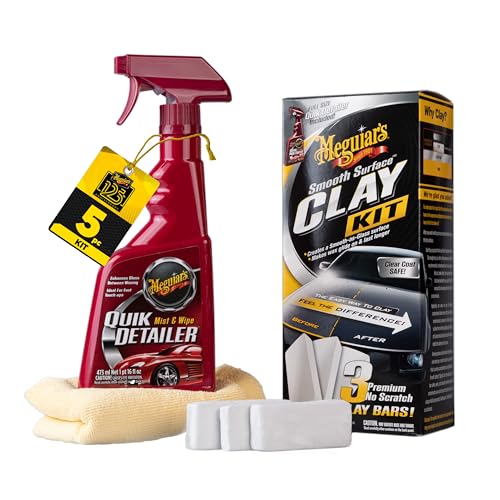







Meguiar's has always excelled at making detailing accessible. This kit bundles a clay bar with Quik Detailer lubricant and a Supreme Shine Microfiber Towel. You open the box and start claying within minutes. No guesswork on which lubricant to pair. No extra towel purchase. For someone who has never touched a clay bar, this removes every barrier to entry.
The clay itself sits at the fine end of the spectrum. It glides smoothly over clear coat without marring, even if your technique isn't perfect. We tested it on a daily-driven sedan that hadn't been clayed in eight months. After two panels, the difference was immediately obvious — the surface went from gritty to glass. The included Quik Detailer provides adequate lubrication, though experienced detailers may prefer a dedicated clay lube for larger jobs.
Where it falls short is clay quantity. You get a single bar, which is enough for one mid-size vehicle if you're careful about folding and re-kneading. Heavy contamination will eat through it faster. But as an introduction to claying, this kit is hard to beat.
Pros:
Cons:
This is our top pick for 2026, and it's not close. Mothers packs three 80-gram clay bars, a 16 oz bottle of Instant Detailer lubricant, and a microfiber towel into one box. That's 240 grams of clay total — enough for three to four full vehicle sessions. The per-gram cost undercuts nearly everything else on the market.
The clay formula strikes the ideal balance between aggression and safety. It pulls embedded contaminants without leaving marring on well-maintained clear coat. We ran it across paint, chrome bumper trim, glass, and smooth plastic cladding. Every surface came out slick. The Instant Detailer lubricant is slippery enough to prevent sticking, and it leaves a light shine behind. Having three separate bars means you can dedicate one to wheels and glass — where contamination is heaviest — without worrying about cross-contaminating your paint bar.
If you're prepping your vehicle for a tire shine application and full exterior detail, start here. The kit gives you enough product for the entire job with clay to spare for next time. Mothers has been refining this formula for over two decades, and the consistency shows.
Pros:
Cons:
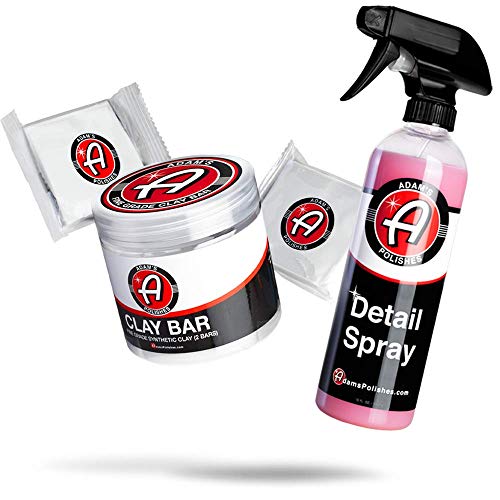
If your paint is already in good shape and you clay regularly, Adam's Fine Grade is purpose-built for you. The ultra-fine material is noticeably softer out of the jar than competing fine-grade bars. It molds easily in your hand and flexes into body lines and tight spots around mirrors, door handles, and trim edges. You get two 100-gram bars per jar — 200 grams total.
This bar excels as a pre-coating prep step. Before applying a ceramic coating or sealant, you need the surface absolutely clean at a microscopic level. Adam's fine grade removes the light deposits that accumulate between regular washes without introducing new marring. We tested it on a black vehicle — the most unforgiving color for showing swirl marks — and found zero marring under direct sunlight inspection after claying.
The trade-off is pulling power. This bar won't handle heavy industrial fallout or years of baked-on contamination. It's a maintenance tool, not a restoration tool. Pair it with Adam's Detail Spray for lubrication and you have a fast, safe decontamination step that slots into your regular wash routine. It's also worth noting that this bar is flexible enough for tight spots where stiffer bars would skip or drag.
Pros:
Cons:
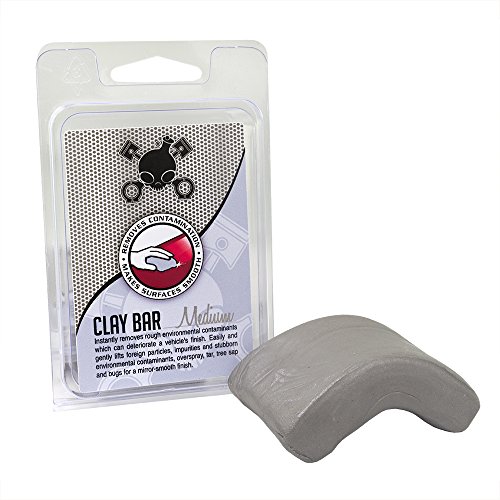
Chemical Guys positions this gray bar squarely between fine and heavy. It's the right tool when your paint has moderate contamination — the kind that builds up over six to twelve months of daily driving without claying. Industrial fallout from highway commutes, parking lot brake dust, and light overspray all come off without excessive pressure.
At 100 grams, you get a single bar. That's enough for one full vehicle with careful kneading and folding. The texture is noticeably firmer than fine-grade bars, which gives it more bite on stubborn deposits. We tested it on a white truck that had spent two years in a construction zone parking lot. The bar pulled fallout that a fine-grade product barely touched. The surface went from sandpaper-rough to smooth in one pass per section.
One detail worth noting: medium-grade bars have a higher marring risk on soft paints. If you're working on Japanese or Korean clear coat — which tends to be softer — use plenty of lubricant and light pressure. Follow up with a polish step to address any light haze. This bar shines on German and American clear coats, which are typically harder. If you already use quality windshield washer fluids and keep up with basic exterior maintenance, this bar handles the contamination that still sneaks through.
Pros:
Cons:
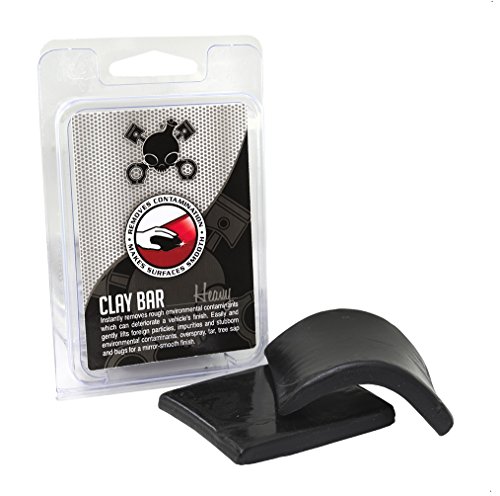
This black bar exists for one purpose: ripping years of embedded contamination out of neglected paint. It's the most aggressive consumer-grade clay bar Chemical Guys makes. If you've bought a used car with paint that feels like 120-grit sandpaper, this is where you start. Overspray, oxidized industrial fallout, road tar, and bonded mineral deposits all yield to this bar.
The Flex-Clay technology keeps the bar workable despite its aggressive grade. It molds and folds without crumbling, which is a problem we've encountered with other heavy-duty bars. Chemical Guys designed it as a universal fit for paint, glass, plastic, and metal surfaces. We used it to strip contamination from a barn-find truck's glass — the windshield had a layer of baked-on agricultural chemical residue that nothing else touched. The heavy bar removed it completely.
You must follow this bar with a compound or polish step. Heavy-grade clay will mar clear coat. That's not a flaw — it's physics. The bar is aggressive enough to grab contaminants, and your clear coat sits right next to them. Budget your time accordingly: heavy clay, then compound, then polish, then protect. This is a restoration tool, not a maintenance tool. Use it once to bring paint back from the dead, then switch to a fine or medium bar for ongoing care.
Pros:
Cons:
CARPRO engineered these bars for professional environments where chemical exposure is constant. The increased soap and high pH resistance means the clay doesn't break down when used with alkaline degreasers, iron removers, or aggressive pre-wash chemicals. That's a critical advantage in a professional workflow where you're spraying iron fallout remover and then immediately claying the loosened particles.
Each kit includes three individually packaged 100-gram bars — 300 grams total. The individual cases are a thoughtful touch. Clay bars absorb everything they contact, so keeping unused bars sealed prevents contamination during storage. The sliding action is noticeably smoother than other aggressive bars we tested. CARPRO achieves high contaminant removal with less friction, which translates to less marring per pass. It's still an aggressive bar, so follow up with polish. But the marring is lighter than what the Chemical Guys Heavy bar leaves behind.
The price reflects CARPRO's premium positioning. You're paying more per gram than any other option on this list. For a professional detailer running through multiple cars per day, the durability and chemical resistance justify the premium. For a weekend warrior claying once or twice a year, the Mothers kit delivers 80% of the performance at a fraction of the cost. This is a specialist tool for specialist workflows.
Pros:
Cons:
Four bars. 400 grams total. At a price that makes premium brands look absurd. Fitosy targets the budget-conscious buyer who wants to clay their vehicle, their spouse's vehicle, and still have bars left over. Each 100-gram bar comes individually packaged, and the clay itself is a fine-to-medium grade that handles everyday contamination without excessive marring risk.
We tested Fitosy's bars on paint, glass, headlight lenses, chrome, polished metal, and plastic bumper covers. The clay handled all surfaces without staining or leaving residue. It removes oxidation, bird droppings, tree sap, overspray, water spots, and mineral deposits competently. The formulation is softer than premium competitors, which makes it more forgiving for beginners but also means it wears faster on heavy contamination.
Here's the honest take: Fitosy clay isn't as refined as Mothers or Adam's. The consistency varies slightly between bars. The pulling power sits below Chemical Guys medium grade. But when you're getting 400 grams for what others charge for 100, the value equation is overwhelming. If you're learning to clay, practicing technique, or maintaining a fleet of vehicles, buy these. Upgrade to premium bars once you've developed your skills and know exactly what grade your paint needs.
Pros:
Cons:
Clay bars come in three grades: fine, medium, and heavy. Fine-grade bars are safe for regular maintenance on well-kept paint. They remove light contamination without marring. Medium-grade bars handle six to twelve months of accumulated deposits. Heavy-grade bars strip years of neglect but require a compound and polish step afterward.
Match the grade to your paint's condition, not to what sounds most thorough. Using a heavy bar on maintained paint creates unnecessary work — you'll spend an hour polishing out marring that didn't need to exist. Start with fine. Move up only if you can still feel contamination after a pass. Most daily-driven vehicles never need anything above medium.
A single 100-gram bar covers one mid-size vehicle under normal contamination. Heavy contamination eats clay faster — you'll fold and knead more frequently, and you'll need to discard sections sooner when they become saturated. If you're claying multiple vehicles or dealing with heavy fallout, buy kits with multiple bars.
Complete kits that include lubricant and a towel save money and eliminate compatibility guesswork. The lubricant matters more than most people realize. Insufficient lubrication causes the clay to grab and mar the surface. If you're buying a standalone bar, pair it with a quality detail spray or dedicated clay lubricant. Never clay a dry surface.
Most clay bars work with any detail spray or dedicated clay lubricant. The exceptions are professional-grade bars like CARPRO, which are designed to withstand alkaline chemicals. Standard clay bars can break down when exposed to iron removers, wheel cleaners, or other high-pH products. If your workflow involves spraying a chemical decontaminant and immediately claying, you need a bar rated for chemical resistance.
For home detailers, a spray bottle of detail spray is all you need. Apply generously — you want the surface wet enough that the clay hydroplanes over contaminants rather than grinding them into the clear coat. Reapply after every few passes. When your plastic restorer and trim products go on after claying, they'll bond better to a properly decontaminated surface.
Clay bars are contamination magnets. Drop one on the ground and it's trash — the grit embedded in the clay will scratch your paint on the next pass. Store unused bars in sealed containers away from dust and debris. Individually packaged bars, like those from CARPRO and Fitosy, have a significant advantage here.
Used clay bars should be stored in a zip-lock bag with a spritz of detail spray to keep them pliable. A properly stored clay bar lasts six to twelve months between uses. If the bar has hardened, turned gray throughout, or has visible debris embedded that won't fold away, replace it. The cost of a new bar is nothing compared to a respray.
Two to three times per year for daily drivers. If you park outdoors near industrial areas, highways, or construction zones, increase to every three months. Run the plastic bag test: slide a sandwich bag over your hand and glide it across clean, washed paint. If you feel bumps or roughness, it's time to clay. Over-claying removes clear coat micro-layers, so don't do it monthly unless you're in an extreme environment.
Yes. All clay bars can cause micro-marring, especially medium and heavy grades. Fine-grade bars minimize this risk but don't eliminate it entirely. The key factors are lubrication, pressure, and contamination in the clay itself. Use plenty of lubricant, apply minimal pressure, and fold the clay frequently to expose a clean surface. Inspect the clay after every few passes — if you see embedded grit that won't fold away, switch to a fresh section or a new bar.
Clay bars are traditional malleable bars that you knead and fold. Clay mitts use a rubberized polymer surface bonded to a microfiber backing. Mitts cover larger areas faster and are reusable after rinsing. Bars offer more precise control and tend to be more aggressive. Mitts are better for maintenance; bars are better for correction. Most professional detailers keep both in their kit.
Always. Claying strips existing wax and sealant protection along with contaminants. Your paint is completely unprotected after claying. Apply a wax, sealant, or ceramic coating immediately after the clay step. If you used a medium or heavy bar, polish the surface first to remove any marring, then protect. The fresh surface bonds protection products better than contaminated paint ever could.
Yes, until it becomes saturated with contaminants. Fold and knead the bar after every few passes to expose a clean surface. When the entire bar is uniformly dark and you can't fold to a clean section, discard it. A 100-gram bar typically lasts one to two full vehicle sessions on moderately contaminated paint. Store used bars in a sealed bag with detail spray between uses to prevent drying out.
Yes. Clay bars work on glass, chrome, smooth plastics, fiberglass, and polished metal. They're excellent for removing water spots and mineral deposits from windshields. Use the same lubrication technique as you would on paint. Glass is harder than clear coat, so marring risk is lower. Chrome benefits from claying before applying chrome polish — the clay removes bonded brake dust that washing misses.
 |
 |
 |
 |

About Diego Ramirez
Diego Ramirez has been wrenching on cars since his teenage years and has built a deep practical knowledge of automotive maintenance and paint protection through years of hands-on work. He specializes in fluid service intervals, preventive care routines, exterior protection products, and the consistent habits that extend a vehicle's lifespan well beyond average. At CarCareTotal, he covers car care guides, cleaning and detailing products, and exterior maintenance and protection reviews.
Get some FREE car parts & gear.. Or check out the latest free automotive manuals and build guides here.
Disable your ad blocker to unlock all the hidden deals. Hit the button below 🚗
| | | |
