by Joshua Thomas
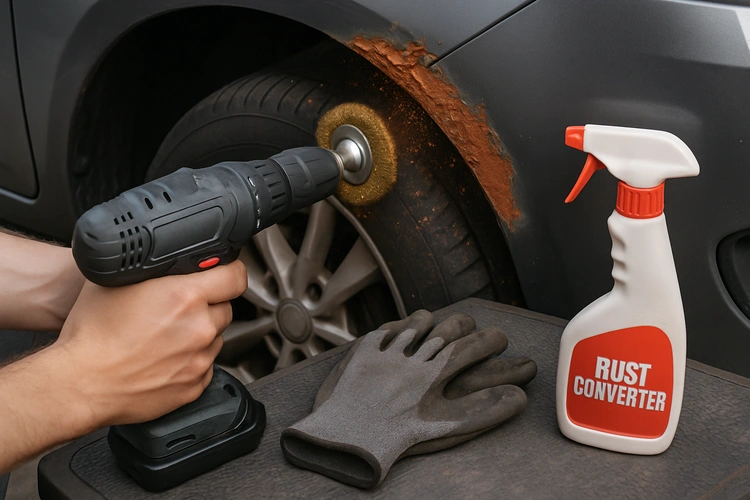
Rust is one of the most damaging things that can happen to your car's body. Once iron oxide takes hold, it spreads fast — eating through metal, destroying paint, and dropping resale value. Knowing how to remove rust from car body panels before it becomes structural damage can save you hundreds in repair bills. Whether you're dealing with surface rust, scale rust, or penetrating rust, this guide walks you through every method, tool, and product you need.
Before you reach for a grinder or wire brush, it helps to understand what you're dealing with. If you've already been keeping up with paint protection, you may catch rust early — but even well-maintained cars develop spots over time, especially in wet or salty climates. Pair this guide with our article on how to protect car paint to stop rust from returning after you treat it.
Contents
Rust (iron oxide) forms when iron in steel reacts with oxygen and moisture. Not all rust is equal — how you treat it depends entirely on how deep it has penetrated.
This is the earliest stage. Paint chips or scratches expose bare metal, which oxidizes into a reddish-brown film. At this stage the metal is still structurally intact. Surface rust is the easiest to fix and requires only light sanding, primer, and touch-up paint. Catching small chips early is critical — see our guide on how to fix paint chips on your car for a detailed walkthrough.
Left untreated, surface rust converts the surrounding metal into rough, flaking scales. The metal begins to pit and bubble underneath the paint. You'll need more aggressive sanding or grinding to remove all the affected material before treatment.
This is full-thickness rust — holes in the panel, or metal so thin it crumbles. DIY repair is still possible with patch panels and filler, but the work is significant. For large areas of penetrating rust, a body shop is often the better call.
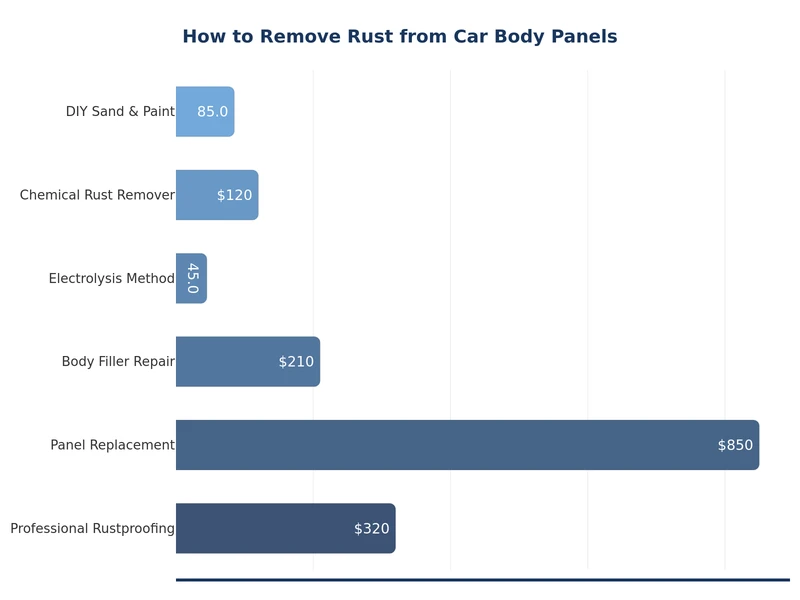
| Item | Purpose | Rust Stage |
|---|---|---|
| 80–120 grit sandpaper | Remove loose rust and paint | Surface, Scale |
| 220–400 grit sandpaper | Feather edges and smooth filler | All stages |
| Angle grinder + flap disc | Aggressively remove heavy scale rust | Scale, Penetrating |
| Wire brush / wire wheel | Scrub loose rust from crevices | Surface, Scale |
| Rust converter | Chemically neutralize remaining rust | Surface, Scale |
| Rust remover (phosphoric acid) | Dissolve rust on bare metal | Surface, Scale |
| Automotive body filler (Bondo) | Fill pits and low spots | Scale, Penetrating |
| Self-etching primer | Bond primer to bare metal | All stages |
| Spray paint / touch-up paint | Restore color match | All stages |
| Masking tape and plastic sheeting | Protect surrounding panels | All stages |
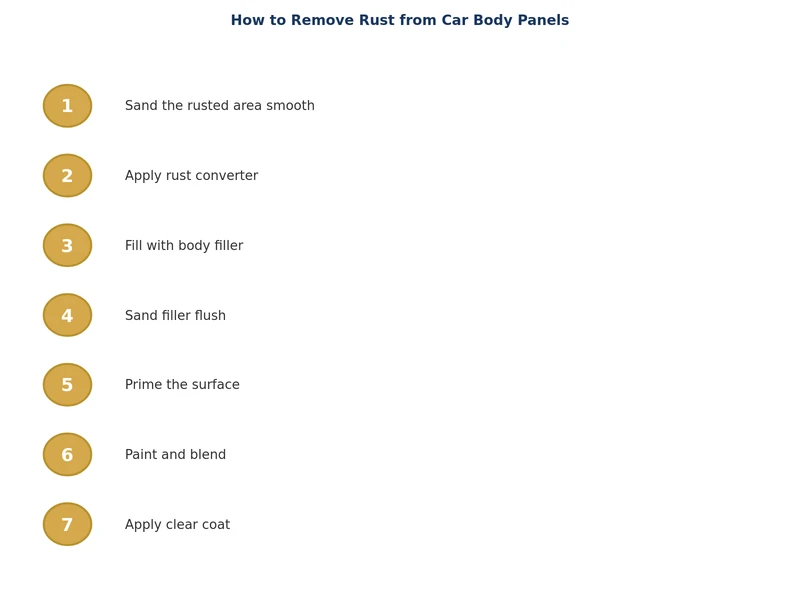
Work in a shaded, dry area. Wash the panel thoroughly first — a clean surface lets you see the full extent of damage. Use masking tape and plastic sheeting to protect glass, trim, and adjacent panels from dust and overspray. Put on safety glasses and a dust mask before any sanding or grinding.
Start with 80-grit sandpaper or a wire brush to break through the paint and remove loose rust. Work in circular motions, extending 1–2 inches into good paint around the rust spot to create a smooth feathered edge. For scale rust or larger areas, an angle grinder with a flap disc is far faster. Keep grinding until you reach shiny, clean metal. Any rust left behind will reappear under primer.
After the bulk of rust is gone, switch to 120-grit to smooth the surface, then 220-grit to feather the edges of the surrounding paint. The transition should be gradual — no sharp ridges.
Even after sanding, microscopic rust can remain in pits. A rust converter (typically tannic acid-based) reacts with residual rust and converts it to a stable, paintable compound. A phosphoric acid-based rust remover dissolves rust chemically — apply it to bare metal, let it dwell 15–30 minutes, then rinse and dry completely.
For the best results, check out our best rust remover roundup, which covers top-rated products for each type of rust and application method.
If the metal has pits or low spots after rust removal, mix automotive body filler per the instructions and apply it with a spreader. Work quickly — filler sets in minutes. Once cured, sand with 80-grit, then progressively finer grits up to 320 until the surface is level with surrounding metal.
Apply two coats of self-etching primer to the bare metal, letting each coat flash off for 10 minutes. Follow with 2–3 coats of filler primer, sanding between coats with 400-grit. Then apply color-matched base coat and clear coat. For small touch-ups, brush-on touch-up paint works well — our guide on how to apply touch-up paint to your car covers the technique in detail.
There are three main chemical approaches to rust removal. Each suits different situations:
Phosphoric acid removers are liquid solutions applied to bare metal. They convert rust into iron phosphate, which is gray, stable, and paintable. Products like POR-15 Metal Prep and Ospho fall into this category. Best for: flat, accessible panels where you can control pooling.
Rust converters (tannic or oxalic acid-based) are brushed directly onto rusted metal and left in place — no rinsing required. They turn rust black and seal the surface. Best for: spots you can't fully sand to bare metal, like inside seams.
Gel or paste removers cling to vertical surfaces and won't run. They're ideal for door edges, wheel arches, and rockers. Apply, wait, wipe off. Many hobbyist-friendly products use a citric acid or oxalic acid blend that's safer to handle than strong phosphoric acid concentrations.
Removing rust only fixes the problem temporarily if you don't address the root cause. Here's how to keep panels clean and protected long-term:
DIY rust repair works well for surface and moderate scale rust on flat, accessible panels. But some situations call for a body shop:
A professional assessment is worthwhile if you suspect rust has spread beyond what's visible. Body shops can pressure-test panels and inspect inner surfaces with cameras. The cost of catching structural rust early is far less than dealing with a failed frame inspection.
Yes, for surface rust you can use a chemical rust remover or converter without sanding. However, for scale rust or pitted metal, sanding to bare metal gives far better results because it physically removes all oxidized material before chemical treatment.
WD-40 can loosen light surface rust and is useful as a penetrating lubricant, but it is not a dedicated rust remover. It won't neutralize or dissolve rust the way phosphoric acid or tannic acid products do, and it leaves an oily residue that prevents primer adhesion.
A small spot of surface rust can be sanded, primed, and painted in a few hours. A door panel with scale rust typically takes a full day when you account for drying and curing time between coats. Penetrating rust repairs with patch panels can take an entire weekend.
A rust remover (typically phosphoric acid) dissolves rust and leaves clean bare metal behind. A rust converter chemically reacts with rust to transform it into a stable black compound that can be painted over. Converters are better where you can't fully sand to bare metal.
Rust can return if moisture reaches bare metal again. Proper priming, painting, and clear coating seals the surface. Applying wax regularly and touching up paint chips promptly will significantly slow or prevent recurrence on treated panels.
It depends on the extent and location of the rust. Surface and scale rust on body panels is almost always worth treating to prevent spread. Structural rust — on frame rails, floor pans, or suspension mounts — is more serious. Get a professional assessment to decide whether repair costs are justified relative to the vehicle's value.
 |
 |
 |
 |

About Joshua Thomas
Joshua Thomas just simply loves cars and willing to work on them whenever there's chance... sometimes for free.
He started CarCareTotal back in 2017 from the advices of total strangers who witnessed his amazing skills in car repairs here and there.
His goal with this creation is to help car owners better learn how to maintain and repair their cars; as such, the site would cover alot of areas: troubleshooting, product recommendations, tips & tricks.
Joshua received Bachelor of Science in Mechanical Engineering at San Diego State University.


Get some FREE car parts & gear.. Or check out the latest free automotive manuals and build guides here.
Disable your ad blocker to unlock all the hidden deals. Hit the button below 🚗
| | | |
