by Joshua Thomas
Black paint is arguably the most dramatic finish you can put on a car — but it is also the most unforgiving. Every swirl mark, every fine scratch, and every water spot shows up in sharp relief under direct sunlight. Learning how to wash a black car without swirl marks is the single most valuable skill a black car owner can develop. The good news: swirl marks are almost entirely preventable. With the right tools, technique, and a little patience, you can keep a black finish looking deep, glossy, and mirror-smooth wash after wash.
This guide covers everything from understanding why black paint is different to a full step-by-step washing process, product recommendations, and the protective steps that lock in your results. Whether you are washing weekly or detailing before a show, the same principles apply.
Contents
Swirl marks are microscopic scratches in the clear coat. On white or silver paint, scattered light fills in those tiny valleys and the damage becomes nearly invisible. On black paint, light reflects straight back to your eye from the undamaged high points while the scratched valleys appear as bright arcs — the classic swirl pattern.
Modern automotive paint is a layered system: primer, base coat (color), and clear coat on top. The clear coat is typically 40–60 microns thick. It is the layer that provides gloss and the layer that gets scratched during washing. Because black absorbs so much light, any disruption to that clear coat surface is immediately visible. Protecting it starts with every single wash.
Older black cars may have single-stage paint where color and gloss are combined in one layer, making swirl repair more complex. Most modern vehicles use two-stage paint with a dedicated clear coat, which is easier to polish and maintain. Know which system your car has before attempting any correction work.
The right supplies eliminate most swirl risk before you touch the car. Avoid anything abrasive, rough, or porous enough to trap grit against the paint.
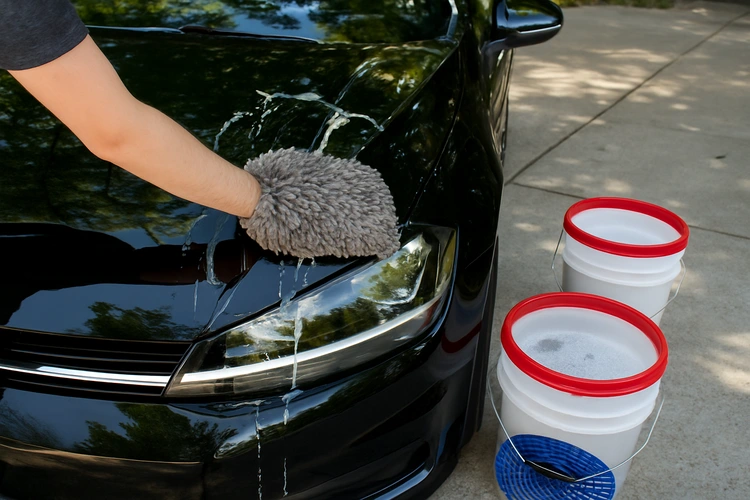
A traditional sponge sits flat against the surface and drags trapped dirt directly across the clear coat. A microfiber or lamb's wool wash mitt has deep, soft fibers that push particles away from the paint surface and into the nap. This single swap eliminates one of the most common sources of swirl marks. Use at least two mitts — one for the body panels, one for the lower half and wheels.
Dish soap and all-purpose cleaners strip wax and sealant, leaving paint exposed. Use a dedicated, pH-neutral car shampoo with high lubricity. High-lubricity formulas let the mitt glide rather than drag, dramatically reducing the chance of micro-scratches. Products labeled "slick" or "high-foam" typically have the lubricating additives black paint needs.
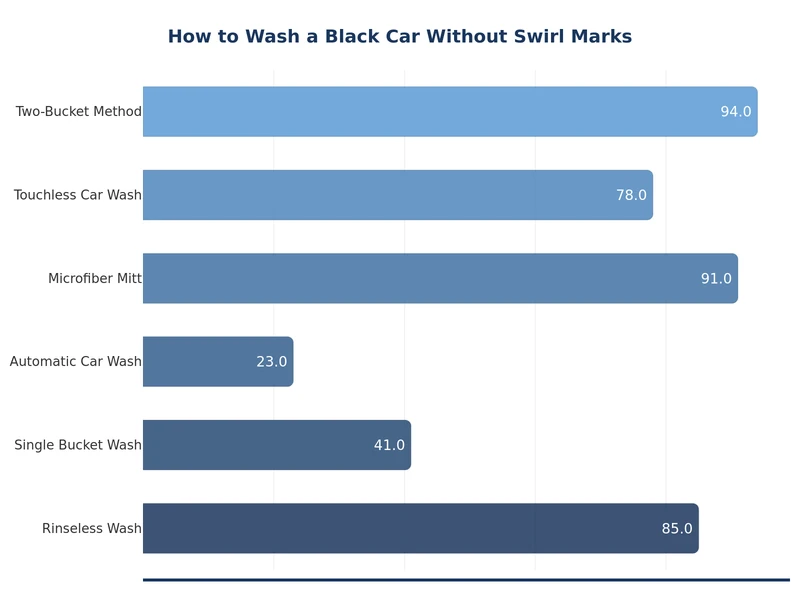
The two-bucket method is the industry-standard technique for minimizing swirl marks during a contact wash. It is simple, effective, and requires no special skills — just consistency.
Never touch the paint before rinsing. Start with a thorough rinse using a hose or pressure washer on a low fan setting to knock loose dirt, bird droppings, and dust. If you have a foam cannon, apply a thick layer of snow foam, let it dwell for 3–5 minutes, then rinse again. This pre-wash step removes 60–80% of surface contamination before your mitt makes contact — which means far less grit to scratch the paint during the hand wash.
Work top to bottom. The lower panels and rocker areas carry the most road debris, and rinsing from the top pushes that debris downward and off the car before you start washing.
Fill one bucket with your pH-neutral shampoo mixed to the manufacturer's ratio. Fill a second bucket with plain rinse water. Add a Grit Guard insert to each bucket. The Grit Guard sits at the bottom and traps grit below the waterline so it cannot be picked back up by the mitt.
Rinse the car thoroughly from top to bottom. For drying, never use a chamois or terry cloth towel. These materials have very little lubricity and will drag across the surface. Use a large, plush microfiber drying towel (1000+ GSM works well) or a dedicated waffle-weave drying towel. Pat or blot rather than dragging. Alternatively, a car dryer blower eliminates contact altogether. Dry in the shade — sun-heated panels dry water spots into the clear coat before you can wipe them away.
Even experienced detailers fall into these habits. Eliminating them costs nothing and immediately improves results.
| Tool / Method | Swirl Risk | Best For | Notes |
|---|---|---|---|
| Microfiber wash mitt | Very Low | All body panels | Deep nap lifts grit away from surface |
| Lamb's wool mitt | Very Low | All body panels | Excellent lubricity; rinse thoroughly |
| Traditional sponge | High | Not recommended | Flat surface traps and drags grit |
| Brush car wash | Very High | Not recommended | Shared brushes carry accumulated grit |
| Touchless car wash | Low | Quick interim wash | No contact, but strong chemicals may strip protection |
| Foam cannon pre-wash | None (no contact) | Pre-wash step | Loosens contamination before mitt contact |
| Plush microfiber drying towel | Very Low | Drying after rinse | Use blotting motion, never drag |
According to Wikipedia's overview of car washing methods, touchless and hand washing techniques consistently produce the least paint damage compared to brush-based automatic systems.
Washing correctly prevents new swirl marks, but protection products reduce the risk further by creating a sacrificial barrier over the clear coat. Every layer of protection means your wash mitt is gliding over wax or sealant rather than bare paint.
Car wax (carnauba-based) provides a warm, deep glow that looks especially good on black — though it typically lasts 6–8 weeks. A paint sealant lasts 3–6 months and provides harder protection. For maximum durability, ceramic coating bonds chemically to the clear coat and can last years with proper maintenance. Whichever you choose, see our guide to the best car wax for black cars to find a product matched to black paint's specific optical properties.
Keep a spray detailer in the car for dust and fingerprints between washes. Always spray before wiping — never dry-wipe. When you park outdoors, a car cover or garage keeps bird droppings and tree sap off the paint. Both are acidic and begin etching the clear coat within hours. Paired with sun protection, this dramatically reduces how often you need corrective polishing. Sun damage is a leading cause of clear coat deterioration on dark-colored vehicles, so shade and UV-blocking protection products are worth the effort.
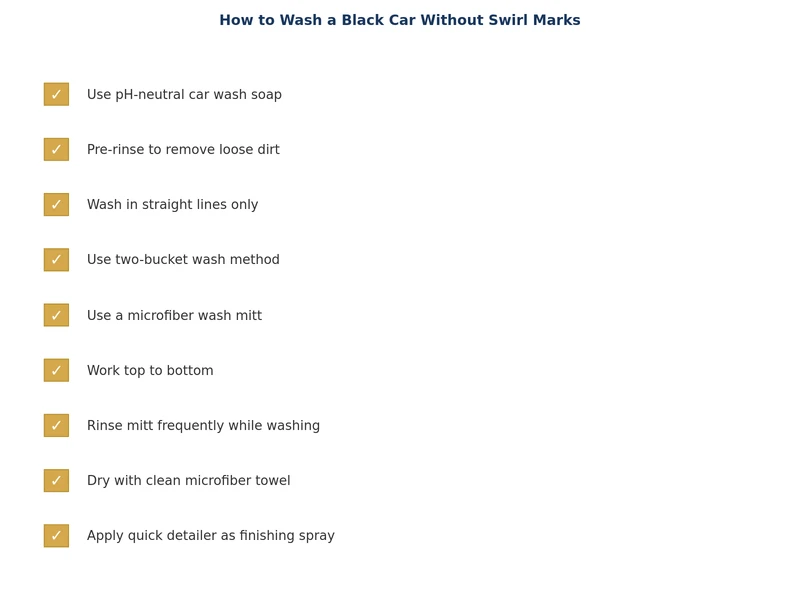
Brush-style automatic car washes are a major source of swirl marks on black paint because the rotating brushes carry grit from every previous vehicle. Touchless automatic washes are a safer option when you cannot hand wash, but they use stronger chemical detergents that can strip wax and sealants over time. Hand washing with the two-bucket method remains the best choice for maintaining a swirl-free black finish.
Washing every one to two weeks prevents dirt and contaminants from bonding to the paint. The longer bird droppings, tree sap, or road salt sit on the surface, the more likely they are to etch the clear coat. Regular washing is far easier than corrective polishing later.
Swirl marks during drying are almost always caused by using the wrong towel or dragging a towel across the surface without lubrication. Use a large plush microfiber drying towel and blot rather than wiping. A car dryer blower eliminates contact altogether and is the safest drying method for black paint.
Yes. Light swirl marks can be removed with a light polish applied by machine or hand using a foam applicator pad. Deeper swirls require a more aggressive compound followed by a finishing polish to restore clarity. After any polishing step, apply a wax, sealant, or ceramic coating immediately to protect the freshly exposed clear coat.
A foam cannon is not strictly necessary, but it makes a significant difference on black paint. The snow foam phase breaks down and suspends surface dirt before any contact, so your wash mitt encounters far less contamination. This reduces swirl risk substantially. A simple foam gun that attaches to a garden hose offers a budget-friendly alternative if you do not have a pressure washer.
Ceramic coating does not make paint scratch-proof, but it creates a hard, slick surface that is more resistant to light contact marks than bare clear coat or wax. The hydrophobic properties also cause water and mud to bead and slide off more easily, which means less contamination bonding to the surface between washes. Combined with correct washing technique, ceramic coating is the most effective long-term protection strategy for black paint.
 |
 |
 |
 |

About Joshua Thomas
Joshua Thomas just simply loves cars and willing to work on them whenever there's chance... sometimes for free.
He started CarCareTotal back in 2017 from the advices of total strangers who witnessed his amazing skills in car repairs here and there.
His goal with this creation is to help car owners better learn how to maintain and repair their cars; as such, the site would cover alot of areas: troubleshooting, product recommendations, tips & tricks.
Joshua received Bachelor of Science in Mechanical Engineering at San Diego State University.


Get some FREE car parts & gear.. Or check out the latest free automotive manuals and build guides here.
Disable your ad blocker to unlock all the hidden deals. Hit the button below 🚗
| | | |
