by Joshua Thomas
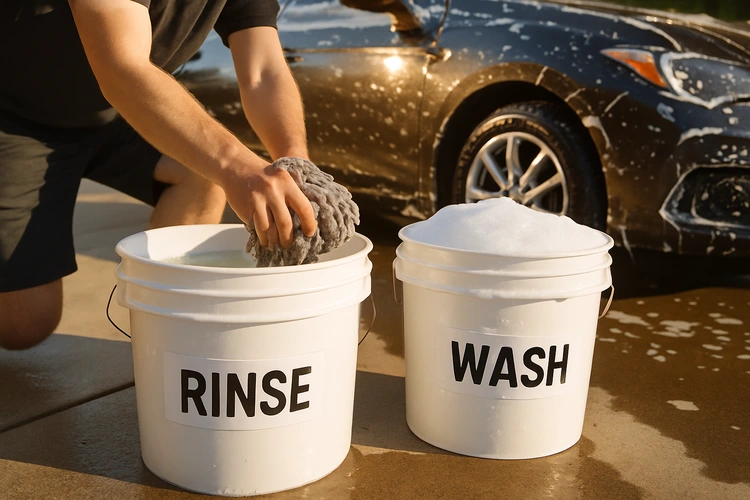
Knowing how to wash a car properly is one of the most valuable skills any car owner can develop. A correct wash removes contaminants that degrade paint over time — road grime, bird droppings, tree sap, and brake dust. The two-bucket method is the gold standard technique used by detailers worldwide because it dramatically reduces the risk of swirl marks and scratches. This guide walks you through every step, from gathering supplies to the final dry, so your car stays protected and looks its best.
Before diving in, check out our guide to the best car wash soaps and shampoos to make sure you're using a product that's safe for your paint. Using dish soap or household cleaners strips wax and can damage clear coat — a dedicated car shampoo is non-negotiable.
Contents
Having the right tools before you start makes the process faster and safer for your paint. Here's everything you need:
| Supply | Purpose | Notes |
|---|---|---|
| Two buckets (5-gallon) | Wash + rinse separation | Use grit guards in both |
| Dedicated car shampoo | Lubricated, pH-neutral cleaning | Never use dish soap |
| Microfiber wash mitt | Safe paint agitation | Replace if dropped on ground |
| Wheel brush + wheel cleaner | Brake dust removal | Use a separate mitt for wheels |
| Large microfiber drying towel | Streak-free drying | At least 800 GSM recommended |
| Hose or pressure washer | Rinsing loose dirt | Pressure washer: keep nozzle 12+ inches away |
| Detailing spray (optional) | Final gloss + lubrication | Use during drying stage |
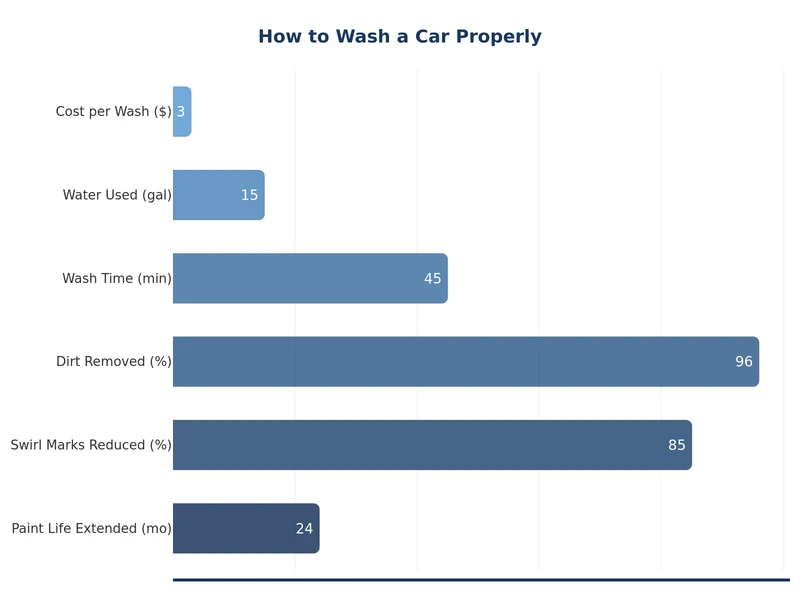
The two-bucket method is the cornerstone of safe hand washing. It separates clean soapy water from the dirty rinse water, preventing you from dragging grit back across your paint.
Fill Bucket 1 with clean water and your car shampoo, following the dilution ratio on the label. Fill Bucket 2 with plain water only — this is your rinse bucket. Drop a grit guard (a plastic grid) into each bucket. The grit guard sits at the bottom and traps dirt beneath it so particles don't contaminate your mitt when you dip it back in.
Without a rinse bucket, every time you reload your mitt with suds you're also reloading it with the grit you just removed from the car. That grit acts like fine sandpaper on clear coat, creating the tiny circular scratches known as swirl marks. The two-bucket system keeps abrasive particles isolated in the rinse bucket, far away from your clean soapy water.
Preparation is half the job. Skipping these steps leads to scratches before your wash even begins.
Wash your car in the shade or on an overcast day. Direct sunlight heats the metal and causes soap to dry and streak before you can rinse it off. Avoid washing immediately after driving — a hot engine bay and hot brake rotors can be damaged by cold water. Early morning is ideal: cool temperatures, low wind, and good light.
Always rinse the entire car before touching it with a mitt. This loosens and removes the bulk of loose dirt, sand, and road debris. Start from the roof and work downward. If you have a pressure washer, use a wide fan nozzle (25–40 degree) held at least 12 inches from the paint. Pay extra attention to the lower panels, wheel arches, and sills where mud accumulates most.
With your car rinsed and your buckets set up, you're ready to wash. Work systematically to ensure no panel is missed or double-washed with a dirty mitt.
Dip your mitt in the soapy bucket and begin at the roof. Use straight, overlapping strokes — never circular motions, which concentrate grit in one spot. After each panel, rinse the mitt in the plain water bucket, agitating it against the grit guard, then reload with soapy water. Work in this order:
The lower third of the car carries the most contamination, so saving it for last means you're not dragging heavy grit across upper panels. Rinse each section with water as you go to prevent soap from drying on the surface.
Clean wheels first before the main wash, or use a completely separate mitt and bucket. Wheels carry brake dust — iron particles that are extremely abrasive. Use a dedicated wheel cleaner and a long-bristle wheel brush to reach inside the barrel. Scrub the tire sidewall with a stiff brush. Rinse thoroughly. For a deeper guide on this, see our article on how to clean alloy wheels without damaging them.
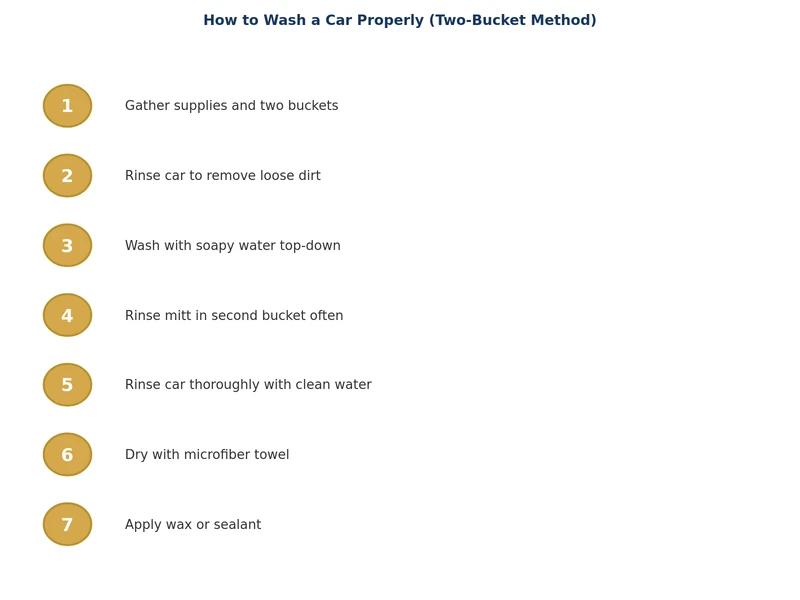
Drying is where many people unknowingly damage their paint. Air-drying leaves water spots — mineral deposits that etch into clear coat over time. If you're dealing with existing spots, our guide on how to remove water spots from car paint covers the full removal process.
Use a large, plush microfiber drying towel rated at least 800 GSM. Fold it into quarters to create multiple clean surfaces. Lay the towel flat on the panel and drag it across rather than scrubbing. Never rub a towel in circles. A detailing spray misted onto each panel before drying adds lubrication and improves gloss.
Alternatively, a leaf blower or dedicated car dryer blows water out of door jambs, mirrors, grilles, and badges where towels can't reach — areas that drip onto your freshly dried paint if left untreated. Open the doors and trunk briefly to let trapped water escape before finishing.
A clean car is the ideal starting point for protective treatments and detailing work.
Once dry, you have a clean surface ready for protection. If the paint feels rough or gritty even after washing, the next step is clay bar decontamination — see our full clay bar guide for the process. After decontamination, apply a wax or sealant to lock in protection. Our how to wax a car by hand guide covers application technique in detail.
If you're doing a full detail session, tackle the interior after the exterior is complete and dry. See our complete car interior detailing checklist for the full step-by-step process.
For most drivers, washing every two weeks is a good baseline. If you park under trees, drive on salted winter roads, or live near the coast, wash weekly. Bird droppings and tree sap should be removed within 24–48 hours regardless of your normal schedule, as they etch paint quickly.
No. Dish soap is formulated to strip grease and oils, which means it will also strip your car's wax or sealant protection. It can leave clear coat dried out and dull. Always use a dedicated, pH-neutral car shampoo designed for automotive finishes.
Yes, if used correctly. Keep the nozzle at least 12 inches from the paint and use a 25–40 degree wide fan tip. Never use a zero-degree (pencil jet) nozzle directly on paint, trim, or rubber seals. Keep pressure below 1,900 PSI for safe use on most factory finishes.
Grit guards are highly recommended and inexpensive. They sit at the bottom of the bucket and trap dirt below the grid, preventing it from contaminating your wash mitt when you dip it back in. Without them, particles swirl freely in the water and re-coat your mitt with abrasive grit.
Clean wheels and tires first using a separate bucket and mitt. Then pre-rinse the entire car from roof to bumper. Wash panels top to bottom — roof, glass, hood, trunk, upper doors, lower doors, bumpers. Rinse again from top to bottom. Finally, dry with a clean microfiber towel.
Work in the shade and dry the car immediately after the final rinse. Use a large, high-GSM microfiber drying towel and mist a detailing spray on each panel before wiping to provide lubrication and prevent mineral deposits from bonding to the clear coat. A car dryer or leaf blower helps eliminate trapped water in crevices.
 |
 |
 |
 |

About Joshua Thomas
Joshua Thomas just simply loves cars and willing to work on them whenever there's chance... sometimes for free.
He started CarCareTotal back in 2017 from the advices of total strangers who witnessed his amazing skills in car repairs here and there.
His goal with this creation is to help car owners better learn how to maintain and repair their cars; as such, the site would cover alot of areas: troubleshooting, product recommendations, tips & tricks.
Joshua received Bachelor of Science in Mechanical Engineering at San Diego State University.


Get some FREE car parts & gear.. Or check out the latest free automotive manuals and build guides here.
Disable your ad blocker to unlock all the hidden deals. Hit the button below 🚗
| | | |
