by Joshua Thomas
When it comes to automotive paint, understanding the difference between single stage vs two stage paint can save you time, money, and frustration — whether you're repainting a panel, touching up chips, or restoring a classic. These two systems have been used for decades, and each has real advantages depending on your vehicle, budget, and goals. Before you pick up a spray gun or hand your car to a body shop, it's worth knowing exactly what you're choosing between.
Car paint isn't just about color — it's a protective barrier that shields your vehicle's metal from rust, UV rays, and environmental damage. The system you choose affects gloss, durability, repairability, and long-term maintenance. If you've ever wondered why some older cars have that chalky oxidized look while newer ones peel in sheets, paint system choice plays a direct role. For more on protecting your finish long-term, see our guide on how to protect car paint.
Contents
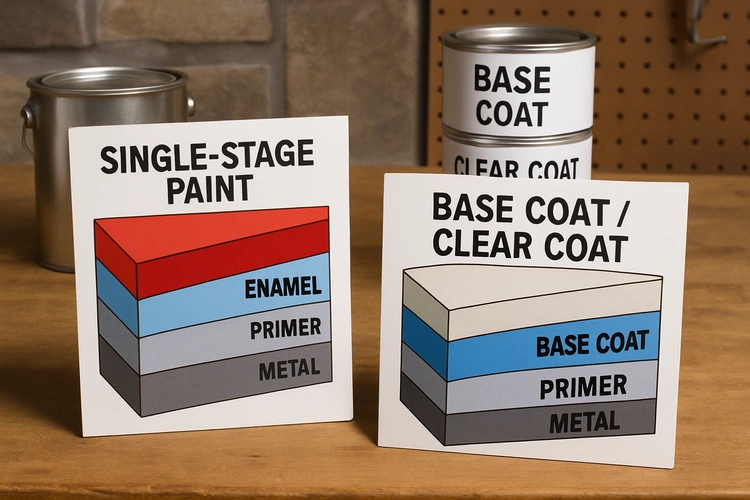
Single stage paint is a system where color and gloss protection are combined into one product. You apply it directly over the primer, and once it cures, the job is done — no separate clear coat required. The pigment, resins, and UV inhibitors are all mixed together in a single formula.
This system was the industry standard for most of the 20th century. Vehicles from the 1950s through the mid-1980s were almost universally finished in single stage paint — typically lacquer or enamel formulations. Many classic car restorers still prefer it for authenticity. Today it's also common in commercial vehicle refinishing, agricultural equipment, and budget repair work.
Single stage paints come in three main chemistry types: lacquer (fast-drying, easy to buff), enamel (harder, more durable), and urethane (the modern standard, combining durability with workability). Urethane single stage is the most widely used today for DIY and professional shop applications.
Two stage paint separates color and protection into two distinct products. The first stage — the basecoat — lays down the color. It has little to no gloss on its own and isn't meant to be the final surface. The second stage — the clear coat — goes on top, providing gloss, depth, and UV protection. According to Wikipedia's overview of automotive paint, basecoat/clear coat systems became the industry standard starting in the 1980s and are now used by virtually all vehicle manufacturers.
The separation of color and protection is what enables the deep, glossy finishes seen on modern vehicles — especially metallic, pearl, and tri-coat colors. The clear coat locks in the flakes and pigment orientation of the basecoat while adding its own gloss and hardness on top.
If you've ever dealt with peeling clear coat, you know it's a distinct problem from faded single stage paint. For help with that specific issue, see our guide on how to fix peeling clear coat on a car.
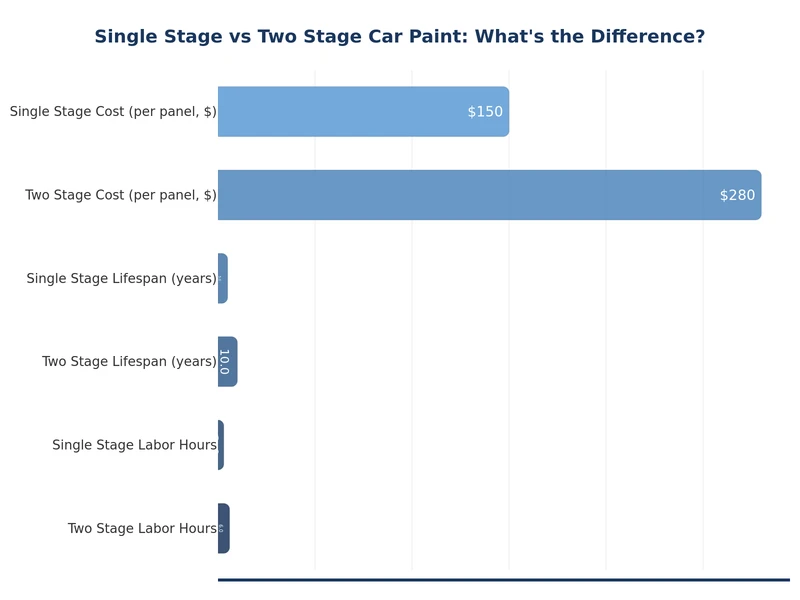
| Feature | Single Stage | Two Stage (Base/Clear) |
|---|---|---|
| Number of coat stages | 1 | 2 |
| Gloss depth | Moderate | High |
| UV protection | Fair | Excellent |
| Oxidation resistance | Moderate | High |
| Material cost (relative) | Lower | Higher |
| Application time | Shorter | Longer |
| Compatible with metallic/pearl | Limited | Yes |
| Failure mode | Chalking/oxidation | Clear coat peeling |
| Best use case | Classics, commercial, budget repairs | Modern vehicles, show cars, OEM match |
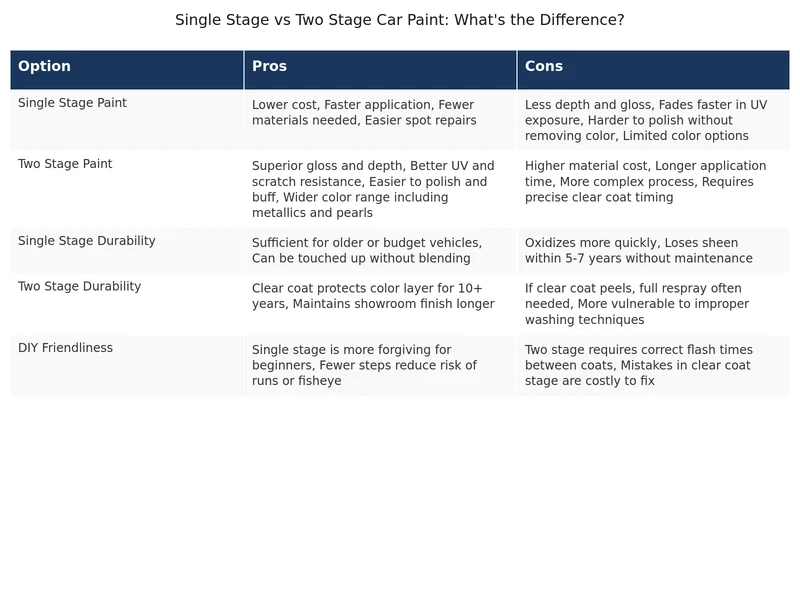
Two stage paint wins on long-term durability in most climates. The dedicated clear coat layer contains higher concentrations of UV absorbers and can be applied thicker than the protective additives in single stage. In hot, sunny regions, single stage paint begins to oxidize and chalk within a few years without regular protection. Two stage finishes hold up significantly longer before showing UV degradation — though they're not immune.
That said, when single stage fails it tends to fail gradually. You get chalking and dullness that progresses slowly and can often be reversed with polishing compounds. Two stage clear coat, when it fails, tends to peel — and once peeling starts, it spreads. Learning how to restore faded car paint is different depending on which system you're dealing with.
Single stage paint is generally easier to repair for DIYers. Because the color and finish are the same product, you can spray color directly and blend into surrounding areas. There's no need to match a clear coat sheen or worry about clear adhesion over old color layers.
Two stage repairs require more steps: apply basecoat, allow to flash, apply clear coat, blend the clear into the surrounding factory clear. Getting this blend right so the repair is invisible takes skill. Metallic and pearl colors add another layer of complexity because flake orientation must match the surrounding panel.
For paint chip repairs on either system, the approach differs but the principles overlap. See our detailed walkthrough on how to fix paint chips on your car for practical steps on both systems.
Almost every vehicle manufactured after the mid-1980s uses a two stage basecoat/clear coat system. This shift was driven by stricter VOC (volatile organic compound) emissions regulations and consumer demand for deeper, more complex color options. Solid colors on modern cars still use two stage — the clear coat is standard regardless of whether the color has metallic flakes.
Single stage paint is found on:
If you're matching paint on a modern vehicle, two stage is almost certainly what's on the car — using single stage for a spot repair would result in a visible mismatch in gloss and texture even if the color code is correct.
Single stage urethane paint typically costs less per job because you're purchasing one product instead of two. For a full vehicle repaint, you might spend 20–40% less on materials alone. Labor savings also apply since the application process has fewer steps.
However, material cost is only part of the picture. Two stage finishes last longer and maintain their appearance better, meaning the interval between repaints is extended. On a vehicle you plan to keep long-term, the higher upfront cost of two stage often pays off.
For application difficulty, single stage is more forgiving for beginners. You have one product to work with, one set of reduction and hardener ratios, and one cure window to manage. Two stage requires managing the flash time between basecoat and clear coat — apply clear too soon and you trap solvents; wait too long and you lose intercoat adhesion. Getting a quality clear coat matters enormously for long-term results. Our best automotive clear coat guide covers the top options for both professional and DIY use.
The right choice depends on your specific situation:
Choose single stage if: You're working on a classic or vintage vehicle and want an authentic period-correct finish. Or you're repainting a commercial vehicle, farm equipment, or a beater where durability over appearance is the priority. Budget repairs on older vehicles where matching existing faded paint is the goal also favor single stage.
Choose two stage if: You're repainting a modern vehicle or any car with metallic, pearl, or special-effect colors. Long-term gloss retention matters, or you want the ability to polish and machine correct the clear coat without touching the color layer. Two stage is also necessary any time you want a deep, professional-grade finish that matches factory standards.
For most DIY enthusiasts working on daily drivers or modern vehicles, two stage is the correct system. The additional steps are manageable with proper preparation, and the long-term results are significantly better. Pair a quality basecoat with a high-durability clear coat, prep your surface thoroughly, and maintain the finish regularly — that combination will keep paint looking sharp for years.
Single stage paint combines color and gloss protection in one product applied directly over primer. Two stage paint separates them — basecoat provides the color, and a separate clear coat on top provides gloss and UV protection. Two stage is the modern standard for most vehicles.
Technically you can apply single stage over properly prepared two stage paint, but the results are rarely satisfactory. The gloss level and texture will differ noticeably, making the repair visible. For modern vehicles, always match the existing system — use basecoat and clear coat for two stage repairs.
Two stage paint generally lasts longer because the dedicated clear coat provides superior UV and chemical resistance. Single stage finishes tend to oxidize and chalk faster when exposed to sunlight. However, when two stage clear coat fails, it often peels dramatically, whereas single stage fades gradually.
Yes — single stage paint is often the preferred choice for classic and vintage vehicle restorations. Vehicles from the 1950s through early 1980s were originally finished in single stage lacquer or enamel, so using single stage keeps the finish period-correct and historically accurate.
Rub a small hidden area with a white cloth dampened with rubbing compound. If color transfers to the cloth, you have single stage paint — the color is in the outer layer. If no color transfers and the surface just becomes shinier, you have two stage paint with a clear coat on top.
Two stage paint requires similar routine care — washing, waxing, and polishing — but the clear coat layer can be machine polished to remove scratches and swirl marks without affecting the color layer underneath. Single stage paint can also be polished but with less margin for error since you're working the color layer directly.
 |
 |
 |
 |

About Joshua Thomas
Joshua Thomas just simply loves cars and willing to work on them whenever there's chance... sometimes for free.
He started CarCareTotal back in 2017 from the advices of total strangers who witnessed his amazing skills in car repairs here and there.
His goal with this creation is to help car owners better learn how to maintain and repair their cars; as such, the site would cover alot of areas: troubleshooting, product recommendations, tips & tricks.
Joshua received Bachelor of Science in Mechanical Engineering at San Diego State University.


Get some FREE car parts & gear.. Or check out the latest free automotive manuals and build guides here.
Disable your ad blocker to unlock all the hidden deals. Hit the button below 🚗
| | | |
