by Joshua Thomas
The debate over synthetic oil vs conventional oil comes up at nearly every oil change — and for good reason. Choosing the wrong type can affect engine longevity, fuel economy, and maintenance costs. Whether you drive a turbocharged crossover or a high-mileage commuter car, understanding what separates these two lubricants is one of the smartest things you can do for your engine. This guide breaks down the chemistry, the performance data, and the real-world cost so you can make a confident choice at the auto parts counter.
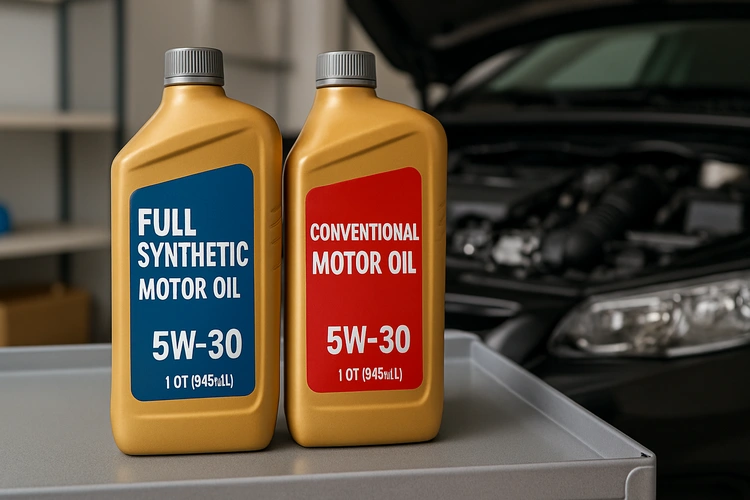
Both types start life as crude oil, but they diverge sharply after that point. One is refined and ready; the other is engineered at the molecular level. That difference in construction is what makes synthetic oil genuinely better for modern engines — though it's not always the necessary choice for every vehicle on the road.
Contents
At the most basic level, both oils lubricate your engine's moving metal parts, reduce friction, carry heat away from critical components, and keep sludge from building up. But how they're manufactured determines how well they do each of those jobs.
Conventional motor oil — also called mineral oil — is produced by refining crude petroleum. During the refining process, impurities like sulfur, nitrogen, and reactive hydrocarbons are partially removed, but the resulting molecular structure is still irregular and inconsistent. That inconsistency matters because irregular molecules don't flow as predictably under heat and pressure. Conventional oil has been the industry standard for most of automotive history, and it still works reliably in older, simpler engines that were designed around it. It is widely available, inexpensive, and more than adequate when changed at the right intervals.
Synthetic oil begins as either crude oil or natural gas but is then chemically broken down and rebuilt through a controlled synthesis process. The result is a uniform, purpose-built molecular chain with far fewer impurities than conventional oil. According to the Wikipedia overview of synthetic motor oil, full synthetics offer superior thermal stability, better low-temperature flow, and longer service life — benefits that trace directly back to that engineered molecular structure. Synthetic blends sit between the two: they mix conventional base oil with a percentage of synthetic, offering moderate performance improvements at a lower cost than full synthetic.
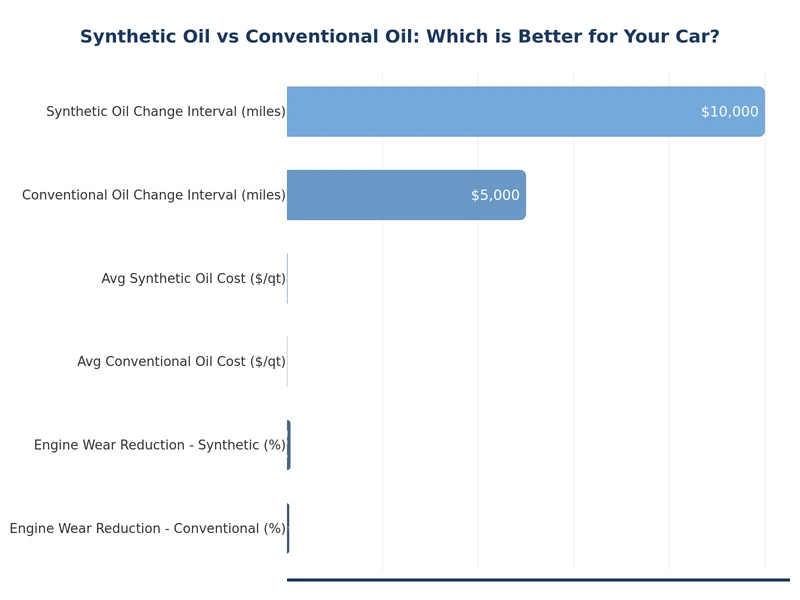
Cold starts are where synthetic oil delivers one of its most tangible benefits. When temperatures drop below freezing, conventional oil thickens significantly. For the first few seconds after startup, engine parts run with minimal lubrication — a period that accounts for a disproportionate share of cumulative engine wear over a vehicle's lifetime. Synthetic oil flows faster in cold conditions, shrinking that vulnerable window.
At the high end of the temperature spectrum, synthetic oil also holds up better. Under the sustained heat of stop-and-go traffic, towing, or track use, conventional oil thins out more quickly and its additive package depletes faster. Synthetic oil maintains a more stable viscosity film across a wider temperature range, protecting bearings and cylinder walls even when the engine is working hard.
Over the course of thousands of miles, motor oil degrades. Its base stock oxidizes, its additives deplete, and its viscosity shifts. Conventional oil reaches that degraded state faster, which is why it requires more frequent changes. Synthetic oil's stable molecular structure resists oxidation longer, and its additive packages are typically more robust. For engines with tight tolerances — modern turbocharged direct-injection units in particular — that extended protection window matters. Just as you'd track wear on other mechanical components (see our guide to timing belt vs timing chain differences for another wear-related comparison), tracking your oil's condition is essential to keeping an engine healthy long-term.
Conventional oil typically calls for a change every 3,000 to 5,000 miles. Full synthetic is rated for 7,500 to 15,000 miles per interval in most applications — some manufacturer specifications push that to 10,000 miles as a standard drain interval. Extended drain intervals translate to fewer trips to the shop, less oil waste, and lower cumulative labor costs over the life of the vehicle.
That said, the owner's manual is the authoritative source. Driving patterns matter too: frequent short trips, dusty environments, extreme temperatures, or frequent towing all shorten effective oil life regardless of type. Building oil changes into a consistent car maintenance schedule — alongside tire rotations, fluid checks, and filter replacements — is the most reliable way to stay ahead of wear across your entire vehicle.
Synthetic oil costs more per quart, but the full cost picture is more nuanced than the sticker price suggests.
| Factor | Conventional Oil | Synthetic Oil |
|---|---|---|
| Cost per quart | $4 – $6 | $8 – $13 |
| DIY oil change cost (5 qt) | $25 – $35 | $45 – $70 |
| Shop oil change cost | $35 – $60 | $65 – $110 |
| Typical change interval | 3,000 – 5,000 miles | 7,500 – 15,000 miles |
| Changes per 15,000 miles | 3 – 5 | 1 – 2 |
| Annual cost (15k miles, shop) | $105 – $300 | $65 – $220 |
| Engine wear protection | Adequate for older engines | Superior for modern engines |
When you account for fewer changes per year, the annual cost gap between synthetic and conventional narrows considerably — and often disappears. Factor in the reduced engine wear and the potential to go longer between major repairs, and synthetic oil frequently comes out ahead on total cost of ownership. If you're weighing specific premium synthetic brands, our detailed comparison of Castrol Edge vs Mobil 1 walks through two of the market leaders side by side.
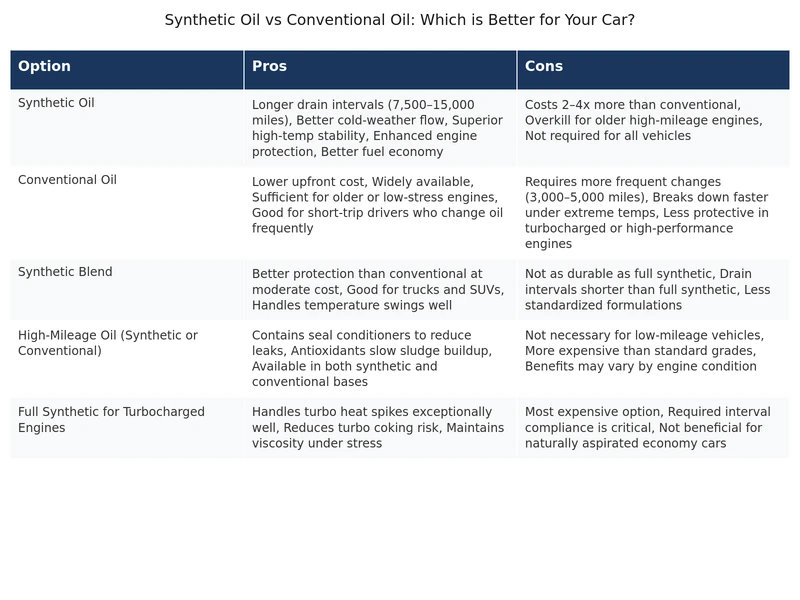
Conventional oil is a reasonable, cost-effective choice for older vehicles (generally pre-2000) with high mileage that have always run on mineral oil. Simple naturally aspirated engines with generous tolerances were designed around conventional oil and can perform perfectly well on it when changes are kept current. If your car has already accumulated significant miles on conventional oil and isn't showing symptoms of wear, there's no urgent need to switch — though a high-mileage synthetic blend can offer a useful middle ground, providing extra seal conditioners and wear protection without the full cost of a premium synthetic.
For any turbocharged engine, modern direct-injection engine, or performance vehicle, full synthetic isn't optional — it's specified by the manufacturer and skipping it voids warranties and accelerates wear. Synthetic is also the stronger pick for vehicles operated in extreme climates, used for regular towing or hauling, or left parked for extended periods where oil degradation happens even without driving miles accumulating.
For newer vehicles especially, the added upfront cost of synthetic pays dividends in reduced internal wear across multiple systems. Keeping the engine clean and well-lubricated reduces the frequency of other engine-adjacent service items, including spark plug replacements, which benefit from a cleaner combustion environment. As a general rule: if your owner's manual calls for synthetic, use it. If it doesn't specify, synthetic is still a worthwhile upgrade for most modern vehicles.
In summary, the synthetic oil vs conventional oil decision usually comes down to your vehicle's age, engine design, driving conditions, and budget. For most drivers today, full synthetic or a synthetic blend is the smarter long-term investment — even if conventional oil remains a perfectly serviceable option in the right context.
Yes. Modern synthetic oils are fully compatible with conventional oils and engine seals. You can switch at any regular oil change without flushing the system first. If your engine has significant buildup from years on conventional oil, doing a short-interval change after switching can help flush out residual deposits.
This is a common myth. Synthetic oil does not cause leaks, but it can expose pre-existing leaks that conventional oil's thicker consistency was masking. If you notice a small leak after switching, the leak was already there — synthetic oil's better flow properties simply made it visible. Address the seal or gasket rather than switching back.
Yes, they are chemically compatible and can be mixed in a pinch — such as topping off on the road. However, mixing dilutes the performance benefits of synthetic oil. If you want full synthetic protection, keep the oil type consistent and avoid blending them long-term.
High-mileage synthetic blends are often the best choice for engines with over 75,000 miles. They include seal conditioners that reduce minor seepage, antioxidants that slow further oil degradation, and extra detergents to address accumulated deposits — without the potential for seal shrinkage that some older seal materials can experience with full synthetic.
Viscosity — the numbers like 5W-30 or 0W-20 on the bottle — is specified in your owner's manual and does not change based on oil type. When switching to synthetic, use the same viscosity grade your manual specifies. Do not use a heavier viscosity to compensate for perceived thinness; modern synthetic oils meet or exceed the protection of heavier conventional oils at the correct grade.
Yes. Synthetic oil's engineered molecular structure resists thermal breakdown more effectively than conventional oil. At sustained high operating temperatures — from towing, mountain driving, or performance use — synthetic oil retains its viscosity and protective film longer. This is one of the core reasons turbocharged engines, which run significantly hotter oil temperatures than naturally aspirated engines, require full synthetic.
 |
 |
 |
 |

About Joshua Thomas
Joshua Thomas just simply loves cars and willing to work on them whenever there's chance... sometimes for free.
He started CarCareTotal back in 2017 from the advices of total strangers who witnessed his amazing skills in car repairs here and there.
His goal with this creation is to help car owners better learn how to maintain and repair their cars; as such, the site would cover alot of areas: troubleshooting, product recommendations, tips & tricks.
Joshua received Bachelor of Science in Mechanical Engineering at San Diego State University.


Get some FREE car parts & gear.. Or check out the latest free automotive manuals and build guides here.
Disable your ad blocker to unlock all the hidden deals. Hit the button below 🚗
| | | |
