Engine wear accounts for roughly 70% of all mechanical failures in passenger vehicles, and your choice of motor oil is one of the most direct levers you have for slowing that process down over hundreds of thousands of miles. When you're working through a Castrol Edge vs Mobil 1 synthetic oil comparison, you're evaluating two of the most widely trusted full-synthetic motor oils available today, each backed by decades of independent testing and real-world validation across millions of engines. This guide breaks down their formulations, performance characteristics, pricing, and real-world use cases so you can make a confident decision without relying on marketing language alone. For additional guidance on keeping your vehicle in top shape, the car care section covers a wide range of maintenance topics worth exploring.
Castrol Edge vs. Mobil 1 - What's the Difference?
Both products are full-synthetic oils that meet or exceed the API and ILSAC standards that govern modern gasoline engine protection, which means either formula is technically acceptable for most vehicles currently on the road. The differences that actually matter emerge when you look more closely at base oil chemistry, additive technology, viscosity stability under pressure, and how each formula performs across different driving environments and engine types. Understanding those differences lets you match the oil to your engine's actual demands rather than just grabbing whichever brand is on sale.
According to the motor oil classification standards maintained by industry bodies, full-synthetic oils like these two must meet strict criteria for viscosity retention, oxidation resistance, and wear protection before they earn their certifications. Both Castrol Edge and Mobil 1 exceed those minimum thresholds, but the way they achieve that performance differs in ways that are relevant to your specific situation as a driver.
Both oils start from chemically engineered base stocks rather than refined crude oil, which is what earns them the full-synthetic label. But the additive packages and base oil types they use to build on that foundation are meaningfully different from each other, and those differences matter when your engine is under stress.
Castrol Edge Formula and Technology
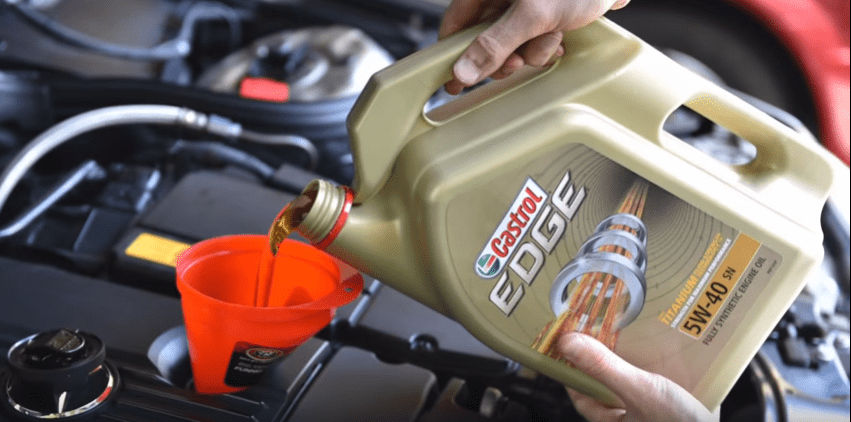
Castrol Edge
Castrol Edge is built around what the brand calls Fluid Titanium Technology, a proprietary additive system designed to reinforce the oil film under extreme mechanical pressure. Here is what that means in practice for your engine:
Microscopic titanium-based structures in the additive package resist film breakdown during hard acceleration, towing, and sustained high-load driving
Stronger boundary lubrication during cold starts, when metal-to-metal contact is at its highest before oil fully circulates
Stable viscosity retention across a wide temperature range, from cold morning starts through sustained highway driving
Available grades ranging from 0W-20 through 5W-50, covering most modern and performance-oriented engine specifications
Preferred by drivers with turbocharged engines and high-performance vehicles where thermal and mechanical stress on the oil is significantly more intense
Mobil 1 Formula and Technology
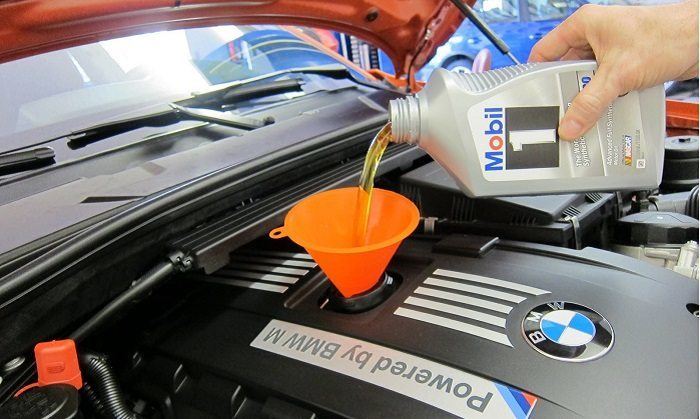
Mobil 1
Mobil 1 uses its SuperSyn anti-wear technology combined with a Group IV polyalphaolefin (PAO) synthetic base oil that is highly refined at the molecular level for consistency and stability. Key characteristics of the Mobil 1 formula include:
Outstanding cold-start performance in temperatures well below 0°F, where PAO-based oils flow faster to critical engine components than many competing formulas
Strong thermal stability that resists viscosity breakdown during sustained high-temperature operation
Extended drain intervals up to 15,000 miles when paired with Mobil 1 brand filters under the Extended Performance product line
Factory-fill status with high-end manufacturers including Corvette, Porsche, and Mercedes-Benz, which reflects its engineering validation across demanding and diverse platforms
Specialized variants including High Mileage and Advanced Fuel Economy formulations that target specific engine conditions
If you plan to handle your own oil changes to take advantage of either oil's performance, having the right equipment at home makes the process safer and more efficient. A solid set of floor jacks combined with reliable jack stands gives you stable, secure vehicle access for drain plug and filter work on any passenger car or truck.
Performance Comparison at a Glance
Putting the two oils side by side on the key specifications helps you see where the Castrol Edge vs Mobil 1 synthetic oil comparison lands in concrete terms rather than brand claims and marketing language.
Viscosity Grades and Specifications
Feature
Castrol Edge
Mobil 1
Core Technology
Fluid Titanium Technology
SuperSyn Anti-Wear Technology
Base Oil Type
Full Synthetic (Group III/IV)
Full Synthetic (Group IV PAO)
Viscosity Range Available
0W-20 to 5W-50
0W-20 to 15W-50
Cold-Start Performance
Excellent
Outstanding (PAO advantage)
High-Temperature Stability
Superior (Titanium reinforced)
Excellent
Max Drain Interval
Up to 10,000 miles
Up to 15,000 miles (Extended Performance)
OEM Factory Fill Applications
Jaguar Land Rover, BMW (select grades)
Corvette, Porsche, Mercedes-Benz
Typical 5-Quart Price
$25–$35
$28–$40
High-Mileage Variant Available
Yes
Yes
Engine Protection Metrics
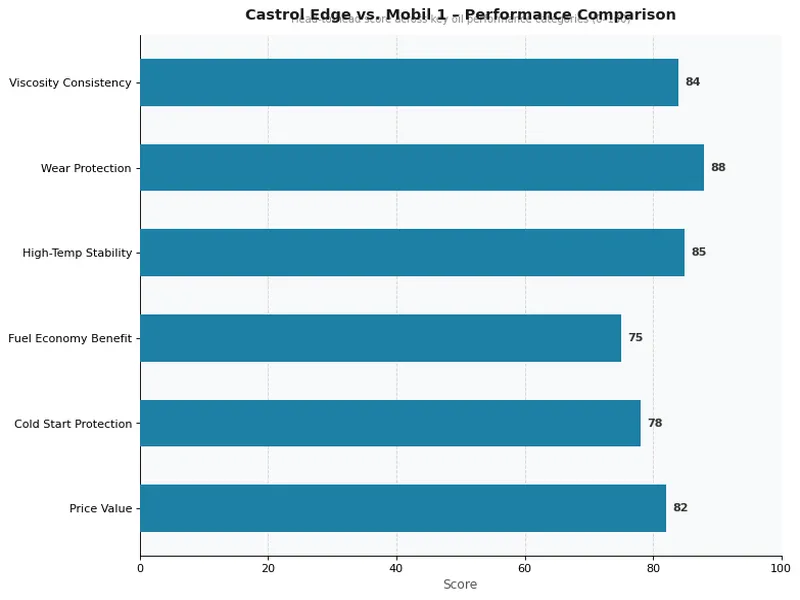
Castrol Edge vs. Mobil 1 – Performance Comparison
Both oils carry the same API and ILSAC certifications for most common grades, but the way they reach those ratings differs in ways that affect long-term engine health under different operating patterns. Here is what the performance data suggests:
Wear protection under load: Castrol Edge shows stronger performance in high-load scenarios because the titanium additive maintains film integrity during the pressure spikes that occur in turbocharged and performance engines
Oil consumption rate: Mobil 1 tends to burn off slightly less oil over extended intervals, in part because the PAO base oil has a tighter molecular structure and lower volatility under thermal stress
Sludge and deposit resistance: Both oils resist sludge effectively, but Mobil 1's Extended Performance variant is specifically formulated with longer drain cycles in mind and carries added detergent capacity
Fuel economy impact: Real-world comparisons using 0W-20 grades from both brands show differences in the range of 0.1–0.3%, which is statistically present but practically negligible for most drivers
Pricing and Value Over Time
Price is one of the most direct practical factors in any oil comparison, and the story here is more nuanced than just comparing the sticker price per quart at your local auto parts store.
Per-Quart Cost Comparison
Castrol Edge: Typically retails between $6.50 and $8.00 per quart, with 5-quart containers ranging from roughly $25 to $35 depending on grade and retailer
Mobil 1: Generally priced slightly higher at $7.00 to $9.00 per quart, with 5-quart containers ranging from $28 to $40 for the standard product line
Sale pricing: Both brands run seasonal promotions at major retailers where the price gap narrows to one or two dollars per container, so timing your purchase can meaningfully affect total cost
Bulk vs. single-quart pricing: Buying 5-quart containers consistently delivers the lowest per-quart cost for both brands, making it the smarter purchase format for most drivers
Oil Change Interval Impact
When you calculate cost per mile driven rather than cost per quart, the value equation shifts in Mobil 1's favor despite its higher sticker price. Here is how the math breaks down across 30,000 miles of driving:
Castrol Edge at a 10,000-mile drain interval requires three oil changes, costing approximately $75–$105 for oil alone over that distance
Mobil 1 Extended Performance at a 15,000-mile interval requires only two oil changes, costing approximately $56–$80 for oil alone over the same distance — making it cheaper per mile despite the higher per-quart cost
Filter costs, labor, and disposal fees apply equally to both, so the extended interval is where Mobil 1 builds its long-run cost advantage
Always confirm that extended drain intervals are approved by your vehicle manufacturer before skipping a scheduled change, because using unapproved intervals on newer vehicles can affect your powertrain warranty
Doing your oil changes at home is one of the most straightforward ways to keep maintenance costs down. A reliable set of car ramps gives you quick and stable access under your vehicle without needing a hydraulic lift, making routine drain-and-fill oil changes significantly easier and safer for any skill level.
Strengths and Weaknesses of Each Brand
Neither oil is universally superior, and the trade-offs between them are real rather than negligible. Here is a balanced look at where each product earns its reputation and where it falls short for certain applications.
Castrol Edge Pros and Cons
Strengths:
Titanium film technology delivers measurably stronger protection under high mechanical stress, which benefits turbocharged and direct-injection engines more than naturally aspirated commuter vehicles
Broader viscosity availability including 5W-50 makes it a more natural fit for older European performance engines that require heavier-grade synthetics
Competitive pricing at the per-quart level, especially when purchased in 5-quart containers during routine sales at major retailers
Consistent API certification across grades, making it straightforward to find the correct specification for a wide range of vehicles
Limitations:
Maximum recommended drain interval of 10,000 miles is shorter than what Mobil 1 Extended Performance supports, which affects total cost per mile over time
The titanium additive advantage is most relevant in high-stress applications, meaning it may provide little practical benefit in a low-load city commuter vehicle running a stock engine
Some users in specific grades report slightly higher oil consumption compared to Mobil 1 equivalents in the same viscosity range
Mobil 1 Pros and Cons
Strengths:
PAO-based formula provides industry-leading cold-start protection in extreme winter climates where faster oil circulation at startup directly reduces bearing wear
Extended Performance variant's 15,000-mile capability reduces the number of annual oil changes required and lowers long-run maintenance costs
Factory-fill status with Porsche, Mercedes-Benz, and Corvette reflects extensive OEM engineering validation that is meaningful for drivers of those vehicles
Broader product line including High Mileage and Advanced Fuel Economy variants gives you targeted options based on your vehicle's age and specific performance needs
Limitations:
Higher per-quart cost at the standard tier compared to Castrol Edge, which adds up over multiple oil changes in vehicles that require frequent service intervals
Extended drain interval claims require pairing with Mobil 1-branded filters for warranty coverage, which introduces additional cost and limits your filter flexibility
Some European vehicles require ACEA ratings that only specific Mobil 1 product lines carry, requiring careful label verification before purchasing
How to Pick the Right Oil for Your Vehicle
Choosing between these two oils becomes much more straightforward when you follow a systematic process grounded in your vehicle's documented requirements rather than brand loyalty or habit.
Step 1: Check Your Owner's Manual
Locate the viscosity specification — your owner's manual will list the required grade (such as 5W-30 or 0W-20) and often a specific API service category or OEM approval standard that the oil must carry
Note any brand-specific OEM approvals — if your vehicle requires BMW Longlife-04, VW 502.00, or a similar European specification, confirm that the exact Castrol or Mobil 1 product you're considering carries that specific approval on the label before purchasing
Check for factory-fill recommendations — some manufacturers like Porsche explicitly specify Mobil 1 in their service documentation, and using the recommended product simplifies your maintenance decisions on those vehicles
Review your warranty terms — if your vehicle is still under the manufacturer's powertrain warranty, using an oil that does not meet the specified standard could affect engine-related warranty claims, so verify before deviating from factory specs
Step 2: Match the Oil to Your Conditions
Your actual driving environment and patterns should be just as influential as your vehicle's specifications in determining which oil is the better fit for your specific situation.
Extreme cold climates (below 0°F regularly): Mobil 1's PAO base gives it a meaningful cold-flow advantage where faster oil circulation at startup directly reduces the concentrated wear that happens before oil fully reaches critical engine components
Turbocharged or high-performance engines: Castrol Edge's titanium film strength is most relevant here, where sustained thermal and pressure loads are intense enough to break down less reinforced oil films during hard driving
High-mileage engines over 75,000 miles: Both brands offer High Mileage variants with seal conditioners and enhanced anti-wear packages that address the specific wear patterns common in engines with significant accumulated hours
Long highway commutes or extended change intervals: Mobil 1 Extended Performance's 15,000-mile capability is a practical advantage if you want to reduce the number of oil changes you handle each year
Towing and hauling applications: Castrol Edge in a heavier grade like 5W-40 or 5W-50 provides stronger protection under the sustained thermal load that towing creates across the entire powertrain during extended use
Maintaining your vehicle goes beyond engine oil — keeping your exterior clean and protected matters equally for long-term ownership satisfaction. Using a quality waterless car wash between full detailing sessions protects your paint and lets you stay on top of grime without needing a full setup every time. And if you want your fuel system running as cleanly as your engine oil allows, periodically using one of the top-rated fuel stabilizers can help prevent deposit buildup in your injectors and fuel lines between oil change intervals.
Troubleshooting Common Engine Oil Issues
Even with a premium synthetic oil in your crankcase, certain problems can still emerge that require diagnosis before you attribute the issue to your oil choice. Knowing how to read the symptoms saves you from unnecessary product switches and helps you address the actual root cause.
Excessive Oil Consumption
If you're adding oil more than once between scheduled changes, here are the steps to identify the actual cause before switching products:
Inspect for external leaks first — oil stains under your parking spot, residue around the valve cover gasket, or seepage around the oil pan or drain plug indicate leaks that no oil formulation can fix on its own
Evaluate your driving habits — frequent short cold trips, high-RPM driving, and extended idling all accelerate consumption regardless of which brand or grade you use
Reconsider your viscosity grade — running a thinner grade than your engine's tolerances require can increase burn-off in cylinders with any accumulated wear, and stepping up one viscosity can reduce consumption meaningfully in some cases
Try a High Mileage variant — both Castrol Edge and Mobil 1 offer High Mileage formulations with seal conditioners and additional anti-wear additives that specifically address consumption increases common in engines over 75,000 miles
Sludge and Deposit Buildup
Sludge forms when oil degrades and mixes with combustion byproducts and moisture, creating deposits that restrict oil flow through small passages and accelerate internal wear. Here is how to address it systematically:
Run two consecutive short-interval changes — if you're coming from conventional oil or neglected changes, doing two synthetic oil changes at 3,000–5,000 mile intervals helps flush out accumulated degraded oil before settling into a normal schedule
Consider an engine flush product before switching — added to the crankcase before draining, a quality engine flush can loosen light sludge deposits, though exercise caution in very high-mileage engines with worn seals that depend on slight oil seepage for integrity
Switch to full synthetic going forward — both Castrol Edge and Mobil 1 contain significantly stronger detergent and dispersant additive packages compared to conventional or synthetic-blend oils, which means ongoing deposit prevention is part of the formula from day one
Replace your PCV valve — a stuck or blocked positive crankcase ventilation valve forces combustion gases into the oil supply at a higher rate, which is one of the most common root causes of sludge formation that switching oil brands will not resolve on its own
Quick Wins for Better Engine Protection
Getting the full benefit from either Castrol Edge or Mobil 1 depends as much on your maintenance habits and driving practices as on which bottle you put in your engine. Here are the most impactful things you can do starting with your next oil change.
Real-World Driving Scenarios
Different driver profiles tend to land on one oil versus the other based on priorities that are clear once you map them to real conditions and vehicle types:
Daily commuter in a moderate climate with a stock four-cylinder: Either oil works well, and Castrol Edge often edges out Mobil 1 on per-quart value at this level, making it a practical default without meaningful sacrifice
Performance car owner who occasionally tracks the vehicle: Castrol Edge in 5W-40 or 5W-50 is the more natural fit here, because the titanium film holds up better during extended high-RPM sessions and the repeated thermal cycling of circuit driving
Driver in Minnesota or northern Canada through harsh winters: Mobil 1 0W-20 or 0W-40 gives a measurable cold-start advantage when temperatures drop well below zero and oil flow speed to bearings becomes a critical protection factor
Owner of a high-mileage domestic pickup truck: Mobil 1 High Mileage 5W-30 is a well-regarded option among owners of high-mileage trucks, offering the seal conditioning and wear protection that engines with over 100,000 miles benefit from most
European vehicle owner (BMW, Audi, VW): Both brands produce oils carrying the required ACEA ratings and OEM approvals, but you must verify the specific certification on the label — the brand name alone is not a reliable indicator that the spec matches
Tips to Extend Engine Life
Never exceed your manufacturer's drain interval — even oils rated for extended service intervals degrade their additive packages over time, and topping off with fresh oil does not restore the depleted chemistry that protects against wear and oxidation
Replace the oil filter at every single change — a saturated filter bypasses its filtration media and can send contaminated oil directly to your bearings and camshaft, which undercuts the clean oil you just installed in the crankcase
Allow gentle warmup rather than immediate hard acceleration — giving your engine 30–60 seconds of light idle time before normal driving allows oil to circulate fully through the valvetrain and bearings before they experience significant load
Check your oil level every 1,000–2,000 miles between changes — some consumption between changes is normal in many engines, and maintaining the correct level protects you from low-oil wear that no premium formula can prevent once the level drops significantly
Keep your engine bay clean enough to spot fresh leaks early — catching a developing leak after a few hundred miles is dramatically less damaging than discovering one after thousands of miles have passed with gradually declining oil level
Frequently Asked Questions
Is Castrol Edge better than Mobil 1 overall?
Neither oil is universally better than the other — the right choice depends on your engine type, climate, and driving habits. Castrol Edge tends to outperform in high-stress, high-heat applications like turbocharged or performance engines, while Mobil 1 leads in cold-start protection and offers longer drain intervals with its Extended Performance variant. For most daily drivers, both oils deliver excellent protection and either is a sound choice when matched to the correct viscosity specification.
Can you mix Castrol Edge and Mobil 1 in the same engine?
Mixing two full-synthetic oils from different brands is generally safe in an emergency top-off situation because both products use compatible base oil chemistry and similar additive standards. That said, you should not intentionally run a 50/50 mix over a full oil change interval because you lose the specific additive balance that each formula is designed to maintain. Top off with whatever you have available if needed, then do a full drain and refill with your preferred oil at your next scheduled change.
How often should you change Castrol Edge or Mobil 1 synthetic oil?
Castrol Edge is rated for intervals up to 10,000 miles under normal driving conditions, while Mobil 1 Extended Performance supports up to 15,000 miles when used with Mobil 1 filters. However, your vehicle manufacturer's recommended interval always takes precedence over the oil manufacturer's claims, especially if your vehicle is still under a powertrain warranty. Severe driving conditions — towing, extreme temperatures, frequent short trips — shorten these intervals regardless of which brand you use.
Which oil is better for a high-mileage engine?
Both Castrol Edge and Mobil 1 offer dedicated High Mileage variants specifically formulated for engines with over 75,000 miles, and either one is a reasonable choice for an older vehicle. Mobil 1 High Mileage is particularly well-regarded among owners of high-mileage domestic vehicles for its combination of seal conditioners and wear protection additives. If oil consumption or seeping seals are already present issues, the High Mileage variant from either brand is more appropriate than the standard full-synthetic formula.
Does the brand of full-synthetic oil you use actually make a difference?
For most drivers in most vehicles, both Castrol Edge and Mobil 1 will deliver virtually indistinguishable results in everyday use, because both exceed the minimum API performance requirements that modern engines require. The meaningful differences emerge at the extremes — extreme cold, extreme heat, track driving, extended drain intervals, or very high-mileage engines — where the specific additive chemistry and base oil type start producing measurable outcomes. Choosing the correct viscosity grade for your engine is more important than choosing between these two brands in a typical daily driving scenario.
Key Takeaways
Castrol Edge's Fluid Titanium Technology provides stronger oil film protection under high mechanical and thermal stress, making it the better fit for turbocharged engines, performance driving, and towing applications.
Mobil 1's PAO-based formula delivers superior cold-start performance in extreme climates and supports drain intervals up to 15,000 miles with the Extended Performance variant, making it the more cost-effective choice per mile driven over time.
Price per quart favors Castrol Edge, but Mobil 1's longer drain interval can reverse the cost advantage when you calculate total oil spend across 30,000 miles of driving.
For most everyday drivers, the viscosity grade and API certification matter more than the brand name — choose the correct specification for your vehicle first, then pick whichever oil fits your budget and driving profile within that spec.
Diego Ramirez has been wrenching on cars since his teenage years and has built a deep practical knowledge of automotive maintenance and paint protection through years of hands-on work. He specializes in fluid service intervals, preventive care routines, exterior protection products, and the consistent habits that extend a vehicle's lifespan well beyond average. At CarCareTotal, he covers car care guides, cleaning and detailing products, and exterior maintenance and protection reviews.