by Sarah Whitfield
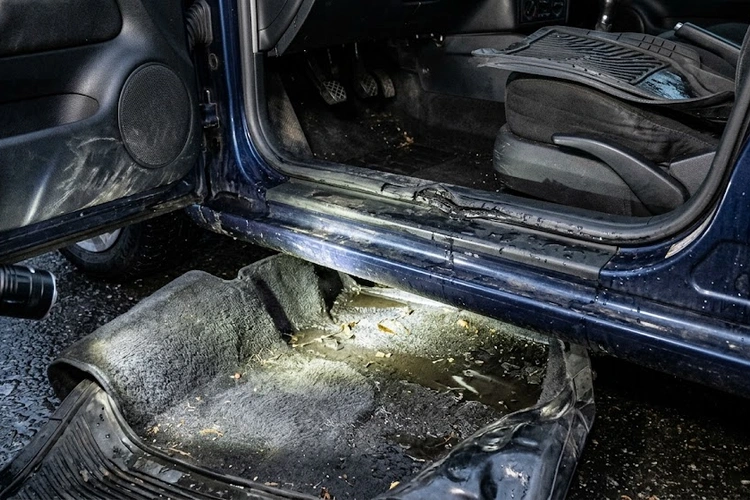
Our team spent an entire afternoon helping a colleague track down a puddle that kept reappearing on his passenger-side floor every morning without fail — the culprit turned out to be a clogged AC evaporator drain that had been quietly overflowing for two months straight. Problems with water leaking into the car floor are surprisingly common across all vehicle ages and makes, and the source is almost never obvious from a quick glance inside the cabin. Most people assume the worst when they find a wet floor mat, but the fix is frequently straightforward once the exact entry point gets identified.
This guide covers the six most likely causes, a clear step-by-step diagnostic process, and an honest breakdown of which repairs are manageable without professional help versus which ones genuinely warrant a shop visit. It is also worth knowing that unchecked moisture accelerates mold growth fast — the EPA notes that mold can begin colonizing saturated materials within 24 to 48 hours — which is why finding the source quickly matters more than most people realize.
Left untreated, a wet floor also triggers secondary cabin problems; our team's guide on windshield fogging up inside explains how trapped floor moisture cycles through the HVAC system and makes persistent visibility problems much worse over time.
Contents
Not every instance of a wet car floor is an emergency, but some causes genuinely are — and knowing the difference saves both money and the safety of the vehicle.
A sweet smell combined with wet carpet is a heater core leak until proven otherwise — never ignore it, because the engine will overheat once coolant levels drop low enough to matter.
Having the right gear assembled before starting the search makes the process significantly faster and reduces the chance of missing a subtle or indirect entry point.
Several persistent misconceptions cause people to waste time and money chasing the wrong cause — our team has encountered all of the following repeatedly across dozens of diagnoses.
The windshield seal is one possibility among several, but it accounts for a comparatively small share of car floor water complaints in our experience. The AC evaporator drain and sunroof drain channels are responsible for far more wet-floor incidents than windshield failures ever are. Assuming the windshield is the source often leads people to reseal it unnecessarily while the actual leak continues uninterrupted — a frustrating and expensive misdirection.
Clogged AC drain tubes and blocked sunroof channels are just as common on newer vehicles, because debris accumulation is independent of mileage — a single autumn season can pack a fresh sunroof drain channel completely full of compacted organic matter. Modern door seals can also develop localized failures from manufacturing variances or minor collision damage that has no effect on drivability, leaving no clue that water entry is occurring until the carpet is already saturated.
Pro tip: applying soapy water spray to weatherstripping before the hose test produces visible bubbles at any air gap — because air gaps and water entry points are almost always the same location on the seal.
Experienced technicians rely on a handful of non-obvious approaches that dramatically narrow down the source without needing specialized equipment or extensive disassembly.
Our team recommends a sequence that eliminates the most statistically common causes first, before moving to more complex and time-intensive possibilities.
| # | Cause | Typical Location | Fluid Type | DIY Difficulty |
|---|---|---|---|---|
| 1 | Clogged AC evaporator drain | Passenger front floor | Clear water (condensation) | Easy |
| 2 | Failed door or window seal | Below door sill, front or rear | Clear water | Easy to Moderate |
| 3 | Blocked sunroof drain channels | Front floor or at pillar base | Clear water | Easy |
| 4 | Damaged windshield seal | Base of A-pillar or dashboard edge | Clear water | Moderate |
| 5 | Leaking heater core | Passenger front floor, under dash | Coolant (sweet smell, slightly oily) | Difficult — shop recommended |
| 6 | Clogged cowl panel drain | Driver or passenger footwell | Clear water | Easy to Moderate |
The cowl panel — the plastic-covered tray at the base of the windshield that channels rainwater away from the firewall — is one of the most consistently overlooked sources in our experience. When debris packs the drain hole completely, water overflows directly into the cabin through the HVAC air intake opening in the firewall. Clearing this channel thoroughly every autumn makes a meaningful preventive difference for anyone parking regularly beneath trees.
The heater core is the cause that carries the most urgency — coolant on the floor means the engine cooling system is losing volume, and the distinctive sweet smell should never be written off as an odd rain smell or spilled drink. The related moisture also creates ideal conditions for the kind of mold growth in the evaporator housing that produces a musty car AC smell that is extremely difficult to fully eliminate once it takes hold.
For vehicles where water stains on the headliner accompany the wet floor complaint, sunroof drain blockages and headliner adhesive failure are frequently both present simultaneously — a combination our team has also addressed in depth in the guide on how to fix a sagging headliner without removing it, which covers the repair options available without full headliner extraction.
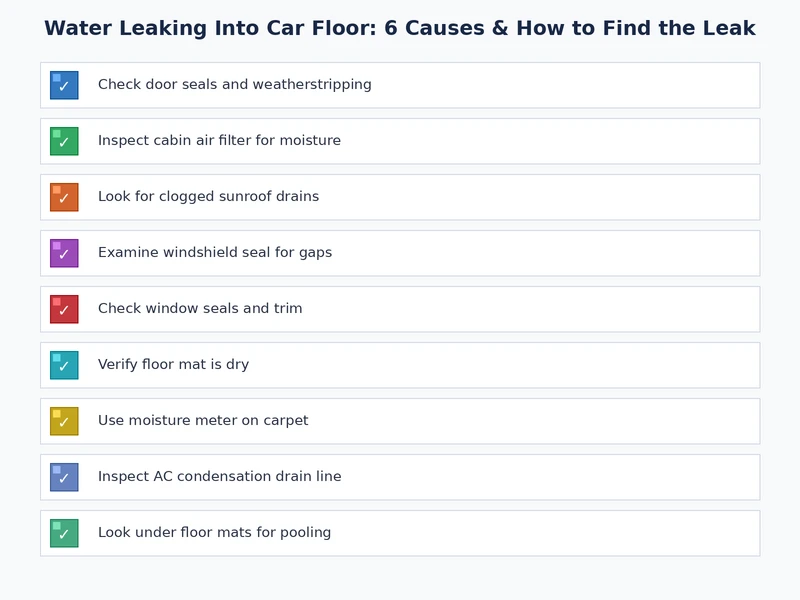
Our team's honest assessment is that four of the six causes are entirely manageable for anyone with basic mechanical confidence, while two of them genuinely warrant professional involvement for reasons beyond just difficulty.
The cost-benefit calculation is clear: the four straightforward DIY fixes cost almost nothing and take an afternoon at most, while the two complex repairs benefit from professional expertise in ways that directly affect safety and long-term reliability of the repair.
A clogged AC evaporator drain tube is by far the most common cause in our experience. The drain removes condensation from the evaporator box as a continuous function of AC operation, and when debris blocks it, that water has nowhere to go except onto the passenger floor. Clearing it with a thin wire or compressed air resolves the problem immediately in the vast majority of cases.
The smell is the clearest indicator — coolant leaking from a heater core carries a distinctly sweet, faintly syrupy odor that plain rain water and AC condensation do not produce. The windshield may also fog persistently and resist clearing even with the defroster running, and the coolant reservoir level will gradually drop without any visible external puddle under the vehicle to explain the loss.
The AC evaporator coil removes humidity from the cabin air as part of its normal operation, and that humidity condenses into liquid water that must drain through the evaporator drain tube to exit the vehicle. When that tube is blocked or kinked, condensation accumulates in the evaporator box and eventually overflows onto the floor instead of draining outside. The floor stays dry whenever the AC is off because the condensation process stops entirely.
Yes — sunroof drain channels route water collected at the sunroof corners down through the A-pillars and B-pillars to drain exits near the rocker panels at the base of the door openings. When those channels clog, water follows hidden paths inside the pillars and can emerge at floor level without ever visibly saturating the headliner fabric above. The headliner may feel faintly damp to the touch, but visible staining on the surface typically lags well behind where the actual water path runs.
It depends entirely on the cause and the location of the water. A puddle from a clogged AC drain is not an immediate safety risk, though addressing it promptly prevents mold and protects nearby electronics. Water near the fuse box, any control module, or the brake pedal area is a genuine safety concern that warrants parking the vehicle and diagnosing the source before any further driving. Coolant on the floor from a heater core leak means the engine cooling system is losing fluid and the vehicle is at risk of overheating, which also makes continued driving inadvisable.
The cowl panel is a channel at the base of the windshield designed to collect and redirect rainwater away from the firewall and HVAC air intake opening. When leaves, pine needles, and organic debris pack the drain hole at the bottom of that channel, water has no exit path and overflows directly into the cabin air intake, entering the footwell through gaps in the firewall or HVAC box housing. Keeping the cowl drain clear is one of the most straightforward and most frequently overlooked pieces of preventive maintenance on any vehicle that parks beneath trees regularly.
Under warm and humid conditions, mold growth can begin within 24 to 48 hours on saturated carpet and foam padding, which is why addressing the wet floor quickly is more important than many people initially recognize. Removing saturated floor mats, running the vehicle's fan on fresh air mode with windows cracked to encourage airflow, and addressing the leak source as soon as possible are the most effective preventive steps. Once mold establishes itself in the dense foam underlayer beneath the carpet, professional extraction or full carpet replacement is typically the only reliable solution.
Water on the car floor always has a source — find the source first, and the fix almost always turns out to be far simpler than the soggy carpet suggested.
 |
 |
 |
 |

About Sarah Whitfield
Sarah Whitfield is a diagnostics and troubleshooting specialist who spent ten years as an ASE-certified technician before joining the editorial team. She specializes in OBD-II analysis, electrical gremlins, and the kind of intermittent problems that make most owners give up.
Get some FREE car parts & gear.. Or check out the latest free automotive manuals and build guides here.
Disable your ad blocker to unlock all the hidden deals. Hit the button below 🚗
| | | |
