by Liam O'Brien
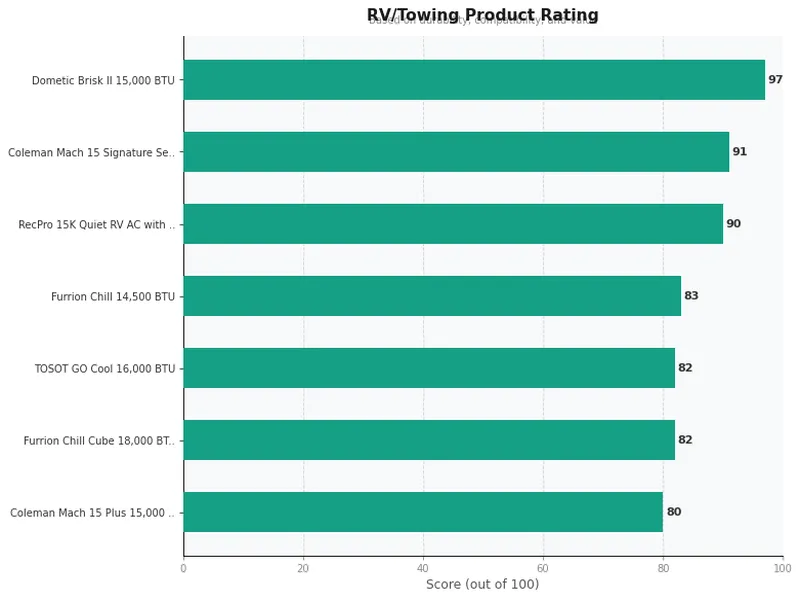
Which RV air conditioner actually keeps your rig cool when temperatures hit triple digits at a desert campsite? After testing and researching the market in 2026, one unit consistently rises to the top: the Dometic Brisk II 15K BTU, which delivers proven rooftop cooling performance at a price point that makes sense for most RV owners. But your ideal unit depends on your specific rig, your power setup, and how much noise you're willing to tolerate on a quiet night at the campground.
Choosing the right RV air conditioner is more consequential than picking a car accessory — a bad choice means a sweltering summer on the road, a blown generator circuit, or a rooftop unit that shakes itself loose on a mountain highway. The 2026 market offers compelling options across every price tier, from budget-friendly 13,500 BTU cooling-only models to variable-speed powerhouses with inverter compressors that sip power like a soda straw. Whether you're running off shore power, a generator, or a solar battery bank, the right match makes all the difference. If you're also outfitting your RV for the long haul, check out our roundup of the 7 Best RV Covers of 2026 to protect your investment when it's parked.
In this guide, we've reviewed seven of the best RV air conditioners available in 2026, covering rooftop units from Dometic, Furrion, Coleman-Mach, and RecPro. You'll find honest assessments of BTU output, noise levels, installation requirements, and energy efficiency so you can match the right unit to your rig without second-guessing. We've also included a comprehensive buying guide and answers to the most common questions RV owners ask before pulling the trigger on a new AC unit.
Contents
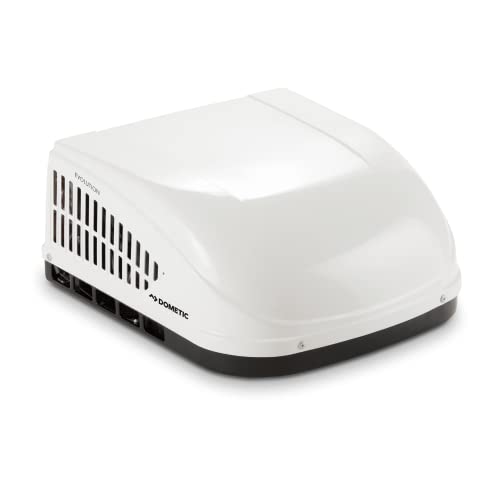









The Dometic Brisk II has been the industry benchmark for rooftop RV air conditioning for years, and the 2026 version proves why that reputation is entirely deserved. Delivering 15,000 BTUs of cooling power in a standard-profile rooftop form factor, this unit handles rigs up to approximately 40 feet with ease, pushing cold air through a non-ducted air distribution box that you'll need to purchase separately. The compressor is reliable, the build quality is solid enough to handle years of highway vibration, and Dometic's service network means you're never far from support if something goes wrong down the road.
Installation is straightforward for anyone who has replaced a rooftop unit before — the Brisk II uses a standard 14-inch roof opening and drops in cleanly with the included hardware. You'll need to supply your own thermostat or control kit, since no pre-installed controls are included, but that flexibility actually works in your favor because it lets you pair this unit with your existing RV control system. Running on standard 15-amp shore power, it's compatible with most campground hookups without requiring a dedicated circuit upgrade.
The Brisk II doesn't chase the latest eco-friendly refrigerant trends — it's a proven workhorse that prioritizes dependability over novelty. If you want the most reliable rooftop unit with the broadest parts availability and the deepest installer knowledge base in the RV industry, the Dometic Brisk II is your unit, full stop. It belongs in the same conversation as essential RV upgrades like a quality RV sewer hose setup — not glamorous, but absolutely critical to a comfortable trip.
Pros:
Cons:
If your RV is going under low bridges, into tight campground sites with overhead trees, or through a garage door with limited clearance, the Dometic Penguin II is the low-profile solution you've been looking for. Its sleek, aerodynamic rooftop housing dramatically reduces wind resistance compared to standard-profile units, which translates to better fuel economy when you're highway driving and less wind noise inside the cabin at speed. The EPP foam housing cuts weight compared to traditional ABS plastic shells, which is a genuine advantage when you're managing roof load on a Class B van or a shorter Class C motorhome.
The Penguin II steps up on the environmental side by using R410A refrigerant, a refrigerant compound that carries a significantly lower ozone-depletion profile than older R22-based systems. Cooling efficiency is impressive for a 13,500 BTU unit — the foam housing acts as a mild insulator around the compressor assembly, helping retain thermal efficiency during sustained operation. The unit handles both ducted and non-ducted configurations, giving you real flexibility depending on how your RV's interior ventilation is set up, which is a notable advantage over single-mode competitors.
The trade-off is straightforward: you're giving up 1,500 BTUs compared to the Brisk II, which matters in large Class A coaches or when desert heat pushes ambient temps above 100°F. For rigs under 30 feet, though, the 13,500 BTU output is more than adequate, and the combination of low weight and reduced aerodynamic drag makes the Penguin II a smarter choice for fuel-conscious travelers who are doing serious highway miles between destinations.
Pros:
Cons:
The Furrion Chill Cube represents a genuine step forward in RV air conditioning technology, bringing variable-speed compressor technology to the rooftop market in a way that actually matters for real-world RV use. At 18,000 BTUs, it produces more cooling power than any other unit on this list — more than a full ton of refrigeration capacity — and the variable-speed compressor adjusts its output continuously to match the thermal load of your space rather than cycling on and off at full power. That modulation is what makes it dramatically more energy efficient than fixed-speed competitors, which matters enormously if you're running off a solar battery bank or a smaller generator.
The Turbo Cool mode is a standout feature that fires the compressor at maximum capacity when you first park and need to pull the cabin temperature down from a sun-baked 110°F as fast as possible, then automatically steps back to a quieter, more efficient maintenance mode once you've reached your target temperature. Installation uses a bolt-on rooftop mount, and the included step-by-step guide makes the process genuinely manageable even if you haven't done a rooftop unit swap before. The unit also uses R32 refrigerant, which has a lower global warming potential than R410A, positioning the Chill Cube as the most forward-thinking refrigerant choice in the category.
The important caveat is that this listing covers the AC unit only — you'll need to purchase the Air Distribution Box (ADB) separately, and that's where the total cost rises above the competition. If you're equipping a large Class A coach, a fifth wheel, or a campervan that sees serious summer heat, the Chill Cube's combination of 18K BTU capacity, variable speed efficiency, and lightweight construction justifies the premium. For smaller rigs or occasional-use campers, the added complexity and cost may outweigh the benefits.
Pros:
Cons:
Coleman-Mach built the Mach 10 NDQ — the "NDQ" standing for Noise and Decibel Quiet — specifically for RV owners who have been frustrated by the thunderous racket that older rooftop units produce during nighttime operation. The engineering emphasis here is directly on acoustic performance, with multiple layers of vibration dampening built into the compressor mounting assembly to isolate motor noise from the rooftop shroud and ultimately from the cabin ceiling. If you've ever tried to sleep under a conventional RV air conditioner during a humid summer night, you understand exactly why this design priority matters so much.
The low-profile rooftop design keeps your RV's center of gravity lower and reduces wind resistance, while the polished white housing presents a clean, factory-integrated appearance that looks right at home on newer production rigs. At 13,500 BTU, this is a non-ducted unit designed for direct air distribution into the living space without complex ductwork, which simplifies installation significantly. The build quality reflects Coleman-Mach's decades of RV HVAC experience — the hardware is robust, the tolerances are tight, and the unit is designed to handle the constant vibration and temperature cycling that comes with life on the road.
The quiet operation is the dominant selling point, and it genuinely delivers on that promise — experienced RV owners report the Mach 10 NDQ is noticeably quieter than comparable Dometic units at similar BTU ratings. If you frequently camp in campgrounds with close neighbors, or if you're a light sleeper who runs the AC all night, this unit's noise reduction engineering is worth the premium over standard-profile alternatives. The 13,500 BTU output is adequate for rigs up to roughly 28 feet, though larger coaches may benefit from the Furrion Chill Cube's 18K capacity instead.
Pros:
Cons:
The RecPro 15K stands apart from every other unit on this list because it includes an integrated heat pump, transforming it from a seasonal cooling appliance into a true year-round climate control solution. When ambient temperatures drop in fall or spring, you can switch the unit to heat pump mode and extract warmth from the outside air to heat your RV interior without burning propane — a meaningful advantage for shoulder-season travelers who don't want to rely entirely on a furnace. The 15,000 BTU cooling side is competitive with the Dometic Brisk II, and the all-in-one design eliminates the need for a separate heating element.
The low amp draw design is genuinely impressive and practically useful — RecPro engineered this unit to run efficiently enough that you can operate other RV appliances simultaneously without tripping a 30-amp shore power circuit. For off-grid travelers running solar systems or portable generators, this energy efficiency translates directly to more runtime and fewer mid-day power interruptions. The UV-resistant plastic housing holds up well to extended outdoor exposure, and the aerodynamic profile reduces highway drag without compromising the internal component packaging that makes the heat pump function possible.
The noise level rating of 55.4 dB positions the RecPro 15K as one of the quieter 15K BTU units available in 2026, competitive with the Coleman-Mach 10 NDQ despite delivering 1,500 more BTUs of cooling capacity. Installation is a bolt-on affair using a standard 14-inch roof opening, and RecPro includes everything you need in the box — no surprise add-on purchases required. If you're planning multi-season travel and you want a single rooftop unit that handles both cooling and supplemental heating, the RecPro 15K is the most complete solution available at this price point. You might also find our guide to the best AC recharge kits useful for maintaining your RV's supplemental climate systems.
Pros:
Cons:
The Dometic FreshJet 3 Series is Dometic's answer to one of the most persistent durability problems in RV air conditioning: coil corrosion. Dometic is the only company in the RV industry currently using e-coated evaporator coils — a flexible epoxy polymer coating process originally developed for commercial HVAC heat transfer coils that bonds directly to the aluminum fin surfaces and provides exceptional resistance to moisture, salt air, road chemicals, and the thermal cycling stress that destroys uncoated coils over time. If you're camping near the coast, in humid Southern climates, or through harsh winters, this engineering choice alone extends the FreshJet 3's service life meaningfully beyond that of competing units.
The FreshJet 3 also carries a backwards-compatible design that allows you to upgrade from an older Dometic unit while retaining your existing Air Distribution Box — a significant cost and labor savings compared to a full system replacement. For RV owners who already have a Dometic ecosystem, this upgrade path makes the FreshJet 3 the logical next unit. The lightweight construction reduces the roof load compared to Dometic's older units, and the 15,000 BTU output is identical to the Brisk II, so you're getting improved durability and corrosion resistance without any sacrifice in cooling capacity.
The e-coat technology is the defining reason to choose the FreshJet 3 over the Brisk II if you're making a long-term investment in your RV's comfort system. Full-time RVers, coastal campers, and anyone who plans to keep their rig for five or more years will find that the FreshJet 3's superior corrosion resistance and lightweight design justify the price premium over the Brisk II. Think of this as the premium tier of the Dometic lineup — the Brisk II is the reliable standard, but the FreshJet 3 is what you buy when you're building for the long haul.
Pros:
Cons:
The RecPro 13.5K Cooling Only unit is the value champion in this roundup — it delivers the same low-amp-draw engineering and UV-resistant aerodynamic housing as its 15K heat pump sibling, but strips away the heat pump functionality to bring the price down to a level that makes it accessible for RV owners on a strict equipment budget. At 13,500 BTU with a noise rating of 59.7 dB, it's slightly louder than the 15K model but still quieter than most standard-profile competitors at this price point. You get a genuinely complete, ready-to-install package without surprise add-on costs.
The dual-mode compatibility — the unit works with both ducted and non-ducted RV systems — gives you real flexibility at installation time and makes it a viable replacement for rigs that already have ductwork in place. The low amp draw characteristic is preserved from the 15K line, so you can run your microwave, charge devices, and operate lighting circuits simultaneously without worrying about tripping your 30-amp pedestal breaker at the campground. RecPro includes all installation hardware, and the process is a straightforward bolt-on mount using a standard 14-inch roof opening that fits the vast majority of production RVs.
The honest trade-off is that 13,500 BTUs is the minimum cooling capacity you want in any RV over 20 feet, and it will work harder in high ambient temperatures than a 15K unit would. For RVs under 25 feet, weekend-use campers, or budget-constrained buyers who need a reliable replacement for a failed unit, the RecPro 13.5K delivers everything you actually need without paying for capacity you won't use. It's the kind of practical, no-fuss solution that fits naturally alongside other smart RV investments — find more ideas in our RV and automotive tools guide.
Pros:
Cons:
Buying an RV air conditioner in 2026 means navigating a more complex market than it was even five years ago — variable-speed compressors, new eco-friendly refrigerants, integrated heat pump options, and a broader range of BTU capacities all compete for your attention. Before you purchase, you need to understand the four core variables that determine whether any given unit is right for your specific situation.
BTU — British Thermal Unit — is the measure of how much heat an air conditioner can remove from your RV per hour, and choosing the correct BTU rating is the single most important decision you'll make. The U.S. Department of Energy's guidelines on room air conditioners provide useful general rules that translate to RV applications: roughly 20 BTU per square foot of living space is a practical starting point. For a 30-foot Class C motorhome with approximately 200 square feet of living area, a 13,500 BTU unit is adequate under moderate conditions, while a 40-foot Class A coach pushing 400 square feet in a desert campground genuinely needs a 15,000 BTU unit or better. The Furrion Chill Cube's 18,000 BTU variable-speed output is specifically designed for the largest, most thermally demanding RVs on the road today.
Traditional RV air conditioners use fixed-speed compressors that operate at full power when running, then cycle off completely when the target temperature is reached — an efficient pattern in mild conditions but increasingly inefficient as the thermal load increases. Variable-speed compressors, like the one in the Furrion Chill Cube, continuously modulate their output between roughly 30% and 100% of maximum capacity, maintaining a steady cabin temperature with dramatically less energy consumption and significantly reduced noise during sustained operation. For off-grid RVers running solar battery banks or inverter generators, the energy efficiency difference between fixed-speed and variable-speed compressors translates directly into hours of usable runtime per charge cycle. If your power budget is tight, variable-speed technology is worth the premium investment.
Non-ducted RV air conditioners distribute cold air directly through an air distribution box into the space below the unit, which means the sleeping area at the far end of your coach may be several degrees warmer than the zone directly under the AC. Ducted systems run cooled air through a network of ceiling ducts with registers at multiple points throughout the RV, delivering more even temperature distribution throughout the entire living space. Most production Class A motorhomes over 35 feet use ducted systems for this reason, while shorter Class C units, travel trailers, and campervans typically rely on non-ducted setups. Before you purchase, check whether your existing roof opening uses a ducted or non-ducted termination — buying a non-ducted unit for a ducted system requires an adapter or replumbing.
Modern RV air conditioner noise ratings run from approximately 55 dB to 65 dB during operation — a range that spans from "white noise you can sleep through" to "loud enough to notice through the walls." The Coleman-Mach 10 NDQ and the RecPro 15K lead this category at their respective BTU ratings, both engineering specific noise-reduction measures into their compressor mounting systems. If you regularly camp in RV resorts or state park campgrounds with close-spaced sites and quiet hours policies, investing in a quieter unit is a courtesy that your neighbors will appreciate and that will give you more flexibility in which campsites you can book without complaints. Consider this dimension alongside other RV upgrades like 5th wheel hitch protection when planning your complete rig setup.
A practical rule of thumb is 20 BTU per square foot of living space, which means a 25-foot travel trailer with roughly 150 square feet needs a 13,500 BTU unit, while a 40-foot Class A coach with 400 square feet needs a 15,000 BTU unit or larger. In regions where summer temperatures routinely exceed 100°F, move up one BTU tier from your square footage calculation to account for the additional thermal load. The Furrion Chill Cube's 18,000 BTU rating is specifically designed for the largest RVs operating in extreme heat conditions.
Non-ducted units distribute air directly through a ceiling air distribution box into the zone directly below the rooftop unit, which creates a temperature gradient — the area near the AC is coldest, while areas farther away are warmer. Ducted units connect to ceiling ductwork with registers throughout the RV, distributing cooled air more evenly across all zones. Most travel trailers and Class C motorhomes under 32 feet use non-ducted systems, while longer Class A coaches and fifth wheels with ceiling duct systems require ducted-compatible units like the Dometic Penguin II.
Yes, but you need a substantial solar and battery system to do it effectively. A standard 15,000 BTU fixed-speed RV air conditioner draws roughly 13 to 15 amps at 120V during peak operation, which requires approximately 1,500 to 2,000 watts of solar generation capacity and a lithium battery bank in the 200 to 300 amp-hour range to run through peak afternoon hours. Variable-speed units like the Furrion Chill Cube are significantly more solar-friendly because their modulated compressor operation reduces average power draw substantially during the maintenance phase after the cabin temperature has been established.
A properly maintained RV rooftop air conditioner lasts between 10 and 15 years under normal use conditions, though coastal and high-humidity environments can shorten that lifespan to 7 to 10 years due to coil corrosion. The Dometic FreshJet 3 Series is specifically engineered to extend service life in corrosive environments through its e-coated evaporator coils. Annual maintenance — cleaning the evaporator filter, inspecting the roof gasket seal, and checking refrigerant charge — preserves both performance and service life across any brand.
In theory, a properly sealed RV air conditioner system should never need refrigerant recharging — the refrigerant operates in a closed loop and doesn't deplete under normal conditions. If your unit is blowing warm air despite the compressor running, the most likely causes are a refrigerant leak (requiring professional repair), a failed capacitor, or a clogged filter/evaporator coil rather than simple refrigerant depletion. Unlike automotive systems, DIY refrigerant recharging is not a practical option for rooftop RV units, so low cooling performance should be diagnosed by an RV service technician.
For full-time RV living in 2026, the Dometic FreshJet 3 Series or the RecPro 15K Heat Pump are the two strongest choices depending on your priority. The FreshJet 3 wins on longevity and corrosion resistance — its e-coated coils are specifically engineered for the sustained operation and environmental exposure that full-timers experience. The RecPro 15K wins on versatility because its integrated heat pump eliminates the need to rely solely on propane for shoulder-season heating, reducing fuel costs and extending your ability to stay comfortable in spring and fall camping conditions without running a furnace.
 |
 |
 |
 |

About Liam O'Brien
Liam O'Brien has spent over a decade buying, field-testing, and evaluating automotive tools with a focus on what actually performs in a real DIY garage rather than what markets well on a spec sheet. His hands-on experience spans hand tools, diagnostic equipment, floor jacks, socket sets, and specialty automotive gear across a wide range of brands and price points. At CarCareTotal, he covers automotive tool and equipment reviews, garage setup guides, and buying advice for home mechanics.
Get some FREE car parts & gear.. Or check out the latest free automotive manuals and build guides here.
Disable your ad blocker to unlock all the hidden deals. Hit the button below 🚗
| | | |
