by Liam O'Brien
Picture this: it's a sweltering July afternoon, your car's AC is blowing warm air, and you're standing in the auto parts store staring at a wall of refrigerant cans and recharge kits with absolutely no idea which one to grab. You know the system just needs a top-off, but the options range from budget cans to professional-grade gauge sets, and the difference between them isn't obvious. The good news is that recharging a low R-134a system is one of the most accessible DIY car repairs you can tackle at home, provided you have the right kit in hand.
In 2026, the AC recharge kit market has expanded well beyond simple cans with a hose attached. You now have gauge sets that display real-time pressure readings, eco-friendly hydrocarbon blends that are chemically compatible with R-134a systems, and reusable dispenser assemblies that work across multiple refrigerant cans. The challenge is matching the right kit to your vehicle, your comfort level with automotive work, and the severity of the refrigerant loss you're dealing with. Whether you're maintaining a daily driver or keeping a fleet vehicle comfortable through summer, this guide has a pick for you.
Our team evaluated these kits across five key criteria: gauge accuracy, hose length and flexibility, ease of use, refrigerant quality, and overall value. You'll also find a thorough buying guide and FAQ section below to help you avoid the most common recharge mistakes. If you're the type who likes to keep your garage stocked with the right tools, be sure to check out our guide to the best mechanic tool sets and our best car emergency kits reviews for more DIY-friendly picks. All of our automotive tools coverage is indexed in one place as well.
Contents







The InterDynamics ACP410-4 is the gauge and hose dispenser that most professional DIYers reach for first, and it earns that reputation through straightforward engineering rather than marketing hype. The standout feature is the extra-large easy-to-read gauge face, which gives you a clear pressure reading without having to crouch awkwardly next to the engine bay or squint at a tiny dial. At 24 inches, the charging hose is genuinely long enough to reach the low-side service port on vehicles with tight engine compartments — a detail that becomes critical when you're working on crossovers and trucks where the port sits toward the firewall.
This is a dispenser-only kit, meaning you supply the refrigerant can separately, which actually works in your favor if you want flexibility over which refrigerant you purchase. The quick-connect low-side coupler locks onto the service port with a satisfying click and releases cleanly without any refrigerant blowback. Build quality is solid throughout — the hose feels reinforced rather than flimsy, and the gauge housing is impact-resistant enough to survive a drop onto a concrete driveway without losing calibration.
If you're the kind of person who prefers to invest in a quality tool rather than a disposable kit, the InterDynamics gauge and hose is the logical choice. It pairs well with A/C Pro branded cans, but the standard threading accepts most major R-134a refrigerant brands on the market in 2026.
Pros:
Cons:
The A/C Pro Arctic Freeze kit takes the reusable gauge-and-hose format and adds a trigger-style dispenser mechanism that dramatically reduces hand fatigue during the recharge process. If you've ever tried to hold down a thumb lever for five minutes while watching a pressure gauge and trying not to overfill the system, you'll immediately appreciate the ergonomic advantage here. The trigger allows precise, controlled bursts of refrigerant rather than a continuous flow, which translates directly to a more accurate charge and less wasted refrigerant from overshooting your target pressure.
The gauge on this kit displays both low-side pressure and a color-coded temperature correlation scale, which helps you understand whether you're reading the system correctly under ambient temperature conditions. This is a particularly useful feature because the correct target pressure changes depending on the outdoor temperature — what reads as properly charged on a 70-degree day looks undercharged on a 95-degree afternoon. The self-sealing valve compatibility means this gauge works with Arctic Freeze cans that preserve unused refrigerant between sessions, which is a meaningful advantage if your system only needs a partial recharge.
This kit is built for the DIYer who wants professional-caliber control without professional-grade equipment costs. The Arctic Freeze refrigerant formula is designed to perform at lower ambient temperatures than standard R-134a, which makes it particularly well-suited to vehicles operating in climates where early spring and late fall AC use is common. The reusable design extends the value over multiple recharge cycles.
Pros:
Cons:
ZeroR's 2-pack recharge kit brings an eco-conscious refrigerant formula to the DIY market, using a 100% natural hydrocarbon blend that carries zero global warming potential and is non-ozone-depleting — a meaningful distinction from standard R-134a refrigerant, which is a hydrofluorocarbon with measurable environmental impact. The formula is chemically compatible with R-134a systems, so you don't need to retrofit your vehicle or flush the system before using it, provided you verify your car runs R-134a and not the newer R-1234yf.
Each can contains 6 oz (measured by weight) of refrigerant gas with a small amount of UV dye included. The UV dye concentration is not high enough to replace a dedicated professional leak detection service, but it does leave a trace that can help you spot obvious leak points with a UV light during follow-up inspections. The 24-inch charging hose gives you solid reach across most engine bay configurations, and the SSV-compatible design means any unused gas stays sealed in the can until your next session — an important practical advantage over piercing-style can taps that vent remaining refrigerant once opened.
One thing you need to understand before ordering: ZeroR is explicit that this kit requires you to confirm your vehicle uses an R-134a system before purchasing. Check your owner's manual or look for the AC service sticker under your hood — don't rely on Amazon's vehicle fitment data, as it can be inaccurate for refrigerant type. The hydrocarbon blend is lighter than R-134a by weight but delivers equivalent volumetric performance, so you won't need additional cans to achieve a full charge. The 2-pack format gives you a backup can on hand, which is a smart purchase if you're managing an older vehicle with a slow leak.
Pros:
Cons:
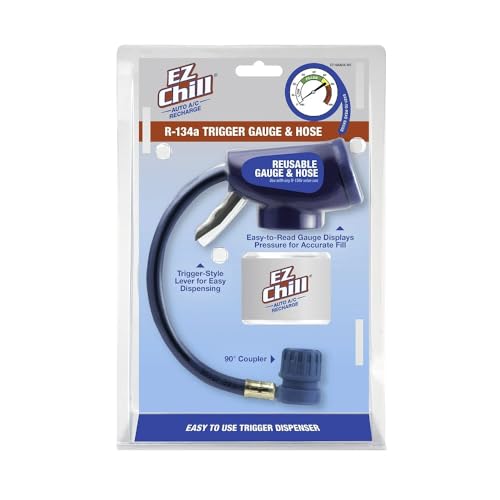
The A/C Pro EZ Chill earns its "EZ" designation through a thumb lever dispenser design that is among the most intuitive to operate in this product category, making it the top recommendation for anyone performing their first DIY AC recharge. The thumb lever provides a natural, comfortable grip position while you're watching the gauge and monitoring the system pressure simultaneously — a multitasking challenge that catches many first-time users off guard when they're using less ergonomically designed kits. The learning curve here is minimal compared to kits that require you to manage a trigger mechanism or hold down an awkward button.
The gauge reads live pressure and includes a color band that correlates to the correct pressure range for different ambient temperatures, so you know exactly when to stop adding refrigerant without guesswork. This temperature-pressure correlation feature is genuinely valuable for beginners who aren't yet familiar with the relationship between ambient heat and system operating pressure — it's the kind of built-in guidance that prevents the most common DIY recharge mistake, which is overfilling the system. An overcharged AC system can actually damage the compressor, so having a gauge that visually communicates the safe zone is a meaningful safety feature.
Like other A/C Pro dispenser assemblies, the EZ Chill is reusable, meaning you connect it to a new can each time the refrigerant runs out. The quick-connect coupler is simple to attach and remove, which matters when you're new to working around an engine bay and want to minimize the time your hands are near moving components. If you pair this with a solid set of gloves from your mechanic tool set, the entire recharge process takes under 15 minutes even for a first-time user.
Pros:
Cons:
If you're managing multiple vehicles, maintaining a shop inventory, or dealing with a system that has lost a significant amount of refrigerant, the ZeroR 3-can bundle with gauge and can tap delivers the best cost-per-ounce value among the options reviewed here for 2026. The bundle pairs three 6 oz cans of ZeroR's hydrocarbon R-134a replacement blend with an SSV-compatible can tap and gauge assembly, giving you everything you need to perform a complete recharge without a separate refrigerant purchase. Having three cans on hand ensures you can handle even significantly depleted systems with a single order.
The SSV (self-sealing valve) can design is the key technical differentiator here, and it's important to understand what that means for tool compatibility. These cans are designed to seal themselves when the tap is removed, allowing you to store partially used cans safely without venting refrigerant into the atmosphere. This is not just an environmental benefit — it also saves money, since standard piercing-style can taps vent all remaining refrigerant once the can is opened and then removed. The SSV system requires a compatible tap, which is included in this bundle, but it means you cannot use a generic piercing-style tap from another kit with these cans.
The ZeroR hydrocarbon blend delivers equivalent volumetric cooling performance to standard R-134a despite being lighter by weight. Compressed gas is measured by weight in automotive AC applications, not by fluid volume, so the 6 oz figure is a weight measurement — and ZeroR's lighter formula is engineered to provide the same effective system charge per can as a conventional 12 oz R-134a can when factoring in molecular density. The bundle format also means you'll have extra refrigerant on hand if you need to top off the system again later in the season, which is practical planning for vehicles with slow, undetected leaks. Just as you'd keep spare gear in a car emergency kit, having backup refrigerant cans is smart preventive maintenance for summer driving.
Pros:
Cons:
Before you look at a single kit, you need to confirm which refrigerant type your vehicle uses. This is the most important step in the entire process, and skipping it is the most common and most expensive mistake DIYers make. Here's how to check:
Do not use the vehicle fitment filters on retail sites to determine refrigerant type. That data is frequently incorrect, and the consequences of using the wrong refrigerant in your system range from no cooling effect to serious compressor damage.
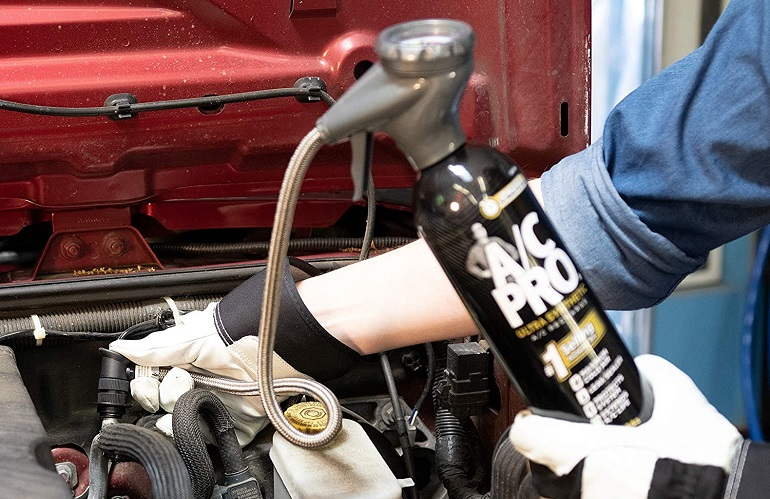
The gauge on an AC recharge kit is not just a convenience feature — it's the primary safety mechanism that prevents you from overfilling the system. An overcharged AC system will trip the high-pressure cutoff switch, which shuts down the compressor to prevent damage, and the symptoms look exactly like an undercharged system to an untrained eye. Key features to evaluate when comparing gauges include:
A 24-inch hose is the practical minimum for comfortable use on most passenger vehicles, and it's the standard length across all the kits reviewed here. Shorter hoses force you to awkwardly position the refrigerant can near the engine bay rather than holding it at a comfortable working distance. Beyond length, pay attention to the dispenser mechanism itself:
Standard R-134a is a hydrofluorocarbon that contributes to atmospheric warming — something that regulators across multiple countries are phasing out at the commercial level. For DIY use in 2026, you have two main options: traditional R-134a cans, which are widely available and broadly compatible with older systems, and hydrocarbon blends like ZeroR's formula, which are ozone-safe and carry zero global warming potential while delivering equivalent cooling performance. The hydrocarbon blends are a smart choice for environmentally conscious buyers, but they require you to verify SSV can compatibility with your chosen dispenser tool. If you're comparing this purchase to other automotive maintenance investments, consider browsing our best pressure washers for cars guide for more DIY upkeep tools that complement your garage setup.
The most obvious sign is warm or lukewarm air blowing from the vents when the AC is set to maximum cool. Other indicators include visible ice buildup on the AC lines near the firewall, a compressor that cycles on and off rapidly without maintaining cabin temperature, and an AC system that cools adequately in mild weather but struggles on hot days. A low-side pressure reading below 25 PSI when the system is running confirms low refrigerant, and a reading below 10 PSI indicates the system is severely depleted or has a significant leak.
For vehicles with R-134a systems, a DIY recharge is a realistic and effective option when the issue is simply low refrigerant rather than a mechanical failure. The process involves connecting a gauge and hose to the low-side service port — always the low side, never the high side — and adding refrigerant while monitoring pressure. However, if your system has lost all of its refrigerant quickly after a previous recharge, or if you notice oil residue around any AC fittings, a professional diagnosis is necessary because you likely have a leak that requires repair before recharging will have a lasting effect.
R-134a is the refrigerant used in most vehicles manufactured before 2021 and is widely available in DIY recharge kits. R-1234yf is the newer refrigerant required by stricter environmental regulations and used in most post-2021 vehicles, as well as some models going back to 2017 depending on the manufacturer. The two refrigerants are not interchangeable and use different service port fittings specifically to prevent accidental cross-contamination. R-1234yf systems require specialized equipment and should be serviced by a certified technician in virtually all cases.
Most passenger car AC systems hold between 14 oz and 32 oz of refrigerant depending on the vehicle size and system design. Compact cars typically sit at the lower end of that range, while full-size trucks and SUVs with dual-zone climate control can require close to 32 oz or more for a complete charge. The exact capacity is listed in your owner's manual or on the AC service sticker under the hood. For a top-off rather than a complete recharge, a single 12 oz can of standard R-134a — or the equivalent ZeroR 6 oz hydrocarbon can — is often sufficient to restore cooling performance.
Mixing different brands of R-134a is generally safe because the underlying refrigerant is chemically identical regardless of branding. What you should avoid is mixing R-134a with hydrocarbon-blend refrigerants unless the hydrocarbon blend is explicitly labeled as chemically compatible with R-134a systems — which ZeroR's products are. Never mix R-134a with R-1234yf under any circumstances, as the two refrigerants have incompatible chemical properties and will not work together in either system. When in doubt, stick with a single refrigerant type throughout the life of the system.
Overfilling an AC system with refrigerant is a more serious problem than most DIYers realize, and it's the reason gauge accuracy matters so much. An overcharged system creates dangerously high pressure on the high side, which triggers the high-pressure cutoff switch and shuts down the compressor to prevent damage. Repeated compressor cycling from overpressure events accelerates wear on the compressor clutch and can eventually cause the compressor to seize. If you overfill the system, you need to have a certified technician remove the excess refrigerant using a recovery machine — releasing refrigerant directly into the atmosphere is illegal under EPA regulations and harmful to the environment.
The right AC recharge kit is the one with an accurate gauge, a hose long enough to reach your service port, and refrigerant that matches what your system was designed to run — get those three things right and you'll have cold air blowing before the afternoon is over.
 |
 |
 |
 |

About Liam O'Brien
Liam O'Brien has spent over a decade buying, field-testing, and evaluating automotive tools with a focus on what actually performs in a real DIY garage rather than what markets well on a spec sheet. His hands-on experience spans hand tools, diagnostic equipment, floor jacks, socket sets, and specialty automotive gear across a wide range of brands and price points. At CarCareTotal, he covers automotive tool and equipment reviews, garage setup guides, and buying advice for home mechanics.
Get some FREE car parts & gear.. Or check out the latest free automotive manuals and build guides here.
Disable your ad blocker to unlock all the hidden deals. Hit the button below 🚗
| | | |
