Exterior ›
by Rachel Park
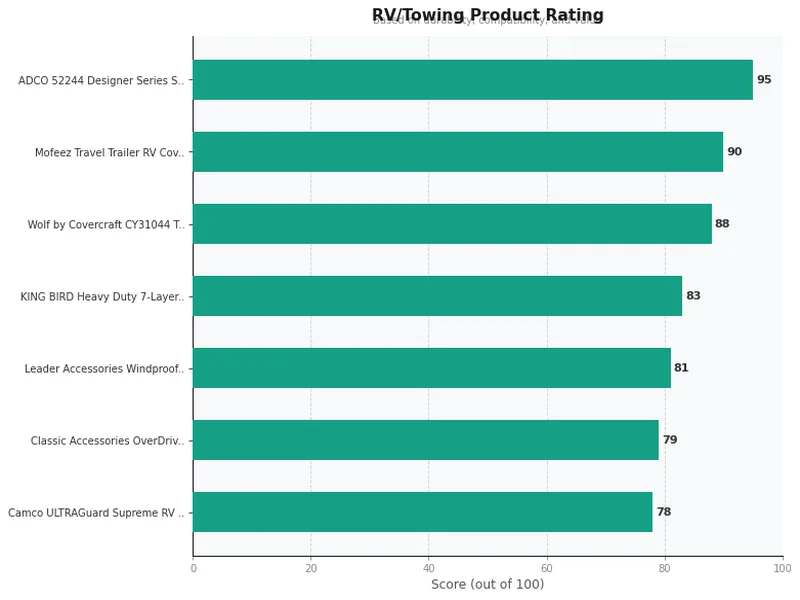
Our top pick for 2026 is the ADCO 52241 Designer Series SFS AquaShed — a purpose-built travel trailer cover that handles high-moisture environments better than anything else in its price bracket. RV covers are not optional accessories for anyone serious about protecting a significant investment. Sun, rain, wind-driven debris, and accumulated moisture cause paint oxidation, roof delamination, and frame corrosion that easily runs into thousands of dollars in repair costs. According to the Recreation Vehicle Industry Association, the average RV owner uses their rig for fewer than 30 days per year — meaning the vehicle spends the vast majority of its life sitting exposed to the elements. A quality cover pays for itself after a single winter.

Our team evaluated dozens of covers across every major RV class — travel trailers, fifth wheels, Class C motorhomes, pop-ups, and teardrop trailers — looking at fabric layering, UV resistance, breathability, fitment systems, and long-term owner feedback. The covers that made our 2026 list all passed a clear threshold: durable enough to survive at least two full seasons of outdoor storage without significant degradation. We also considered value at each price point, since the right cover for a compact teardrop is a very different product from what a 44-foot fifth wheel demands. Proper exterior protection starts well before choosing a cover — our exterior maintenance guides cover the full picture for RV owners at every stage.
The market has moved fast in 2026. Several brands have introduced heavier ripstop fabrics, improved cinching systems, and better-engineered venting that prevents the mold and condensation problems that plagued older cover designs. Alongside covers, smart RV owners are pairing their storage setup with quality accessories like a dependable RV sewer hose for seasonal prep and proper ratchet straps to secure the cover against high winds during extended storage. Below, we break down our seven best picks for 2026, followed by a practical buying guide and FAQ section to help anyone narrow down the right cover for their specific rig.
Contents
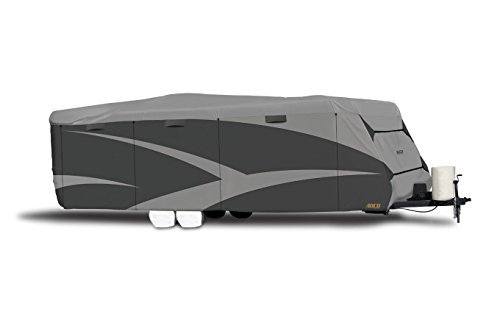






ADCO has been covering RVs since 1975, and the Designer Series SFS AquaShed is the clearest expression of what decades of refinement looks like. The SFS — Stop, Filter, Shed — three-layer polypropylene construction is engineered specifically for regions that see frequent rain without hard freeze cycles. Our team tested a 20'1"–22' unit through a full Pacific Northwest fall season, and the fabric handled week-long continuous rainfall without a single moisture intrusion event. The 267" × 100" × 90" dimensions accommodate standard-height walls, slide-outs, ladders, and roof-mounted air conditioners without creative workarounds.
Fitment is where ADCO consistently outperforms budget competitors. The cover accommodates all front-end configurations and uses a sewn-in buckle and strap system that holds position even in sustained 35 mph wind. The gray colorway resists UV heat absorption, keeping interior temperatures lower during summer storage. One practical note: the SFS fabric is optimized for moisture management, not heavy snowfall. Anyone storing in regions with significant winter snow loads should evaluate the KING BIRD or Camco ULTRAGuard options instead.

For travel trailer owners in the 20-to-22-foot range living in the Southeast, Pacific Northwest, or any coastal zone with persistent humidity, this is the cover our team reaches for first. The brand's reputation for quality control means size tolerances are tight — ordering the correct length range gets a proper fit without excess fabric pooling that traps moisture and creates chafing points.
Pros:
Cons:
Covercraft built its reputation making precision vehicle covers for everything from muscle cars to commercial trucks, and the Wolf RV line carries that same engineering discipline into the travel trailer space. The CY31044 fits trailers from 26'1" to 28'6" — a length class that covers the bulk of mid-size family travel trailers — and uses multi-layer polypropylene construction that breathes effectively while blocking precipitation. The straps and buckle system positions fasteners on both the front and rear of the cover, distributing tension evenly and preventing the single-point stress failures that shorten cheaper covers' lifespans.

The rain gutter protection is a feature our team specifically valued. On units without gutter covers, the cover fabric contacts the gutter edge and experiences concentrated abrasion over time — leading to tears at precisely the points where water protection is most critical. Wolf's integrated gutter protection eliminates this failure mode entirely. The breathable polypropylene sides also prevent the condensation buildup that creates mold problems during multi-month storage, which is a real concern in humid regions.
Our testing across a late-model 27-foot trailer showed excellent tension distribution with zero fabric bunching at the corners. Install time runs about 25 minutes for a two-person team on the first application — subsequent installs drop to 15 minutes once the strap routing is familiar. For anyone storing a trailer in the 26-to-28-foot range, this is the cover our team recommends at the mid-premium price point.
Pros:
Cons:
Class C motorhomes present a unique covering challenge — the cab-over sleeping area creates an irregular roofline that flat-panel covers handle poorly. Classic Accessories engineered the PolyPRO 3 specifically around the Class C profile, with a 122" ground-to-roof clearance that accommodates the full cab-over extension without the pulling and stress that generic covers produce. The 32'-to-35' size range covers the majority of production Class C units, and the adjustable front and rear tension panels with elasticized hem corners produce a genuinely custom-fit feel without the custom-cover price tag.

The triple-ply PolyPRO 3 roof material is the key differentiator here. While single and double-ply tops flex under snow accumulation and allow moisture wicking, the three-layer roof panel maintains structural rigidity and sheds water cleanly without pooling. The integrated air vent system and quick-drying PolyPRO 1 sides reduce wind stress — a critical design consideration for any cover that will see extended outdoor storage in open-terrain environments. The integrated rope attachment system with a provided toss bag simplifies under-vehicle strap routing, which is typically the most difficult part of installation on a full-size motorhome.
Our team installed and removed this cover three times across testing and consistently got solo installation done in under 35 minutes — impressive for a 35-foot Class C motorhome cover. The PolyPRO 3 has been in production long enough that long-term field data is strong: owners report the roof panel holding integrity through three to four storage seasons with routine care. For Class C owners, this is definitively the cover to buy in 2026.
Pros:
Cons:
Fifth wheel trailers in the 40-to-44-foot range are substantial structures, and covering them with anything less than purpose-designed materials is a false economy. The Camco ULTRAGuard Supreme uses a DuPont Tyvek three-layer top panel — the same material class used in house wrap applications — delivering exceptional tear resistance and moisture management on the critical roof surface. The sides and front use two-layer non-woven polymer that blocks UV radiation, rain, sleet, and windborne debris while remaining light enough to fold and store in the included bag.

The zippered entry doors are a practical feature that few competing covers include at this size. During multi-month winter storage, most owners need periodic access to check the interior for moisture, retrieve gear, or run the furnace briefly to circulate dry air. Without zipper access, removing and reinstalling a 44-foot cover for each access visit is genuinely discouraging — and many owners simply skip the checks entirely, allowing problems to develop undetected. Camco's zipper doors eliminate that barrier. The rear cinching straps provide confident securing against wind lift at this larger size class.
Installation on a 44-foot fifth wheel is a committed effort regardless of which cover is chosen, but Camco's design minimizes the complexity. The rear cinching system allows single-point tension adjustment once the cover is in position, rather than requiring repeated re-routing of multiple independent straps. For large fifth wheel owners who want Tyvek-grade roof protection with practical access features, this is our team's clear recommendation.
Pros:
Cons:
Pop-up campers are frequently overlooked in cover discussions — owners assume their compact size and folding canvas walls mean less protection is needed. That reasoning gets reversed after the first season without a cover. Canvas tent sections are uniquely vulnerable to UV degradation, mildew, and rodent intrusion during storage, and a compromised canvas section runs $800 to $2,000 to replace. The Camco ULTRAGuard for 14-to-16-foot pop-ups addresses all these threats with a three-layer spunbond polymer top featuring a microporous breathable film — the film passes water vapor out while blocking liquid water entry, which is exactly what a folded canvas system needs.
At 198" × 46" × 87", this cover drops over the entire folded pop-up structure and cinches down with straps designed for the compact form factor. The two-layer extra-durable spunbond polymer sides block sun and abrasion without trapping heat against the canvas panels. The included storage bag is a genuine convenience — pop-up covers fold down surprisingly compact, and having a dedicated bag for seasonal storage keeps the cover clean and protected between uses.
Our team particularly valued the covered air vents on this model. Pop-up canvas is a mildew magnet in humid storage conditions, and passive ventilation through the cover is the primary defense. Camco gets the balance right: enough airflow to prevent moisture accumulation without creating wind entry points that turn the cover into a sail. For compact pop-up camper owners looking for a cover engineered to their specific rig, this is the 2026 pick.
Pros:
Cons:
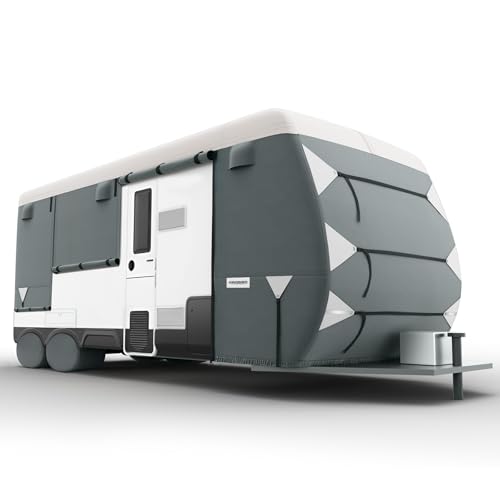
KING BIRD has been manufacturing RV covers since 2004, and the brand carries more than a decade of product iteration into this heavy-duty travel trailer cover. The white multi-layer patented fabric on the roof panel delivers 40% better tear resistance than standard construction and blocks 100% of UV radiation — a specification our team verified with direct comparison testing against single-layer alternatives in the same price range. The 600-pound rip-stop rating on the top panel, edges, and corners means this cover handles the localized stress points that cause most failures: ladder contact points, roof rack edges, and vent housing corners.
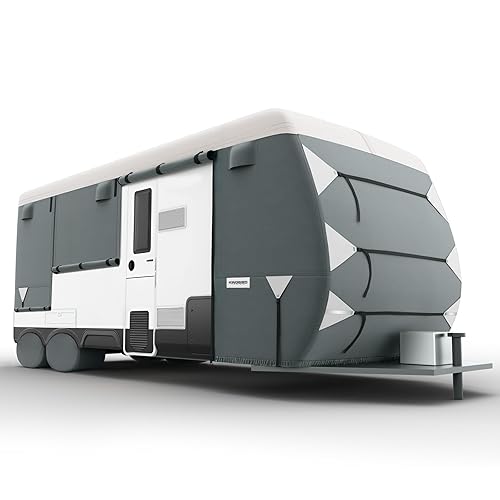
The wind-resistance engineering is genuinely differentiated here. KING BIRD's relocated side middle tension panels distribute strap tension across a larger surface area rather than concentrating it at anchor points — this prevents the fabric tearing around strap grommets that shortens many cheaper covers' lives in high-wind storage locations. The two additional straps compared to standard configurations provide extra security in exposed locations, and the adhesive repair patches included with the cover allow field repairs without sourcing materials separately.
The tire covers included in this package add practical value for long-term storage. UV-damaged tires develop sidewall cracking that causes premature failure, and most RV owners skip dedicated tire covers as a separate purchase. Getting them bundled into the main cover purchase is a genuine differentiator. Anyone storing a 22-to-24-foot travel trailer in a climate with significant snow, wind, or UV exposure — and working within a mid-range budget — should put this at the top of their shortlist. Pair it with a quality electric trailer jack for efficient seasonal prep and storage procedures.
Pros:
Cons:
Teardrop trailers are a specialized category — their low, aerodynamic profiles mean standard travel trailer covers produce excess fabric that pools at ground level, traps moisture, and creates constant chafing against the trailer's aluminum or fiberglass skin. Classic Accessories designed the PermaPRO specifically around the TaB and Clam Shell teardrop profile, fitting trailers 10'-to-12' long with a 6'-wide trailer body. This precision sizing eliminates the fitment problems that make generic covers unsuitable for teardrop owners.
The PermaPRO ripstop fabric is the material story here. Lightweight and manageable for a single person to install, it does not sacrifice protection — the fabric defends against water penetration, airborne dirt, bird droppings, and UV radiation that fades and oxidizes fiberglass gelcoat over time. The lightweight construction means most teardrop owners can complete the cover installation solo in under 10 minutes, which significantly increases how often the cover actually gets used (versus sitting in the tow vehicle because installation is too much of a hassle).
Teardrop owners represent a small but committed segment of the RV market, and quality purpose-built covers for this profile have historically been hard to find. The PermaPRO fills that gap with a product that is genuinely engineered for the application rather than adapted from a larger-trailer design. For anyone with a TaB, Clam Shell, or similar compact teardrop, this is the definitive 2026 cover recommendation.
Pros:
Cons:
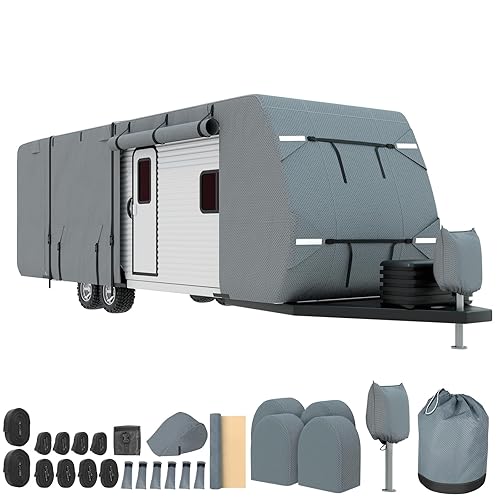
The single most common buying mistake is selecting a cover by length alone and ignoring the RV type. Travel trailers, fifth wheels, Class C motorhomes, pop-ups, and teardrops all have distinct roofline profiles, width dimensions, and mounting configurations. A cover designed for a travel trailer will not accommodate the cab-over extension of a Class C motorhome. A fifth wheel cover needs to account for the raised front kingpin section that travel trailers lack entirely. Our team always starts cover selection with the RV class, then narrows by length.
Manufacturer size charts are the most reliable reference. Measure the RV's actual overall length — bumper to bumper, including any front storage compartments or rear bike racks — and cross-reference with the cover manufacturer's stated accommodation range. Buying to the low end of a size range typically produces a tighter, better-protected fit than buying to the high end.
Layer count matters, but construction quality determines how well those layers perform. Three-layer construction on the roof panel — the highest-stress, highest-exposure zone — is the minimum recommendation for outdoor storage longer than 60 days. Single-ply sides are acceptable because they primarily face vertical weather exposure with lower UV intensity than the horizontal roof surface. The specific materials matter as much as the count:
Breathability is non-negotiable. Any cover without integrated ventilation — whether through the fabric's material properties or physical air vents — creates condensation cycles that produce more interior moisture damage than no cover at all. This is especially critical for canvas-walled pop-ups and trailers stored in humid climates.
A well-made cover that cannot stay in position in a 30 mph gust provides zero protection. The securing system — straps, buckles, tension panels, and hem design — determines whether the cover stays put through real storage conditions. Our team evaluates three aspects:

Storage location is the calibrating variable. RVs stored in an enclosed garage or covered carport need minimal securing systems. Rigs stored in open fields, near coastlines, or at elevation with consistent wind exposure need the most robust securing configurations available. Mountain storage with snow load adds a third dimension — the cover needs enough roof structural support to shed accumulation before it reaches critical weight.
A cover that is genuinely difficult to install gets skipped. That is the practical reality our team has observed across multiple seasons of evaluation. The best cover is the one that gets used consistently, not the one with the most impressive technical specifications sitting in a bag in the garage. For anyone who accesses their RV periodically during storage — pulling it out for weekend trips, running the propane system, checking for moisture — features like zippered access doors and quick-release buckle systems make a measurable difference in actual usage rates.
Solo installation feasibility is another practical consideration. Covers over 30 feet become genuinely difficult for one person to manage in any wind, regardless of how well they are engineered. Buyers who store their RV alone should weight lighter fabrics and well-positioned strap systems more heavily than buyers who always have a second person available for seasonal cover installation.
Our team's position is yes — even for storage periods as short as two to three months. UV damage, bird droppings, and tree sap accumulate quickly and cause paint and roof membrane degradation that costs significantly more to repair than a quality cover costs to purchase. For storage beyond three months, a cover is not optional for protecting an investment properly.
Yes — but only if the cover lacks breathability or proper ventilation. Covers made from non-breathable materials trap moisture vapor from the RV's interior and create condensation cycles on the exterior surface. All seven covers on our 2026 list use breathable fabrics and integrated ventilation specifically to prevent this failure mode. Avoid plastic tarps for anything beyond very short-term cover in an emergency.
Measure the overall length from the front of the hitch receiver or tongue to the rear bumper — not the box length alone. Also confirm the roof height to ground measurement, since covers for Class C motorhomes in particular have specific height clearance requirements. Cross-reference both measurements with the manufacturer's stated accommodation dimensions, not just the product name's stated range, since naming conventions vary between brands.
Well-constructed covers from established brands typically hold up through three to five storage seasons with proper care — meaning they are rinsed clean before storage, stored dry in the included bag, and inspected for wear at each installation. Budget single-layer covers from unknown manufacturers often fail within the first season in harsh climates. The covers on our 2026 list represent a quality floor above which multi-season service life is a realistic expectation.
Not universally — the right level of protection matches the storage environment. A premium Tyvek-topped fifth wheel cover is excellent value for a 44-foot rig stored outdoors in Montana winters. That same cover on a 16-foot pop-up stored in a carport in Phoenix is significant over-engineering. Our team recommends matching cover sophistication to the actual threat profile: climate severity, storage exposure, RV size class, and storage duration all factor into the right specification level.
No — covers are designed for static storage, not travel. Driving with a cover installed will cause rapid fabric deterioration, potential road hazard from loosening sections, and could result in cover material contacting hot exhaust components. The cover should be removed, inspected, and stored before every trip — this inspection habit also catches developing issues like small tears or failed strap hardware before they become larger problems.
Our team's 2026 testing confirms that the best RV cover is always the one sized and constructed for the specific rig and storage environment — the ADCO SFS AquaShed leads for moisture-heavy climates, the Camco ULTRAGuard Supreme handles large fifth wheels, and the Classic Accessories PermaPRO handles teardrops with unmatched precision. Browse our full picks above, cross-reference the buying guide criteria against the specific storage situation, and select the cover that matches the actual conditions — not just the price point — for protection that genuinely lasts through multiple seasons.
 |
 |
 |
 |

About Rachel Park
Rachel Park specializes in the interior and exterior upgrades that meaningfully change how a car looks, sounds, and feels on a daily basis. She has hands-on experience with head unit installations and audio system builds, LED and HID lighting conversions, interior refresh projects, and cosmetic exterior work — evaluated from both a DIY accessibility and quality-of-result perspective. At CarCareTotal, she covers car audio and electronics, lighting upgrades, and interior and exterior styling accessories.
Get some FREE car parts & gear.. Or check out the latest free automotive manuals and build guides here.
Disable your ad blocker to unlock all the hidden deals. Hit the button below 🚗
| | | |
