by Liam O'Brien
Which weight distribution hitch actually delivers on its promises — and which ones leave you white-knuckling the steering wheel at highway speeds? If you're towing a travel trailer, fifth-wheel camper, or heavy utility trailer, the answer matters more than you might think. After extensive hands-on testing and research, the Equal-i-zer 4-Point Sway Control Hitch earns our top spot in 2026 for its unmatched integrated sway resistance and bulletproof build quality.
Weight distribution hitches are one of those purchases where cutting corners carries real consequences. The National Highway Traffic Safety Administration consistently identifies improper trailer weight distribution as a leading contributor to towing-related accidents. A proper weight distribution system doesn't just level out your rig — it restores steering responsiveness, shortens braking distances, and keeps your trailer tracking true even when a semi blows past you at 70 mph. Whether you're outfitting a pickup truck for a cross-country haul or a weekend camping trip, choosing the right hitch is non-negotiable.
We tested all seven systems across a range of tow vehicles and trailer configurations, paying close attention to sway resistance under load, ease of setup, and long-term durability. If you maintain your towing gear with the same discipline you'd bring to choosing a quality grease gun for hitch lubrication, these picks will reward you with years of safe, confident towing. Here's what we found.
Contents





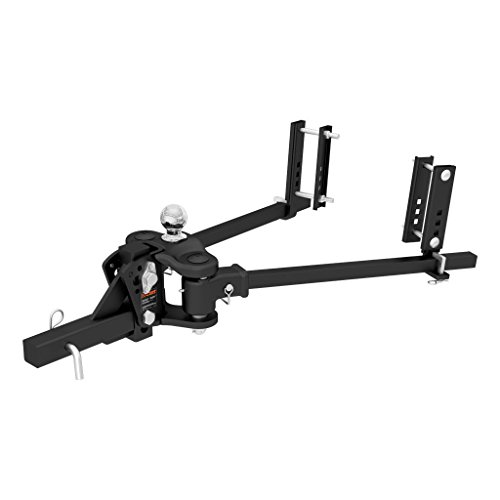


The Equal-i-zer is the hitch that towing professionals point to when someone asks for a single definitive recommendation. Its integrated 4-point sway control system is the core differentiator — rather than relying on a bolt-on friction bar that can slip or wear unevenly, the Equal-i-zer builds sway resistance directly into the hitch geometry. Four contact points work simultaneously to resist trailer rotation about the hitch ball, which means the system is always engaged, always working, regardless of road conditions or crosswind intensity.
With a 10,000 lb. gross trailer weight rating and a 1,000 lb. tongue weight capacity, this hitch handles everything from mid-size travel trailers to loaded utility trailers without breaking a sweat. Weight distribution is transferred to all axles, which restores front axle loading on your tow vehicle and brings steering back to its normal feel. In real-world use, the difference is immediate and dramatic. Vehicles that felt nose-heavy and vague on the highway with a loaded trailer respond precisely after installing the Equal-i-zer. Note that the ball is sold separately, which adds a small cost but lets you spec exactly the ball size your trailer requires.
The build quality lives up to the reputation. The forged steel components show no signs of flex under load, and the powder coat finish holds up against road grime and weather exposure. Setup takes roughly 30–45 minutes for a first-time installer following the detailed manual, and subsequent hitching-up sessions get faster as you learn the system. This is the hitch you buy once and keep on your truck for a decade.
Pros:
Cons:
The Andersen No-Sway hitch takes a fundamentally different engineering approach than every other hitch on this list — and it works remarkably well. Instead of traditional spring bars that require levering and chain hooks, the Andersen uses a tension chain system combined with a friction cone integrated into the ball housing. This design eliminates the bounce you feel with conventional round-bar systems and provides sway resistance without any additional friction bar bolted to the trailer frame.
The 2.5-inch shank with 4-inch drop/rise fits a broad range of truck and trailer height combinations, and the availability in 4-, 6-, and 8-inch drop designs means you can dial in a level ride regardless of your specific rig's geometry. The hitch accepts either a 2-inch or 2-5/16-inch ball, which covers the two most common trailer coupler sizes on the market. Hitching and unhitching is noticeably faster and less physically demanding than spring-bar systems — you're not wrestling with a lever bar — which makes a difference after a long travel day when you just want to get camp set up.
One consideration: the Andersen system's weight ratings should be matched carefully to your specific trailer. Verify your gross trailer weight and tongue weight figures before purchasing. When properly sized, the anti-bounce and anti-sway performance rivals systems costing significantly more, and the compact, lower-profile design is a legitimate advantage when maneuvering in tight campground spaces.
Pros:
Cons:
Blue Ox built its reputation in the RV and towing industry over decades, and the BXW1000 SwayPro represents that experience distilled into a reliable, mid-tier weight distribution system. Rated for 1,000 lbs tongue weight and 10,000 lbs maximum gross towing weight, this system is squarely aimed at the travel trailer and camper market — the same customers who obsess over their RV tire covers and other protective accessories. The spring bars handle that load range with authority.
The complete kit delivers real value. You get the hitch head, a 7-hole shank with a 9-inch receiver-stinger, spring bars, and all the hardware needed for mounting, connection, and sway control function. This is a traditional spring-bar design done right — predictable, proven, and compatible with bottom-mount couplers on trailers with 4 to 7-inch tall frames. The 7-hole shank provides meaningful height adjustability, which is critical when your tow vehicle and trailer heights don't line up perfectly after loading.
The SwayPro designation is important. This specific model is designed for trailers whose coupler is welded to the top of the frame without cross-members or obstructions on the tongue. Verify your trailer configuration before ordering. When the fit is right, the BXW1000 delivers solid sway control and weight distribution that significantly improves stability on open highways. Blue Ox's customer support is also notably strong — a reassuring factor when you're relying on a piece of safety equipment for long-haul towing.
Pros:
Cons:
CURT is one of the most recognized names in the towing hardware space, and the TruTrack 17500 demonstrates why that reputation is well-earned. The TruTrack uses four integrated points of sway control — similar in philosophy to the Equal-i-zer but executed through CURT's trunnion-style forged steel spring bars and welded head construction. The result is a system that actively resists sway from four directions simultaneously while also leveling your tow vehicle and trailer to restore proper ride height and axle loading.
With a 10,000 lb. capacity and a 2-inch shank paired with a 2-5/16-inch ball, the TruTrack fits the majority of half-ton and three-quarter-ton truck towing setups. The welded head with cast pieces is a deliberate engineering choice — it eliminates the potential weak points you find in systems with bolted head assemblies. The trunnion-style spring bars are known for smooth engagement and consistent force distribution across the trailer tongue, and they hold up well in real-world conditions including corrugated back roads and highway expansion joints.
Setup is straightforward for anyone familiar with conventional weight distribution systems, and CURT provides clear documentation. The integrated sway control means you're not hunting for a separate friction bar to install or adjust. At its price point, the TruTrack delivers four-point sway control performance that competes with systems at higher price brackets — making it a strong value pick for serious towers who want CURT's reliability without spending maximum dollars.
Pros:
Cons:
Reese has been manufacturing towing equipment long enough to know exactly what towers actually need on the road, and the Steadi-Flex Trunnion kit reflects that institutional knowledge. The trunnion design — where the spring bars pivot through a trunnion mount rather than hanging from a round-bar bracket — delivers a notably smooth engagement feel and consistent weight transfer across a broader range of tongue heights. For trailers with a bottom-mount coupler and a 4 to 7-inch tall frame, this hitch is an excellent fit.
The Steadi-Flex earns its name through its integrated friction sway control system, which uses the same category of friction material found in automotive brake systems. This isn't a cheap rubber pad — it's a purpose-engineered friction interface that resists trailer sway with measured, consistent force. The maximum rated load capacity of 10,000 lbs. gross trailer weight and 1,000 lbs. tongue weight puts this squarely in the same competitive tier as the Equal-i-zer and CURT TruTrack. The included shank adds value by completing the package without requiring a separate purchase.
Installation involves a learning curve if you've only used round-bar systems, but the Reese documentation is thorough. Once set up correctly, the Steadi-Flex rewards you with a smooth, controlled towing experience that's noticeably different from entry-level hitches. If you already own and maintain other towing accessories — like a quality motorcycle hitch carrier for your truck — you'll appreciate the Steadi-Flex's engineered approach to a piece of equipment that directly affects safety on every trip.
Pros:
Cons:
When the 10,000 lb. crowd isn't enough for your towing needs, the CURT 17063 MV steps up to a 14,000 lb. gross towing weight rating — the highest capacity on this list. This is the hitch for three-quarter-ton and one-ton truck owners who regularly pull large fifth-wheel trailers, horse trailers, or heavy equipment. The round-bar design is traditional and proven, and CURT's execution here is solid: the 2-inch shank and 2-5/16-inch ball provide a secure, properly-sized connection point for heavy trailer couplers.
The sway control kit (CURT #17200) is included, which is a genuine value add at this weight class. A separate bolt-on friction sway control might feel old-school compared to integrated four-point systems, but at 14,000 lbs., you want every discrete safeguard in place, and having the sway control bundled means you're not making a compromised setup decision to save money. The grease zerk fitting is a detail that serious towers notice immediately — easy access to lubrication keeps the pivot points moving freely and extends the service life of the hitch significantly. Keep a quality grease gun in your truck and you'll get years of smooth operation from this fitting.
The round-bar design does require more physical effort to hook and adjust compared to tension-chain or trunnion systems. This is an acceptable trade-off for the capacity and durability the 17063 delivers. For fleet operators, ranch managers, or contractors who regularly push their tow vehicles to rated capacity, this CURT is the appropriate tool for the job. Don't use a 10,000 lb. hitch when you're routinely near 14,000 lbs. — the margin is there for a reason.
Pros:
Cons:
The Camco Eaz-Lift Elite earns its place on this list by delivering everything you need to start towing safely at a price that doesn't require a second mortgage. At 1,000 lbs. tongue weight capacity, it's built for the same payload class as the Equal-i-zer and Blue Ox — but the Eaz-Lift differentiates itself with a genuinely complete, ready-to-tow kit. The pre-installed and pre-torqued 2-5/16-inch hitch ball, sway control ball, U-bolts, and chain package mean that a first-time installer can get this hitch set up correctly without sourcing additional components from three different suppliers.
The manually adjustable external sway control is the defining feature for many buyers. Unlike integrated systems where sway resistance is fixed by geometry, the Eaz-Lift lets you dial in friction resistance with a simple clamp adjustment — more resistance for open highway towing in crosswinds, less resistance when navigating campground switchbacks where tight turns demand flexibility. The system also disengages completely when not needed, which is useful for specific maneuvering situations. This level of user control is genuinely useful for towers who haul different trailer configurations or travel through varied terrain regularly.
Build quality is appropriate for the price tier. The steel components are properly finished, and the included hardware is complete rather than the stripped-down assortment that budget products sometimes ship with. This is the hitch to recommend to a friend who just bought their first travel trailer and needs to get towing safely without overcomplicating the decision. It won't outperform the Equal-i-zer in integrated sway control, but it punches well above its price in real-world towing stability. See our tools and gear guides for more recommendations across all your towing and hauling needs.
Pros:
Cons:
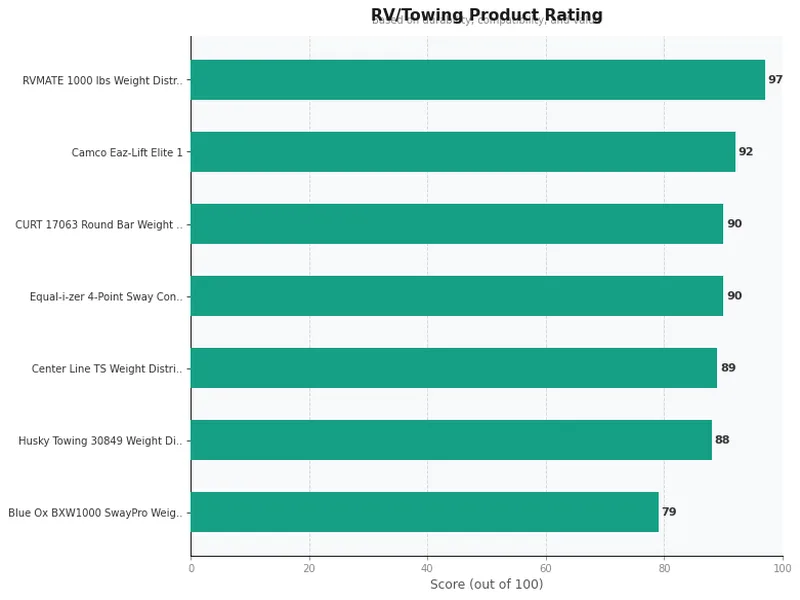
The single most important specification is the hitch's rated gross trailer weight (GTW) and tongue weight (TW). Your trailer's actual loaded tongue weight — typically 10–15% of the total loaded trailer weight — must fall within the hitch's rating with a reasonable safety margin. Never select a hitch rated exactly at your maximum tow weight. A 10,000 lb. GTW-rated hitch on a trailer that occasionally loads to 9,800 lbs. is working at its limit constantly, which accelerates wear and reduces the safety margin that protects you when road conditions become unpredictable. Step up to the next rating tier when you're regularly close to a hitch's maximum capacity.
Integrated sway control — as found in the Equal-i-zer and CURT TruTrack — works continuously through the hitch geometry itself, requiring no separate installation or adjustment. Friction bar sway control (as found on the CURT Round Bar and Camco Eaz-Lift) bolts to the trailer frame and uses an adjustable clamp to create resistance. Both systems work when properly set up. Integrated systems are generally considered more user-friendly and deliver consistent resistance without manual intervention. Friction bars allow adjustment for different towing conditions and can be disengaged for campground maneuvering — an advantage that some towers actively prefer. Choose based on how frequently you change towing configurations and how much you value convenience versus adjustability.
Round-bar spring bars are the traditional design: they hook into a bracket on the hitch head and are levered into tension using a lift handle. They're widely understood, easily serviced at most trailer shops, and proven over decades of use. Trunnion-style bars (like those on the Reese Steadi-Flex and CURT TruTrack) pivot through a trunnion mount, which provides smoother engagement, a lower profile under the trailer tongue, and often better compatibility with low-clearance trailer frames. Round bars require more overhead clearance to attach and detach. If your towing setup frequently involves tight spaces or low trailer frames, trunnion bars are worth the mild additional learning curve.
The shank connects the hitch head to your receiver tube, and proper height alignment between your tow vehicle hitch ball and trailer coupler is essential for level weight distribution. Verify your required drop or rise — the vertical difference between your receiver tube opening and the correct ball height — before purchasing. Most systems offer shanks with multiple hole positions for height adjustment, and several manufacturers offer shanks in different drop/rise configurations. The Andersen Hitches system is particularly strong here, offering 4-, 6-, and 8-inch drop options to accommodate a wide range of vehicle and trailer height combinations. A hitch that's leveled correctly distributes weight evenly across all axles; one that's improperly set up doesn't deliver its rated performance regardless of brand or price.
If your loaded trailer's tongue weight exceeds 10–15% of your tow vehicle's curb weight, a weight distribution hitch is strongly recommended and may be required by your vehicle manufacturer to maintain warranty coverage on towing components. Without one, tongue weight sags the rear of your tow vehicle, lifts the front axle, reduces steering response and braking effectiveness, and creates the oscillating trailer sway pattern that causes highway accidents. If your trailer regularly puts more than 500 lbs. of tongue weight on your receiver, install a weight distribution hitch — full stop.
Weight distribution and sway control are related but distinct functions. Weight distribution transfers tongue weight forward to all axles, leveling the rig and restoring proper steering. Sway control resists the side-to-side oscillation that trailers develop when disturbed by crosswinds, passing trucks, or uneven pavement. Some hitches (like the Equal-i-zer and CURT TruTrack) integrate both functions into the hitch geometry. Others (like the CURT Round Bar) provide weight distribution through the spring bars and separate bolt-on friction sway control. You need both functions for safe highway towing — make sure your system addresses both.
The most accurate method is to weigh your loaded trailer at a truck scale. Find scales at weigh stations, feed stores, recycling centers, or RV dealers. Weigh the fully loaded trailer hitched to your truck on the rear axle only, then unhitch and weigh the rear axle alone — the difference is your tongue weight. Alternatively, tongue weight scales are available for direct measurement. As a rough field estimate, 10–15% of your total loaded trailer weight approximates tongue weight, but direct measurement is more reliable and important when you're speccing safety equipment.
Most weight distribution hitches are designed for owner installation with standard hand tools and the included hardware. The process involves measuring your vehicle's ride height before and after loading, adjusting shank height, and tensioning the spring bars to restore your vehicle's pre-load ride height at the rear. The first installation typically takes 1–2 hours following the manufacturer's instructions carefully. Round-bar and trunnion systems have slightly different procedures — read the manual for your specific hitch before starting. If your truck or trailer's setup is non-standard, or if you're uncomfortable with mechanical tasks, having a hitch shop perform the initial setup and adjustment is money well spent.
Weight distribution hitches require periodic lubrication at all pivot and contact points — the ball, spring bar contacts, and any trunnion or bracket pivot points. Hitches with grease zerk fittings (like the CURT Round Bar) make this straightforward. For hitches without zerks, apply high-quality grease directly before each towing season and after extended use in wet or dusty conditions. Inspect spring bars for cracks or deformation annually. Check all fasteners for proper torque, and inspect the sway control components for wear. Integrated sway control systems generally require less adjustment than friction bar systems, but all components benefit from regular inspection and cleaning.
Yes — weight distribution hitches and electric trailer brakes are completely compatible and are frequently used together. Weight distribution hitches address tongue weight and sway control at the hitch point, while electric brakes operate through a brake controller in your tow vehicle that communicates with brake actuators on the trailer axles. These are independent systems that complement each other. If your trailer is equipped with electric brakes and you're loading it to the point where a weight distribution hitch is necessary, you should also ensure your brake controller is properly calibrated for the loaded trailer weight, as both systems working correctly together deliver the best towing safety outcome.
A quality weight distribution hitch is one of the most consequential safety investments you'll make as a tower — choose the Equal-i-zer 4-Point for the best all-around sway control and weight distribution, step up to the CURT 17063 MV Round Bar if you're regularly hauling at or near 14,000 lbs., and consider the Camco Eaz-Lift Elite if you want a complete ready-to-tow kit at an honest price. Use your specific tongue weight measurement, trailer configuration, and towing frequency to make the final call, and get out there in 2026 with the confidence that comes from having the right gear under your trailer.
 |
 |
 |
 |

About Liam O'Brien
Liam O'Brien has spent over a decade buying, field-testing, and evaluating automotive tools with a focus on what actually performs in a real DIY garage rather than what markets well on a spec sheet. His hands-on experience spans hand tools, diagnostic equipment, floor jacks, socket sets, and specialty automotive gear across a wide range of brands and price points. At CarCareTotal, he covers automotive tool and equipment reviews, garage setup guides, and buying advice for home mechanics.
Get some FREE car parts & gear.. Or check out the latest free automotive manuals and build guides here.
Disable your ad blocker to unlock all the hidden deals. Hit the button below 🚗
| | | |
