by Sarah Whitfield
Nearly 40 percent of preventable engine failures show warning signs through the tailpipe before a single dashboard light ever turns on. Understanding exhaust smoke colors meaning is one of the most powerful diagnostic tools you have — no scan tool required. White smoke, blue smoke, and black smoke each point to a specific failure inside your engine. Catch the right color early and you can save thousands in repair bills. This guide breaks down every shade, what causes it, and exactly what you should do next. For context on how your exhaust system is built and what it's doing under the car, start with our overview of straight pipe exhaust systems.
Contents
Your engine burns a precise mixture of air and fuel inside each cylinder. When that combustion is clean and complete, the exhaust exits as invisible gas — mostly carbon dioxide and water vapor. You see nothing at the tailpipe. The moment a foreign substance enters the combustion chamber, the color of the exhaust changes. That substance leaves a chemical fingerprint in the smoke. Each color corresponds to a specific contaminant. Understanding that chemistry is the first step to reading exhaust smoke colors meaning accurately and acting on it before minor problems become catastrophic ones.
According to the U.S. Environmental Protection Agency, vehicle exhaust that deviates from normal combustion byproducts is a direct indicator of engine malfunction or improper fuel combustion. That's the scientific foundation behind smoke-color diagnostics — and why mechanics use it as a first-pass tool before reaching for any electronic equipment.
Smoke color narrows a problem from hundreds of possible causes down to a handful. White smoke points to coolant (antifreeze). Blue or gray smoke points to engine oil. Black smoke points to excess unburned fuel. Each category has its own set of root causes and its own repair path. Identifying the color first tells you which system to inspect and which ones you can rule out immediately. That focus is what separates a fast, accurate diagnosis from an expensive guessing game at the shop.
Thin white wisps from a cold engine on a cold morning are completely normal. That's condensation burning off the exhaust system. It disappears within two minutes of startup. Thick, sweet-smelling white smoke that persists after the engine warms up is a completely different problem. That syrupy, slightly floral odor is burning coolant — the antifreeze that keeps your engine from overheating. The most common culprits are a blown head gasket (the metal seal between the engine block and the cylinder head), a cracked cylinder head, or a warped engine block. Any of these failures allows coolant to enter the combustion chamber, where it vaporizes and exits as thick white smoke. This is the most serious of the three smoke colors. It can escalate to complete engine failure within miles if ignored.
Blue or blue-gray smoke means your engine is burning motor oil. Oil is leaking past the piston rings (the metal seals that keep oil out of the combustion chamber) or through worn valve stem seals (the seals around the intake and exhaust valve stems). This smoke is especially noticeable at startup after the car has sat overnight — oil seeps past worn seals and pools in the cylinders, burning off in a brief but visible puff. Sustained blue smoke throughout a drive indicates more severe ring wear. You'll likely notice your oil level dropping faster than usual between scheduled changes. Left unaddressed, this path ends in oil starvation and engine seizure.
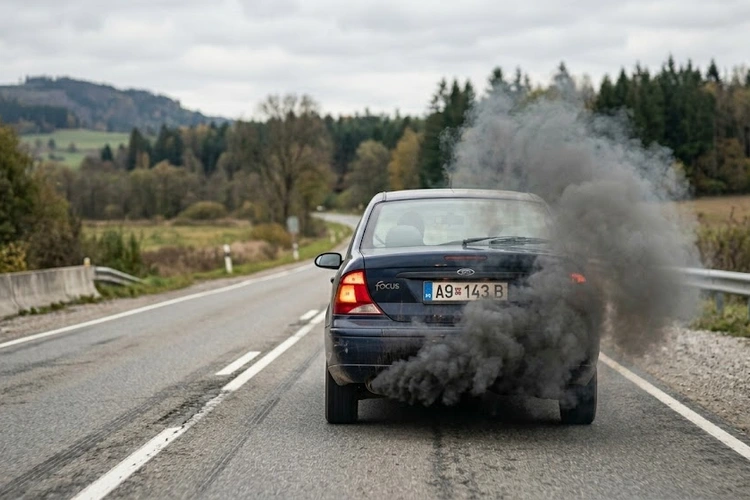
Black smoke means your engine is running rich — it's burning more fuel than the air-fuel ratio allows. Unburned fuel exits the tailpipe as thick, dark, sooty exhaust. The most common causes include a clogged air filter (which restricts airflow and forces the engine to compensate with more fuel), a leaking fuel injector, a failing fuel pressure regulator, or a faulty mass airflow (MAF) sensor. Diesel engines produce black smoke more readily than gasoline engines, especially under hard acceleration. On a gasoline vehicle, persistent black smoke during normal driving is always a fuel system or sensor problem. It needs attention promptly — prolonged rich running fouls spark plugs and destroys the catalytic converter.
| Smoke Color | Contaminant | Most Likely Cause | Urgency Level |
|---|---|---|---|
| White (thick, sweet smell) | Coolant / antifreeze | Blown head gasket, cracked cylinder head | Stop driving immediately |
| Blue / Gray | Engine oil | Worn piston rings, failed valve stem seals | Diagnose within days |
| Black | Excess unburned fuel | Clogged air filter, bad injector, faulty MAF sensor | Address within a week |
| White (thin, cold start only) | Water vapor / condensation | Normal cold-weather startup behavior | No action needed |
Start by checking your coolant reservoir. If the level is dropping between checks without any visible external leak under the car, coolant is going somewhere internal — most likely the combustion chamber. Next, pull the oil dipstick on a cold engine and examine both the level and the color of the oil. Healthy oil runs amber to dark brown. Milky, gray, or foamy oil means coolant and oil have mixed inside the engine, which confirms a compromised head gasket until proven otherwise. Check under the oil filler cap too — creamy brown residue there is a classic tell. You can also use a chemical block test kit: a dye added to the coolant reservoir changes color in the presence of combustion gases, giving you a definitive yes or no. A failing camshaft position sensor can generate misfires that stress head gaskets over time, so rule that out too if you're chasing persistent misfires alongside white smoke.
Start by tracking your oil consumption. If you're adding a quart every 1,000 miles or fewer, oil is burning at an abnormal rate — that alone confirms a problem. Run a cylinder compression test next. Low compression in one or more cylinders alongside blue smoke confirms worn piston rings. If compression reads normal but the smoke persists, the cause is likely valve stem seals — a less invasive and less expensive repair than a full ring job. Also inspect the PCV (positive crankcase ventilation) valve. A clogged PCV valve increases crankcase pressure and forces oil past seals that would otherwise hold. It costs under $15 and takes five minutes to replace.
Start with the easiest fix first: inspect and replace the engine air filter. A severely clogged filter costs under $20 and takes five minutes to swap. If the smoke persists, connect an OBD-II scanner and pull live fuel trim data. Negative long-term fuel trim values confirm the engine is running rich. Cross-reference with injector pulse data or have a shop perform an injector flow test. A bad MAF sensor is another prime suspect — unplug it briefly while the engine idles to see if behavior changes, which tells you whether it was actively corrupting the air-fuel mixture calculation. Work from cheap to expensive: filter, then MAF, then injector, then fuel pressure regulator.
Start your cold engine first thing in the morning and watch the tailpipe for three full minutes. Thin white vapor that clears quickly is normal condensation. Thick white smoke, blue smoke, or black smoke that persists past that window is your first confirmed signal. Note the color, the density, and whether it's accompanied by any unusual smell. Also pay attention to whether the smoke appears only at startup or continues throughout the drive — that timing distinction narrows the diagnosis significantly before you even open the hood.
Pull the dipstick when the engine is cold. Check both the oil level and its color on the stick. Healthy oil is amber to dark brown. Milky, gray, or foamy oil means coolant contamination — a head gasket issue until proven otherwise. Check under the oil filler cap as well. Creamy brown residue there is a definitive sign of coolant mixing with oil. Staying current with your vehicle's oil change intervals keeps oil viscosity and additive packages intact, which protects seals and reduces the risk of oil burning developing in the first place. Neglecting oil changes accelerates the seal wear that leads to blue smoke.
Open the coolant reservoir — never the radiator cap on a hot engine — and check the level. Place a small piece of tape at the current level. Recheck after a week of normal driving. A noticeable drop without any external puddles under the car confirms internal coolant loss. While you're there, examine the coolant color. Fresh coolant is bright green, orange, or pink depending on the formula your vehicle requires. Rusty, oily, or brown discoloration signals contamination that needs to be flushed and addressed separately.
Warning: Never remove the radiator cap when the engine is hot — pressurized coolant at operating temperature can spray and cause serious burns. Always wait at least 30 minutes after shutdown before opening the cooling system.
This is the most dangerous myth in exhaust diagnostics. Yes, thin white vapor on a cold morning is steam — but that distinction depends entirely on thickness, persistence, and smell. Thick white smoke that smells sweet and continues after the engine reaches full operating temperature is burning coolant. Drivers who dismiss it as condensation often don't realize the damage until the head gasket has fully failed and coolant has mixed with oil throughout the engine. The repair cost difference between early intervention and a fully cooked engine can exceed $5,000. If the smoke is thick and the smell is sweet, stop the car and call a mechanic.
Oil burning can occur in vehicles with fewer than 50,000 miles — especially turbocharged engines where extreme heat and pressure stress seals more aggressively than in naturally aspirated motors. Some modern turbocharged four-cylinders consume a quart of oil every 2,000 to 3,000 miles under normal driving conditions. Owners of vehicles known for long service lives, like the Toyota RAV4 or Toyota Tacoma, should check oil levels between scheduled changes rather than waiting for the interval — especially if either is equipped with a turbo. Mileage and age don't predict oil consumption. Engine design and maintenance history do.
Black smoke sounds alarming but is statistically the cheapest of the three colors to fix. A $15 air filter replacement resolves it more often than any other single repair. A new MAF sensor runs $80 to $150 and installs in under an hour on most vehicles. Black smoke signals a fuel delivery or sensor problem — not inherent engine wear. Address the cause promptly and the engine typically suffers no lasting damage. The real danger with black smoke is ignoring it for tens of thousands of miles, which eventually fouls spark plugs, clogs the catalytic converter, and creates the expensive secondary repairs that make this myth feel true in hindsight.
If the car is mechanically sound beyond the smoking issue, repair almost always makes economic sense. A head gasket replacement on a low-mileage vehicle with a solid body is a worthwhile investment. Valve stem seal replacement costs $300 to $900 depending on engine design but can restore years of reliable service. Piston ring replacement runs $1,500 to $3,000 but is justifiable on a vehicle that would otherwise last another 100,000 miles. The math is straightforward: compare the repair cost against the replacement cost of a comparable vehicle in similar condition. If the repair is less than half the replacement cost, it's worth doing. Vehicles with proven long-term reliability, like the Ford Escape, often make repair a better bet than trading up to something unfamiliar.
Good vehicle maintenance habits also affect this calculation. A well-maintained car with documented service history is worth repairing. A neglected one with multiple deferred problems may not be.
When multiple systems are failing simultaneously, the calculus shifts fast. A blown head gasket on a high-mileage vehicle with worn suspension, slipping transmission, and failing brakes is not a good repair candidate. You'd pour money into one problem only to face another within months. This is especially true when a head gasket failure has allowed coolant and oil to mix for an extended period — internal cylinder wall scoring from oil starvation may mean the entire short block needs replacement, which rarely makes financial sense on a vehicle already past its service prime. Let the smoke be the car's final message and redirect that repair budget toward a sound replacement.
The single best prevention against smoke problems is checking your oil and coolant every 1,000 miles — or at every other fuel fill-up. Both checks take under two minutes and require no tools. Use the correct oil specification for your engine. Running a thinner oil than specified accelerates seal wear and is a direct path toward blue smoke over time. Check coolant concentration with an inexpensive test strip to confirm the mixture is correct for your climate. A 50/50 mix of antifreeze and distilled water is the standard starting point, but your owner's manual specifies the exact formula your system requires.
Smoke is often a late-stage warning. Earlier signals reach you first if you know what to look for. A sweet smell from the engine bay without visible smoke points to an early external coolant leak. Oil spots under the car after overnight parking indicate an external seal failure under pressure. A gradual drop in fuel economy over several consecutive fill-ups often signals an early rich-running condition. A failing fuel pressure regulator, for example, shows up as rough idle and poor fuel economy weeks before it produces black smoke. Catching it at that stage means a $50 part instead of a $500 repair and potential catalytic converter damage. Build the habit of paying attention to how your car smells, sounds, and feels — your exhaust system will reward that attention with years of clean, efficient operation.
Not always. Thin white vapor at a cold start is normal condensation and clears within two minutes of running. The warning sign is thick, sweet-smelling white smoke that persists after the engine fully warms up. To confirm a head gasket failure, check for a dropping coolant level with no external leaks, look for milky oil on the dipstick, and use a chemical block test kit for a definitive answer. Don't guess — verify with at least two checks before authorizing an expensive repair.
You can drive short distances, but you need to check your oil level every day without exception. Blue smoke means oil is being consumed inside the engine. Running the oil level too low causes metal-on-metal contact and destroys the engine quickly. Keep a quart of the correct oil grade in your trunk, check the dipstick before every drive, and get a proper diagnosis within days — not weeks. Driving long distances with confirmed blue smoke and no oil monitoring is a reliable way to turn a $900 repair into a $4,000 engine replacement.
Diesel engines produce black smoke more readily than gasoline engines because they rely on precise fuel metering under varying loads. Common diesel-specific causes include a failing EGR (exhaust gas recirculation) valve, a clogged diesel particulate filter (DPF), a worn injection pump, or a stuck injector delivering too much fuel. A brief puff of black smoke under hard acceleration is normal for older diesel trucks. Sustained black smoke at all throttle positions is not normal and requires a proper diagnosis — starting with the DPF and EGR systems on modern diesels.
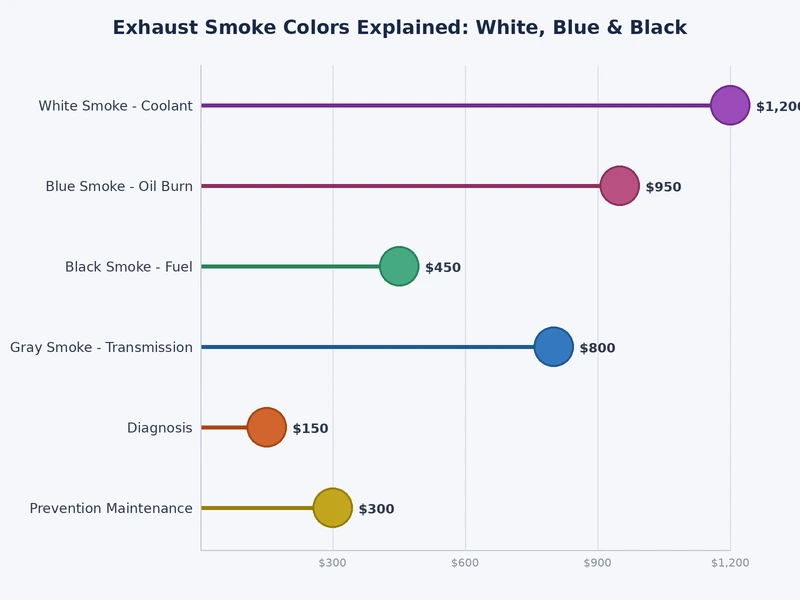
Costs range from very cheap to very expensive depending on the cause. A new air filter for black smoke costs under $20. A MAF sensor replacement runs $80 to $200 parts and labor. Valve stem seal repair costs $300 to $900. A head gasket replacement — the most common cause of white smoke — typically runs $1,200 to $2,500 depending on the vehicle and labor rates in your area. Piston ring replacement can reach $3,000 or more. Getting an accurate diagnosis before authorizing any work is essential — misidentifying the cause means paying for the wrong repair while the real problem continues to damage your engine.
 |
 |
 |
 |

About Sarah Whitfield
Sarah Whitfield is a diagnostics and troubleshooting specialist who spent ten years as an ASE-certified technician before joining the editorial team. She specializes in OBD-II analysis, electrical gremlins, and the kind of intermittent problems that make most owners give up.
Get some FREE car parts & gear.. Or check out the latest free automotive manuals and build guides here.
Disable your ad blocker to unlock all the hidden deals. Hit the button below 🚗
| | | |
