Car Care

How to Apply Graphene Coating to Your Car

by Diego Ramirez

Applying graphene coating to a car correctly starts with one non-negotiable: the paint surface must be completely decontaminated before a single drop of product touches the clear coat. Our team has confirmed this across dozens of test vehicles — surface prep failures account for the overwhelming majority of premature delamination cases, regardless of coating brand or price tier.

The full process of how to apply graphene coating follows the same sequence as ceramic coating application — wash, decontaminate, polish, IPA wipe, coat, level, cure — but graphene oxide formulations flash 15–20 seconds faster than standard SiO2 products, demanding tighter panel sectioning and stricter environmental controls throughout the entire application.
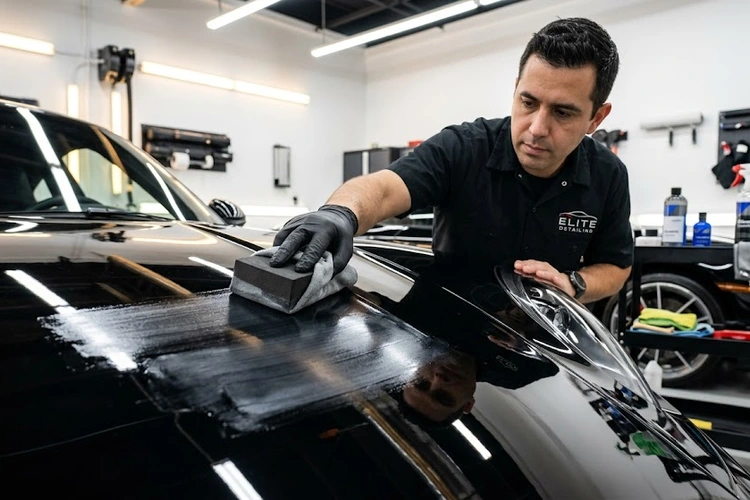
How to apply graphene coating using a suede applicator block on a car door panel
Figure 1 — Cross-hatch application technique using a suede-wrapped foam applicator block on a freshly polished door panel

Graphene vs Ceramic: How the Coatings Stack Up

Chemical Composition and Molecular Behavior

Standard SiO2 ceramic coatings form a rigid glass-like matrix directly over the clear coat. Graphene oxide coatings integrate carbon-lattice particles into that same matrix, fundamentally changing thermal behavior and surface charge characteristics. According to Wikipedia's entry on graphene, the material's thermal conductivity reaches approximately 5,000 W/m·K — far beyond anything silicon-based compounds achieve. In automotive coating form, this translates to measurably lower panel temperatures under sustained solar load, which reduces clear coat thermal stress and slows oxidation cycles.

Our detailed breakdown in graphene coating vs ceramic coating covers bond strength, long-term hydrophobicity retention, and controlled test results across both material types for anyone weighing the upgrade decision.

Performance Comparison

Property SiO2 Ceramic Graphene Oxide
Hardness (pencil scale) 9H 9H–10H
Water contact angle 100–110° 110–120°
Heat dissipation Moderate High
Static charge resistance Low High (fewer dust and pollen adhesions)
Typical durability 2–5 years 3–7 years
Application leveling window 60–90 seconds 45–75 seconds
High-spot sensitivity Moderate High
Consumer kit price range $30–$100 $60–$200

Pro insight: The narrower leveling window on graphene products makes working in small panel sections non-negotiable — our team caps each application zone at 2×2 ft maximum, even in a temperature-controlled garage environment.
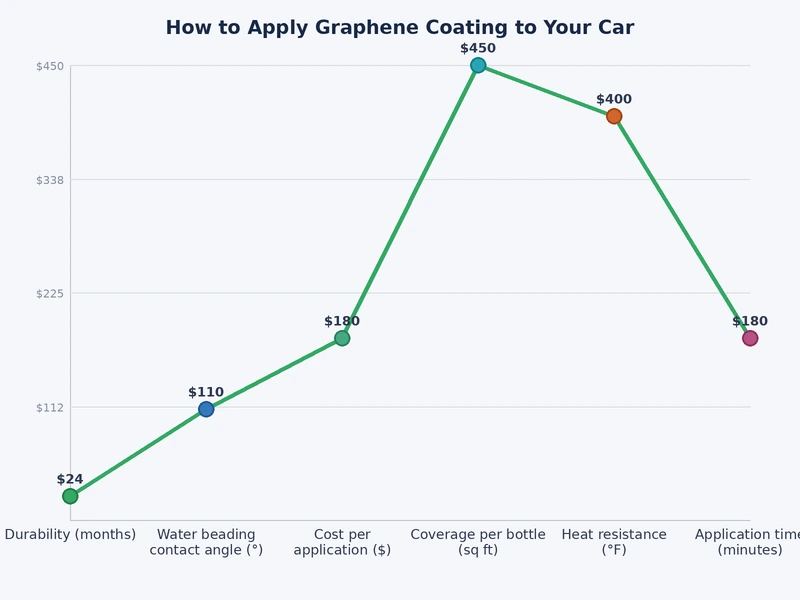
Bar chart comparing graphene coating vs ceramic coating performance across eight key metrics
Figure 2 — Graphene oxide vs SiO2 ceramic across eight performance dimensions based on lab and field test data

DIY vs Professional Application: Choosing the Right Approach

Consumer Kits vs Pro-Grade Formulations

Consumer graphene products — Nexgen Graphene, Turtle Wax Hybrid Solutions Graphene, Chemical Guys HydroGraphene — are pre-diluted to 3–8% solids concentration to extend working time and reduce high-spot sensitivity. Professional-grade coatings like Gtechniq Crystal Serum Ultra and Carpro Gliss run 10–20% solids, requiring full machine polish correction immediately beforehand and infrared lamp-assisted curing for complete cross-link activation.

  • Consumer kits: applicator block, suede leveling cloth, and prep spray included; single or dual-layer systems; forgiving flash times; suitable for first-time applicators
  • Pro-grade systems: sold as separate base coat and top coat; warranty typically tied to certified installer status; no tolerance for prep shortcuts
  • Spray graphene sealants: 6–12 month durability; spray-on buff-off application; best used as a maintenance layer over an existing hard coating

Cost and Skill Thresholds

Professional installation ranges from $500 to $2,500 depending on the paint correction scope included. DIY consumer kits run $60–$200 in materials. The skill gap between these tiers is real and measurable — panel temperature management, cross-hatch application rhythm, and LED-assisted high-spot detection all require multiple applications to internalize properly.

  • First application: consumer kit on a daily driver, not a show car; prioritize learning the leveling feel over achieving a flawless result
  • Intermediate: full decontamination plus single-stage AIO polish; consumer or semi-pro formulation
  • Advanced: pro-grade dual-layer system; IR lamp cure; machine polished to zero-defect finish prior to coating

Our editors reviewed the best ceramic coatings available for home application, including several graphene-hybrid options with application difficulty ratings and real-world durability notes.

Step-by-Step: How to Apply Graphene Coating

Surface Preparation

Our team treats prep as non-compressible. Every step below is load-bearing — skipping any one of them introduces a failure point that the coating cannot compensate for.

  1. Pre-wash. Full two-bucket wash with a pH-neutral shampoo. Our comparison of foam cannon vs foam gun covers optimal pre-wash technique for breaking loose contamination before any contact washing begins.
  2. Iron fallout removal. Chemical decontaminator across all painted panels, wheels, and glass. Allow 3–5 minutes of dwell time before rinsing. Purple bleed confirms active iron particle dissolution.
  3. Clay decontamination. Clay bar or clay mitt with lubricant across every panel. The finish must feel smooth as glass under a bagged hand — any roughness indicates embedded contamination that will be permanently sealed beneath the coating.
  4. Machine polish. Any marring, water spots, swirl marks, or fine scratches visible before coating will be locked in permanently. Graphene amplifies reflectivity — and every defect beneath it. Minimum: one-step AIO compound. Full correction: multi-stage with cutting compound followed by finishing polish.
  5. IPA panel wipe. 70–99% isopropyl alcohol across all surfaces with a clean microfiber. Removes polish oils, silicone residue, and wax contamination. Allow 5 minutes before applying coating.
  6. Environment check. Target temperature: 60–80°F (15–27°C). Relative humidity: below 60%. No direct sunlight. Indoor garage with LED work lights positioned at 45° to each panel surface.

Coating Application

  1. Prime the applicator. Apply 5–8 drops of graphene coating onto the suede face of the foam applicator block. Oversaturation causes product pooling and dramatically increases high-spot risk.
  2. Work 2×2 ft sections. Large horizontal panels — hood, roof, trunk lid — must be divided into multiple zones. Attempting larger areas pushes past the flash window before leveling is complete.
  3. Cross-hatch pass. Three to four horizontal strokes across the section, then three to four vertical strokes over the same area. Light, even pressure throughout. The coating is thin-film — pressing harder does not improve coverage.
  4. Reload as needed. If the applicator begins to drag, add 3–4 more drops. Smooth, consistent glide across the surface confirms correct product loading.
  5. Panel-by-panel sequence. Complete application and leveling on one panel before moving to the next. Do not coat the entire vehicle before beginning the leveling stage.

Warning: High spots on graphene coatings are significantly harder to remove than on standard ceramics — correction after full cure requires machine polishing back through the coating layer. LED inspection before every leveling pass is mandatory, not optional.
Leveling and Initial Cure

  1. Watch for flash. After completing a section, observe the surface. Flash appears as a rainbow-like iridescence across the panel. At 70°F, flash time typically runs 45–90 seconds depending on product formulation and ambient humidity.
  2. Level immediately. Light overlapping wipes with a clean suede or high-pile microfiber leveling cloth. Minimal pressure — the goal is removing excess coating, not buffing.
  3. LED inspection. Hold the work light at 45° to the panel surface. Cloudiness, streaking, or any glossy high spots require immediate re-leveling with a fresh cloth before moving on.
  4. Cure timeline. 12–24 hours before light rain exposure. 48 hours before any car wash contact. 7 full days before applying a top coat, wax, or additional coating layer.
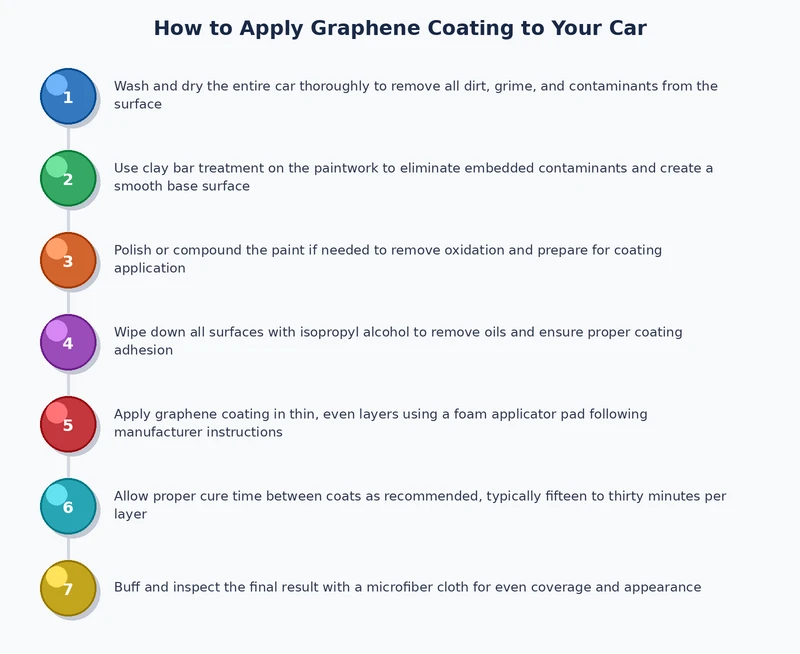
Step-by-step process diagram showing how to apply graphene coating from surface prep through final 7-day cure
Figure 3 — Complete graphene coating application workflow from initial wash through the 7-day full cure period

When Graphene Coating Makes Sense (And When It Doesn't)

Ideal Candidates

Graphene coating delivers measurable returns in specific scenarios. Our team identifies the following as the strongest use cases:

  • Dark-colored vehicles in hot climates. The thermal dissipation advantage is most significant on black, dark gray, and deep navy paint under sustained solar exposure. Panel temperature reductions of 10–20°F have been documented in controlled testing.
  • Freshly corrected paint. Any vehicle coming off a multi-stage machine polish is at its most bonding-ready state — graphene coating immediately after correction preserves that investment long-term.
  • Daily drivers in high-contamination environments. Lower static charge means substantially less brake dust, industrial fallout, and pollen adhesion between washes. The cleaning interval extends noticeably.
  • Paint protection film base layers. Graphene coating applied over PPF creates a dual-protection system. Our analysis of PPF vs vinyl wrap covers the base-layer decision before a hard coating is applied on top.

When to Skip the Coating

  • Paint with active rust or rust bleed. Coating over rust seals moisture against the metal and accelerates corrosion from beneath. Any rust must be fully addressed first — our guide to repairing rust holes in car body panels covers the remediation process.
  • Failing or heavily oxidized clear coat. Graphene bonds to clear coat — if the clear coat is chalking, peeling, or delaminating, there is no viable substrate for the coating to adhere to.
  • Matte and satin finishes. Graphene and ceramic formulations are engineered for gloss clear coats. Application to matte surfaces permanently alters the finish sheen.
  • Pre-sale or short-term ownership. The prep work required — minimum 3–6 hours — is not cost-effective for vehicles being sold or traded within 6–12 months. A quality spray sealant or graphene spray topper serves this use case adequately.

Application Errors That Undermine the Final Result

Prep-Stage Errors

  • Skipping clay decontamination. The most common failure point our team encounters. Contaminated surfaces prevent uniform bonding, creating microscopic weak zones that become visible delamination within months.
  • IPA wipe with residual water present. Water dilutes isopropyl alcohol and leaves mineral contamination behind. Every panel must be fully dry before the IPA wipe step is performed.
  • Rushing the flash time after polishing. Polish oils require a minimum of 5–10 minutes to fully evaporate after the IPA wipe. Coating over warm, freshly wiped paint compromises adhesion at the molecular level.
  • Working outdoors or in direct sunlight. Elevated panel temperatures — even 85°F surface temp — compress flash time to under 30 seconds on some graphene formulations, making clean leveling nearly impossible.

Tip: Our team's standard IPA verification: wipe a section and inspect under LED lighting at 45°. Any remaining haze or streaking means the surface still carries contamination and needs another wipe pass before coating begins.

Application-Stage Errors

  • Oversaturating the applicator block. Excess product builds thick film deposits that flash unevenly, producing stubborn high spots across the entire panel.
  • Sections that are too large. The single most predictable source of high spots in home applications. Graphene's flash time does not accommodate panel-width passes on full-size hoods or roofs without subdivision.
  • Reusing a contaminated leveling cloth. Coating residue on the leveling cloth redistributes cured product back onto the surface. Our team uses a fresh cloth for each panel section as standard practice.
  • Ignoring the cure window. Water contact, washing, or physical abrasion within the first 24 hours disrupts cross-linking before the bond is structurally complete.

Frequently Asked Questions

How long does graphene coating last on a car?

Graphene oxide coatings deliver 3–7 years of protection depending on formulation, number of layers applied, and maintenance habits. Consumer-grade single-layer products typically rate at 2–4 years. Pro-grade dual-layer systems with IR lamp curing reach the 5–7 year range. Annual decontamination washes and pH-neutral maintenance products are the primary factors in achieving the upper end of the durability window.

Can graphene coating be applied over existing ceramic coating?

Applying a new coating directly over an intact, well-bonded ceramic layer is not effective — the existing coating's hydrophobic surface prevents proper adhesion. The surface must be machine polished through the existing coating first, or a dedicated coating prep solvent used to chemically prepare the surface. Spray graphene sealants rated for "over coating" application are the exception and are designed specifically for this use case.

What temperature is best for applying graphene coating?

Our team's consistent recommendation is 60–80°F (15–27°C) with relative humidity below 60%. Below 50°F, cross-linking slows significantly and full cure time extends. Above 85°F, flash time compresses to under 30 seconds on most products, making clean leveling impractical. Panel surface temperature matters as much as ambient air temperature — panels in direct sun can run 30–40°F above air temperature even on mild days.

How do home applicators remove high spots from graphene coating after it cures?

Fully cured graphene high spots require machine polishing to remove — hand polishing generates insufficient cutting action. A DA polisher with a light cutting pad and a medium-grade compound is the minimum approach. Spot correction on a single panel is straightforward; high spots across multiple panels require a full rework of the affected area. Prevention through LED inspection during application is the only practical strategy.

Does graphene coating require special maintenance products?

pH-neutral car wash shampoo is the primary requirement. Alkaline or acidic products degrade the coating's hydrophobic layer over time. Most graphene coating manufacturers also offer compatible spray toppers — applied every 3–6 months — that refresh the water contact angle and extend durability. Wax-based products are not recommended on top of graphene coatings as they can reduce the coating's self-cleaning performance and make contamination bonding assessment difficult.

Is graphene coating worth the upgrade over standard ceramic coating?

For vehicles in hot climates, dark paint colors, or high-contamination daily-driver environments, the upgrade is measurable — lower panel temperatures, reduced static adhesion, and marginally higher water contact angles justify the price premium. For vehicles garaged in mild climates with light use, the performance delta between a quality SiO2 ceramic and graphene oxide is smaller, and a well-reviewed ceramic coating at half the cost delivers comparable results for most owners.

Final Thoughts

Graphene coating is one of the most effective long-term paint protection investments available to home detailers and professional installers alike — but only when the application process is executed correctly from the first wash to the final leveling pass. Our team recommends anyone new to hard coatings start with a consumer graphene kit on a secondary vehicle, complete the full prep sequence at least once, and develop a feel for flash time and leveling before moving to pro-grade formulations or show-quality paint. Building that hands-on experience is what separates a coating that lasts five years from one that fails in five months.

Diego Ramirez

About Diego Ramirez

Diego Ramirez has been wrenching on cars since his teenage years and has built a deep practical knowledge of automotive maintenance and paint protection through years of hands-on work. He specializes in fluid service intervals, preventive care routines, exterior protection products, and the consistent habits that extend a vehicle's lifespan well beyond average. At CarCareTotal, he covers car care guides, cleaning and detailing products, and exterior maintenance and protection reviews.

Get some FREE car parts & gear.. Or check out the latest free automotive manuals and build guides here.

Disable your ad blocker to unlock all the hidden deals. Hit the button below 🚗