Interior ›
by Rachel Park
Last spring, you pull back your driver's side mat after a week of rainy commutes and find mud caked into every channel — and a smell that clings to your whole cabin. You toss it in the garage and forget it for a month. That scenario plays out in millions of vehicles every season. Knowing how to clean car floor mats the right way — by material type, with the right tools — is what separates a fresh interior from one that deteriorates quietly underfoot. For more guides on keeping your cabin in shape, visit the car interior care section.
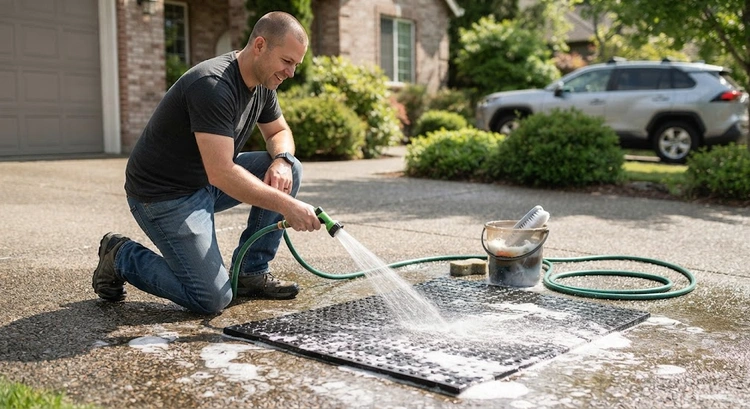
Floor mats absorb more abuse than any other interior surface. Road salt, motor oil, spilled coffee, pet hair, and moisture accumulate in layers that standard vacuuming can't touch. Ignore them long enough and you're dealing with mold growth, shredded fiber backing, and embedded odors that no air freshener will resolve. The good news: both rubber and carpet mats respond well to targeted cleaning when you match the method to the material.
The process diverges sharply by mat type. Rubber mats take a hosing down and a stiff brush — total time under 20 minutes. Carpet mats need enzyme pre-treatment, mechanical agitation, extraction, and patience. Both need attention at least once a month, more often in winter or wet-climate driving.
Contents
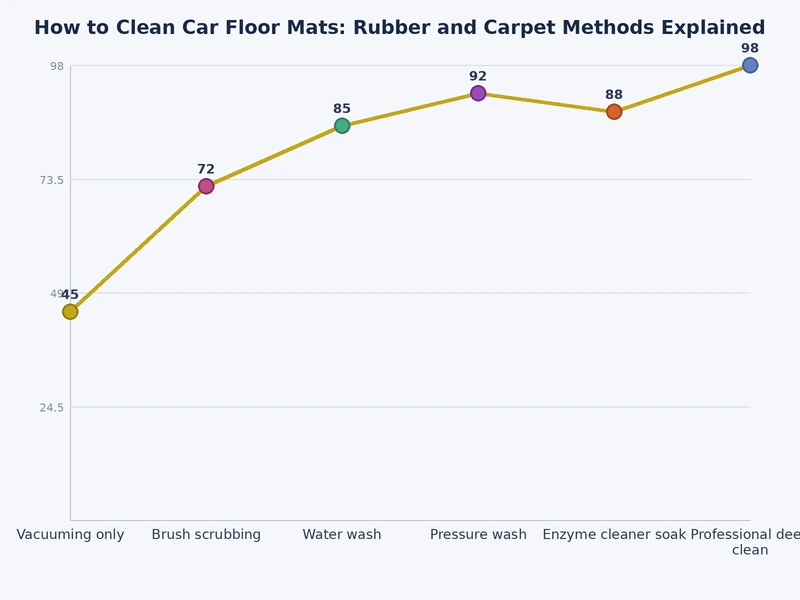
Dirty floor mats create structural problems that go well beyond aesthetics. Trapped moisture under rubber mats accelerates corrosion on the floor pan — a real concern on any vehicle with exposed metal underneath. According to the EPA, mold spores thrive in damp, enclosed environments with limited airflow. Under a soaked carpet mat, colonies can establish in 24 to 48 hours. Once mold penetrates backing layers, it's nearly impossible to fully remove without professional extraction.
Carpet mats carry a secondary risk most owners overlook. Ground-in grit acts like sandpaper on fiber with every footstep. That abrasion shreds pile and destroys the fiber structure over time. Once the backing separates from the face material, no cleaning restores it — the mat is structurally finished.
Regular cleaning every three to four weeks prevents both scenarios. It's far cheaper than replacing mats or remediating a mold-contaminated interior.
Rubber mats are molded thermoplastic elastomer or natural rubber compounds. They're waterproof, dimensionally rigid, and designed to channel fluids away from the floor pan. Most OEM rubber mats and quality aftermarket options feature raised sidewalls, deep drainage channels, and anti-slip backing. They're the default choice for all-weather, high-traffic use.
Carpet mats use cut-pile or loop-pile nylon or polyester fibers bonded to rubber or latex backing. They match factory interior aesthetics far better than rubber, but they absorb everything — spills, odors, fine silica dust, salt crystals. If you're considering an upgrade for protection without sacrificing appearance, the guide to the best all-weather car floor mats covers rubber and carpet options by brand, fit, and material grade.
Pulling together the right supplies before you start saves time and avoids mid-task trips to the garage. The two material types need different product chemistries — don't cross-use them.
Never machine-wash carpet mats with rubber or latex backing — the heat and agitation delaminate the substrate, destroying the mat's structural integrity in a single cycle.
Remove all mats from the vehicle before cleaning. Working mats inside the car re-deposits soil directly onto the factory carpet and risks soaking the floor pan. Lay them flat on a clean driveway or concrete surface before starting.
A complete DIY floor mat cleaning kit costs between $25 and $60 upfront. Once supplies are stocked, ongoing cost per session drops to under $5. Here's a realistic cost breakdown for first-time buyers:
| Item | Approximate Cost | Sessions Per Purchase |
|---|---|---|
| All-purpose cleaner (32 oz concentrate) | $8–$14 | 15–20 |
| Enzyme carpet cleaner (24 oz) | $10–$18 | 8–12 |
| Stiff nylon brush | $5–$12 | Lifetime |
| Microfiber towels (6-pack) | $8–$15 | Reusable (50+ washes) |
| Rubber protectant (16 oz) | $7–$12 | 10–15 |
| Baking soda (16 oz) | $2–$4 | 8–10 |
A standalone floor mat cleaning at a detail shop runs $20 to $50 depending on mat type and soil level. Full interior detail packages — which include mat extraction, factory carpet shampooing, and seat surface cleaning — range from $100 to $250. Mobile detailers add a 15 to 25 percent premium over shop rates for the convenience of coming to you.
Professional extraction equipment outperforms consumer wet/dry vacs for heavily soiled or mold-affected carpet mats. For routine monthly maintenance, DIY methods deliver comparable results at a fraction of the recurring cost. The break-even point is roughly three professional sessions — after that, the DIY kit pays for itself indefinitely.
Rubber mats require less effort per session — no contest. A full clean runs 10 to 20 minutes from start to dry reinstall. Carpet mats demand 45 to 90 minutes when you factor in vacuuming, enzyme dwell time, scrubbing, extraction, and drying. The tradeoff is cabin aesthetics: carpet mats look factory-correct in most interiors; rubber mats signal utility over style.
Cleaning frequency requirements also diverge. Rubber mats benefit from a rinse after every muddy or wet trip. Carpet mats need a full clean every four to six weeks under normal driving. In winter climates with road salt exposure, both types need attention weekly to prevent chemical fiber degradation and metal corrosion on the floor pan below.
Cleaning extends mat life by removing abrasive grit and corrosive compounds. It doesn't reverse structural failure. Know the signals that indicate replacement over another cleaning cycle:
A fresh set of mats is almost always more economical than continued cleaning effort on degraded material — and far safer, since a buckled rubber mat under the brake pedal is a documented accident risk.
 |
 |
 |
 |

About Rachel Park
Rachel Park specializes in the interior and exterior upgrades that meaningfully change how a car looks, sounds, and feels on a daily basis. She has hands-on experience with head unit installations and audio system builds, LED and HID lighting conversions, interior refresh projects, and cosmetic exterior work — evaluated from both a DIY accessibility and quality-of-result perspective. At CarCareTotal, she covers car audio and electronics, lighting upgrades, and interior and exterior styling accessories.
Get some FREE car parts & gear.. Or check out the latest free automotive manuals and build guides here.
Disable your ad blocker to unlock all the hidden deals. Hit the button below 🚗
| | | |
