Car Care ›
by Joshua Thomas
Chrome bumpers and trim add a sharp, classic look to any vehicle — but they need consistent care to stay that way. Learning how to clean chrome bumpers properly keeps corrosion at bay and maintains that mirror-like finish. Road grime, brake dust, and moisture attack chrome constantly, and neglecting it leads to pitting and rust that's hard to reverse. This guide walks you through every step, from a basic wash to deep rust removal and long-term protection.
Chrome is a thin layer of chromium electroplated over a metal or plastic base. According to Wikipedia, the chrome plating process creates a hard, corrosion-resistant surface — but it's not immune to damage. Salt, water, and road chemicals work their way into micro-scratches and accelerate oxidation. Regular cleaning stops that cycle before it starts.
If you're also maintaining your car's exhaust system, many of these same techniques carry over — read our guide on how to clean exhaust tips to a mirror shine for more detail on polishing bare metal surfaces.
Contents
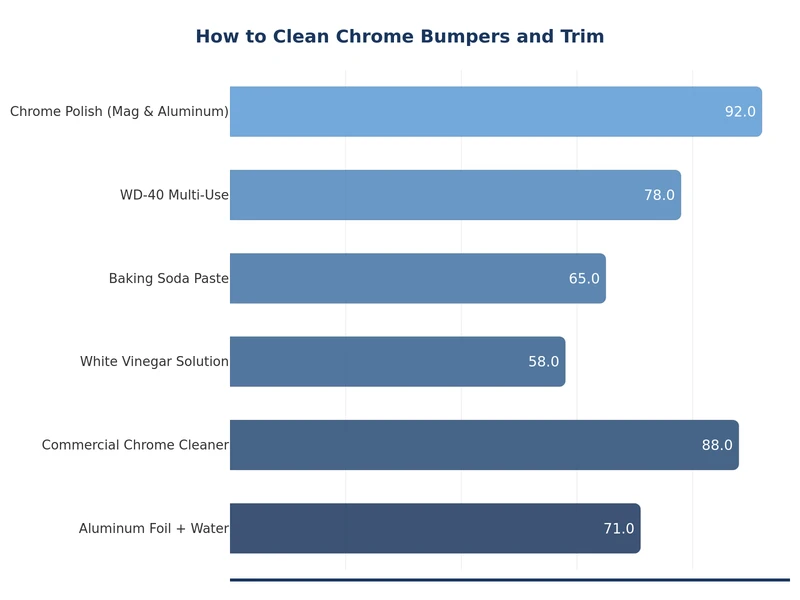
Having the right tools before you start saves time and prevents accidental scratches. Chrome is harder than paint but softer than it looks — abrasive pads and harsh cleaners leave marks that diminish the finish.
Avoid steel wool, abrasive scrubbing pads, or acidic wheel cleaners on chrome. These leave fine scratches that trap moisture and speed up corrosion.
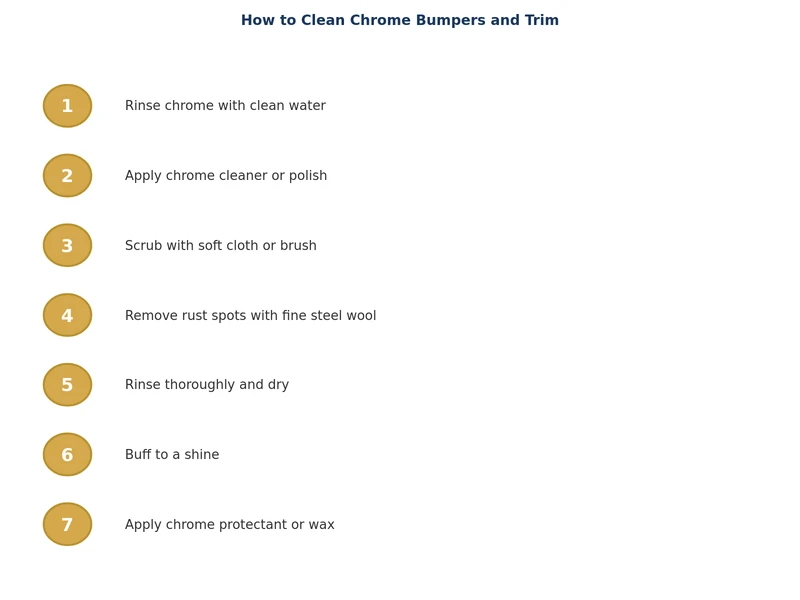
The basic cleaning process takes about 20 minutes per bumper. Work in the shade — direct sun dries soap before you rinse it, leaving residue behind.
Start with a thorough rinse using a garden hose or pressure washer on a low setting. This removes loose dirt and grit that would scratch the surface if wiped directly. Pay attention to the edges and mounting brackets where mud accumulates.
Mix pH-neutral car wash soap in your wash bucket. Use a soft microfiber mitt and work in straight lines, not circular motions. Rinse the mitt in your clean-water bucket between passes to avoid dragging grit across the chrome. The same careful technique applies when washing a black car without swirl marks — the principle is identical: always use clean media.
Water left on chrome causes water spots, especially in areas with hard water. Use a plush microfiber drying towel and blot rather than drag. For tight areas around trim clips, a compressed air blower or a hairdryer on low heat helps push out trapped moisture.
Surface rust and tarnish are the most common problems on chrome bumpers. Catching them early makes removal straightforward. Deep pitting that goes through the plating requires professional re-chroming or replacement.
For light surface rust, the aluminum foil method works surprisingly well. Crumple a piece of standard aluminum foil, dip it in water, and rub it gently over the rust spots. The foil is softer than chrome, so it won't scratch. It reacts with the rust (iron oxide) to form a thin aluminum oxide layer that wipes away cleanly, leaving the chrome intact. Rinse well afterwards.
For heavier rust, apply a dedicated chrome polish with a microfiber applicator pad in small circular motions, then buff off with a clean cloth. Multiple light passes beat one heavy application.
Water spots are mineral deposits left when water evaporates. A 50/50 mix of white vinegar and distilled water applied with a microfiber cloth dissolves most mineral spots. Let it sit for 30 seconds, then wipe and rinse. For stubborn tarnish, chrome polish is the better option.
| Problem | Recommended Method | Difficulty | Time Needed |
|---|---|---|---|
| General grime and road dirt | Car soap + microfiber wash mitt | Easy | 15–20 min |
| Light surface rust | Aluminum foil + water | Easy | 10–15 min |
| Heavier rust or tarnish | Chrome metal polish + applicator pad | Moderate | 20–30 min |
| Hard water spots | Diluted white vinegar or chrome polish | Easy | 10 min |
| Deep pitting through plating | Professional re-chroming or replacement | Professional | Varies |
Cleaning removes contamination. Polishing restores the mirror finish. Protection keeps it looking good between washes. All three steps matter.
Not all metal polishes are suitable for chrome. Products formulated for chrome or multi-metal use are best — they contain fine abrasives sized appropriately for the thin chrome layer. Harsher aluminum or steel polishes can abrade through the plating on older bumpers. Apply a small amount to a microfiber applicator pad and work a 6-inch section at a time using light pressure and overlapping circles. Buff to a clear, haze-free finish with a separate clean cloth.
After polishing, apply a thin coat of carnauba wax or a dedicated chrome sealant. This fills micro-pores in the surface, repels water, and slows oxidation. A properly sealed bumper sheds water better and stays clean longer between washes. Reapply every two to three months, or after any heavy cleaning session.
Many modern vehicles use chrome-look plastic trim rather than actual chrome plating. The two require different care. Real chrome can handle aluminum foil rust removal and metal polishes. Chrome-look plastic has a thin vacuum-deposited metallic layer over plastic — aggressive polishes and foil scrubbing will strip it. For plastic trim, use a plastic-safe detailer and a light protective coating. For guidance on restoring plastic trim that has faded or peeled, see our guide on how to restore black plastic trim on a car — the material science applies to chrome-effect plastics as well.
When in doubt, test any product on a hidden area first. A small patch on the underside of a bumper bracket tells you whether a product is safe before you apply it to visible surfaces.
Even experienced detailers occasionally damage chrome by rushing or using the wrong products. These are the most frequent errors:
Consistent maintenance — a wash every two weeks and a polish-and-seal every few months — prevents nearly all of these problems from becoming serious. Chrome that's cleaned regularly rarely needs heavy rust treatment, which saves time and keeps the plating intact longer.
Wash chrome bumpers every two weeks as part of your regular car wash routine. Polish and apply a protective sealant or wax every two to three months, or whenever the chrome starts to look dull or shows early water spotting.
WD-40 can remove light surface rust and add a temporary shine, but it's not a long-term solution. It leaves an oily residue that attracts dust and doesn't protect against future oxidation. A proper chrome polish followed by carnauba wax gives better and longer-lasting results.
Crumpled aluminum foil dipped in water is the safest DIY method for light surface rust. It's softer than chrome and won't scratch the plating. For heavier rust, use a chrome-specific metal polish with a soft microfiber applicator pad and light pressure.
Not exactly. A chrome cleaner removes contamination, water spots, and light tarnish. A chrome polish contains fine abrasives that smooth micro-scratches and restore the mirror finish. Many products combine both functions, but for badly tarnished chrome it's worth using a dedicated polish after cleaning.
Tap it with your fingernail — real chrome over metal sounds solid and dense; chrome-look plastic sounds hollow. You can also check with a magnet: chrome over steel will attract a magnet, while chrome-look plastic will not. The distinction matters because plastic trim requires gentler care products.
Salt air and road salt significantly accelerate corrosion on chrome. If you live near the coast or in an area where roads are salted in winter, wash your chrome more frequently — weekly if possible — and apply a protective wax or sealant more often. Rinse the undersides of bumpers after any exposure to salt water or road brine.
 |
 |
 |
 |

About Joshua Thomas
Joshua Thomas holds a Bachelor of Science in Mechanical Engineering from San Diego State University and has spent years applying that technical foundation to hands-on automotive work — from routine maintenance to full mechanical repairs. He founded CarCareTotal in 2017 to give car owners the kind of clear, practical guidance that helps them understand what is happening under the hood and make smarter decisions about upkeep and repairs. At CarCareTotal, he oversees editorial direction and covers automotive fundamentals, maintenance guides, and troubleshooting resources for everyday drivers.
Get some FREE car parts & gear.. Or check out the latest free automotive manuals and build guides here.
Disable your ad blocker to unlock all the hidden deals. Hit the button below 🚗
| | | |
