Interior ›
by Rachel Park
You left a gym bag on the back seat for three days. When you finally opened the car door, the smell hit you before you even sat down. If that scenario sounds familiar, you already understand why knowing how to get rid of car smell matters more than most drivers expect. Air fresheners may cover an odor for a few hours, but they do not address the source. True odor elimination requires identifying the cause, treating the affected material, and preventing the smell from returning. This guide covers every step, starting with the basics of your car's interior environment — the enclosed space where odors settle, bond, and multiply.
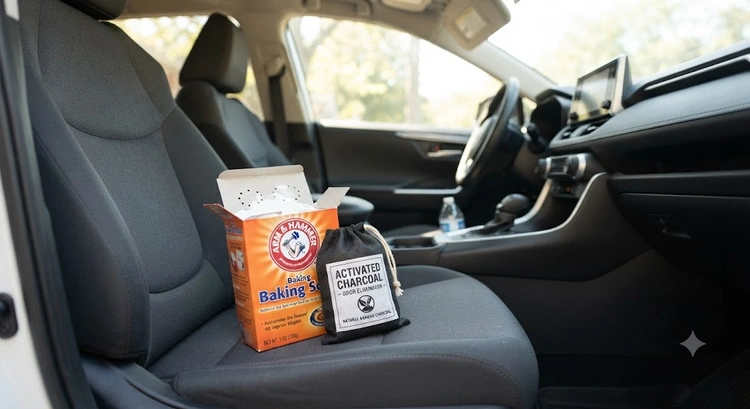
Car odors embed themselves into fabric, foam, carpet, and plastic with surprising efficiency. The enclosed cabin has limited airflow, which allows odor molecules to settle into porous surfaces and remain long after the original source is removed. A quick wipe-down will not reach the layers where the smell has taken hold.
The sections below explain why odors persist, which methods actually work, how common approaches compare, and when a professional is worth the investment. Work through each section systematically and you will have a clear, effective action plan.
Contents
Odor molecules are microscopic compounds that travel through the air and bond to surfaces. In an enclosed vehicle cabin, these molecules have very limited escape routes. They settle into seat fabric, headliner foam, carpet fibers, and dashboard plastics. Over time, heat accelerates the bonding process. A car parked in direct sunlight can reach interior temperatures above 130°F (54°C), which effectively bakes odor compounds deeper into porous materials.
According to the U.S. Environmental Protection Agency, indoor air — including vehicle cabin air — can contain higher concentrations of certain pollutants than outdoor air. Volatile organic compounds (VOCs, chemical vapors released by materials and cleaning products) are a primary contributor to persistent car smells. Simply opening a window provides only temporary relief.
Before you can eliminate an odor, you need to identify its origin. The most frequent culprits include food and beverage spills, cigarette or cannabis smoke, pet fur and dander, mildew from wet carpets or a leaking sunroof, and fuel smells from a mechanical issue. Each source leaves a different chemical signature in the cabin materials.
Mildew is particularly stubborn because it is a living organism. Mold spores continue to grow as long as moisture is present. Removing the visible stain is not enough — you must also dry the affected area thoroughly and treat it with an antimicrobial solution. If you have noticed staining alongside the smell, the guide on how to remove stains from car seats offers a useful companion approach for treating upholstery before applying odor treatments.
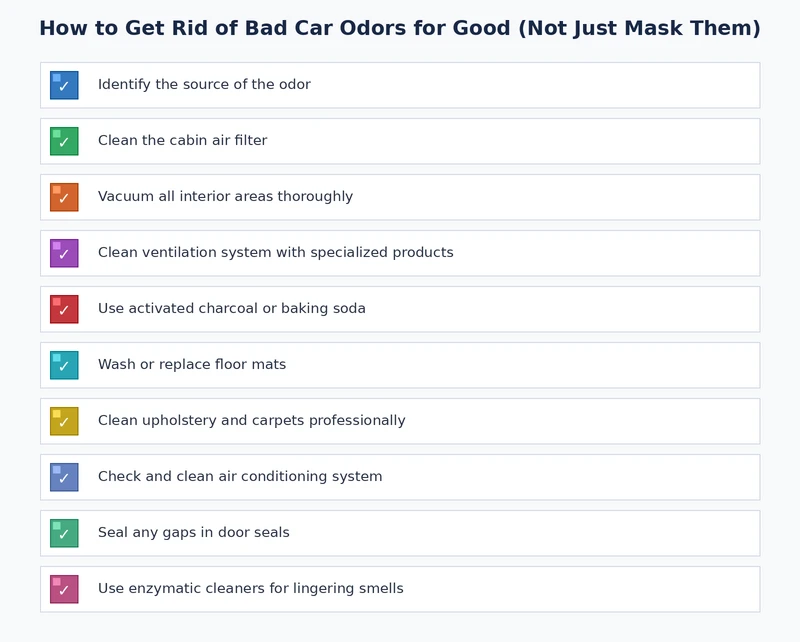
Start by removing all loose items, floor mats, and seat covers from the vehicle. Vacuum the entire interior — seats, carpets, crevices between cushions, and the trunk. A HEPA (high-efficiency particulate air) vacuum captures fine particles that standard models miss. After vacuuming, apply an enzyme-based cleaner (a solution that breaks down organic odor compounds at the molecular level) to any stained or odor-heavy fabric. Allow it to dwell for the time specified on the label before blotting it away.
For carpets, a car carpet stain remover with enzymatic action is your most effective tool. Work the product into the fibers with a stiff brush, then extract the moisture with a wet-dry vacuum. Allow the interior to dry completely before closing the doors. Residual moisture is the primary cause of mildew recurrence — do not rush this step.
Always leave the car doors open or windows cracked while the interior dries. Trapping moisture inside restarts the mildew cycle within 24 to 48 hours.
Hard interior surfaces — dashboard, door panels, center console — absorb less odor than fabric, but they still trap dust, grease, and residue. Wipe them down with a microfiber cloth dampened with a diluted all-purpose cleaner. Pay particular attention to the air vents, which circulate air across every surface in the cabin on every drive.
To treat the vents, set the HVAC (heating, ventilation, and air conditioning) system to recirculate mode and spray an odor-eliminating product into the fresh-air intake vent near the base of the windshield. Run the fan on high for five to ten minutes. This draws the treatment through the ductwork and neutralizes odors trapped inside. Replacing the cabin air filter at this stage is also strongly recommended — a clogged filter reintroduces trapped particles and odors every time the fan runs.
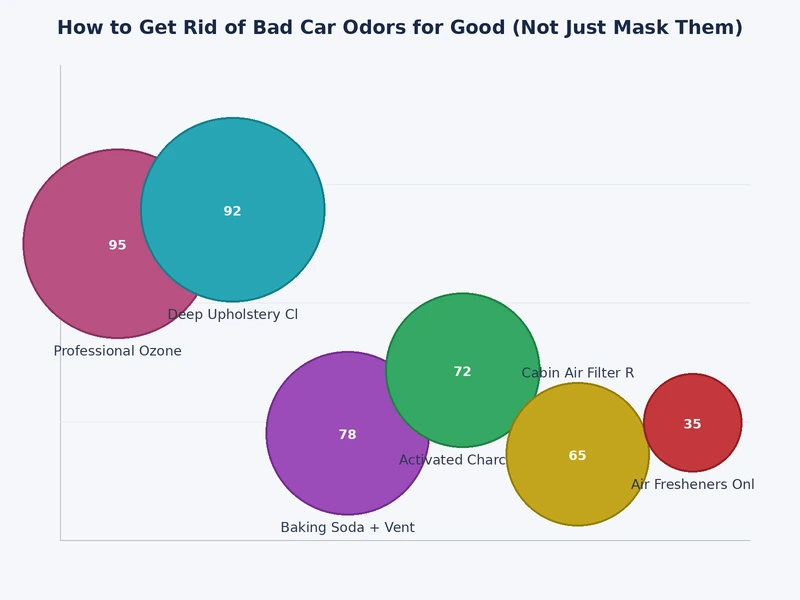
Not all odor eliminators work the same way. There are three main categories to understand before choosing a product:
For most everyday situations, an enzymatic spray combined with an activated charcoal absorber is sufficient. Ozone treatment is typically reserved for professional or advanced DIY use due to the safety precautions involved.
Choosing the right method depends on the odor type, how long it has been present, and your available budget. The table below summarizes the key differences between the most widely used approaches so you can make an informed decision.
| Method | Best For | Cost Range | Ease of Use | Effectiveness |
|---|---|---|---|---|
| Baking Soda / Activated Charcoal | Mild, general odors | $2–$15 | Very Easy | Low to Moderate |
| Enzymatic Spray | Food, pet, urine odors on fabric | $10–$30 | Easy | Moderate to High |
| Steam Cleaning | Deep-set fabric and carpet odors | $30–$80 (rental) | Moderate | High |
| Ozone Generator | Severe smoke odors | $50–$200+ | Difficult | Very High |
| Professional Detailing | All odor types, including hidden sources | $100–$300+ | N/A (performed for you) | Very High |
The most cost-effective starting point for most drivers is an enzymatic spray paired with a thorough vacuum and a fresh cabin air filter. If the smell persists after two rounds of treatment, upgrading to steam cleaning or professional ozone treatment is a logical next step.
Most everyday car smells — food odors, light pet smells, stale air from infrequent use — respond well to a systematic DIY approach. If the odor has been present for less than a few weeks and you can identify the source, you have a strong chance of resolving it at home. Consistent effort matters more than expensive products. A thorough vacuum, an enzyme cleaner, a cabin air filter replacement, and an activated charcoal absorber address the majority of cases without professional intervention.
Weather also plays a role in your results. On a dry, warm day, parking with the windows slightly open after cleaning helps the interior dry faster and allows residual odor molecules to dissipate. Avoid cleaning on humid days when moisture from the cleaner has nowhere to go.
Certain situations fall outside the range of DIY methods. Cigarette smoke that has permeated the headliner foam, seat padding, and HVAC system over many years typically requires ozone treatment or full interior extraction — both of which professional detailers are equipped to perform safely. Flood-damaged interiors present a similar challenge, with mold growth that may extend under carpet padding and behind door panels.
A professional detailer can also locate hidden odor sources that are easy to miss during a home cleaning. A forgotten food item lodged under a seat rail, a clogged sunroof drain causing hidden moisture accumulation, or a small animal that entered the HVAC system are all examples of sources that require trained eyes and specialized equipment. If you have cleaned the interior twice and the smell returns within a week, a professional assessment is the practical and cost-effective choice.
Myth 1: Air fresheners eliminate odors. Air fresheners add a competing fragrance to the cabin air. They do not break down or remove odor-causing compounds. The underlying smell remains and often becomes more noticeable once the fragrance fades. Use them only after a thorough cleaning as a finishing touch — not as a primary solution.
Myth 2: Leaving the windows down is enough. Ventilation helps, but it does not extract odor molecules that have bonded to fabric and foam. You can air out a car for a full week and still detect a stubborn smoke or pet smell. Physical cleaning and chemical treatment are necessary steps that ventilation alone cannot replace.
Myth 3: Baking soda alone will fix any smell. Baking soda is a mild odor absorber. It works reasonably well for surface-level smells in enclosed spaces, but it cannot penetrate deep into upholstery or break down the complex organic compounds left by cigarette smoke or mildew. It is a useful supplementary step — not a standalone solution for serious odors.
Myth 4: Once the smell is gone, it will not return. Without addressing the root cause, most odors return. A mildew smell treated without proper drying will re-emerge within days. A pet odor treated without an enzyme cleaner will reactivate when the seat warms up in direct sunlight. Permanent removal requires treating both the symptom and its source — and in many cases, removing the conditions that allowed the odor to develop in the first place.
For mild odors, one thorough cleaning session followed by 24 hours of drying time is often sufficient. Severe smells — such as heavy cigarette smoke or established mildew — may require multiple treatments over several days, or a professional ozone treatment that typically takes two to four hours plus a ventilation period afterward.
The fastest effective approach is to identify and physically remove the source, vacuum thoroughly, apply an enzymatic spray to all affected fabric surfaces, and replace the cabin air filter. Running the HVAC system with an odor-eliminating spray drawn through the fresh-air intake completes the process in a single session for most common odor types.
Baking soda functions as a passive absorber for mild, surface-level odors. Sprinkle it on carpet or upholstery, allow it to sit for several hours, then vacuum it up. It is not effective for deep-set smells like cigarette smoke or mildew, which require enzymatic cleaners or ozone treatment to address at the molecular level.
Ozone generators are available for consumer use, but they require strict safety protocols. The vehicle must be completely unoccupied during treatment, and you should allow at least 30 to 60 minutes for ozone levels to dissipate before re-entering. Extended or repeated use can also degrade rubber seals and certain plastics inside the cabin.
A persistent musty smell after cleaning almost always indicates mold or mildew in an area you have not yet treated. Common hidden locations include under the carpet padding, inside the HVAC ductwork, or within the trunk lining. Inspect door seals, sunroof drains, and floor drain plugs for any signs of water infiltration.
Prevention starts with the habits that create odors in the first place. Remove food and trash from the vehicle promptly, keep a small lined trash bag within reach, clean up spills immediately before they soak into fabric, and replace the cabin air filter every 15,000 to 25,000 miles. Parking in a shaded or covered area also reduces the heat that accelerates odor bonding between molecules and interior materials.
Getting rid of a bad car smell is entirely achievable when you approach it systematically — identify the source, treat the affected material with the right product, dry the interior completely, and take the preventive steps that stop the odor from returning. Start with a thorough vacuum and an enzymatic spray, work through the methods outlined in this guide, and do not hesitate to consult a professional detailer if the smell persists after two or three treatments. Take action today, and you will be able to enjoy every drive in a genuinely fresh cabin rather than simply a masked one.
 |
 |
 |
 |

About Rachel Park
Rachel Park specializes in the interior and exterior upgrades that meaningfully change how a car looks, sounds, and feels on a daily basis. She has hands-on experience with head unit installations and audio system builds, LED and HID lighting conversions, interior refresh projects, and cosmetic exterior work — evaluated from both a DIY accessibility and quality-of-result perspective. At CarCareTotal, she covers car audio and electronics, lighting upgrades, and interior and exterior styling accessories.
Get some FREE car parts & gear.. Or check out the latest free automotive manuals and build guides here.
Disable your ad blocker to unlock all the hidden deals. Hit the button below 🚗
| | | |
