Interior ›
by Joshua Thomas
Studies from professional detailing associations consistently find that more than 80 percent of vehicle interiors develop measurable upholstery staining within the first two years of ownership, yet the majority of drivers delay treatment until the stain has fully bonded to the fiber. Understanding how to remove stains from car seats is not supplementary knowledge — it is a core competency for any driver committed to preserving cabin hygiene and long-term resale value. The full scope of car interior maintenance extends well beyond surface vacuuming, and seat staining remains one of the most consequential forms of interior neglect.
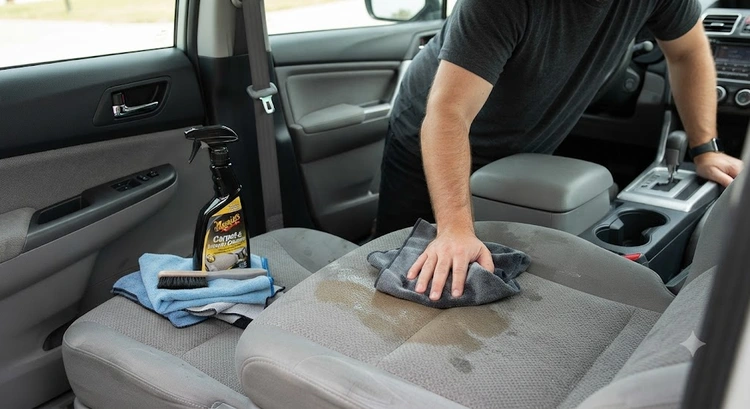
Automotive upholstery — whether woven fabric, genuine leather, or synthetic vinyl — responds to staining compounds in chemically distinct ways. Liquid stains penetrate fiber structures within minutes, while protein-based stains such as blood or dairy products begin cross-linking with fabric polymers almost immediately upon contact with heat. The elapsed time between a spill and the first treatment attempt is the single greatest determinant of cleaning success. Acting within the first 15 minutes dramatically increases the probability of complete removal, regardless of the staining agent.
Seat material dictates method. What dissolves a coffee stain on microfiber can permanently strip a leather surface. This guide addresses the full range of common automotive upholstery types and applies a structured, evidence-based protocol to each scenario, drawing from standard detailing practice and established upholstery cleaning methodology.
Contents
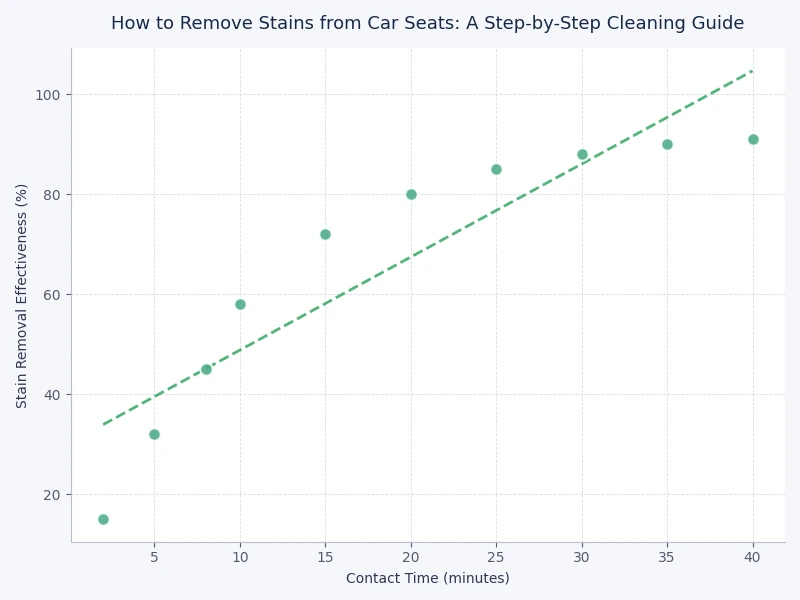
Automotive upholstery fibers are engineered for durability, not stain resistance. Woven polyester and nylon blends — the dominant materials in factory cloth seats — feature microscopic surface irregularities that trap particulate matter and absorb liquid compounds at a cellular level. Tannin stains from coffee and tea oxidize rapidly, forming covalent bonds with fiber proteins that grow stronger with each passing hour. Fat-based stains from food grease and body oils present a different challenge: they repel water-based cleaners while simultaneously attracting airborne particulates, compounding the visible discoloration over time.
Heat is the enemy of stain removal. When a vehicle sits in direct sunlight, interior temperatures routinely exceed 140°F (60°C). At these temperatures, protein stains denature and fuse permanently to fabric polymers, and synthetic dyes in food and beverages undergo chemical reactions that shift their chromophore structures, making the stain optically darker and chemically more resistant to surfactant action.
Genuine leather absorbs liquids at a slower rate than fabric due to its tighter pore structure, but that advantage disappears quickly without a well-maintained protective finish. Factory-applied leather coatings begin to degrade after three to five years of normal use, leaving the substrate increasingly vulnerable to rapid absorption. Vinyl and synthetic leatherette behave more predictably — they do not absorb staining compounds into the substrate, which means surface cleaning is generally sufficient when performed promptly. The substrate behavior determines not just the cleaning method, but the acceptable dwell time for any applied product.
Product selection determines the outcome as much as technique. For fabric upholstery, an enzymatic cleaner with a pH between 7 and 9 is the professional standard. Enzymatic formulas digest protein-based stains at the molecular level rather than merely lifting them from the surface. Dedicated automotive upholstery cleaners — reviewed in depth in the guide to the best car carpet stain removers — offer purpose-built formulations that are safe for color-stabilized automotive dyes and will not leave a residue that accelerates re-soiling.
For leather surfaces, pH-neutral leather cleaners are mandatory. Any product with a pH below 4.5 or above 9 risks degrading the protective coating and causing irreversible discoloration. Standard household cleaners — including dish soap, ammonia-based glass cleaners, and bleach compounds — are categorically unsuitable for automotive leather, regardless of dilution ratio.
Never apply a water-based fabric cleaner to genuine leather upholstery. The surfactant chemistry that breaks down cloth stains will also strip the protective topcoat from leather, causing cracking and permanent discoloration within weeks.
The application tool matters as much as the product. Stiff-bristle brushes are appropriate for woven fabric seats because they agitate the cleaning solution into fiber depths without damaging the weave. A soft-bristle detailing brush — the same category of tool used with car buffers and applicator systems for exterior surfaces — is the correct choice for synthetic suede and microfiber. Microfiber towels with a minimum 300 GSM weight should be used for blotting, not wiping. Wiping spreads the stain laterally; blotting lifts it vertically out of the fiber.
Not all stains respond to the same chemistry. The table below consolidates the recommended treatment approach for the most common stain categories encountered in automotive upholstery, matched against seat material and primary cleaning agent.
| Stain Type | Fabric Seats | Leather / Vinyl | Primary Agent | Dwell Time |
|---|---|---|---|---|
| Coffee / Tea | Enzymatic cleaner + agitation | pH-neutral leather cleaner | Enzymatic surfactant | 3–5 minutes |
| Blood (fresh) | Cold water + enzyme formula | Cold water + leather cleaner | Cold water only | Immediate |
| Blood (dried) | Hydrogen peroxide 3% + enzyme | Professional treatment | Oxidizing agent | 5–10 minutes |
| Grease / Oil | Solvent-based degreaser | Leather-safe degreaser | Solvent surfactant | 2–4 minutes |
| Ink | Isopropyl alcohol 70% | Rubbing alcohol (diluted) | Alcohol solvent | 1–2 minutes |
| Vomit / Organic | High-enzyme biological cleaner | Enzyme spray + immediate wipe | High-enzyme biological | 10–15 minutes |
| Dye Transfer | Upholstery solvent cleaner | Professional color restoration | Solvent blend | Variable |
Begin by removing loose debris with a dry vacuum pass. Skipping this step embeds particulates deeper into the fiber during wet treatment, converting surface contamination into a subsurface problem. Apply the enzymatic cleaner to the stained area with a spray bottle at a distance of four to six inches to ensure even distribution without oversaturation. Oversaturation is a primary cause of secondary damage: excess moisture penetrates the foam padding beneath the fabric and creates mold conditions that manifest within 48 hours in warm climates.
Allow the product to dwell for the manufacturer-specified time — typically three to five minutes. Agitate with a soft-bristle brush using circular, inward-spiraling strokes that drive the cleaning solution toward the stain center rather than dispersing it outward. Blot with a clean microfiber towel, rotating to a fresh section with each application. Repeat the spray-dwell-agitate-blot cycle until the stain no longer transfers to the towel. Finish with a wet-dry vacuum extraction pass; leaving a fabric seat to air-dry in humid conditions invites mineral deposits and mold formation.
Leather cleaning requires lighter pressure and shorter dwell times than fabric. Apply the pH-neutral cleaner to a microfiber applicator — not directly to the surface — and work in small, overlapping sections no larger than six inches square. After wiping, buff the area dry immediately. Moisture left on a leather surface for more than two minutes risks penetrating the finish coat and causing water spotting that is more visually prominent than the original stain.
Always follow leather cleaning with a quality leather conditioner applied within 30 minutes of treatment. Cleaning removes protective oils alongside the stain, and conditioning prevents the cracking that accelerates with each successive dry-cleaning cycle.
Vinyl surfaces tolerate slightly more aggressive treatment. A diluted all-purpose automotive cleaner at a 4:1 water-to-product ratio handles most organic stains effectively. The critical distinction from leather is that vinyl can be wiped rather than blotted, provided the wiping motion runs parallel to the surface grain pattern to avoid micro-scratching the finish.
The detailing industry draws a clear line between stains that respond to consumer-grade treatment and those that require professional intervention. DIY methods are effective for fresh stains, surface-level discoloration, and single-agent stains on fabric upholstery. The limiting factor is not effort — it is equipment. Consumer spray bottles and microfiber towels cannot replicate the extraction force of a commercial upholstery machine, which removes significantly more moisture and embedded cleaning solution than manual blotting.
Professional hot-water extraction is the industry benchmark for deep fabric cleaning. The process injects heated cleaning solution under pressure, then extracts it with simultaneous vacuum force at the same point of injection. This method removes staining compounds that have migrated below the surface fiber layer — the zone that consumer products routinely fail to reach. The cost ranges from $150 to $400 for a full interior detail, making it cost-effective only when staining is severe, widespread, or located on high-visibility surfaces.
Three conditions warrant professional intervention without hesitation. First, any stain on genuine leather that has been present for more than 72 hours, where consumer products have already been attempted without success. Second, biological stains — blood, vomit, urine — on fabric seats where odor persists after cleaning, indicating subsurface contamination of the foam padding. Third, dye-transfer stains from dark clothing on light-colored leather upholstery, which require color-restoration techniques entirely beyond the scope of consumer products.
Set-in stains require a two-phase approach. The first phase softens and rehydrates the dried staining compound using a pre-treatment soak. For tannin-based stains on fabric, a 3 percent hydrogen peroxide solution applied for five to ten minutes effectively breaks the oxidative bonds that have formed between the stain and the fiber. This is the same oxidative chemistry applied in professional textile restoration and is the closest consumer-accessible equivalent to commercial ozone treatment.
The second phase applies the standard enzymatic cleaning protocol, but with a longer dwell time — up to 15 minutes — and two or three additional agitation-blot cycles. If the stain persists after three complete cycles, further consumer-grade treatment will not improve the result. Aggressive scrubbing at this stage causes fiber distortion and pilling that is visually worse than the original stain.
Ink stains represent a unique troubleshooting challenge. Isopropyl alcohol at 70 percent concentration is the correct solvent, but application must be precise. A cotton swab applied directly to the ink deposit prevents the alcohol from spreading the stain radially — the most common error in ink treatment on automotive fabric. The working-in-small-sections methodology that governs paint correction applies equally to upholstery stain work: isolate the affected zone and prevent lateral migration at every stage of the process.
Baking soda functions as a deodorizing agent and mild abrasive for surface-level dry stains on fabric upholstery, but it does not constitute a stain remover in the chemical sense. It lacks the surfactant chemistry necessary to break down oil-based or protein-based stain compounds. Use it as a pre-treatment for odor neutralization before applying a purpose-built enzymatic cleaner.
Protein-based stains begin cross-linking with fabric fibers within the first 30 minutes, particularly under the elevated heat conditions of a parked vehicle. Tannin stains from coffee and tea reach a near-permanent oxidation state within 24 to 48 hours if untreated. Oil-based stains do not bond permanently in the same way but attract progressive particulate buildup that compounds discoloration over weeks.
Steam cleaning is highly effective for sanitizing fabric upholstery and loosening set-in stains, but it carries significant risks on leather and vinyl. High-temperature steam can delaminate the protective coating on finished leather and cause vinyl to bubble or crack along seam lines. When used on fabric, steam treatment must be followed immediately by extraction to prevent moisture from saturating the seat foam.
Isopropyl alcohol at 70 percent concentration, applied with a cotton swab in a precise dabbing motion, is the most reliable consumer-accessible solution for ink on leather. Commercial leather ink-removal products are more effective in most cases. The critical technique is preventing the dissolved ink from spreading: work from the stain's outer edge inward, using fresh swab material with every pass.
Diluted dish soap in cold water functions as a mild surfactant cleaner for fresh, non-protein stains on fabric. Its primary limitation is the absence of enzymatic activity, which means it cannot break down biological or protein-based compounds at the molecular level. It also leaves residue if not thoroughly rinsed, which accelerates re-soiling compared to a properly extracted enzymatic treatment.
Professional detailers apply a combination of high-enzyme dwell agents or oxidizing pre-treatments, followed by heated extraction at pressures that consumer equipment cannot achieve. For severe cases, ozone treatment neutralizes residual biological compounds, and spot dyeing restores color uniformity where the original dye has been lifted by prior cleaning attempts. These are services that no consumer product fully replicates.
WD-40 is a petroleum-based solvent and lubricant, not a cleaning agent. While it can loosen certain adhesive-based stains on fabric, it simultaneously deposits an oil film that becomes a secondary stain and a persistent odor source. Its use on automotive upholstery is not recommended under any circumstances — the oil contamination it introduces is more difficult to remove than most original stains.
 |
 |
 |
 |

About Joshua Thomas
Joshua Thomas holds a Bachelor of Science in Mechanical Engineering from San Diego State University and has spent years applying that technical foundation to hands-on automotive work — from routine maintenance to full mechanical repairs. He founded CarCareTotal in 2017 to give car owners the kind of clear, practical guidance that helps them understand what is happening under the hood and make smarter decisions about upkeep and repairs. At CarCareTotal, he oversees editorial direction and covers automotive fundamentals, maintenance guides, and troubleshooting resources for everyday drivers.
Get some FREE car parts & gear.. Or check out the latest free automotive manuals and build guides here.
Disable your ad blocker to unlock all the hidden deals. Hit the button below 🚗
| | | |
