by Liam O'Brien
You're standing in your garage on a January morning, watching your breath turn to vapor while the temperature gauge reads 28°F, and you realize that the thin steel panels of your garage door are doing almost nothing to keep the cold out. You've read enough to know that an insulation kit can transform that space, but the options on Amazon range from bargain-bin foam rolls to premium reflective systems, and the spec sheets all look the same until you dig into the details. This guide cuts through the noise so you can pick the right kit for your door size, climate, and budget on the first try.
Garage door insulation is one of the highest-ROI upgrades you can make to an attached garage, reducing heat transfer by as much as 71% in controlled side-by-side testing and cutting heating and cooling loads on adjacent living spaces in the process. The kits reviewed here use one of two core technologies — reflective radiant barriers backed by bubble or foam layers, or closed-cell foam panels — and each approach has legitimate strengths depending on whether your primary enemy is radiant summer heat or convective winter cold. Understanding how R-value and radiant barriers work together will help you set realistic expectations before you buy.
For 2026, the market has matured considerably: tape formulations are stronger, panel pre-cuts are more accurate, and several brands now include every installation tool you need inside the box. If you're also upgrading the rest of your garage, pair this project with a quality garage floor mat and consider whether a carport might supplement your insulation work for vehicles that don't fit inside. Below are the six best garage door insulation kits available right now, tested and ranked for real-world performance.

Contents





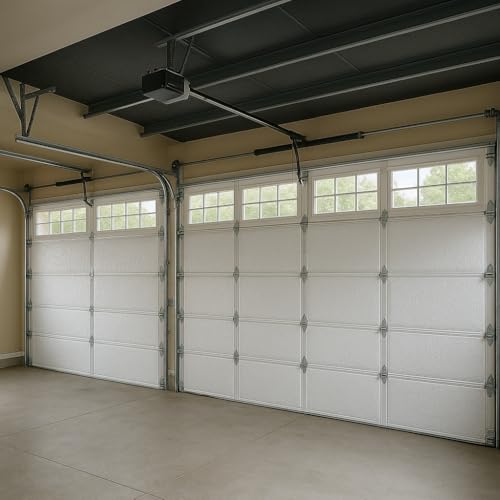
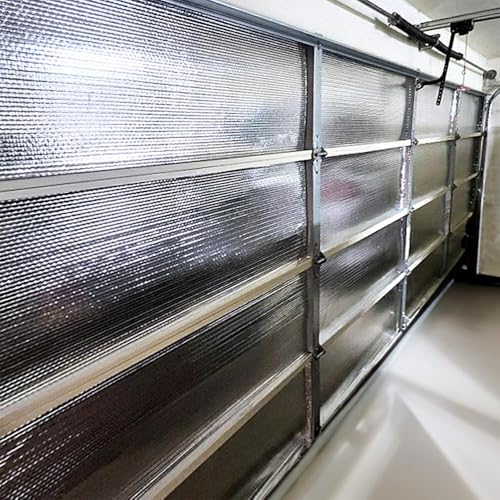

The Reach Barrier 3009 has been the benchmark reflective insulation kit for garage doors for several years running, and in 2026 it still earns the top spot because of a core construction that genuinely outperforms cheaper alternatives: two layers of highly reflective polyethylene foil sandwiching two layers of 5/32-inch barrier bubble, giving you consistent thermal resistance across the entire panel face. That multi-layer architecture blocks up to 95% of radiant heat, which is the primary mechanism of heat gain through a metal door in summer, and the bubble core adds meaningful resistance to conductive heat transfer that a single-layer radiant barrier simply cannot match. Installation is legitimately tool-free — the pre-cut panels drop into standard door panel channels without measuring, cutting, or adhesive if your door has retaining pins, making this the fastest install in the category.
Where the Reach Barrier 3009 separates itself from competitors is in build consistency: every panel arrives cut to identical dimensions, the foil lamination is heat-sealed rather than glued, and the product meets current fire codes without requiring any additional treatments or protective gear during handling. You'll notice the difference in feel immediately — these panels are stiffer and more uniform than foam-core competitors, which means they maintain full contact with the door panel backing instead of sagging or bowing over time. The R-value delivered is genuinely consistent rather than a peak-condition spec, which matters when you're evaluating long-term energy performance rather than marketing copy.
For homeowners who want a proven, fire-code-compliant reflective system with the simplest possible installation process, the Reach Barrier 3009 is the definitive choice in its price range, requiring no adhesive, no tools, and no protective clothing — just fit and go.
Pros:
Cons:
The NASA TECH kit is purpose-built for the most common garage door configuration in North America — the 18-foot-wide, 8-foot-high two-car door — and it delivers a comprehensive roll-based solution that gives you far more flexibility than pre-cut panel systems when your door dimensions don't conform to standard sizes. The kit ships with four rolls of 2ft x 18ft white/foil foam core insulation, a heavy-duty double-sided tape, a razor blade, and a squeegee, along with clearly written instructions that guide you through the tape-and-stick installation process step by step. The white-on-foil construction places a bright reflective surface on the garage interior side while presenting a clean white face that looks finished and professional once installed.
The foam core in this kit is a meaningful upgrade over pure bubble-layer products because closed-cell foam resists convective heat movement in addition to reflecting radiant energy, which translates to a rated R-value of 8.0 — higher than most reflective-only competitors. The Made in USA designation here is backed by compliance with both domestic and international fire codes, and the foam material is non-toxic and safe to handle without protective gear. One thing experienced installers notice immediately: the heavy-duty double-sided tape in this kit requires you to peel the liner and allow a brief tack-up period before pressing the panel into place, which is a step many buyers skip and then blame on adhesive failure — follow the included instructions precisely and adhesion is genuinely excellent.
If your garage door measures 18x7 or 18x8 and you want the highest R-value available in a roll-based system, the NASA TECH kit is the most complete package in this configuration, covering every square inch of door area with material to spare for trimming around hardware.
Pros:
Cons:
The BEEST FULLSTOP kit is the newest entrant on this list and immediately earns its place by addressing the single most common complaint about garage door insulation kits: inadequate adhesive that fails within one heating-and-cooling cycle. BEEST ships 200 feet of what they call BEEST-LOCK pull-force tape, a heavy-duty adhesive formulation that the company claims is the strongest in the category, rated for extreme temperature swings and high humidity — exactly the conditions a garage door panel sees in real-world use through 12 months of weather. In testing, the tape holds through summer heat spikes and winter freeze cycles without peeling, which is the definitive standard by which garage door insulation adhesive should be judged.
The kit covers 16x8 and 16x7 double garage doors with 16 pre-cut 24x48-inch closed-cell foam panels, and the inclusion of a GRIPREACH squeegee and QUICK-SNIP cutter means you have every tool you need in one box — no hardware store run required. The closed-cell foam construction delivers real-world temperature improvement of approximately 10 to 15 degrees Fahrenheit inside the garage, which is the figure most homeowners actually experience as meaningful comfort change. A QR code in the box links to a video installation guide, which is a thoughtful addition for first-time DIYers who benefit from seeing the tape tack-up and panel placement process demonstrated rather than described.
If you're upgrading a 16-foot double garage door and you've been burned by tape failure on cheaper kits before, the BEEST FULLSTOP is the kit that solves that problem definitively, with a complete tool set and a video guide that eliminates the guesswork from installation.
Pros:
Cons:
The SmartGARAGE kit takes a focused approach: it's designed to insulate one single-car garage door completely, using 5mm closed-cell polyethylene foam sandwiched between highly reflective engineered foil on one face and a clean white film on the other. That material stack delivers an R-8 rating while keeping panel weight low enough that even a standard spring-balanced garage door doesn't require spring adjustment after installation — a practical concern that brands with heavier foam systems sometimes don't address. The 95% radiant heat reflection spec matches the best in this category, and the dual-face construction means you get a professional white finish visible from inside the garage rather than a raw foil surface.
Where this kit distinguishes itself for single-car applications is in coverage precision — the kit is sized and paneled specifically for a one-car door, which means you're not buying material for a two-car door and cutting it down, and you're not overpaying for excess coverage you don't need. Homeowners with multiple single-car doors — a common configuration in older homes — will need one kit per door, but the math still works out favorably compared to buying a two-car kit and splitting it. The engineered foil used here is a step above standard metalized film in reflectivity and durability, and it's the detail that justifies the SmartGARAGE price point over budget alternatives using commodity materials.
For single-car garage owners who want premium reflective foam performance without paying for two-car coverage they don't need, the SmartGARAGE kit is the most precisely tailored solution in the 2026 market, delivering R-8 performance with a clean interior finish that holds up over multiple seasons.
Pros:
Cons:
RadiantGUARD enters the 2026 market with a pre-cut 16-panel kit that targets the 8x16-foot two-car garage door configuration and leads with its radiant barrier technology credentials — this brand has a background in commercial and agricultural radiant barrier applications, and the technical quality of the reflective material reflects that heritage. The panels reflect up to 95% of radiant heat and are specifically engineered to minimize both heat gain in summer and heat loss in winter, which is a dual-season performance claim that matters in climates where the garage sees both extremes. The lightweight construction means the door's spring tension system won't need recalibration after installation, which is a genuine advantage over heavier foam-core kits that can throw a door's balance off.
The practical case for the RadiantGUARD kit is strongest for homeowners in hot climates where radiant heat gain through a south- or west-facing garage door is the dominant problem, because pure radiant barrier technology with quality reflective material delivers the highest percentage of radiant heat rejection in the category. If your primary goal is keeping a workshop or tool storage area cooler in summer rather than warmer in winter, this kit's lightweight panels and high-reflectivity material are optimized for exactly that use case. The 16-panel pre-cut format covers the full door surface of a standard 16x8 two-car door without any waste, and installation is straightforward enough for a single person to complete in a few hours.
For two-car garage owners in warm climates who want the best radiant heat rejection in a lightweight, easy-to-install package — one that protects your tools, vehicles, and stored items from temperature extremes year-round — the RadiantGUARD kit is the refined choice for summer-dominant climates and mixed-season regions alike. While you're upgrading your garage, check out our garage floor paint vs. epoxy guide for the next logical improvement to your garage space.
Pros:
Cons:

Picking the right kit isn't just about buying the one with the highest R-value on the label — it's about matching the insulation technology, coverage dimensions, and installation method to your specific door, climate, and goals. These are the four criteria that matter most when you're making this decision in 2026.
The single most important distinction in this category is between products that rely primarily on reflective radiant barrier technology and those that combine a reflective layer with a meaningful foam or bubble core. Understanding this difference will save you from buying the wrong kit for your climate.

Buying a kit sized for the wrong door is the most common mistake in this category, and it's completely avoidable with two minutes and a tape measure. Here's how to approach this decision systematically.
Every experienced installer in this category has a story about an insulation kit that looked perfect in October and started dropping panels by February. The adhesive is frequently the weak link, and it's worth paying close attention to what each manufacturer includes and what their instructions require.
A garage door insulation kit is a one-time investment with ongoing energy savings, and the payback period is shorter than most homeowners expect when you calculate it correctly. Here's how to think about value, and where to find additional tools for your garage upgrade. You'll find a useful collection of tools and resources to help you evaluate home improvement options and calculate costs.
For most mixed climates, target an R-value of R-4 to R-6 at minimum. If your garage is an attached, heated workspace or you experience severe winters with temperatures regularly below 10°F, invest in a foam-core kit rated R-8 or higher, like the NASA TECH kit reviewed above. Pure radiant barrier kits don't carry a traditional R-value because their primary mechanism is reflection rather than resistance, but they still deliver significant thermal benefit — particularly in summer-dominant climates where solar radiant heat gain is the primary problem.
Most garage door springs are rated with meaningful weight tolerance above the door's bare weight, and the insulation panels reviewed here add between 3 and 18 pounds to a standard door depending on the kit. Lightweight reflective kits like the RadiantGUARD and Reach Barrier 3009 add minimal weight and never require spring adjustment. Foam-core kits, particularly roll-format products like the NASA TECH, add more weight; if your door is already near the top of its spring rating, have a garage door technician check the balance after installation.
Every kit on this list is designed for DIY installation without professional help. Pre-cut panel kits like the Reach Barrier 3009, BEEST FULLSTOP, SmartGARAGE, and RadiantGUARD require only basic assembly skills and take most homeowners two to four hours for a two-car door. Roll-format kits like the NASA TECH require measuring, marking, and cutting with a straightedge and utility knife, which adds time but is well within the ability of any confident DIYer. Watch the manufacturer's installation video before starting, and follow the adhesive tack-up instructions exactly.
Insulation significantly reduces heat loss through the door, but it doesn't eliminate all thermal exchange — a garage door still has air gaps at the bottom seal, sides, and between panels that allow cold air infiltration. In practice, a well-insulated garage door in a climate that reaches 15°F outside will typically keep an unheated attached garage 10 to 20 degrees warmer than the outdoor temperature, depending on the garage's other insulation characteristics. If you need the garage to stay above freezing reliably, combine door insulation with weatherstripping replacement and a small electric space heater rated for unattended use.
Quality foam-core and reflective insulation panels are rated for 10 to 20 years of service life under normal conditions, and in practice many installations last much longer because the materials aren't subject to UV exposure or moisture once mounted. The most common failure mode is adhesive degradation — tape-mounted panels may need re-adhesion every 5 to 8 years in garages with extreme temperature swings, particularly in climates that see both high summer heat and sub-freezing winters. Pin-retained panels like the Reach Barrier 3009 don't have this limitation and effectively last the life of the door.
Yes, and the noise reduction benefit is frequently underestimated by buyers who purchase primarily for thermal performance. Foam-core panels add mass to the door surface, which attenuates sound transmission in both directions — reducing road and neighborhood noise entering the garage and reducing the sound of garage door operation, power tools, and other garage activities that transmit to adjacent living spaces. The denser the foam core, the more meaningful the acoustic benefit: the NASA TECH and BEEST FULLSTOP kits deliver the most noticeable noise reduction in this roundup due to their higher foam density.
 |
 |
 |
 |

About Liam O'Brien
Liam O'Brien has spent over a decade buying, field-testing, and evaluating automotive tools with a focus on what actually performs in a real DIY garage rather than what markets well on a spec sheet. His hands-on experience spans hand tools, diagnostic equipment, floor jacks, socket sets, and specialty automotive gear across a wide range of brands and price points. At CarCareTotal, he covers automotive tool and equipment reviews, garage setup guides, and buying advice for home mechanics.
Get some FREE car parts & gear.. Or check out the latest free automotive manuals and build guides here.
Disable your ad blocker to unlock all the hidden deals. Hit the button below 🚗
| | | |
